
Pet Shop Boys, Domino Dancing and the Album That Turned the Twelve-Inch Into the Main Event
The Twelve Inch 220 - The A Side (Extended) : Domino Dancing (Pet Shop Boys)

Here’s the thing with the Pet Shop Boys.
If you’re telling the story of dance music by shining a light on one twelve-inch every week, sooner or later you’ll have to invite Neil Tennant and Chris Lowe into the conversation. There simply isn’t a way around them.
And yet, I’ve always hesitated.
Last week, while replying to Howard Salmon excellent article on one of Rod Stewart’s early albums, I ended up telling a story about how a couple of less-than-positive stories had coloured the way I looked at Rod’s music ever since. We all carry those little prejudices around with us, don’t we? They shouldn’t matter, but somehow they do.
I’ve found myself wrestling with something similar here.
Not because I dislike the Pet Shop Boys, quite the opposite.
Actually was one of the albums that practically lived inside my CD player in 1987. If I’d kept track of listening hours back then, there’s a fair chance it would’ve finished number one. It had everything I loved. Wonderful songs, immaculate production, melodies that refused to leave your head, and beats that made it impossible to sit still.
But despite all that, I never really thought of it as a dance album.
It always felt like a brilliant pop album that happened to dance.
Maybe that’s because of what was hiding beneath the glossy surface. Unlike so many dance acts of the period, the Pet Shop Boys rarely dealt in carefree escapism. Their records were full of sharp observations, irony and melancholy.
Take King’s Cross. On the surface it’s about the London railway station where all the lines coming from the north arrive. Dig a little deeper and it becomes a portrait of a part of Britain that arguably suffered more than anywhere else during the Thatcher years. Or a place where economic decline and queer marginality met. And Rent, which sounds like a straightforward love song until you realise it’s really about dependency and power inside a relationship.
Pretty serious subjects for records I happily danced to.
Mind you, all four singles from Actually, It’s A Sin, What Have I Done To Deserve This?, Rent and Heart, came with magnificent twelve-inch versions. Every single one of them found its way into my record collection. Every single one spent plenty of time on my turntables while DJ’ing.
So perhaps I’ve been unfair all these years.
Because once I started researching this week’s episode, one thing became impossible to ignore.
Dance music wasn’t simply part of the Pet Shop Boys’ career.
It was part of their DNA.
👋 Welcome, I’m Pe Dupre, thanks for stopping by.
This is The Twelve Inch, a community about the history of dance music from 1975 to 1995, told one twelve-inch record at a time.
If this landed in your inbox because a friend forwarded it, I’d love for you to subscribe so you don’t miss the weekly episodes. Each one dives into a track, its story, and the culture around it.
And if you’re already enjoying the free posts, would you consider becoming a paid subscriber? Your support helps me keep researching, writing, and unearthing the stories behind the music. And You’ll get access to the weekly B-side post: the full archive and extra Subscriber Only Posts
More Than Just Remixes
Neil Tennant and Chris Lowe met in the early eighties through a shared obsession with... dance music. That’s something I hadn’t fully appreciated before. Even if their first two albums were presented as pop records, the language they spoke was borrowed almost entirely from the dancefloor.
But at the same time they did something that, looking back, feels remarkably bold. By the mid-eighties we’d already become used to successful artists releasing remix albums. Usually they felt like a little bonus for the fans, something to keep the record company happy between studio albums.
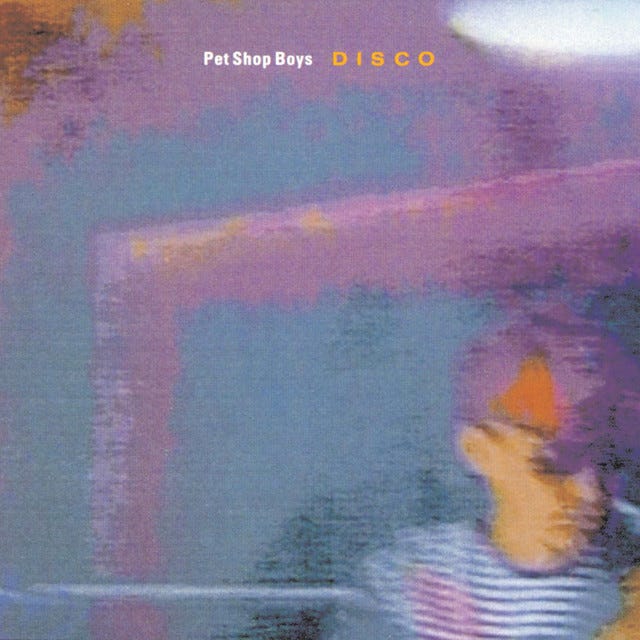
The Pet Shop Boys approached the whole idea differently. In 1986 they released Disco, a compilation built entirely around their twelve-inch versions.
Think about that for a moment.
This wasn’t a collection aimed at DJs. It wasn’t some obscure club-only release. No, it was sold to the general public as a proper album. And because they’re the Pet Shop Boys, they added one final stroke of genius. They called it Disco.😁
This was 1986. The time when the United States was their biggest market. The United States, a country where the word “disco” was still practically radioactive after the infamous “Disco Sucks” movement.
I’ve always loved that little act of defiance.
Whether they intended it that way or not, it perfectly summed up who they were. Intelligent, mischievous and never particularly interested in following expectations. The more I thought about it, the clearer it became.
The Pet Shop Boys don’t just deserve a place in the story of dance music. They’re one of the bands that quietly changed the relationship between pop albums, twelve-inch singles and club culture.
The End Of The Imperial Phase
That’s why I’ve chosen to start not at the beginning, but at a fascinating turning point.
Neil Tennant would later describe the years of Please and Actually as the Pet Shop Boys’ “imperial phase.” Everything seemed effortless. They Scored hit after hit. They had three number ones in a row. They had critical acclaim.
And then something changed.
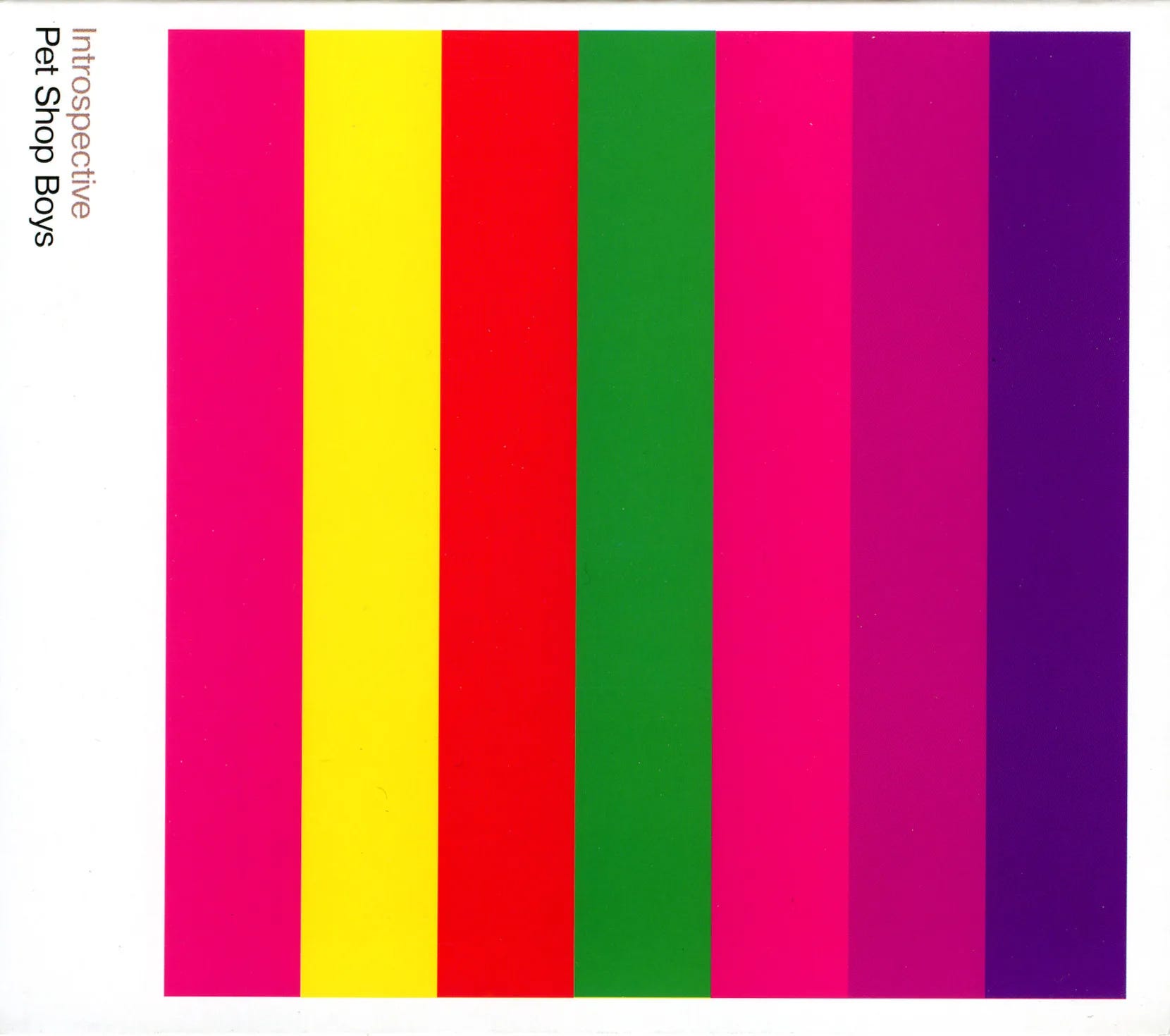
Their third album, Introspective, turned everything upside down. Instead of writing songs and then extending them into twelve-inch remixes, they reversed the entire process. The twelve-inch became the original. The single became the edited version.
In many ways, the idea behind Disco had quietly evolved into a full studio album. Introspective contained just six tracks, each presented in extended, club-length form. It was a remarkably brave idea. But even more remarkable is the fact that it worked.
By almost every measure, Introspective became their biggest album. It reached the Top 40 in America, performed strongly across Europe and remains one of the defining records of their career. The irony is that the singles didn’t quite follow. Which brings us to Domino Dancing.
I’ve often wondered whether choosing that particular song as the album’s introduction helped shape what happened next. A Latin Freestyle record, released just as it became clear that Freestyle wasn’t the new disco, and never really found a home in Europe.
Was it simply unfortunate timing? Or was something else going on? The deeper I dug into Domino Dancing, the more fascinating the story became.
Why On Earth Freestyle?
One thing kept nagging at me while researching this. If Introspective was built around six extended dance tracks, why open the campaign with Domino Dancing? It wasn’t the obvious choice.
The song was steeped in Latin Freestyle, a style that had become hugely popular on (some) American dance floors but was already showing signs that it might struggle to break into the mainstream. Even EMI had warned the Pet Shop Boys that it wasn’t the ideal choice if they wanted another major American hit.
And they weren’t entirely wrong.
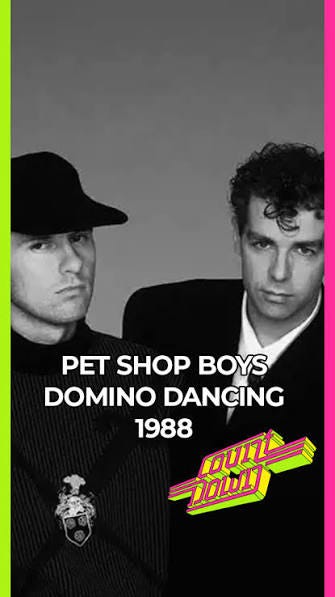
The single still became a respectable success in Europe, reaching No. 7 in both the UK and the Benelux, but in the United States it only just scraped into the Top 20 of the Billboard Hot 100. It would also become their final Top 40 pop hit across the Atlantic. Looking back, it’s easy to conclude they simply chose the wrong single.
Personally, I think that’s much too simplistic.
Because if you study Introspective as an album, you quickly realise the Pet Shop Boys weren’t chasing the charts as much as they were documenting what was happening on dancefloors around them.
Look at the track listing: Eurodance, House, Synth-pop & Latin Freestyle. It’s almost as if they’d built a snapshot of club culture in 1988. And suddenly Domino Dancing makes perfect sense.
The Miami Connection
The choice of Freestyle wasn’t nearly as unexpected as it first appears. Neil Tennant and Chris Lowe had been following American club music closely for years. They were huge admirers of Exposé, one of the biggest Freestyle acts in America and one of the few to successfully cross over from the dance charts to mainstream pop.
Behind Exposé stood producer Lewis Martineé, one of the architects of the Miami Freestyle sound. The Pet Shop Boys wanted him. And remarkably, they got him.
Martineé later recalled that the request came completely out of the blue when Parlophone (the PSB record company) contacted him to ask if he’d be interested in producing a song for the band.
His answer?
Absolutely.
In fact, he later joked that he would’ve done it for free. 😁
There’s another detail I hadn’t fully appreciated until now. Domino Dancing wasn’t actually their first flirtation with Freestyle. Far from it. The Pet Shop Boys had been borrowing from Latin rhythms and American club music for quite some time.
Go back to Disco and you’ll hear it already. Arthur Baker’s remix of In The Night. The Latin Rascals’ spectacular reconstruction of Opportunities (Let’s Make Lots Of Money). Both are firmly rooted in the same musical vocabulary.
So travelling to Miami to work with Martineé wasn’t a sudden change of direction. It was the logical next step.
Why It Doesn’t Quite Sound Like Freestyle
This is probably the discovery that surprised me most. For years I’d wondered why Domino Dancing always sounded like Freestyle without ever completely being Freestyle. There’s something that felt different.
If you’ve spent enough evenings listening to Shannon, Exposé, Stevie B, Company B or Pretty Poison, your ears immediately notice it. The tempo.
Traditional Freestyle usually sits around 118 BPM. Domino Dancing cruises along at roughly 108 BPM. Ten beats per minute doesn’t sound like much on paper. On a dancefloor, it changes everything.
But the explanation is simple. Lewis Martineé wasn’t building a Freestyle record from scratch. By the time the Pet Shop Boys arrived in Miami, the song already existed.
They had written the melody, finished the lyrics and created the structure. So Martineé’s job wasn’t to compose a Freestyle song. He just had to add the Freestyle elements And that’s exactly why it works so beautifully.
Underneath all those Latin percussion patterns and syncopated rhythms sits an unmistakably Pet Shop Boys pop song. Or perhaps it’s the other way round. A dance record cleverly disguised as pop. And the more I listened to it, the more I realised that perfectly sums up their entire career.
What Was Domino Dancing Really About?
The song itself has generated plenty of discussion over the years. And if you spend enough time reading about the Pet Shop Boys, you’ll quickly stumble across one recurring question.
Was Domino Dancing simply a song about jealousy? Or was there something else going on beneath the surface?
Neil Tennant has always given a wonderfully down-to-earth explanation. The title, he said, came from a holiday on the Caribbean island of St Lucia. Apparently there wasn’t much to do in the evenings except play dominoes. One of their friends kept winning and every victory was celebrated with an exuberant little dance.
Hence...
Domino Dancing.
As unlikely as that sounds, it perfectly fits the Pet Shop Boys’ sense of humour. On the surface, the lyrics tell a fairly straightforward story. The main character is in a relationship with someone everyone else desires. The jealousy slowly destroys what the main character is trying to protect. Push one domino....and eventually they all fall.
Simple enough.
Except that, with the Pet Shop Boys, things are rarely quite that simple. For years people have argued that the song, and particularly its video, carried a much stronger LGBTQ subtext than many listeners recognised at the time.
The lyrics are written from a first person view and they never indicate if the main character is male or female. And then there’s the video. It certainly didn’t discourage that reading, with its lingering shots of two impossibly beautiful young men and a visual language that was quite gay for mainstream pop in 1988.
Some commentators have even suggested that Domino Dancing marked the moment America turned its back on the Pet Shop Boys. I’ve never been entirely convinced.
The first question, whether the song contains LGBTQ coding, is actually quite an interesting one. The second? I’m much more sceptical. And that’s exactly what I’d like to explore in this week’s B-Side.
Did They Really Lose America?
One statistic completely changed the way I looked at this period. For years I’d heard people describe Domino Dancing as the beginning of the Pet Shop Boys’ American decline. On paper, that sounds convincing. It was their last Top 40 pop hit in the United States.So case closed.
Or was it?
Because if you stop looking at the pop charts and start looking at the dance charts... the picture changes completely. The Pet Shop Boys didn’t disappear from America at all. They simply continued their success somewhere else.
In fact, they became one of the most successful artists the American dance charts have ever seen.
Read that again.
Ever.
Only three artists have had more US Dance Chart success than the Pet Shop Boys. And all three are female solo artists. (Can you guess who they are? Answers in the comments please. 😁)
That also means they outperformed dance heavyweights such as Depeche Mode and New Order. Not exactly the career of a band that “lost America.” Their albums kept charting. Their American tours continued. Their audience remained remarkably loyal.
What changed wasn’t the audience.
It was the charts they appeared in.
Pop Was Changing, Dance Was Too
Personally, I think the explanation is much simpler. By 1988 the Pet Shop Boys had become more unapologetically European. More club-oriented and more interested in extended arrangements than radio edits.
Ironically, the very thing that makes Introspective such a landmark album may also have made it a little less obvious for American Top 40 radio. The album wasn’t built around singles. It was the singles that were built around the album. That’s a completely different philosophy.
One small detail has always fascinated me. The first two studio albums became major American successes. But Disco, despite containing many of their strongest club mixes, only reached No. 95.
I’ve often wondered how much of that was simply down to one word. Disco. Even in 1986 it still carried baggage in America that it simply didn’t have in Europe. And that irony is almost delicious. The album that celebrated the twelve-inch format also carried the one title that many Americans still weren’t quite ready to embrace.
The Story Didn’t End There
The relationship between the Pet Shop Boys and Latin music certainly didn’t end with Domino Dancing. Eight years later they returned to those influences on Bilingual, by which time Latin rhythms had become far more accepted on both sides of the Atlantic.
Looking back, Domino Dancing almost feels like a preview. Another example of the Pet Shop Boys arriving somewhere just a little earlier than everyone else. And Lewis Martineé benefited from the collaboration too.
One of the session’s backing vocal groups, The Voice In Fashion, would later sign with the Pet Shop Boys’ label and score a sizeable club hit with Only In The Night. Years later they even recorded their own version of Domino Dancing, a lovely little reminder of where that collaboration had started.
The Twelve Inch is a growing community of people who love disco, eighties, and early-nineties dance music.
If you know someone who would enjoy these stories, feel free to share this post with them or pass it along on Substack Notes. Every share helps the music, and the community, travel a little further. 💿✨
🎁 B-Side,
IThere’s another fascinating part of this story that simply wouldn’t fit into one article.
So this Saturday, on the subscriber-only B-Side, I’ll be digging into three questions that kept coming back while researching this episode.
Did Domino Dancing really bring the Pet Shop Boys’ imperial phase to an end, or was that simply the moment the pop charts stopped understanding what they were doing?
Why did Latin Freestyle become such a huge phenomenon in the United States while Europe largely looked the other way?
And finally, how much LGBTQ coding was really hiding inside the Pet Shop Boys’ songs, and how differently were those lyrics understood in 1988?
The B-side is where we go deeper.
It’s paywalled, but for the price of 8 premium coffees, you get:
a full year of B-sides
access to 150+ deep dives
future stories across genres
And yes, payment in beans is still impractical 😁
Join the club. I’d genuinely love to have you on board.
And now, it’s your turn:
Was Domino Dancing your introduction to the Pet Shop Boys?
Do you prefer the sleek pop perfection of Actually, or the club-first philosophy of Introspective?
And who do you think are the only three artists to have scored more US Dance Chart number ones than Neil Tennant and Chris Lowe?
I’m curious to read your thoughts.
So You Wanna Hear More ?
I thought you would !
It’s fun to write about music but let’s be honest. Music is made to listen to.
Every week, together with this newsletter, I release a 1 hour beatmix on Mixcloud and Youtube. I start with the discussed twelve inch and follow up with 10/15 songs from the same timeframe/genre. The ideal soundtrack for…. Well whatever you like to do when you listen to dance music.
Listen to the Soundtrack of this week’s post on MIXCLOUD
Or on Youtube :
Next week we’ll start the CanCon month. The story of Disco’s second city and the records that shaped it.
Terrific piece — I became a fan of them when West End came out, I believe it was originally on Bobcat (and MIGHT have been produced by Jelly Bean, but I I may be misremembering). This is a great analysis, found myself nodding along with all of it — forwarded to my two younger brothers who went along for the ride in the 80s!
This week's mix is truly outstanding! I grew up with this music so every song sounds so natural. The writeup is thought-provoking as well, now I will have to listen to Domino again. Thanks for putting the hard work in every week, and welcome back from vacation, Pe!