Welcome to the B-side.
This is where things get a little closer to the source.
The parts of the story that don’t always make it into the main piece. The details behind the sound. The personal notes. And the versions that really tell you how a track worked on the dancefloor.
If you missed the A-Side story, you can read it here. 👇
What Time Is Love? The Strange, Funny, Occasionally Terrifying Story of The KLF

On 23 August 1994, KLF members Bill Drummond and Jimmy Cauty took roughly £1 million in £50 notes to an abandoned boathouse on the Scottish island of Jura and burned it.
Every twelve inch had a B-side where the DJs and collectors found the extra tools: beats, dubs and alternate versions.
This is the B-Side of this week’s episode, where we dig deeper into the story behind the record. Read it in one go or enjoy the different sections on different moments. The choice is yours
🥁 Mix 1 — The Beats
Conduit or footnote? The KLF’s place in UK rave history
By 1988, acid house had its own world: warehouse parties, raves and a culture that much of the British press seemed to notice only when it could run a drug scare.
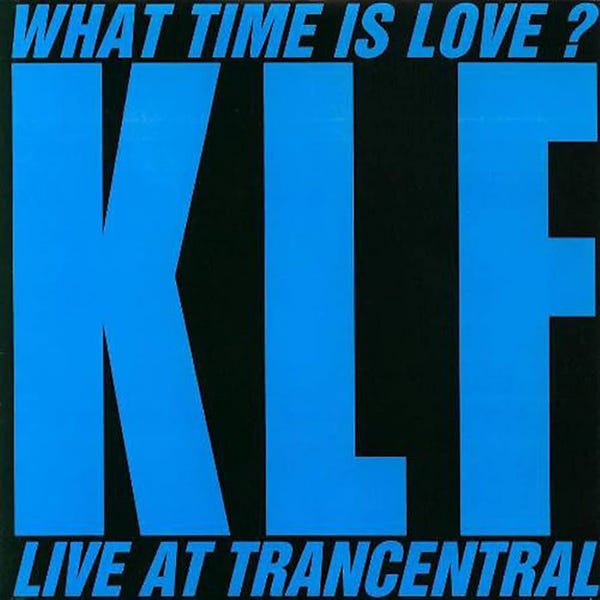
The KLF took sounds from that world and made them enormous. Start with the Pure Trance singles, then put on the stadium house versions of “What Time Is Love?”, “3 a.m. Eternal” and “Last Train to Trancentral.” There are sirens, electronic beats and sampled crowds, but now they sound ready for Top of the Pops. And, eventually, the Brit Awards stage, though perhaps nobody there was quite ready for what happened on that one. 😁
I think that is where The KLF’s place in rave history gets interesting. They didn’t invent the scene, and I wouldn’t want to give them credit that belongs to the people building it. But they brought some of its sounds into living rooms far beyond the rave circuit. Those records became international hits while keeping enough of their rave character for you to hear where they had come from.
Were The KLF a bridge from the underground to pop? I think so. Were they the most important bridge? That’s a bigger claim, and I’m not entirely convinced. But it would be difficult to call them a footnote when “3 a.m. Eternal” was playing to an audience that had never set foot in a warehouse party.
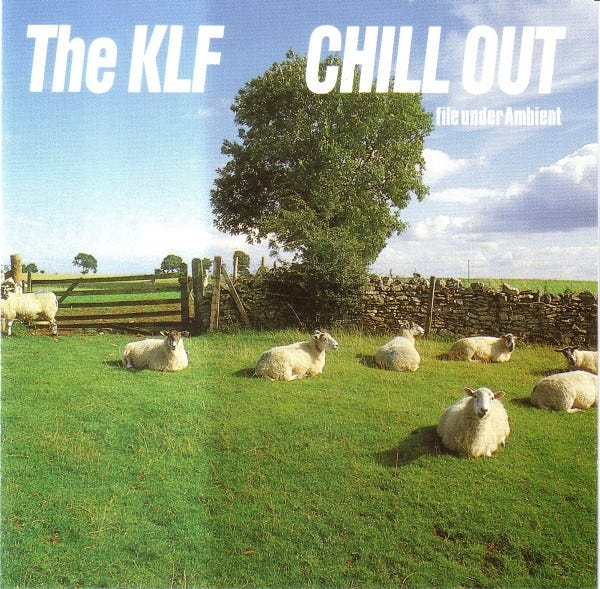
🌙 The other side: Chill Out and The Orb