

On 23 August 1994, KLF members Bill Drummond and Jimmy Cauty took roughly £1 million in £50 notes to an abandoned boathouse on the Scottish island of Jura and burned it.
Gimpo, their longtime collaborator, filmed the whole thing. It took well over an hour.
A few years earlier, the same two men had written a manual explaining how to make a number-one hit. They had made several themselves. Now they were setting the proceeds on fire.
If you have never come across The KLF before, you may reasonably assume I have skipped a few important steps. I have. But I promise we’ll get to them. 😁
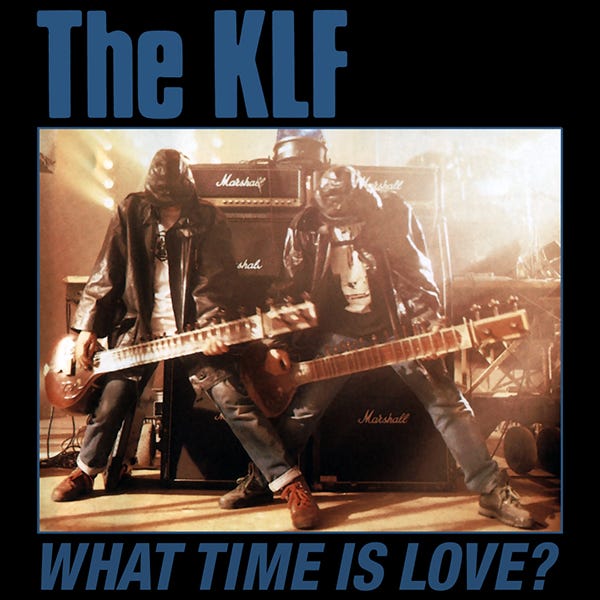
I have always wondered whether Drummond and Cauty were geniuses or stark raving mad. After looking into their story again, I am less sure than ever. Our way in, is their first (hit) single under the KLF name, “What Time Is Love?”
First, though, we need to visit Sweden.
👋 Welcome, I’m Pe Dupre, thanks for stopping by.
This is The Twelve Inch, a community about the history of dance music from 1975 to 1995, told one twelve-inch record at a time.
If this landed in your inbox because a friend forwarded it, I’d love for you to subscribe so you don’t miss the weekly episodes. Each one dives into a track, its story, and the culture around it.
And if you’re already enjoying the free posts, would you consider becoming a paid subscriber? Your support helps me keep researching, writing, and unearthing the stories behind the music. And You’ll get access to the weekly B-side post: the full archive and extra Subscriber Only Posts
Two Men, ABBA, and a Very Bad Meeting
Bill Drummond knew his way around the music business. He had run Liverpool’s Zoo Records, managed Echo & the Bunnymen and The Teardrop Explodes, and worked as A&R for WEA. Jimmy Cauty was a graphic artist who had played in Brilliant.
In 1987, they began recording together as The Justified Ancients of Mu Mu, or The JAMs. They borrowed the name from The Illuminatus! Trilogy, whose fictional Justified Ancients introduce chaos into human affairs.
And they took their mission seriously!
The debut album, 1987 (What the Fuck Is Going On?), was built from samples they had not cleared. The Beatles and Led Zeppelin appeared. So did ABBA’s “Dancing Queen,” chopped into a track called “The Queen and I.”
ABBA’s people were not amused. The unsold copies had to be destroyed.
If you think the next part is a legal battle.
No.
It’s a road trip.
Drummond and Cauty drove to Sweden with an NME journalist and photographer, hoping to meet Benny and Björn and talk them round. They didn’t get their meeting. Instead, outside ABBA’s studio at three in the morning, they presented a gold disc “in recognition of sales in excess of zero” to a blonde sex worker. The idea, apparently, was that the photographs might make her look like Agnetha Fältskog fallen on hard times.
It didn’t work.
On the way home, they burned copies of the album in a Swedish field. According to accounts of the trip, a farmer was sufficiently unhappy about this to fire at them. Of course there was a furious farmer. At this point, I would be disappointed if there weren’t one. 😁

They kept some copies back and later advertised them for £1,000 each.
And, ladies and gents, we are only just getting started.
A Number One, followed by Instructions
Having been burned (pun intended) by the music business once, Drummond and Cauty’s response was not to go straight (what did you think?).
No, they wanted to prove they understood the machine better than anyone in it.
In 1988, Drummond and Cauty released “Doctorin’ the Tardis” as The Timelords. It mashed up the Doctor Who theme, Gary Glitter’s “Rock and Roll (Part 2)” and The Sweet’s “Blockbuster!” It went to number one in the UK and became a big European hit.
And then they wrote it all down. The Manual (How to Have a Number One the Easy Way) is a genuinely step-by-step guide to manufacturing a hit single with no money, no talent, and no shame. The short of it: sample liberally, use a drum machine, if you have instruments, throw them away, exploit chart mechanics and be shameless about promotion. It reads partly as satire and partly as a confession, because they had, in fact, just done exactly what it describes.
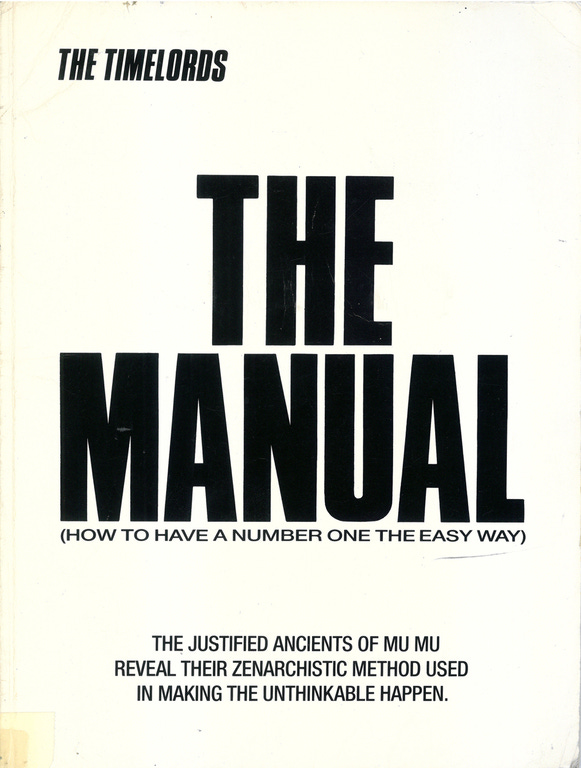
It later became an underground cult text among aspiring pop chancers; Austrian duo Edelweiss reportedly followed it almost to the letter to score their own massive 1988 hit “Bring Me Edelweiss.” I’ll return to that on this week’s B-Side.
Meanwhile, Drummond and Cauty had another record on the way.
“What Time Is Love?”, Take one. And Two. And Three…
The original “What Time Is Love?” appeared in 1988 under their new name, The KLF. It was a twelve-inch in their Pure Trance series: repetitive, insistent and made for the dancefloor.
It was the year of the second Summer Of Love and Rave parties
But with these two, releasing a track was rarely the end of the matter. It was more like an invitation to see what else they could do to it.
They chased what they started calling “stadium house”, pounding, anthemic dance music built for arenas rather than clubs. By the time the definitive versions landed in 1989–90, The KLF (the acronym stood for, among other explanations they gave, the Kopyright Liberation Front) had a genuine sound: air-raid sirens, Wagnerian synth stabs, sampled crowd noise, ancient-Egyptian and Mu-mythology sleeve art, and a recurring visual motif of a horned Viking helmet that made absolutely no narrative sense and somehow worked anyway.
It became the first part of their stadium house trilogy. “3 a.m. Eternal” and “Last Train to Trancentral” followed.
And then came the single nobody could have predicted: “Justified and Ancient,” featuring Tammy Wynette, the reigning First Lady of American country music, cooing the incredible line “they’re justified and they’re ancient and they drive the Ice Cream Van” over house beats.
It was a transatlantic top-ten hit. Wynette apparently had very little idea who The KLF were or what any of it meant (and she wasn’t the only one), which, if anything, made it funnier.
Later, when I worked with artists myself, I sometimes thought about the (distribution) companies handling KLF releases. I have known artists to change their minds quite often, sometimes as often as you and I change underwear. Which, to be clear, is a lot. I hope the same goes for you. 😁
But what must have working with KLF been like? I presume, as responsible label manager it meant lots of phone calls to your better half.
“Honey, I’ll be late. They’ve changed everything again”. If you ever had an idea that working at a record company is/was all fun, think again.
I wasn’t there. If anybody reading this was, please get in touch. I would love to hear your story, and I ‘m a very good listener
The Exit: Machine Guns, a Dead Sheep, and the Vanishing Act
By early 1992, The KLF had sold millions of records and won Best British Group at the Brit Awards.
So naturally they decided to end it as violently and publicly as possible.
Invited to perform at the Brit Awards after winning Best British Group, they took the stage with the grindcore band Extreme Noise Terror and performed a thrashed-out, near-unrecognisable version of “3am Eternal.”
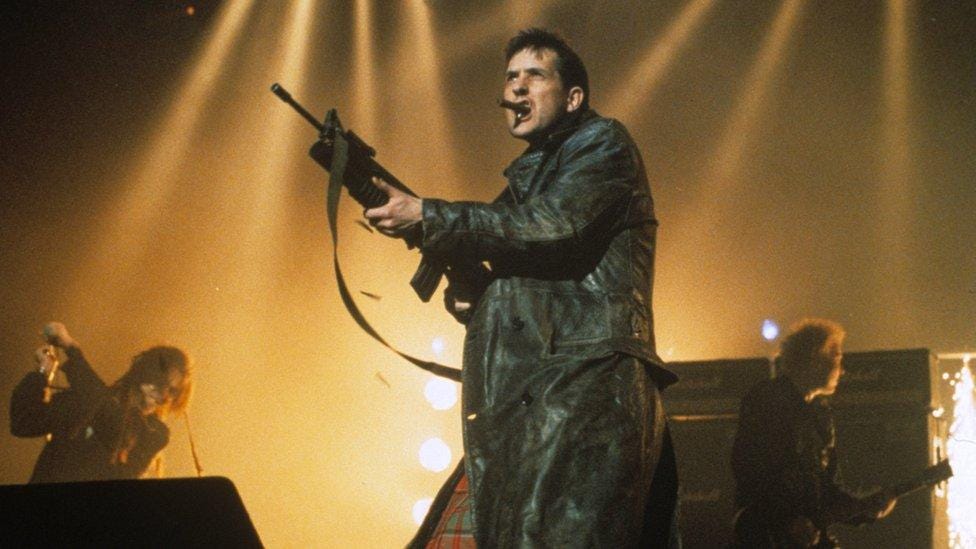
Drummond, on crutches in a long coat (in the style of an SS army officer), fired a machine gun loaded with blanks into the audience of the British music industry’s finest. They’d wanted to disembowel a dead sheep on stage too, with buckets of blood thrown over the front rows, but BBC lawyers vetoed the blood (how unsporty of them) and Extreme Noise Terror, committed vegetarians, refused to take part in a live disembowelling.
The dead sheep still made an appearance later that night, left at an after-party with a note saying, “I died for ewe.” As The KLF came offstage, their spokesman announced that they had left the music business.
You could be forgiven for thinking that was another joke. In May, they formally announced their retirement and withdrew their complete! back catalogue from sale.
At the height of their success, they made their records unavailable. Somewhere, somebody in distribution must have put down the phone, stared at the wall and decided it was time to go home.
They also buried their Brit Award near Stonehenge. As one does.
Could we go any further?
Of course we could.
After The KLF, Drummond and Cauty became the K Foundation and announced a £40,000 “Worst Artist of the Year” award. They offered it to sculptor Rachel Whiteread in the same year she won the Turner Prize. I suspect she had not planned to collect both.
And then came the boathouse on Jura.
They burned the money while Gimpo filmed and a journalist watched. Some notes escaped the fire. Later, when they screened the film, audiences were furious. People wanted to know why they had done it.
So do I.
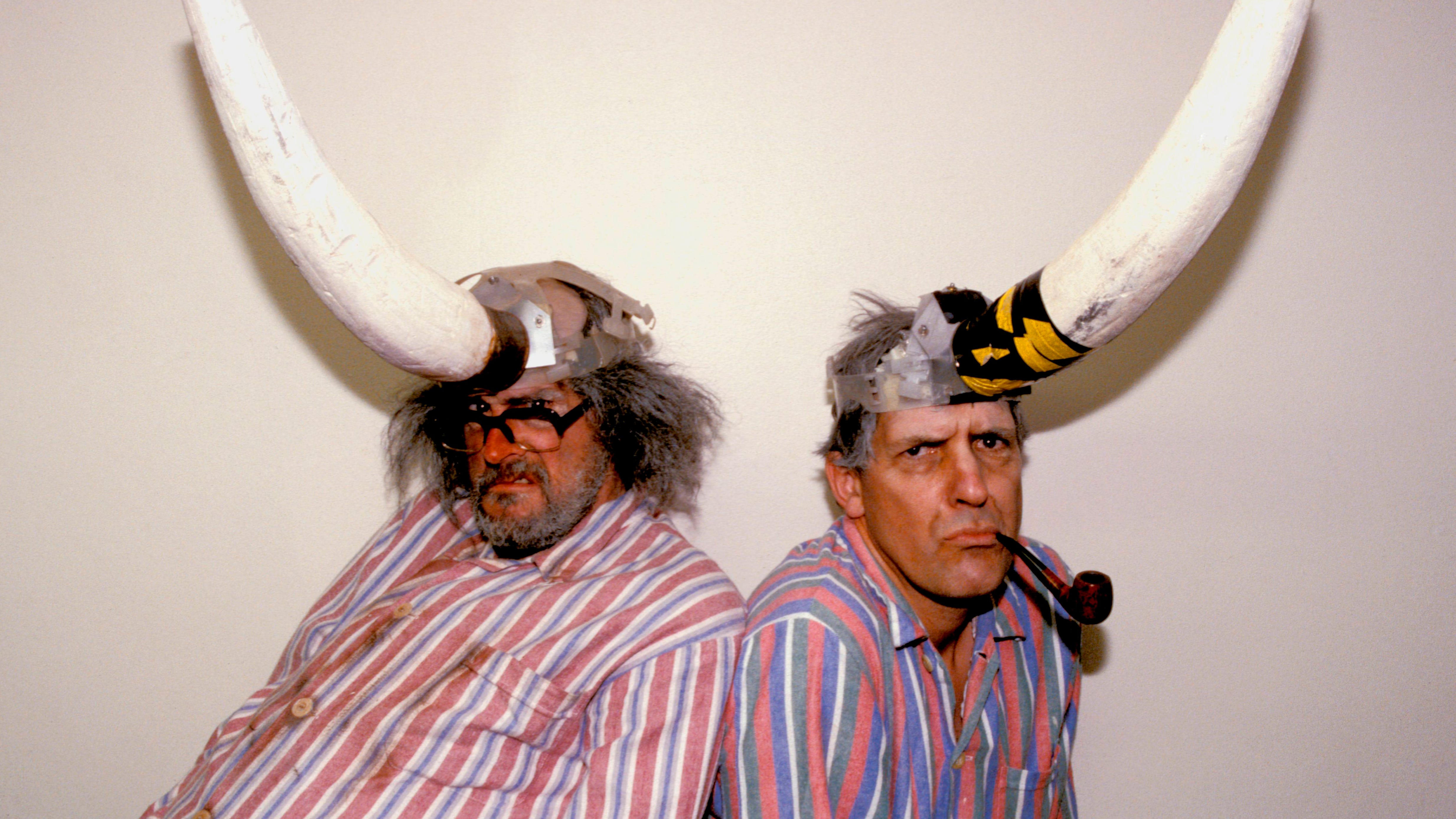
So: Mad, or Visionaries?
Here’s the trouble with trying to sum up The KLF: every fact checks out, and none of it adds up to a motive. They wrote the literal manual for gaming the pop charts and then proved it worked. They made a fortune and then destroyed both the fortune and the records that made it. They turned genuine chart pop into performance art and then turned performance art into a public spectacle nobody, including apparently the two men doing it, could fully explain afterward.
Was this a coherent critique of the music industry and the fetishisation of money, executed by two people smart enough to see the machine from the inside and cynical enough to blow it up rather than keep feeding it? Or were Drummond and Cauty just two enormously talented pranksters who got in over their heads with their own mythology, the Illuminatus references, the Discordianism, the ancient Mu symbolism, until the joke and the belief became impossible to tell apart, even for them?
Or was it just the drugs?
Bill Drummond would later say : “Some people thought we had a vision. But we didn’t really. We were just winging it, making it up” “A lot of the time we didn’t decide what to do. We asked the question”what would the KLF do now”.
“We just were trying to push things a bit further. Push ourselves as far as we could go” said Jimmy. “Go All the way and not come back again”.
Stark raving mad, or the two most clear-eyed visionaries British pop produced in a generation. I genuinely don’t think you can pick one. Maybe that’s the point.
The Twelve Inch is a growing community of people who love disco, eighties, and early-nineties dance music.
If you know someone who would enjoy these stories, feel free to share this post with them or pass it along on Substack Notes. Every share helps the music, and the community, travel a little further. 💿✨
🎁 B-Side, Going Deeper Into The Groove
The KLF were influential. Or were they?
They left an enormous footprint on early nineties dance music, though it can be hard to separate their musical influence from all the chaos surrounding them. On this week’s B-Side, I’m going to see just how far that footprint stretches.
I’ll take a closer look at The Manual, and at the hits made by people who followed its instructions, whether they meant to or not. I’ll explore The KLF’s connection to rave culture and the second summer of love in 1988. And, of course, there’s the saga of their illegal samples. They weren’t the first to use them, but they took “do it first, ask for forgiveness later” to rather impressive heights. 😁
Finally, I’ll follow the trail to the artists they influenced, directly and indirectly. Because once you look beyond the bonfires, the sheep and the ice cream van, The KLF start to look like a lot more than a crazy footnote to the early nineties.
Over To You
Which version of “What Time Is Love?” is yours?
And at what point in this story would you have decided The KLF had gone too far?
So You Wanna Hear More ?
I thought you would !
It’s fun to write about music but let’s be honest. Music is made to listen to.
Every week, together with this newsletter, I release a 1 hour beatmix on Mixcloud and Youtube. I start with the discussed twelve inch and follow up with 10/15 songs from the same timeframe/genre. The ideal soundtrack for…. Well whatever you like to do when you listen to dance music.
Listen to the Soundtrack of this week’s post on MIXCLOUD
Or on Youtube :