

Welcome to the B-side.
This is where things get a little closer to the source.
The parts of the story that don’t always make it into the main piece. The details behind the sound. The personal notes. And the versions that really tell you how a track worked on the dancefloor.
If you missed the A-Side story, you can read it here. 👇
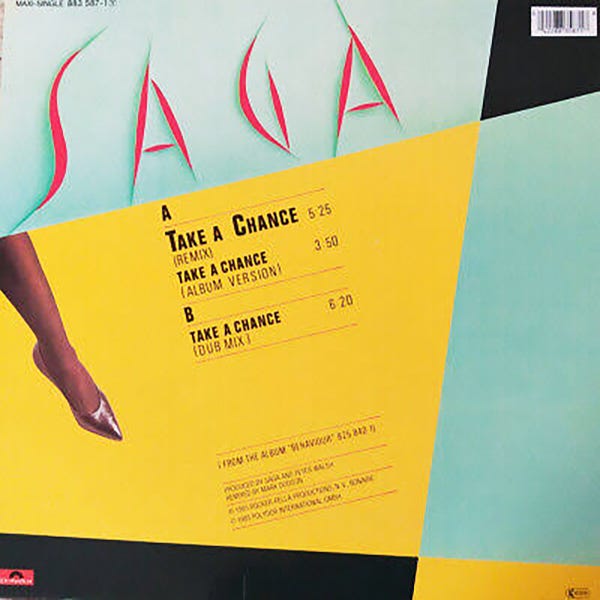
Saga’s “Take A Chance”: From Canadian Rock to Belgian New Beat

Last week, I wrote about the stereo wars raging at my parents’ house, when I battled it out musically with the neighbours’ son across the street. “Hit ’n Run Lover” by Carol Jiani was my secret weapon because of the bass that is so hot & pumping it can move houses. 😁
Every twelve inch had a B-side where the DJs and collectors found the extra tools: beats, dubs and alternate versions.
This is the B-Side of this week’s episode, where we dig deeper into the story behind the record. Read it in one go or enjoy the different sections on different moments. The choice is yours
🥁 Mix 1 — The Beats
So What Exactly Was New Beat?
Before we explain what New Beat was, let’s start with where it came from.
Just like disco didn’t suddenly appear out of thin air in mid-seventies New York, New Beat didn’t fall out of the sky in late-eighties Belgium either. And to keep the image of things falling out of the sky, we can start with the first ingredient: society.
Growing up in eighties Belgium wasn’t simple.
Economically, the country was heading for disaster, not helped by the quick succession of governments and the ever-present problems between the Flemish and French-speaking parts of the country. Belgium was, together with Italy, sometimes called the sick man of Europe. The deficit was mounting at double speed.
Part of the problem was something we called “waffle-iron politics”.

Belgian waffles are the best in the world. The politics named after them were a little less successful. 😁
The idea was that whenever money was invested in the north, a similar amount had to be spent in the south, and vice versa. There are entire books, sometimes tragicomic ones, about the unnecessary public works this produced. Metro infrastructure that was built but never used, for instance, and that later became urbex landmarks.
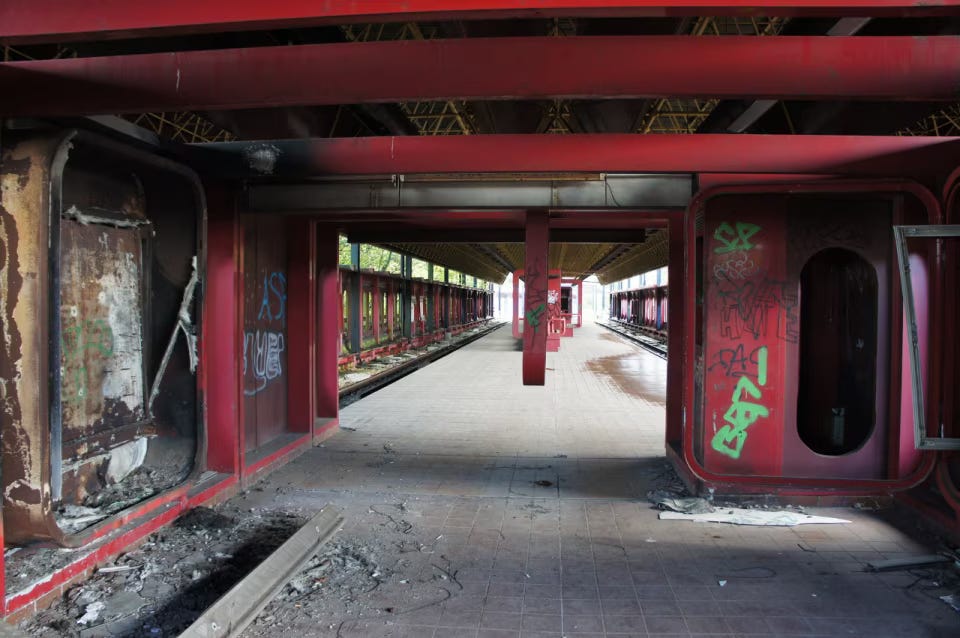
By the early eighties, the deficit was rising so fast that Belgium had serious problems financing itself on the international money markets.
Add the very present threat of nuclear war with the Soviet Union (yep, also then 😁), and early-eighties Belgium wasn’t exactly overflowing with optimism.
And those things always find their way into music.
Belgium Starts Making Its Own Noise
Synth-pop and electronic disco had ushered in a period of cheaper electronic instruments, which democratised music-making. Suddenly, you didn’t need an enormous studio budget to make electronic music.
That also meant more Belgian music made by Belgian bands.
At the same time, we had an explosion of commercial pirate radio stations. Usually very local. Also very illegal. 😁
As I explained last week when comparing Canada and Belgium, Belgian-made music was often avoided by the national radio stations. The local stations didn’t care. There was no format stress. The DJs were volunteers and pretty much played whatever they liked during their allotted few hours of the week.
And some of the electronic music coming out of Belgium was darker and rougher than what was happening elsewhere. The term that became associated with it was EBM, Electronic Body Music, with bands such as Front 242 and The Neon Judgement.
A great example and one that definitely will get it’s own episode down the line
EBM was very danceable, although not necessarily suited to every dancefloor. But it would provide part of the blueprint for New Beat. And then there was another, perhaps less obvious ingredient.
