

Welcome to the B-side.
This is where things get a little closer to the source.
The parts of the story that don’t always make it into the main piece. The details behind the sound. The personal notes. And the versions that really tell you how a track worked on the dancefloor.
If you missed the A-Side story, you can read it here. 👇
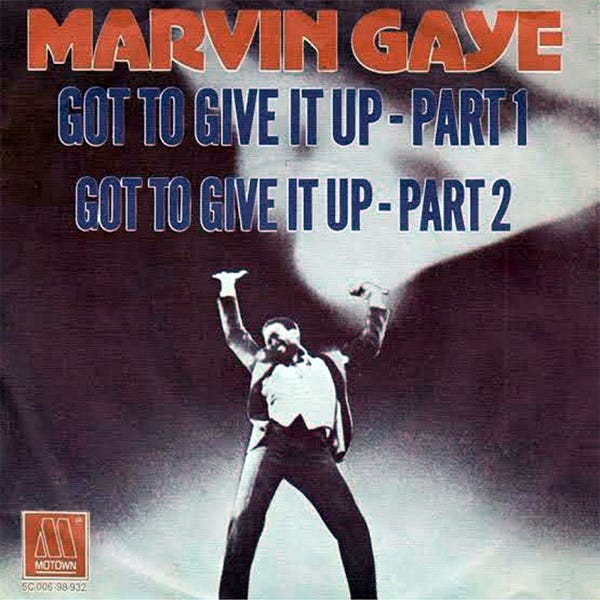
🪩 Marvin Gaye's Got To Give It Up: The Disco Hit He Never Wanted To Make

Sometimes you witness history without realising it.
Every twelve inch had a B-side where the DJs and collectors found the extra tools: beats, dubs and alternate versions.
This is the B-Side of this week’s episode, where we dig deeper into the story behind the record. Read it in one go or enjoy the different sections on different moments. The choice is yours
Mix 1 — The Beats
Why Wasn’t Motown A Disco Label?
Confession time. Until I started researching this episode, I'd never actually asked myself this question. I'd accepted Motown wasn't a disco label in much the same way I'd accepted Belgium has terrible weather. It was just... true. Except, when you start looking at the catalogue, it suddenly isn't that simple.
Because if Motown made some of disco’s greatest records... why don’t we think of Motown as a disco label?
Mention disco labels and most collectors immediately reply with names like Salsoul, Casablanca, Prelude, West End or Philadelphia International. Motown rarely enters the conversation. Yet we’re talking about the label that gave us Love Hangover, Love Machine, Don’t Leave Me This Way and, of course, Got To Give It Up.
So what happened?
The simple answer is that Motown made disco records but it never really became a disco label.
Built for Hits
The difference might sound subtle, but I think it’s important. Berry Gordy had spent the 1960s building what was probably the greatest hit factory in popular music. Everything at Motown revolved around one objective: making records that could cross over to everybody. Black audiences, white audiences, radio, television, teenagers, even parents. If a song could conquer all of them, it was perfect for Motown.
And let’s not forget, Motown had always been dance music. Long before anyone had heard the word “disco”, people were dancing to Baby Love, I Can’t Help Myself and Stop! In The Name Of Love. Listen to those records today and you can already hear some of the ingredients disco would later adopt: the relentless beat, the strings, the tambourines, the hooks that refuse to leave your head.
Disco didn’t suddenly appear out of nowhere in 1975. It grew out of the legacy of what came before, and Motown was certainly part of it.
Then the Rules Changed
The problem was that disco wasn’t simply another musical style, it changed the business. Nightclubs suddenly mattered just as much as radio stations and DJs wanted six or eight minutes instead of three.
The twelve-inch single appeared. Tom Moulton started extending records, not because listeners asked for it, but because DJs did. That required labels to think differently.
Philadelphia International understood almost immediately what was happening. Salsoul practically built its entire identity around club culture. Casablanca threw itself at disco with all the subtlety of someone diving into a swimming pool.
Motown...didn’t. It simply carried on making excellent records And sometimes those records became disco classics almost by accident. It’s the story of a lot of R&B based disco.
