

Welcome to the B-side.
This is where things get a little closer to the source.
The parts of the story that don’t always make it into the main piece. The details behind the sound. The personal notes. And the versions that really tell you how a track worked on the dancefloor.
If you missed the A-Side story, you can read it here. 👇
🇫🇷🇨🇦 Mylène Farmer, The Canadian Who Became France's Biggest Pop Mystery

I‘ve never been a star-chaser
Every twelve inch had a B-side where the DJs and collectors found the extra tools: beats, dubs and alternate versions.
This is the B-Side of this week’s episode, where we dig deeper into the story behind the record. Read it in one go or enjoy the different sections on different moments. The choice is yours
🥁 Mix 1 — The Beats
🇨🇦 CanCon Month Begins, The Canadian Puzzle That Wouldn’t Leave Me Alone
One of the things I love most about writing The Twelve Inch is that every episode usually answers one question... and immediately raises three new ones. That’s exactly what happened here.
While researching Mylène Farmer, I kept coming back to the same thought.
How did ideas travel across the Atlantic before the internet?
Today a producer uploads a track and, minutes later, DJs on another continent can play it. Back then, it wasn’t remotely that simple. Yet somehow disco, Hi-NRG, synth-pop and countless production ideas kept bouncing between Europe and North America with remarkable speed.
The more I studied the history of dance music, the more I realised something fascinating. We often tell the story as if Europe and the United States were talking directly to each other. But what if there was a third player quietly helping that conversation along?
That’s where Canada enters the picture.
Or, more precisely...
Quebec and Montreal.
🌍 The Missing Bridge Across the Atlantic
To understand why Montreal became so important, we need to go back much further than disco. Back to the eighteenth century. After Britain defeated France in North America, political control changed hands.
Culture didn’t.
French never disappeared from Canada. Quite the opposite. Quebec developed into something unique. Not French. Not American.
Something in between.
You hear it immediately in the language.
Anyone from France will instantly recognise Québécois as French... but equally quickly realise it has evolved in its own direction. We understand each other perfectly well, but centuries of separate development have left their mark.
Culturally, though, Quebec never stopped looking east. Even after becoming part of Canada, it continued thinking of itself as belonging to the wider French-speaking world. That became even more pronounced after the Quiet Revolution of the 1960s. Instead of becoming more American, Quebec deliberately strengthened its cultural ties with France and Europe.
For someone researching dance music, that immediately rang alarm bells. Because if Europe and North America were exchanging musical ideas...
Quebec suddenly looked like a very convenient bridge.
💃 Then Add the Italians...
Another piece of the puzzle appeared when I started looking at immigration. Both Montreal and Toronto attracted large Italian communities after the Second World War. If you’ve been reading The Twelve Inch for a while, you’ll already know why that made me smile.
Italy.
France.
Canada.
New York.
Those four places keep appearing in disco history, almost as if someone secretly connected them with invisible string. And the deeper I dug, the less accidental those connections became.
No, Canada wasn’t the reason Eurodisco exploded after Saturday Night Fever. But I’m becoming increasingly convinced it was one of the most important gateways through which European music entered North America, and, just as importantly, American ideas travelled back across the Atlantic. Exactly the kind of two-way traffic that fascinates me.
Because dance music has always evolved through exchange rather than isolation.
📻 One Law That Changed Everything
Then I stumbled onto another piece of the puzzle.
Canada introduced regulations requiring radio stations to broadcast a significant percentage of Canadian music, the famous CanCon rules. At first glance it sounds like broadcasting policy. In reality, it became rocket fuel.
Once disco exploded, broadcasters suddenly needed Canadian dance records.
Lots of them.
The result?
Canada produced far more disco than most people realise.
Some records became international classics. Others barely travelled beyond provincial borders. Those forgotten releases are often the ones I enjoy discovering most. Which also raised another question.
What was happening outside Montreal?
What about Saskatchewan?
Manitoba?
Alberta?
British Columbia?
Finding reliable sources hasn’t been easy. Researching New York or London is almost luxurious by comparison. Researching seventies Canadian disco sometimes feels like archaeological fieldwork.
But that’s also part of the fun.
And I think we’ve uncovered enough to tell a story that, surprisingly, hasn’t really been told before.
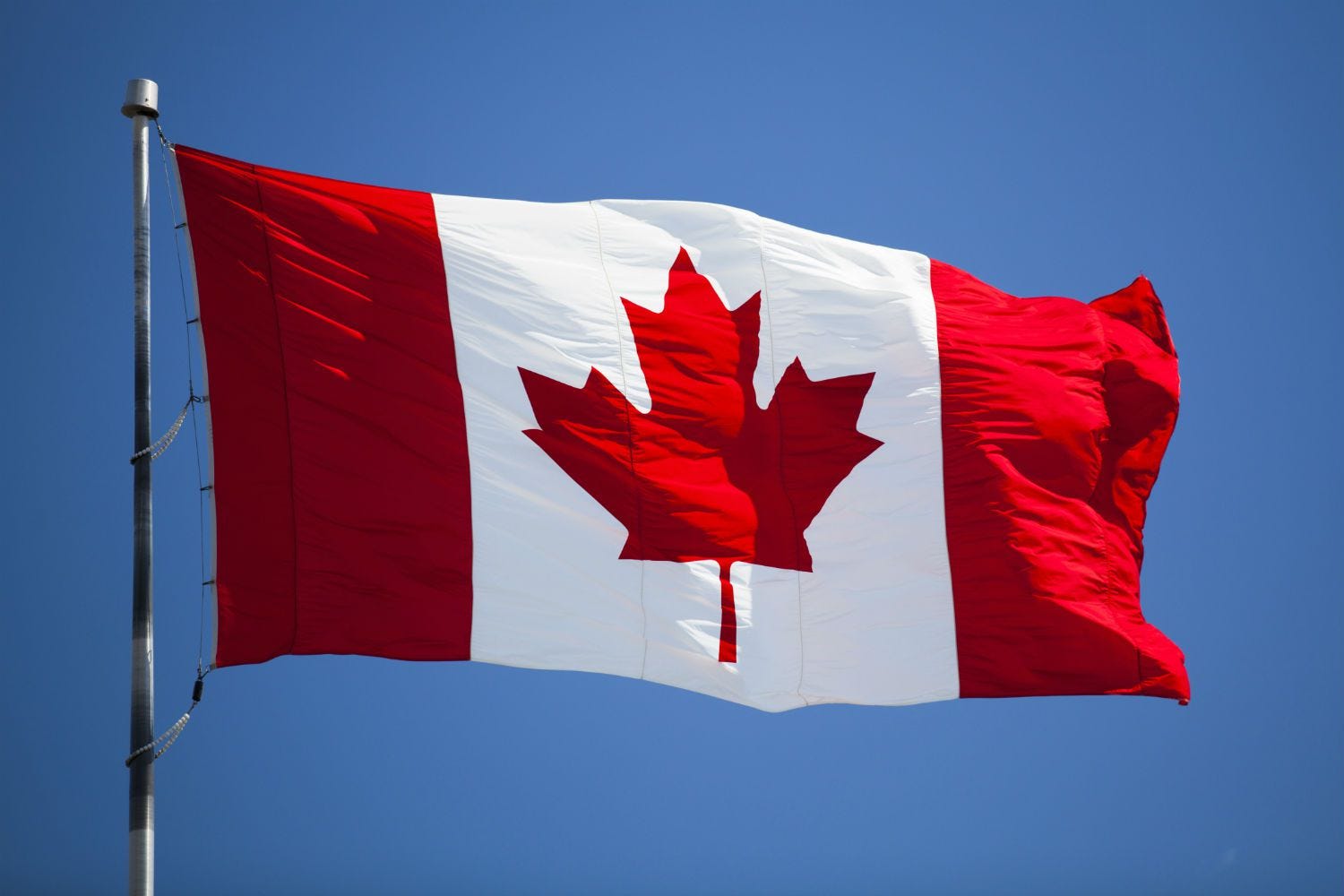
🎧 Welcome to CanCon Month
So here’s what we’ll be exploring throughout August.
Episode One lays the foundations.
Why Montreal became such fertile ground for disco and why the Quiet Revolution matters far more than you might think.
Episode Two jumps into disco’s explosive growth around Saturday Night Fever.
Although Canada sat right next door to New York, its story unfolded very differently.
Episode Three looks at what happened after Disco Demolition Night.
Again, Canada’s experience turns out to be very different from that of its southern neighbour.
And then, on the final Friday of the month, we’ll jump forward in time.
Because while researching all of this, I discovered a wonderful connection between a Canadian band and a uniquely Belgian dance movement that would eventually conquer Europe.
I can’t wait to tell you that story.
I genuinely believe this series will change the way many of us look at dance music history.
At least...
It certainly changed mine.
🚪 Join Me for the Journey
This series has become far bigger than I originally imagined.
The deeper I dug, the more I realised that Canada isn’t a footnote in dance music history. It’s one of its missing chapters.
Over the coming weeks we’ll travel from Montreal to Toronto and far beyond, discovering forgotten labels, DJs, producers, clubs and records that helped shape dance music on both sides of the Atlantic.
Every Friday, the A-Side will spotlight a classic Canadian twelve-inch.
Every B-Side will continue the larger story, connecting the dots that rarely appear in the history books.
Because this is months of original research, the Canadian series will be available exclusively to paid subscribers.
If you’ve been thinking about upgrading, this is probably the perfect moment. I genuinely believe this will become one of the most rewarding series I’ve published on The Twelve Inch, and I’d love to have you along for the ride.
After all...
The best crate digs are always more fun when you discover them together.
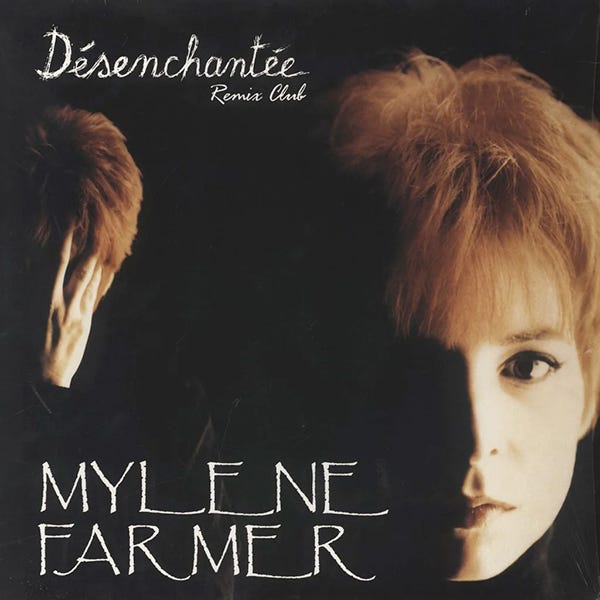
🌍 Why Mylène Farmer Never Conquered the World, Not Even Canada
Here is the paradox at the heart of Mylène Farmer’s career.
