

I‘ve never been a star-chaser
You know the type. The people whose knees go weak the moment they’re anywhere near a celebrity. Some of them get nervous just imagining it.
Bless them.
I’ve certainly had heroes I’d have loved to meet. One day I’ll tell you the story of how I came painfully close to meeting Neil Young, only to miss my chance at the very last moment. It still hurts.
But meeting famous people was never an ambition in itself.
Not even when I started working at Universal Music in the late 1990s.
Because of my role in catalogue and compilations, I jokingly told colleagues I was responsible for the “dead” artists. Whenever a major international act visited Belgium, they usually belonged to the frontline marketing teams, not mine. The pressure was elsewhere. Occasionally, though, our worlds crossed.
One of those occasions involved the artist at the heart of this week’s story.
After a sold-out concert in Brussels, the entire Universal Music staff lined up backstage to meet Mylène Farmer…. Or at least, that was the plan.
Mylène greeted the first group of employees, quietly shook a few hands... and then disappeared. She had simply had enough.
Looking back, it was the most Mylène Farmer thing imaginable.
She has always been famously shy, uncomfortable with the rituals that come with superstardom. Looking people in the eye during meet-and-greets wasn’t exactly her favourite pastime. After twenty or thirty percent of the queue had filed past, she politely vanished backstage, leaving the rest of us standing there.
For once in my life, I was part of the majority 😁.
Honestly?
It didn’t bother me.
It certainly didn’t change how I felt about her music. Because whether I shook her hand or not was beside the point. The remarkable thing about Mylène Farmer wasn’t the woman backstage.
It was the phenomenon she had become.
If you’re reading this from France, Belgium or Switzerland, that sentence probably sounds obvious. Mylène Farmer is nothing less than a cultural institution. More than sixty chart hits. More than fifteen number ones. Millions upon millions of records sold. A career spanning four decades.
Madonna was huge in France.
Mylène Farmer was bigger.
If, however, you’re reading this from Britain, the United States, Australia or even English-speaking Canada, there’s a good chance you’ve barely heard of her.
And that’s where this week’s story becomes fascinating.
Because Mylène Farmer wasn’t even born in France.
She was born in Canada.
That single fact opens the door to one of the most remarkable careers in European pop history, and, unexpectedly, to a much bigger story I’ve been researching for months.
The Twelve Inch is, after all, the story of how dance music kept reinventing itself, often by accident.
And few careers illustrate that better than Mylène Farmer’s.
Before we get to Désenchantée, the song that turned her into an icon, we first need to understand how a little girl born in Quebec ended up giving a voice to an entire generation in France.
👋 Welcome, I’m Pe Dupre, thanks for stopping by.
This is The Twelve Inch, a community about the history of dance music from 1975 to 1995, told one twelve-inch record at a time.
If this landed in your inbox because a friend forwarded it, I’d love for you to subscribe so you don’t miss the weekly episodes. Each one dives into a track, its story, and the culture around it.
And if you’re already enjoying the free posts, would you consider becoming a paid subscriber? Your support helps me keep researching, writing, and unearthing the stories behind the music. And You’ll get access to the weekly B-side post: the full archive and extra Subscriber Only Posts
🇧🇪 Two Countries, One Small Nation
To understand why Mylène Farmer became part of my musical life, you first need to understand the wonderfully complicated country I was born into. Belgium may be small, but culturally it often feels like two different countries sharing the same map.
In the north, where I grew up, the musical compass has traditionally pointed across the North Sea. Britain and the United States shaped what we listened to. The charts were dominated by Anglo-American artists, much like those in neighbouring Holland.
Head south, however, and everything changes.
The French-speaking part of Belgium naturally looks towards France. When an artist becomes a superstar in Paris, chances are they’ll become one in Wallonia too. As we sometimes joke over here, when it rains in Paris, it usually rains in Brussels as well.
Life, of course, has a habit of ignoring linguistic borders.
Long before I joined Universal Music, I had already crossed that invisible line myself. Some of my relationships were with French-speaking partners. Today I’m married to one. That meant I wasn’t just learning another language, I was discovering another musical universe.
While my own record collection was filled with Disco, Depeche Mode, Roxy Music and the Anglo-American artists I adored, another name kept appearing.
Mylène Farmer.
She wasn’t simply popular.
She was everywhere.
Albums, singles, television appearances, conversations. She occupied a place in French-speaking culture that few artists ever achieve. Seeing her live almost became inevitable. I’ve seen Depeche Mode five times over the years. Mylène isn’t far behind with four concerts.
By then I understood something that many people outside francophone Europe still don’t realise.
Mylène Farmer wasn’t just another successful French singer. She was one of the defining cultural figures of an entire generation.
Which makes the next part of her story all the more surprising.
Because despite becoming the biggest female star France had produced in decades...
she wasn’t French at all.
🇨🇦 Born in Quebec, Made in France
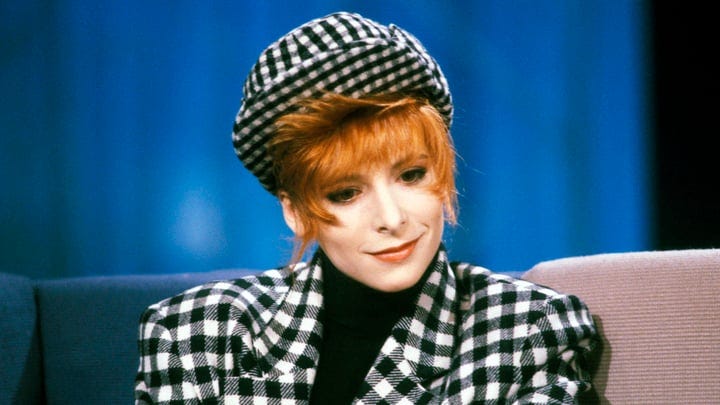
As you may already have guessed, Mylène Farmer isn’t her real name. She was born Mylène Jeanne Gautier in Pierrefonds, Quebec, in 1961.
But here’s another twist.
Her family wasn’t Canadian.
Her parents were French and, from everything I’ve been able to piece together, they hadn’t emigrated permanently to Canada. Her father was working on the construction of a hydroelectric dam, and when Mylène was eight years old the family returned to France, settling near Paris. The move wasn’t entirely seamless. Young Mylène had to take speech lessons to lose her Québécois accent.
To say it in Québécois : Comment ça se peut, tabarnak? 😁
(Or, roughly translated: How on earth is that possible?, followed by one of Quebec’s favourite expressions.)
At that point there was little to suggest she would one day become France’s biggest female recording artist. Her first love wasn’t music at all.
It was horses.
For years she dreamed of becoming an equestrian before eventually deciding to pursue acting instead. Around that time she adopted the stage name Farmer, a tribute to the troubled Hollywood actress Frances Farmer. It proved to be one of several life-changing decisions.
The next arrived when she met a young film student named Laurent Boutonnat.
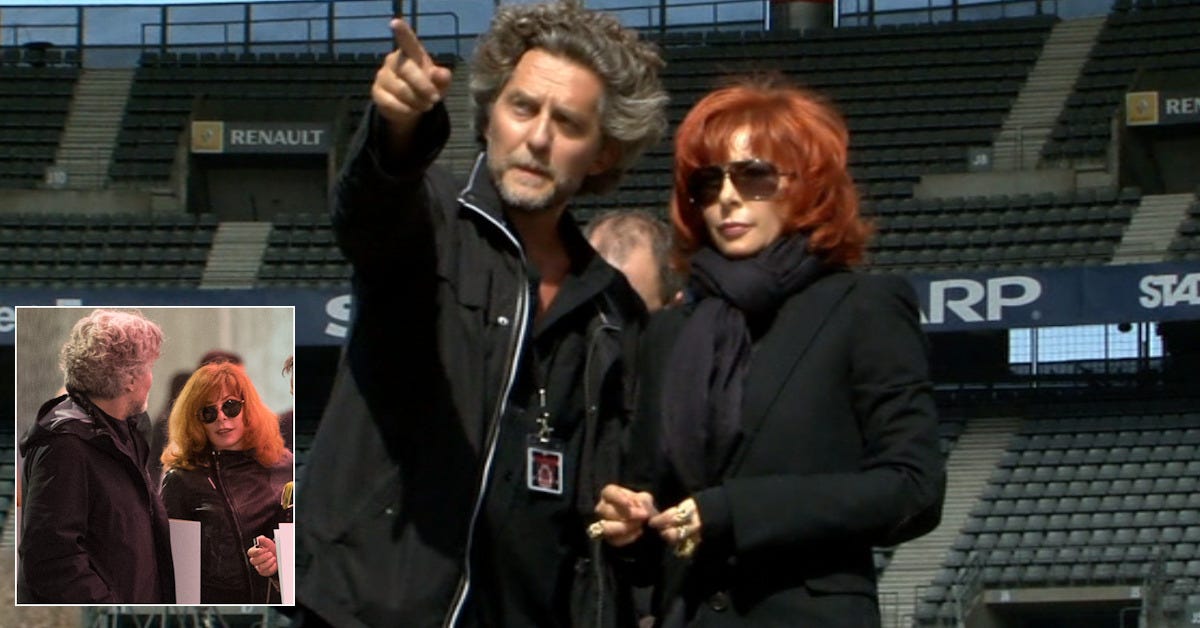
If Mylène Farmer became the face of one of Europe’s most fascinating pop careers, Boutonnat became its architect. He didn’t dream of becoming a record producer. He wanted to make films. That ambition would end up shaping everything they created together.
The pair began writing songs, with Boutonnat composing the music and Farmer writing the lyrics. But unlike most successful songwriting teams, they weren’t thinking only about records.
They were thinking in pictures.
This was the golden age of MTV, when music videos were becoming almost as important as the songs themselves. While many artists simply promoted a single, Farmer and Boutonnat created cinematic worlds. Their videos weren’t promotional clips. They were short films.
And remarkably, they persuaded their record company to finance them.
Success, however, didn’t arrive overnight. Mylène’s first label, RCA, dropped her after her second single, On est tous des imbéciles (Love the title😂), failed commercially.
It turned out to be one of the worst decisions the company ever made. Polydor signed her almost immediately.
After the modest success of Plus Grandir, everything changed with her fourth single, Libertine.
The song was a hit. The video became a sensation. Running for more than ten minutes and inspired by the visual world of Barry Lyndon, it featured lavish period costumes, candlelit scenes, mystery, eroticism and, for the first time, full frontal nudity by a French female pop singer.
Suddenly everyone was talking about Mylène Farmer.
More importantly, she and Boutonnat had found the formula that would define her entire career. He would write exclusively for her. She would write exclusively with him.
Unlike producers such as Stock Aitken Waterman, Trevor Horn or Giorgio Moroder, Boutonnat showed almost no interest in building a career with other artists. Everything he created was poured into this unique artistic partnership.
It gave Mylène Farmer something almost impossible to copy, a musical and visual identity that belonged to her alone.
And over the next few years, France couldn’t get enough of it.
🎤 From Pop Star to the Voice of a Generation
By the end of the 1980s, Mylène Farmer had become one of France’s biggest stars.
Her second album, Ainsi soit je..., confirmed that she was much more than a passing phenomenon. It became one of the country’s biggest-selling albums, produced her first number one single, Pourvu qu’elles soient douces, and reinforced the unique world she and Laurent Boutonnat had been building.
Nothing about Mylène Farmer was ordinary.
Even the music videos kept growing in ambition. The clip for Pourvu qu’elles soient douces stretched to an astonishing eighteen minutes, unfolding as an elaborate eighteenth-century drama complete with duels, scandal and, inevitably, controversy.
But there was one obstacle she still hadn’t overcome.
The stage.
Despite studying drama, Farmer remained painfully shy. The idea of performing in front of thousands of people terrified her. For years she resisted going on tour, worried that she simply wasn’t made for life in the spotlight.
Eventually she gave in.
In 1989 she embarked on her very first concert tour, a spectacular fifty-two date journey across francophone Europe.
It was also the first time I saw her live.
The contrast was striking.
The woman who seemed so fragile in interviews transformed completely once the lights went down. The theatrical staging, the elaborate costumes by Thierry Mugler and Boutonnat’s cinematic eye turned every concert into something closer to a film than a traditional pop show.
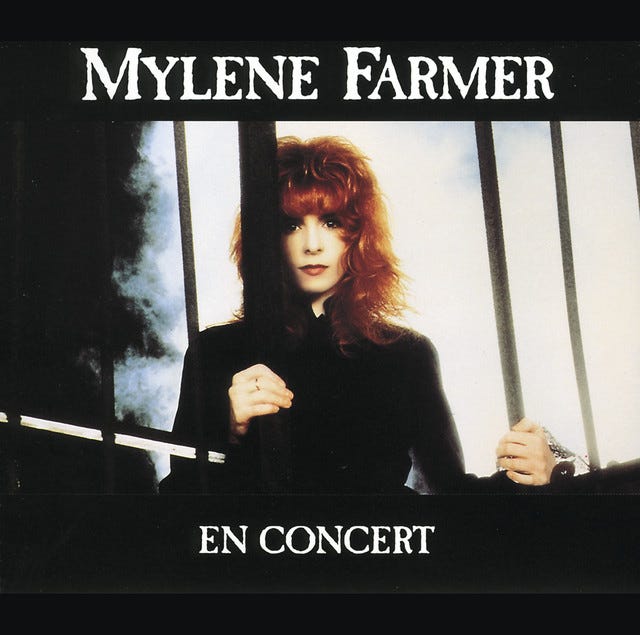
The audience wasn’t just watching songs. They were entering Mylène Farmer’s world.
From the outside, everything appeared to be perfect. Inside, however, something very different was happening.
When the tour finally ended, Farmer found herself emotionally exhausted.
She later admitted:
She added:
Rather than immediately returning to the studio, she withdrew.
She immersed herself in the poetry of Pierre Reverdy and Emily Dickinson, and became fascinated by the bleak philosophy of the Romanian writer Emil Cioran, particularly On the Heights of Despair.
Those months changed her.
When she finally reunited with Laurent Boutonnat to begin work on a new album, the songs looked beyond love, desire and personal obsession.
They confronted a much bigger subject.
Disillusionment.
One song captured that feeling more powerfully than any other.
It almost never made it onto the album.
Boutonnat struggled for weeks to find the right arrangement. Frustrated, he came close to abandoning it altogether. Only after several attempts, with the help of engineer Thierry Rogen, did the track finally come together.
The result would become not only the defining song of Mylène Farmer’s career...
...but one of the most important French-language pop records ever released.
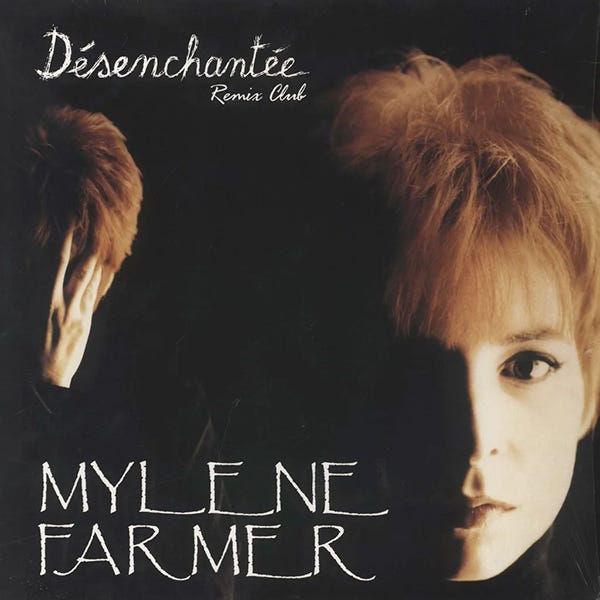
Its title was Désenchantée.
🎹 Désenchantée, When a Song Becomes Bigger Than Its Singer
Released in April 1991 as the lead single from L’Autre..., Désenchantée immediately felt different. The lyrics captured what Farmer later described as a “permanent loss of illusion.” Yet she never intended the song to be depressing.
As she explained:
That tension lies at the heart of the song. The words paint a bleak picture.
“Swimming in the troubled waters of tomorrow, waiting here for the end.”
“Nothing makes sense anymore, nothing is right anymore.”
“Everything is chaos, all around.”
Yet they are carried by an irresistible pulse of piano, synthesizers and a rhythm that practically demands movement. Even in its darkest moments, the song never completely surrenders to despair. Instead, it searches for hope.
“Yet I would like to rediscover innocence.”
“I’m searching for a soul who can help me.”
And perhaps most tellingly:
“If heaven has a hell, then heaven can wait for me.”
It was an unusual combination. A dance record that confronted uncertainty instead of escaping from it.
The timing couldn’t have been better.
France was experiencing student protests. The Gulf War dominated the headlines. Across Europe there was a growing feeling that the optimism of the 1980s had given way to something more uncertain. Without ever mentioning a specific event, Désenchantée somehow became the soundtrack to that mood.
It stopped being simply another Mylène Farmer single.
It became an anthem for an entire generation.
The public response was extraordinary.
The single reached number one in France within weeks and stayed there for nine consecutive weeks. It also topped the charts in French-speaking Belgium, reached the Top 10 in Quebec and crossed into countries such as Austria and the Netherlands.
For years it remained the best-selling single by a female artist in French chart history.
Its parent album, L’Autre..., became Farmer’s biggest studio success, spending twenty weeks at number one and eventually selling around two million copies.
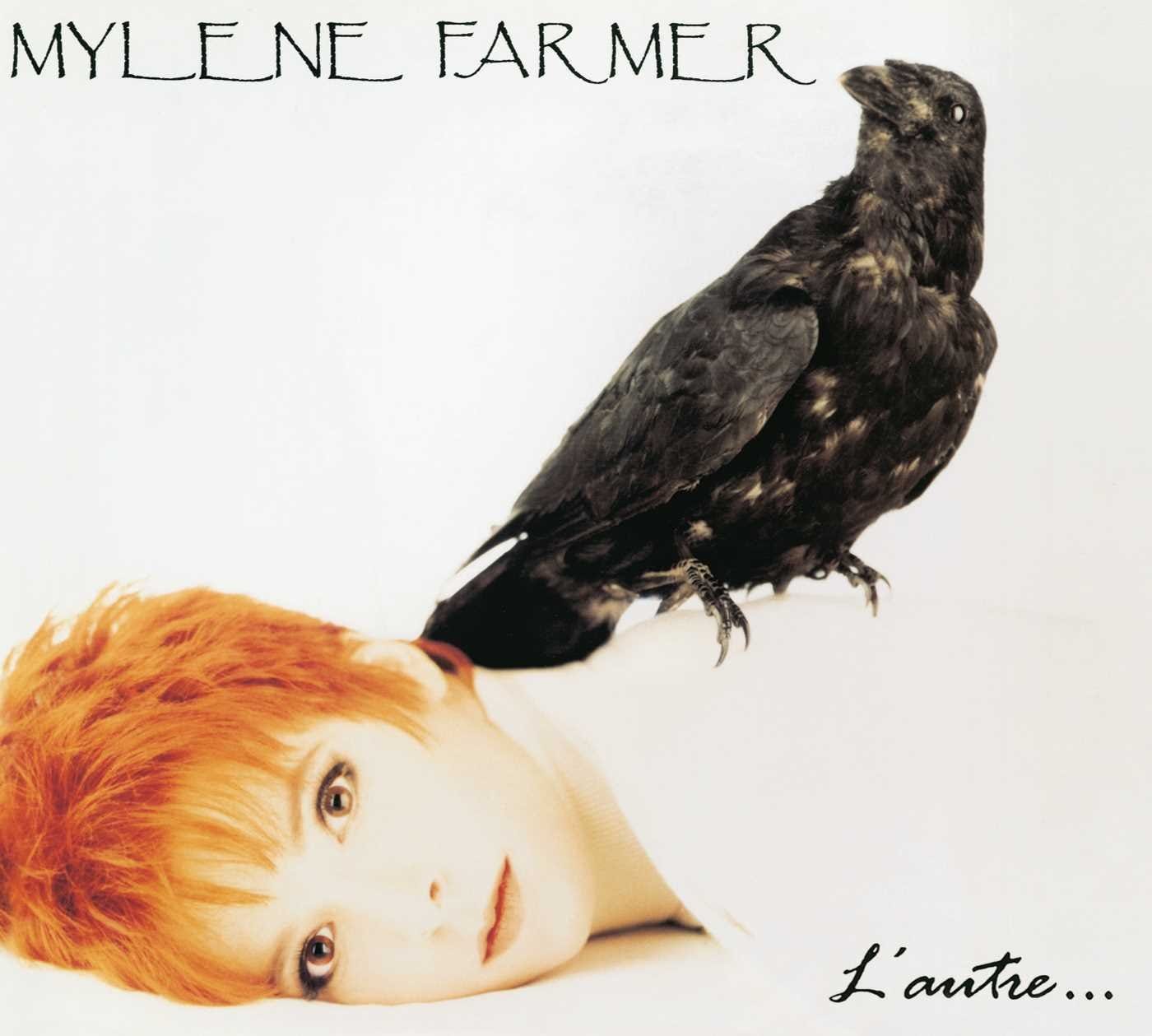
Everything had been building towards this moment. Her first albums had established the mysterious persona. Désenchantée transformed that persona into something much bigger.
From that point on, Mylène Farmer was no longer merely a successful pop artist. She had become a cultural institution.
And, as is so often the case in music history, success came with an unexpected price.
Only months after the album’s release, a disturbed stalker entered Polydor’s Paris headquarters demanding to see Farmer. When he was refused, he murdered the receptionist. The tragedy profoundly changed her.
Already naturally shy, Farmer withdrew even further from public life. She rarely gave interviews, carefully controlled her appearances and built a wall between herself and the outside world that largely remains to this day.
Ironically, the song that made her untouchable commercially also made her almost untouchable personally.
💿 More Than a Pop Star, A Dance Music Icon
For a newsletter called The Twelve Inch, I can’t finish without talking about the dancefloor.
Because although Mylène Farmer is often remembered for her spectacular videos and theatrical performances, her relationship with club culture was every bit as important.
Throughout the late 1980s and early 1990s, the extended versions of her singles became staples in clubs across France, Belgium and beyond. They weren’t afterthoughts produced simply to fill out a maxi-single. They were carefully crafted reinterpretations that gave DJs exactly what they needed, more space, more atmosphere and more time to let a record breathe.
It was another reminder that the twelve-inch wasn’t just a format. It was a way of experiencing music.
In late 1992, Farmer brought many of those versions together on Dance Remixes, a double album collecting fourteen extended mixes alongside a brand new single, Que mon cœur lâche.
True to form, she once again courted controversy.
The song tackled AIDS and sexuality, while its video, directed by Luc Besson rather than Laurent Boutonnat, imagined an angel in stead of a resurrected Jesus sent to Earth because, as God dryly remarks, “last time it was a disaster.” It was witty, provocative and unmistakably Mylène Farmer.
By then she could seemingly do no wrong.
She had earned the artistic freedom to keep reinventing herself, moving from synth-pop to rock, R&B and later electronic music, without ever losing the loyalty of her audience.
The Twelve Inch is, after all, the story of how dance music kept reinventing itself, often by accident.
Few artists embody that idea better than Mylène Farmer.
She was born in Canada.
She became France’s biggest female recording artist.
She created one of the defining European pop songs of the 1990s.
And yet, outside the francophone world, she remains remarkably unknown. That has always fascinated me. Because on paper, everything seemed to be in place for an international breakthrough.
She spoke fluent English. She even recorded songs in English. After the success of Désenchantée, there were clear signs that her team was at least exploring a wider audience.
It never happened.
Why?
That question eventually led me somewhere I hadn’t expected.
It led me back to Canada.
The deeper I dug into Mylène Farmer’s story, the more I realised it wasn’t just about one extraordinary artist. It was the gateway to a much bigger story, one that has consumed me for months.
The story of Canada’s surprisingly enormous contribution to dance music.
Most histories focus on New York, Philadelphia, Chicago, Detroit or London.
Canada is often little more than a footnote.
The more I researched, the more convinced I became that it deserves a chapter of its own.
A big one.😁
And that’s exactly where this week’s B-Side begins.
🎁 This Week’s B-Side
Of course, the story doesn’t end here.
On this week’s B-Side we’ll answer the question that has been hanging over this entire episode.
Why did Mylène Farmer, despite being born in Canada, speaking fluent English and becoming one of Europe’s biggest stars, never build an international career like Céline Dion?
We’ll also look at the remarkable cover version of Désenchantée that almost outsold the original, fourteen years after its release.
Finally, I’ll open the door to the project I’ve been quietly researching for months, the untold story of Canada’s role in the history of dance music. August will be cancon month on the Twelve Inch. It’s the biggest story yet and I’ll introduce it on this week’s B-side.
The B-side is where we go deeper.
It iIt’s paywalled, but for the price of 8 premium coffees, you get:
a full year of B-sides
access to 150+ deep dives
future stories across genres
And yes, payment in beans is still impractical 😁
Join the club. I’d genuinely love to have you on board.
The Twelve Inch is a growing community of people who love disco, eighties, and early-nineties dance music.
If you know someone who would enjoy these stories, feel free to share this post with them or pass it along on Substack Notes. Every share helps the music, and the community, travel a little further. 💿✨
Let’s Keep The Discussion Going 💬
Were you already familiar with Mylène Farmer, or is this your first introduction to one of Europe’s biggest pop icons?
Where does Désenchantée rank among your favourite French-language songs?
And can you think of another artist who became a national institution in one country while remaining almost invisible everywhere else?
I’d genuinely love to hear your memories, discoveries and opinions in the comments.
So You Wanna Hear More ?
I thought you would !
It’s fun to write about music but let’s be honest. Music is made to listen to.
Every week, together with this newsletter, I release a 1 hour beatmix on Mixcloud and Youtube. I start with the discussed twelve inch and follow up with 10/15 songs from the same timeframe/genre. The ideal soundtrack for…. Well whatever you like to do when you listen to dance music.
Listen to the Soundtrack of this week’s post on MIXCLOUD
Or On Youtube :
There were so many phenomenal, world-building women artists coming out of Canada in the late 80s. Mylène Farmer, Dalbello, Jane Siberry, and Mary Margaret O'Hara immediately come to mind.
My ponderings on this subject tend to head in the same direction as yours. The main reason for not crossing over (like Celine) is that she knows who she is and what she wants to do. I don't get the sense that global fame and what that entails is on her wish list. Quite the opposite in fact as she seems to relish anonymity.
"Giorgino" was a disaster, but it scratched an itch for both Laurent and Mylène. After that, Mylène seems to have found that she preferred creating short music films and huge live shows to taking direction as an actress. Being put on the back burner by Laurent for the movie probably had a lot to do with the future direction of her career too. Tellingly - Laurent's name is nowhere to be found in the "Nevermore" credits and remerciments save for the songs that he composed.
Timing is a big deal too. I live in the USA and discovered her at an FNAC in Brussels during a business trip when "Anamorphosée" was being promoted. I looked for her in my local record stores but found nothing. Johnny, Edith, and Celine's "D'eux" - yes, but Mylène? Elle ne existe pas. It wasn't until streaming services started offering unlimited streaming and downloads that I was able to explore the rest of the rest of her discography and discover her videos.
And "Yes!" on her Frenchness. I've listened to the English versions of her early hits ("My Mum Is Wrong", "Bad Girl", "My Soul Is Slashed"), and they don't do justice to the lyrics of the originals. French is a much better language for playing with words and sounds than English. I'm glad she stayed true to her self by making English an exception that is done mainly via bilingual duets.
A side note about Canada - I discovered the "Canadian Madonna" during the same trip that I discovered Mylène. Her name is Mitsou, and she's actually more like Cyndi Lauper than M. She is another artist who eschewed the international pop scene. She released a single compilation album in Europe and it didn't catch on. She continued to do songs in French and English in Canada until ~2005 before moving on to become a radio personality. Like Mylène and unlike Celine, she had little interest in global stardom. And like Mylène, she's not known for having the huge voice that Quebecois use as their primary metric for deciding who can and cannot sing. French-speaking Canada has never taken a big enough interest in Mylène for her to take her shows there.