💄 Lipstick in the Disco Era, The Accidental Dancefloor Moment of Michel Polnareff
The Twelve Inch 202 : Lipstick (Michel Polnareff)
When I started writing this newsletter, I drew up a list of songs I wanted to cover. Quite a few were tracks that became big dancefloor hits almost by chance, moments that felt less like strategy and more like happy accidents. This week’s record fits perfectly into that category.
“Lipstick” by Michel Polnareff reached the Top 5 on the Billboard dance charts and became a fixture on American dancefloors. Yet Polnareff, one of France’s most important artists, never chased disco before and barely touched it afterwards. Or did he? The song appeared during his exile in the US, after signing with Atlantic Records, a highly unusual path for a French artist at the time.
Polnareff was, and still is, a meticulous perfectionist, the opposite of the raw punk energy of last week’s protagonist Pete Shelley. So I wanted to understand the backstory. Why record in English? Why go disco for just one song? Was it a deliberate move or a natural evolution? And why not continue, especially when disco was booming and many of his fellow French musicians were embracing it?
The story wasn’t easy to retrace. His autobiography offers only brief references to this American period. He mentions being n°1 on the dance charts, which isn’t exactly accurate (it was n°5), but enough clues emerge to piece together a credible narrative. What becomes clear is that if Polnareff glosses over the disco episode, it is likely because he did not consider it central to his career. For many Americans though, it was their only encounter with him.
To balance the picture, I asked my trusty friend Brad Kyle to provide the American perspective, especially on the Atlantic album (in English) aimed at the US market.
So grab a croissant, and dig in. Next stop, Paris, and the beginning of one of the most remarkable careers in French music history.
👋 Welcome, I’m Pe Dupre, thanks for stopping by.
This is The Twelve Inch, my newsletter about the history of dance music from 1975 to 1995, told one twelve-inch record at a time.
If this landed in your inbox because a friend forwarded it, I’d love for you to subscribe so you don’t miss the weekly episodes. Each one dives into a track, its story, and the culture around it.
And if you’re already enjoying the free posts, would you consider becoming a paid subscriber? Your support helps me keep researching, writing, and unearthing the stories behind the music.
🎹 The Beginning of a Remarkable Career
Michel Polnareff is less internationally known than Serge Gainsbourg or Johnny Hallyday, but in France he belongs to the pantheon of major artists. He wrote some of the most beloved French chansons, songs woven into the country’s collective memory.
He also cultivated a strong visual identity, most famously the white-rimmed sunglasses he has worn since the early seventies. Were they medical, theatrical, or both? As with many things Polnareff, the answer is somewhere in between.
Born in Paris in 1944 to a Jewish-Ukrainian father and French mother, he grew up in a strict artistic household. His mother was a jazz dancer, his father composed for post-war French icons such as Edith Piaf. Childhood was far from easy. Polnareff later said, “My father made my life difficult and denied me a childhood.”
Forced into classical piano at the age of four, he eventually left home at twenty and played guitar in Paris cafés around Montmartre. There he wrote what would become his first major hit, La Poupée Qui Fait Non. He later recalled:
📻 The Early Breakthrough and Rising Fame
In 1965 he won a talent competition organised by Disco Revue, but famously refused the prize, saying:
Soon after, radio mogul Lucien Morisse signed him to Disc’AZ. When Morisse wanted to record La Poupée Qui Fait Non, Polnareff demanded London studio musicians:
Morisse said yes, and the hit launched a run of successful singles across Europe. An instrumental version of Âme Caline, retitled Soul Coaxing, even became a US radio favorite.
Yet fame weighed heavily. Depression and vision problems followed. In 1970 he was attacked on stage and stopped touring. That same year, Morisse committed suicide, a devastating blow.
After a year away, Polnareff returned transformed, bleached hair, white sunglasses, and a more androgynous image. His 1971 album Polnareff’s became his artistic masterpiece, mixing rock, jazz, soul, and orchestral ambition, influenced by Burt Bacharach and The Moody Blues.
He also entered film scoring, starting with La Folie Des Grandeurs, while continuing to provoke. For the 1972 Polnarevolution campaign he wore a dress and posed lifting that dress to reveal his bare behind, leading to a conviction and a hefty fine.
Things worsened when he discovered his manager had disappeared with his money and failed to pay taxes. Ruined, Polnareff had no choice but to leave France.
✈️ Exile in America and the Atlantic Years
Polnareff arrived in New York, then settled in Los Angeles. Through photographer Daniel Filipacchi he met Atlantic Records founder Ahmed Ertegun, landing a US contract.
His first Atlantic album in 1974 remained fully French. The next, in 1975, was entirely in English, an attempt to conquer America. The result was modest, the single Jesus For Tonight reaching only n°48.
At this point, Brad Kyle steps in with the American perspective on the English material.
This is what the U.S. Atlantic Records promo copy of the self-titled 1975 Michel Polnareff album I once owned looked like.
This self-titled 1975 album was my introduction to the then-30-year-old French singer/songwriter, Michel Polnareff. I was 20, and transitioning myself from a year as Music Director of the University of Houston’s campus KUHF-FM (with a daily, 3-hour afternoon on-air shift) to my first pro gig at Houston’s leading progressive rock FM-er, KLOL, as a part-time fill-in jock.
I remember auditioning the album for my college soft rock/MOR show, and opted against featuring any of his new tracks, and his style had no place among KLOL’s daily rock rotations of Stones, ZZ Top, and the like!
For the first time in his recording career, though, Polnareff recorded an album in English, and Atlantic Records had the herculean task ahead of them in promoting their new artist to America!
This was the 1975 musical milieu (aka their mountain to climb) in which the label found itself:
“Love Will Keep Us Together” – Captain & Tennille
“Rhinestone Cowboy” – Glen Campbell
“Philadelphia Freedom” – Elton John
“Before the Next Teardrop Falls” – Freddy Fender
“My Eyes Adored You” – Frankie Valli
“Shining Star” – Earth, Wind & Fire
“Fame” – David Bowie
“Laughter in the Rain” – Neil Sedaka
“One of These Nights” – Eagles
“Thank God I’m a Country Boy” – John Denver
But, in our Billboard-generated Top 10 for the year, we see that a clear seven of those artists were solo male performers! So, if Atlantic was looking for a greased runway off which to launch Monsieur Polnareff in the States, that may have been an optimistic forecast for them! But, longtime label chief, Ahmet Ertegun, knew he had an uphill battle in “selling” Polnareff to middle America!
A.I. was kind enough to spit out this observation about Ertegun’s motivation, likely collected from Atlantic press-kit copy of the day or similar: “Ertegun saw potential in Polnareff as a ‘pop genius’ capable of crossing over from the French market, according to press materials and record company history.” A piano player, perhaps Atlantic suits saw, in Polnareff, a sort of French Elton John.
He was certainly nurturing a similarly flamboyant rep in Europe! ‘Twas worth a roll of the dice, especially considering the Frenchman’s veteran status…they weren’t exactly nurturing a rookie.
Dick Clark interviews Michel on a 1976 American Bandstand:
Guesting on his self-titled American debut in ‘75 was a veritable army of stellar studio stalwarts (see the entire list here). Produced by Polnareff, he was joined in the booth by such veteran knob-twirlers as Bill Halverson, Bill Schnee, and Greg Prestopino.
Backing vocalists on the album included Andrew Gold, Bobby King, Brooks Hunnicutt, Jennifer Warnes, Leah Kunkel, Lewis Furey, Terry Evans, and Valerie Carter, among others.
Electric guitarists, along with Polnareff, included Andrew Gold, Gary Stovall, Lee Ritenour, and Steve Cropper.
Polnareff wrote the music for all the songs on this album, but he employed a handful of lyricists for them, including Parliament funk-meister, George Clinton (with Carly Simon’s fave wordsmith, Jacob Brackman, on “Jesus For Tonight”), Prestopino, and Carole King’s Tapestry lyricist on two songs (“It’s Too Late,” “Where You Lead”), the late Toni Stern:
One of the bouncier and catchiest tunes on the album opens side 2: The Polnareff/Stern tune, “Come On Lady Blue”:
The other Polnareff/Stern collab was called “No, No, No, No, Not Now”:
Just a couple years after Toni Stern wrote lyrics for two of Polnareff’s songs on his self-titled Atlantic album, she wrote “I’ve Just About Given Up Hope” with exclusive FRONT ROW & BACKSTAGE contributor, Stephen Michael Schwartz (self-titled album on RCA Records, 1974).
Listen to the song, recorded live (on cassette…the song was never demo-ed for publishers by Stephen) at Pasadena’s (CA) Ice House, late-1970s, here, as Stephen also reveals how his imminent divorce (from voice actor, Wendy Schaal, American Dad’s Francine) inspired some of Toni’s lyrics. Featured on oboe and harmony vocals is Janice Hubbard, Stephen’s eventual bandmate in Parachute Express, popular worldwide children’s music trio from the ‘80s thru 2011 (Disney Records):
🕺The Move To Disco
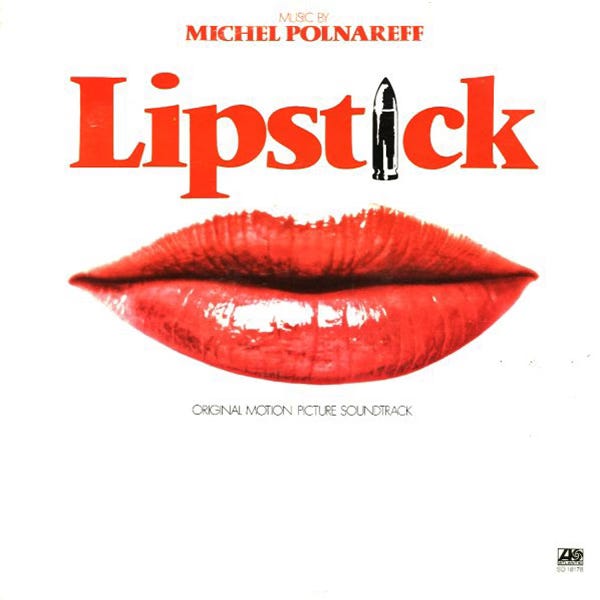
The bigger success in the US for Polnareff came from a different angle. In 1976 Polnareff scored Margaux Hemingway’s controversial film Lipstick. The theme song, perfectly suited to pre–Saturday Night Fever dancefloors, was extended and promoted to DJs. The result, a Top 5 position on the Billboard disco action chart.
Yet mainstream success didn’t follow. Lipstick reached only n°61 on the Hot 100, and his English album stalled at n°117 in the album charts.
By 1977, the American dream was fading. His final Atlantic single, Lettre à France, revealed deep homesickness. He later said:
💃 Why Go Disco at All?
Was Lipstick a one-off accident, or the logical next step?
It was his first true dance record, but not completely out of character. His 1971 work already showed interest in funk and R&B, and the instrumental Voyages feels like an early blueprint for the disco direction.
Once in America, Polnareff witnessed the 1975–76 disco boom firsthand. The Philly sound was everywhere. It made sense that he would try it.
Studio musicians also shaped the result. David Foster’s Rhodes and clavinet, Jimmie Haskell’s strings and horns, and a tight rhythm section pushed Lipstick toward a refined orchestral disco style, elegant rather than purely club-driven.
🛑 Why Didn’t He Continue?
The fact that Lipstick was a soundtrack already suggests it wasn’t meant as a career shift. His 1975 English album leaned more toward country and avoided R&B influences altogether.
He did revisit disco later, though. In 1980 he teamed with Michel Colombier as Max Flash, in the group Ménage à Trois, producing pure disco-funk. The project failed commercially.
Still, Polnareff was proud of Lipstick. He wrote:
The larger issue was legal and financial.
Building a disco career simply wasn’t his priority.
🌴 Life After Lipstick
Although homesick, Polnareff stayed in Los Angeles even after his legal issues were resolved. He returned briefly to France in 1984, then moved back to LA, where he still lives.
His relationship with both countries is perfectly summed up in his own words:
“I am French in culture and American in music. You have to take the best from everywhere”
And the white glasses? Both style and necessity. He suffered from severe myopia and later cataract surgery, but they also symbolised a boundary between public and private selves:
Living in Los Angeles allowed him to be Michel, anonymous in daily life, something impossible in France.
🔁 The Story Continues
Lipstick remains a fascinating anomaly, a moment where exile, opportunity, disco culture, and circumstance briefly aligned. It wasn’t a reinvention, just a detour. But sometimes those detours leave the strongest footprints on the dancefloor.
And that is exactly what this series keeps uncovering…
The Twelve Inch is the story of how dance music kept reinventing itself, often by accident.
💬 Join the Conversation, Your Turn
I’d love to hear your take, because these accidental dancefloor moments always spark strong opinions among readers.
Was Lipstick a true disco record in your opinion, or more of a one-off soundtrack experiment?
Do you hear the seeds of dance music already in Polnareff’s earlier work, or does this track feel completely separate from his core identity?
Have you discovered artists who accidentally crossed into dance music, only to never return?
If you were on American dancefloors in the mid-70s, what was your memory of hearing Lipstick for the first time?
And finally, should Polnareff have leaned further into disco, or was he right to keep it as a unique chapter?
Drop your thoughts in the comments, I read every one of them, and many of your insights end up shaping future episodes.
Further reading (or should I say watching)
There are a number of interesting video’s/links :
So You Wanna Hear More ?
I thought you would !
It’s fun to write about music but let’s be honest. Music is made to listen to.
Every week, together with this newsletter, I release a 1 hour beatmix on Mixcloud and Youtube. I start with the discussed twelve inch and follow up with 10/15 songs from the same timeframe/genre. The ideal soundtrack for…. Well whatever you like to do when you listen to dance music.
Listen to the Soundtrack of this week’s post on MIXCLOUD
Or on Youtube :
So what’s in this week’s mix ?
The deep dive into the sounds that shook the US dancefloors in 1976 kicks off with the extended version of Michel Polnareff’s “Lipstick”, followed by two instrumental dance classics from the era: MFSB’s “Sexy” and the THP Orchestra version of “Theme From S.W.A.T.”
Big names are here too, Donna Summer with one of the standout cuts from her Four Seasons album, “Autumn Changes”, alongside Candi Staton’s timeless anthem “Young Hearts Run Free.”
As always, there’s plenty of room for deeper cuts, including Bobby Moore’s “Try To Hold On,” Joe Thomas’ “Massada,” and The Quickest Way Out with “Thank You Baby For Loving Me.”
Starting with Gloria Gaynor’s “Walk On By” and Carl Carlton’s “Live For Today, Not For Tomorrow,” the energy keeps building toward a supercharged finale, the absolute dancefloor burner that is Rose Royce’s “Car Wash.”
Enjoy! 🎶
What is the best-selling single in the history of Atlantic Records, and why does its story begin with the artists being refused entry to Studio 54?
I’ll tell the full story in next week’s The Twelve Inch.


Three things:
1) “Lipstick” is a total jam. I love that ‘76 disco sound. Any idea who the musicians were on that track?
2) I was completely unaware of the Polnareff’s album, but your description inspired me to check it out on iTunes… and now I’m scouring Discogs for a nice vinyl copy of this wonderful LP!
3) Have you heard The Birds (Ron Wood’s mod band) covering “La Poupee…”? It was actually the first version of the song I ever heard…
https://youtu.be/D7KM64x_iFc