

Welcome to the B-side.
This is where things get a little closer to the source.
The parts of the story that don’t always make it into the main piece. The details behind the sound. The personal notes. And the versions that really tell you how a track worked on the dancefloor.
If you missed the A-Side story, you can read it here. 👇
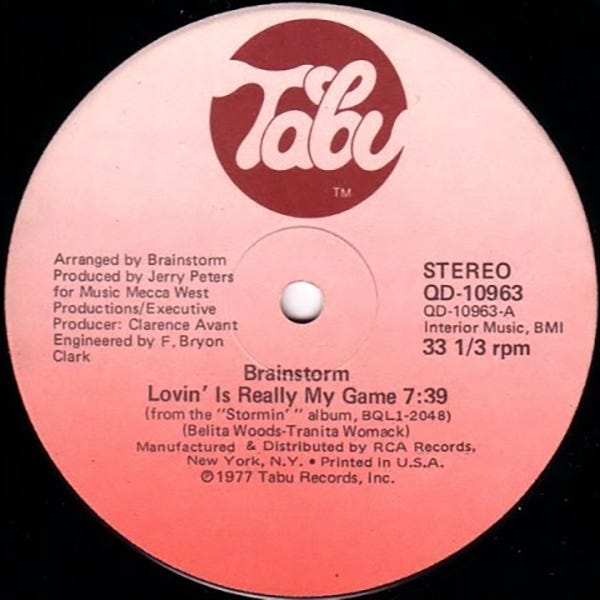
Detroit Between Motown & Techno 🚗🔥: Brainstorm, Lovin’ Is Really My Game and the forgotten dancefloors of the Motor City

🚦The Missing Chapter In Detroit’s Music History
Every twelve inch had a B-side where the DJs and collectors found the extra tools: beats, dubs and alternate versions.
This is the B-Side of this week’s episode, where we dig deeper into the story behind the record. Read it in one go or enjoy the different sections on different moments. The choice is yours
🥁 Mix 1 — The Beats

🥁 Detroit Between Motown & Techno 🔥 The Lost Dancefloors That Changed Music History
One of the reasons I wanted to write this week’s episode is because I kept bumping into the same strange gap. When people talk about Detroit music history, the story usually goes something like this:
Motown.
Then… nothing.
Then Techno.
As if one of America’s greatest music cities simply stopped creating culture for more than a decade.
The more I dug into the story behind Brainstorm and Lovin’ Is Really My Game, the more obvious it became that this version of history doesn’t hold up. In fact, it hides one of the most fascinating and overlooked chapters in dance music history.
Detroit didn’t go quiet after Motown left for Los Angeles in 1972.
Quite the opposite.
The city developed a thriving dance culture that connected soul, funk, disco, New Wave and eventually techno. And while New York tends to get most of the attention, many of the ideas that would later define electronic dance music were already being tested on Detroit dancefloors.
Let’s open the crate a little deeper.
🪩 From Funk Bands To Disco Dancefloors
Before disco became a mainstream phenomenon, Detroit clubs were dominated by live funk bands. The city was full of R&B groups that gradually expanded their sound. Horn sections got bigger. Arrangements became richer. Strings started appearing alongside drums, guitars and keyboards.
Longtime Detroit DJ Felton Howard summed up the transformation beautifully: “If you took classical and put it with a funk band that had a full piece, you got disco.”
What I love about that quote is how perfectly it captures the reality of the period. There wasn’t a switch that suddenly flipped from funk to disco. The two worlds coexisted. Especially in Black clubs.
Howard recalled that you couldn’t simply play Gloria Gaynor’s I Will Survive and ignore the funk records everybody loved. If you played Gloria Gaynor, you also needed Brick House by the Commodores.
The crowd wanted both.
And for a while Detroit’s dancefloors became a fascinating balancing act between old and new.
Then economics entered the picture.
A live funk band could cost a club owner around $500 a night.
A DJ cost roughly $50.
And the DJ had every hit record in America. Suddenly the future looked very obvious. Club after club made the switch. The 20 Grand, a favourite hangout of Motown artists, embraced disco. Soon venues like Millie’s, Ethos, Wash’s Flamingo and the Pink Poodle followed.
Radio moved just as quickly.
Stations such as WJLB, WCHB, WLBS and WGPR put their DJs directly into clubs. Personalities like Tiger Dan, Jay Butler and Al Perkins became voices on the radio during the day and tastemakers on the dancefloor at night.
The connection between radio and club culture became seamless. But the most important story was happening elsewhere. And like so many important stories in dance music, it was unfolding largely out of sight.
What happened next is the missing chapter in Detroit’s musical history.
The story takes us into Black gay after-hours clubs, legendary DJs, disco battles, underground radio, and the direct line between disco and the future inventors of Techno.
