

Welcome to the B-side.
This is where things get a little closer to the source.
The parts of the story that don’t always make it into the main piece. The details behind the sound. The personal notes. And the versions that really tell you how a track worked on the dancefloor.
If you missed the A-Side story, you can read it here. 👇
🚀 Hills of Katmandu: How Italy Sent Disco Back to America and Changed the Dancefloor Forever

I remember it well, the first time I came across Italian Disco.
Every twelve inch had a B-side where the DJs and collectors found the extra tools: beats, dubs and alternate versions.
This is the B-Side of this week’s episode, where we dig deeper into the story behind the record. Read it in one go or enjoy the different sections on different moments. The choice is yours
🥁 Mix 1 — The Beats
🔊 What Do We Call This Music, Italo Disco, Italo Dance or Just Italo?
One of the funniest things about music history is that the names often arrive after the music does.
Scenes are built in clubs, studios and record shops long before journalists, labels and collectors decide what to call them. That is exactly what happened here. So you can ask yourself this simple question: What is the right term, Italo Disco, Italo Dance, or simply Italo?
A fair question, because the answer changes depending on time, sound and context. And if we want to understand why a record like Tantra’s Hills Of Katmandu matters, it helps to get the language right first.
So let’s untangle the knot.

🎹 Italo Disco, The Original Eighties Sound
Italo Disco is the historical genre that emerged in the late seventies and exploded in the early eighties.
Think:
drum machines
analogue synths
catchy hooks
melodic basslines
often English-language vocals
records made for clubs, exports and dancefloors
This is the world of Italian producers building their own version of disco after the American backlash. So yes, Tantra absolutely belongs in that story, even if it also leans into space disco, progressive ideas and early Hi-NRG. For practical purposes, Italo Disco runs roughly until 1988, when house music starts reshaping Europe’s club scene.
But here comes the twist.
The Italian producers did not disappear.
They simply evolved into the next phase.
💿 Italo Dance, A Different Generation
Italo Dance, sometimes written Italodance, is a much later style.
It mainly appears in the mid-nineties and draws more from:
Eurodance
commercial club pop
piano riffs
brighter hooks
faster digital production
It is linked to Italy, yes. But it is not the same movement as the original eighties Italo Disco scene.
Same country, different chapter.
🇮🇹 And What About “Italo”?
This is where confusion enters the room.
Italo is often used as a casual umbrella term for Italian dance music. Depending on who is speaking, it can mean:
classic Italo Disco
later Italo Dance
Italian club music in general
any synthy Italian import from the era
Useful in conversation, risky in research. If someone says “I love Italo,” you may need a follow-up question 😁

🧠 Who Invented the Name Italo Disco?
The term Italo Disco is most commonly linked to ZYX Music and its founder Bernhard Mikulski. ZYX specialised in licensing and exporting Italian dance music, especially into Germany and Northern Europe. Mikulski is widely credited with coining or at least popularising the label through compilation albums in the early eighties.
To be historically careful, the safest wording is this:
ZYX and Mikulski popularised, and likely coined, the term Italo Disco. That is more accurate than pretending the paperwork is airtight.
📼 How Should We Use These Terms Today?
Here is the cleanest guide.
Use Italo Disco when you mean:
the eighties sound
synth-led Italian club music
classic producers and exports
records like Tantra, Kano, Gazebo, Ryan Paris, Fun Fun, etc.
Use Italo Dance when you mean:
mid-nineties onward
Italy’s Eurodance branch
radio-club crossover acts
Use Italo when you mean:
broad shorthand
casual discussion
not strict genre writing
Useful, but vague.
🕺 What About Late Seventies Italian Dance Music?
This is where it gets interesting, and where many collectors disagree.
For late seventies to early eighties Italian electronic club records, Italo Disco is usually the best modern shorthand, even if the term did not yet exist at release date.
But if a record leans more toward:
straight disco
Hi-NRG
funk
pop
…then those narrower labels may be more precise than automatically saying Italo Disco.
Which brings us back to Tantra. Hills Of Katmandu is Italo Disco, yes. But it is also more than that. It is one of those bridge records that stretches the category itself.
⚡ Practical Rule for Fast Use
Need a quick shortcut? Use this:
1978 to 1985-ish, synthy, clubby Italian records
➡️ Call it Italo Disco
1990s Italian Eurodance
➡️ Call it Italo Dance
General conversation
➡️ Italo is acceptable, but too vague for serious cataloguing or writing.
🎁 B-Side Collector’s Question
I’m curious how you use the term.
Do you call Tantra, Change, Klein & MBO, Kano and Gazebo all Italo Disco? Or do you prefer finer distinctions like space disco, electro disco, Hi-NRG or post-disco?
Paying subscribers are the serious heads here, so tell me how you catalogue this world.
Because sometimes the most revealing thing in music history is not the record.
It is what we choose to call it.
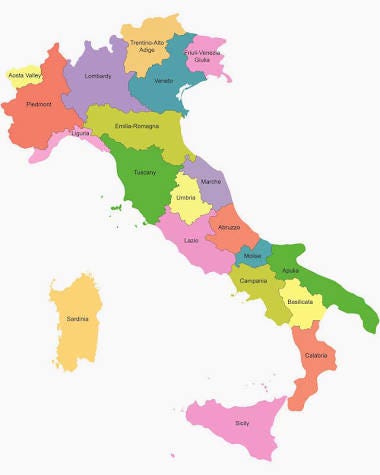
🇮🇹 How Italian Politics and Society Created the Perfect Conditions for Italo Disco
Genres rarely appear by accident.
They emerge when culture, economics, technology and timing suddenly align. That is exactly what happened in Italy.
Many people hear Italo Disco and think only of synths, neon sleeves and irresistible hooks. But behind that glossy sound sits a deeper story, one shaped by political conflict, economic pressure, youth identity and a country learning how to turn creativity into industry.
So here is the real question:
Why did Italy, more than any other European country, become such a powerhouse of dance music in the late seventies and eighties?
