

Welcome to the B-side.
This is where things get a little closer to the source.
The parts of the story that don’t always make it into the main piece. The details behind the sound. The personal notes. And the versions that really tell you how a track worked on the dancefloor.
If you missed the A-Side story, you can read it here. 👇
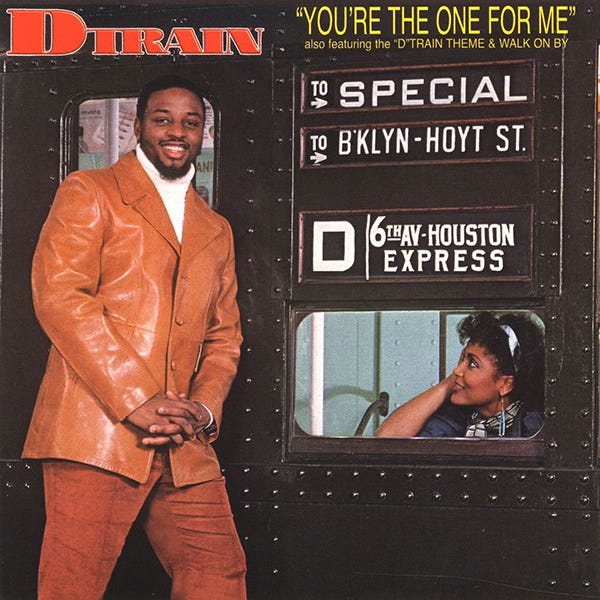
D Train’s “You’re The One For Me” 🎹 | The Post-Disco Bomb That Helped Build House Music

Some Songs Arrive With a Memory, Others Simply Become Part of You ✨
Every twelve inch had a B-side where the DJs and collectors found the extra tools: beats, dubs and alternate versions.
This is the B-Side of this week’s episode, where we dig deeper into the story behind the record. Read it in one go or enjoy the different sections on different moments. The choice is yours
🥁 Mix 1 — The Dub
How Dub Mixes Became Dance Music’s Secret Weapon 🕺
If there is one format that became essential to dance music’s evolution almost by accident, it is the dub mix.
And yes, this week we are shaking up the usual B-side order a little. It would feel rather strange to discuss the importance of the dub version in the Beats section, wouldn’t it? 😂
For anyone who bought twelve inches in the eighties, seeing “Dub Version” written on the B-side was often a major selling point. Sometimes that label hid nothing more than a simple instrumental under a sexier name. But sometimes, the dub was the real treasure, a version that transformed the original song into something entirely different.
Some remixers built entire careers on mastering that craft. Arthur Baker, The Latin Rascals and Shep Pettibone all became famous in part because of the quality of their dub work.
But before any of them, and before dub became standard practice in remix culture, one question matters:
Where did the dub actually come from, and why did it become so important?
Because once you understand that answer, you understand why a record like D Train’s “You’re The One For Me”mattered so much beyond its vocal version.
From Jamaica To New York 🌍
The word dub originally comes from reggae.
In Jamaican studios during the seventies, producers had begun experimenting with deconstructing finished tracks, stripping songs down to their most basic parts, bass, drums, rhythm fragments, then rebuilding them into something new.
As they did so, they manipulated the sound heavily: adding reverb, delay, creating space and atmosphere and transforming instruments into textures rather than melodies
The end result often sounded radically different from the original track.
So yes, reggae gave us dub, both as a concept and as a production technique.
And when dance music became increasingly electronic in the late seventies and early eighties, those same ideas began entering disco and post-disco.
Why DJs Fell In Love With Dub 🎧
François Kevorkian often described dub as a DJ tool, something that allowed DJs to take a song further than the original arrangement would permit.
He specifically pointed to D Train as an example of a record where the dub could function almost like a tool for overlaying and reshaping the mood.
Because that is the crucial thing to understand:
The dub was not just an alternate version. In many clubs, it became the preferred version.
Why?
Because dubs gave DJs:
more space to build tension
more room to manipulate atmosphere
more rhythmic freedom
fewer vocals interrupting the groove
And nowhere was that more important than at one particular nightclub.
The Paradise Garage Effect 🕺
The second major factor in dub’s rise was The Paradise Garage.
Paradise Garage DJs gravitated toward dub versions because they perfectly suited the club’s musical philosophy: long, hypnotic, percussion and bass driven journeys, where vocals became texture rather than centerpiece.
Dub mixes like François K’s “Keep On” mix gave Garage resident DJ Larry Levan far more freedom to shape the night emotionally. Levan’s reputation was built on atmosphere and pacing.
Contemporaries recall him as a DJ who:
built his sets slowly
loved using breakdowns and unexpected “curveballs”
was unafraid to reduce tracks to bass, drums and fragments
Dub versions gave him the ideal blank canvas. Because with their extended drum passages, stripped-back arrangements, reduced verse/chorus structures and heavy use of effects, they allowed him to loop sections mentally and emotionally, tease the crowd, layer moments of tension and release and create something close to a live experience
François Kevorkian later explained his own philosophy this way:
That “wildness” became one of the defining features of eighties remix culture.
But here is where the story gets even more fascinating.
Because if dub versions sounded raw, spontaneous and alive…
that is because they literally were.
