
The Twelve Inch #205 - The B-Side : Beats, Acapella & Dub: OT Quartet
The Twelve Inch 205 : Hold That Sucker Down (O.T.Quartet)

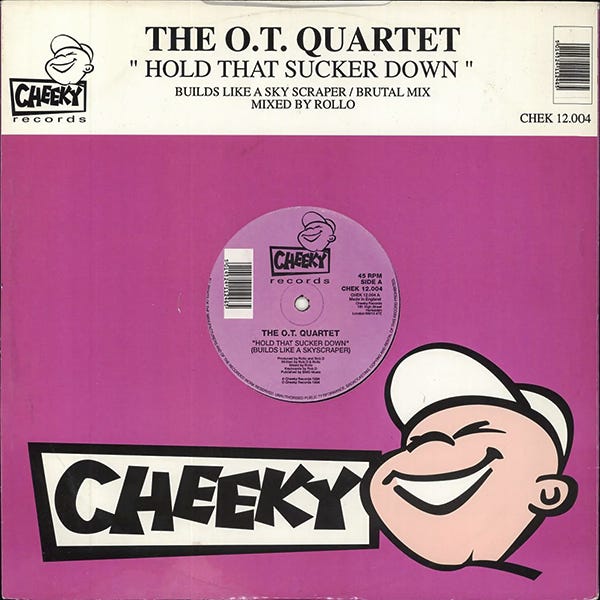
This is the B-Side to this week’s episode.
If you missed the A-Side story, you can read it here. 👇
or the video version :
Every twelve inch had a B-side where the DJs and collectors found the extra tools: beats, dubs and alternate versions.
This is the B-Side of this week’s episode, where we dig deeper into the story behind the record. Read it in one go or enjoy the different sections on different moments. The choice is yours
🥁 Section 1 — The Beats
Why DJs Hid Behind Aliases, The Secret Economy of One-Off Records 🎭
Not a Band, But a Moment 🎧
The name O.T. Quartet suggests a band. But like so many early nineties dance projects, it was really a studio creation. “O.T.” stood for Our Tribe, a clear nod to the communal spirit of rave culture. And as I explained on the A-side, the “Quartet” referred to the four people behind the record.
In reality, the project existed for just one track.
But what a track it was.
And more importantly, it wasn’t unusual. Using a name for a single release was standard practice in early nineties dance music.
Why One Name Was Never Enough 🔁
Most producers didn’t build a single identity. They built many.
Aliases allowed them to:
• release more music into a fast-moving DJ market
• test different sounds without risk
• stay anonymous and credible
• avoid contractual or label restrictions
In that ecosystem, having multiple identities wasn’t confusing. It was strategic.
The Underground Ethos 🕶️
There was also a deeper philosophy at play. Early techno, house and rave culture had a strong anti-star, anti-ego mindset. It wasn’t about the person. It was about the music and the dancefloor. White labels perfectly embodied that idea.
Minimal sleeves.
Sometimes handwritten information.
Often no clear artist identity at all.
The mystery was part of the appeal.
Who made it mattered less than how it worked on the floor.
Aliases as Creative Tools 🎛️
Aliases also acted as musical shorthand. Producers would use different names for different styles or moods, so DJs immediately knew what to expect. One name might signal something deep and hypnotic. Another something harder or more rave-driven. It also allowed for experimentation. A new alias meant freedom.
If a track failed, it didn’t damage your reputation.
If it worked, you simply kept going.
For a limited time, you can get 20% off—that’s a full year of The Twelve Inch for just €40 / $40.
A Scene Bigger Than It Was 🌍
There was also a practical side. Small labels wanted to look diverse and international. One producer using multiple aliases could fill a release sheet with what looked like a global roster.
At the same time, aliases allowed artists to:
• release more records than one name could sustain
• navigate label politics
• work around exclusivity deals
And in a vinyl-driven world, mystery created value. An unknown white-label could become a DJ’s secret weapon. That mattered far more than building a long-term artist narrative.
The Twelve Inch Economy 💿
Back then, the key unit wasn’t the album. It was the twelve inch single. Success wasn’t measured in fame.
It was measured in:
• club impact
• DJ support
• dancefloor reaction
The scene itself was the brand, not the individual. Labels, clubs, record shops, crews. And a rotating cast of aliases kept that ecosystem alive.
Rollo Explains It Best 🎤
Or as Rollo Armstrong put it:
Before the DJ Became the Brand 🔊
Only later did things change. With the rise of superstar DJs and, much later, social media, the pressure grew to become a recognizable, marketable identity.
But in the early nineties?
It was the opposite. The less you were seen, the more credible you often were.
When Rave Grew Up, the explosion of UK dance styles 🏗️🎹
By the mid-nineties, something fundamental was shifting on UK dancefloors.
The wild, chaotic energy of illegal raves was fading. Fields and warehouses were giving way to legal clubs, superclubs and branded events. The music had to evolve with it. Where early rave had been fast, explosive and immediate, this new environment demanded something different.
More control. More space. More story.
From Chaos to Architecture 🎛️
Between 1992 and 1994, the UK scene fragmented. Breakbeat hardcore splintered into jungle, darkcore and happy hardcore. Each went its own way, often faster, darker or more niche.
But another path emerged.
A strand of house music that slowed things down slightly and focused on tension and release rather than instant impact. DJs like Sasha and John Digweed began to rethink what a set could be. Not just a collection of tracks. But a journey.
For that, they needed different tools:
• longer intros
• evolving arrangements
• controlled emotional build
Exactly the framework “Hold That Sucker Down” was build upon.
The Perfect Sound for a New Moment 🎹
The track doesn’t belong neatly to one genre. Instead, it synthesises multiple strands of what dance music had been, and what it was becoming.
You can hear:
• the emotional piano chords of late UK and Italian house
• the long, layered builds of early progressive house
• the scale and drama inherited from rave
Structurally, it reflects a new dancefloor logic. Big breakdown. One massive release. Not the relentless rush of hardcore. Not the loop-driven minimalism of US house. Something in between.
Perfect for large rooms, for superclubs, for a crowd that wanted to feel the moment coming long before it arrived.
Right Time, Right Floor 🔊
When the record landed in 1994, it didn’t just fit the scene. It defined a moment within it. It became a staple in: London gay superclubs like Heaven, progressive house rooms and more commercial house dancefloors
It wasn’t a hardcore record.
It wasn’t underground in the strict sense either.
It lived in that new middle ground, where rave energy was being re-engineered into something more polished and more controlled. And when it dropped, it delivered exactly what that new crowd wanted.
A communal release. A shared peak. A moment.
A Bridge Between Two Worlds 🌉
So to understand the record, you have to place it between two movements.
Rave was ending.
Progressive house wasn’t fully formed yet.
The track stands right in that transition.
In the UK, by 1994, large legal events like Fantazia, Raindance and Tribal Gathering had already proven that colossal, professionalised raves were viable, so there was space for polished, emotionally bombastic records that could work in both club and festival/big‑top settings, exactly the niche this track filled.
Mainland Europe had parallel euphoric anthems, but often tilted either harder (Belgian/NL techno, early gabber) or more overtly Eurodance; “Hold That Sucker Down” represents a particularly British blend of emotional excess with prog‑house restraint.
In the US, house and techno communities were dense but comparatively subcultural; the kind of pan‑national “this is the 2am moment” anthem status that the record developed in UK/European memory would have been less common in US terms at that time, where large‑scale commercial EDM festival culture only really explodes much later
So the O.T. Quartet single is best understood as a quintessential mid‑90s UK progressive‑house anthem: rooted in post‑acid, post‑rave emotionalism, channelling that energy into a technically slick, big‑room format that influenced how later UK/European producers (including Rollo’s own Faithless work) thought about structure, breakdowns and crowd climax.
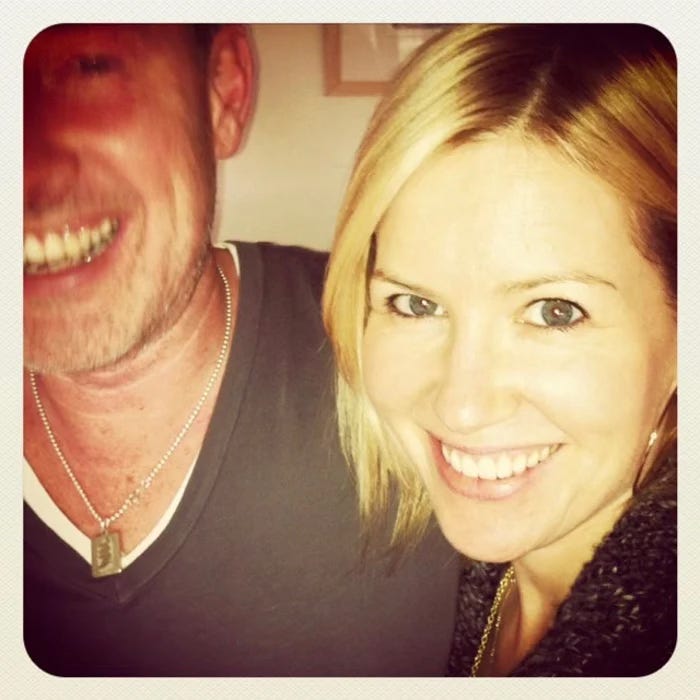
Rollo and his sister Dido. They released an album together in 2020 as R.Plus
🎤 Section 2 — The Acapella
What Studio Gear Built “Hold That Sucker Down”? Inside the Machines Behind the Anthem 🎛️🔥
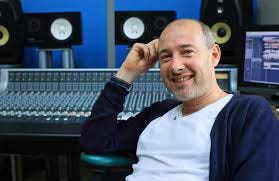
One of my big questions about the early Rollo productions was: how did he do it? How did he create that “organ-like” synth sound that became so characteristic of his work, and was later copied by many other producers? So I’m going on a bit of a tangent here. It’s about to get a bit technical. 😁
Let’s dive into a mid-nineties UK setup built around samplers, drum machines and hands-on synthesis, shaped by the legacy of rave, breakbeat and early progressive house.
Rollo Armstrong and Rob Dougan were working with the tools of that moment. At the heart of the production was almost certainly an Akai sampler, like the S1000 or MPC series, used to chop and trigger vocal snippets, including the iconic “hold that sucker down” line. Drum programming would have been handled through machines such as the Akai MPC60 or E-mu SP-1200, giving that tight, punchy rhythmic foundation, possibly reinforced with classic hits from a Roland TR-909 or 808.
For the musical elements, the sound palette points toward the usual suspects of the era. Think Korg M1, with its instantly recognisable house organs and lush presets, or Roland modules like the JV-1080 or D-50, capable of delivering those rich pads and stabbing synth textures. Everything would have been processed through outboard effects, likely Lexicon or Alesis units, adding the spatial depth that gives the track its almost cinematic feel. All of it brought together on a large-format mixing desk, typically SSL or Soundcraft, where the final balance and energy of the track were shaped.
But the real magic lies in that signature sound.
Those huge, rising “organ” stabs that define the track.
What you’re hearing is essentially a hoover-style synth, a detuned, harmonically rich sound sitting somewhere between an organ and a sawtooth lead. The starting point was likely a preset from the Korg M1 or a Roland synth, something close to a drawbar organ or synth slab. From there, it was transformed.
The key was filtering.
A low-pass filter sweep with resonance would gradually open up the sound, giving that sense of tension building over time. This could have been done with dedicated hardware filters, like a Korg or Peavey unit, or through early sequencing environments such as Cubase. The sound would then be sampled, pitched slightly down for warmth, and further processed with modulation effects, chorus or phasing, using pedals or rack units to add movement.
To give it real presence, the producers likely layered in distortion or overdrive, adding bite and edge, before automating the filter to open during the breakdowns and builds.
The result is that unmistakable surge.
A sound that doesn’t just play.
It arrives.
This technique, rooted in rave and breakbeat culture, is what gives the track its emotional power. The tension, the anticipation, the release, all driven by a handful of machines, carefully pushed to their limits. And that’s perhaps the most fascinating part.
Behind one of the most iconic club records of the era, there wasn’t a complex digital system.
Just samplers, synths, filters, and a deep understanding of how to make a dancefloor wait.
The 12-Inch Mixes: Why DJs Loved This Record 🎉
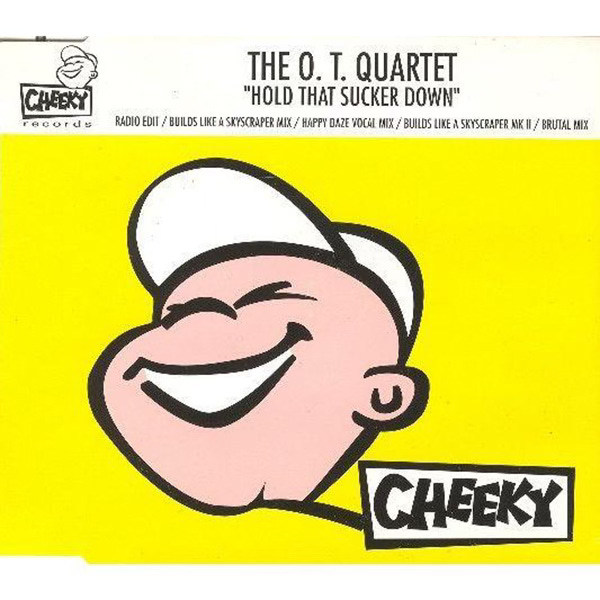
The original 12-inch of Hold That Sucker Down came with several mixes, each tailored for different dancefloor situations. This was typical of early-90s UK house releases, where producers understood that DJs needed different tools depending on the moment in the night.
The most famous version is:
The “Builds Like a Skyscraper Mix”
This is the definitive club version and the one that made the record famous.
The title describes the production concept perfectly. The track is built almost architecturally: layers of piano, pads and vocal fragments gradually rise over a steady house groove until the full anthem finally arrives.
For DJs, this structure was gold.
It meant the record could be used to build tension in a set rather than simply provide another groove. In the early progressive house era, this kind of dramatic structure became a hallmark of the style.
Many DJs used it as a peak-time builder, often mixing it out right after the main piano drop.
The “Brutal Mix”
Where the Skyscraper mix emphasises drama and melody, the Brutal mix strips the track back to its rhythmic core.
Less orchestration. More drums. A tougher groove.
This version worked better in harder house or early trance-leaning sets, especially in European clubs where DJs often preferred more driving rhythms.
The “Happy Daze Vocal Mix”
This is my favorite. It’s probably the one that comes closest to the classic twelve inch of the single. Same build-up and with the full vocal line as on the single. It was probably the one used on the commercial dancefloors instead of the skyscraper mix.It’s the one I used in this week’s mixes!
The Twelve Inch is a growing community of people who love disco, eighties, and early-nineties dance music.
If you know someone who would enjoy these stories, feel free to share this post with them or pass it along on Substack Notes. Every share helps the music, and the community, travel a little further. 💿✨
🎧 Section 3 — The Dub - This Week’s Listening Crate
1️⃣ Companion Mix
This week’s mix is an action-packed affair: 19 tracks packed into a one-hour set. Seven of them are Rollo productions or (re)mixes, so the Rollo sound runs right through the mix. In fact, it’s his productions that do most of the heavy lifting at both the opening and the finale.
I kick things off with the central track of the week, followed by the Pet Shop Boys remix he did for the theme of the wonderful TV series Absolutely Fabulous. The opening stretch is completed by Sphinx’s “What Hope Have I,” Gloworn’s “Carry Me Home,” and the wonderfully playful “Oh What A World” by Sister Bliss, who would soon become Rollo’s songwriting and production partner in Faithless.
The mid-section dives deeper into the high-energy dancefloor sounds of the era. Highlights include Escrima, The Klubbheads, and Lionrock’s “Packet of Peace.” I’ve also included three productions or remixes by another key producer-DJ of the time: Paul Oakenfold — New Order, Grace, and that superb dub remix of The Rolling Stones’ “You Got Me Rocking.” The Stones aren’t the only legacy act showing up here either: David Bowie’s “Hello Spaceboy” (Pet Shop Boys remix) also makes an appearance.
The finale returns to Rollo, with a run of classic productions: Kristine W’s “Feel What You Want,” Livin’ Joy’s “Dreamer,” and, of course, Faithless’ “Insomnia.”
Enjoy. 🎶
Listen to it on Mixcloud
or Youtube :
2️⃣ Discovery Crate
🎧 This Week’s B-Side Playlist: Exploring Tina Turner’s dancefloor moments across the decades
Every week on the B-Side I’ll prepare a special playlist hosted on my YouTube page. It is only accessible through the link here, which means it is exclusively for you, the B-Side reader.
This week I wanted to bring together my favourite Rollo productions and remixes. And boy, was that difficult 😁 As a fan, I could easily pick more than ten outstanding tracks.
In the section where I discussed the evolution of the UK dancefloor, and the influences that shaped Hold That Sucker Down, I highlighted three key elements: the emotional piano chords of late UK and Italian house, the long, layered builds of early progressive house, and the scale and drama inherited from rave.
You’ll hear all three in this playlist.
The first half leans into those piano house influences. There’s the Rollo and Sister Bliss remix of Fairground by Simply Red, the gospel house energy of Gloworm’s Carry Me Home, and tracks by Huff & Herb and Pauline Taylor. And of course, the ultimate example: Love Love Love, released under Rollo’s alias Rollo Goes Mystic.
The second half moves into that early progressive house territory, where the focus shifts to structure and build. You’ll find his first big breakthrough with Felix’s Don’t You Want Me, as well as the incredible Rollo Big Mix of Dreamer by Livin’ Joy. And it all leads to what is, for me, the defining moment: Salva Mea by Faithless.
Some records stop you in your tracks the first time you hear them. You drop everything, run to the radio, turn the volume all the way up, and grab something to write down the title and artist. Because you need that record. Your life depends on it. Salva Mea was exactly that for me. It sounded otherworldly. Like the beginning of a new chapter in dance music.
Right in the middle of the playlist, I’ve included one track that has nothing to do with Rollo, but everything to do with his O.T. Quartet partner, Rob Dougan. The one track everyone knows: Clubbed To Death. The original is already impressive, but it’s the Hybrid mix that turns it into a true anthem. I’ve always loved breakbeats, especially when they blend seamlessly with orchestral arrangements, something Hybrid mastered like no one else. Powerful stuff.
One track I haven’t mentioned yet is number nine: the intriguingly titled Always Respect And Honour Your Mother by Dusted. The mix is fantastic. Like the “Builds Like a Skyscraper” mix of Hold That Sucker Down, it rises steadily to a full-blown crescendo. But the real reason I highlight it goes beyond the track itself.
Look up the full Dusted album, When We Were Young. Rollo produced the entire record, and it’s timeless. Much more laid-back, leaning into lounge and downtempo textures, with echoes of some of the more reflective moments in Faithless.
Great stuff.
I hope you enjoy listening to it as much as I enjoyed curating it.
Listen to it HERE
Fairground (Rollo & Sister Bliss Remix) (Simply Red)
Carry Me Home (Rollo’s Rushin’ Mix) (Gloworm)
Feeling Good (Epic Mix) (Huff & Herb)
Constantly Waiting (Rollo & Sister Bliss Epic Mix) (Pauline Taylor)
Love Love Love, Here I Come (Big Mix) (Rollo Goes Mystic)
Clubbed To Death (Hybrid Mix) (Rob Dougan)
Don’t You Want Me (Extended Version) (Felix)
Dreamer (Rollo’s Big Mix) (Living’ Joy)
Always Respect And Honour Your Mother (Rollo’s Mix) (Dusted)
Salva Mea (Epic Mix) (Faithless)
Next Friday a new record spins on The Twelve Inch A-Side :
“It’s A Disco Night” may sound like one of the cheesiest disco titles ever, but in reality it’s one of the finest disco-funk records of 1979,
driven by a killer bassline and created by a band of three brothers whose career had begun many years earlier.
The full story comes in next week’s episode.
Subscribers get the full crate every weekend.