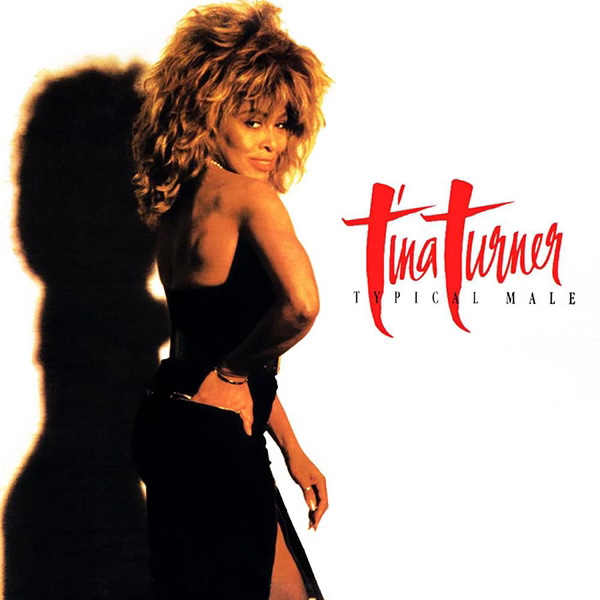
The Twelve Inch #204 - The A-Side : ⚡ Tina Turner, Rock’s Most Unlikely Queen That Loved To Dance
The Twelve Inch 204 : Typical Male (Tina Turner)
The story of Tina Turner is one that never leaves you untouched.
When I saw the movie What’s Love Got to Do with It in 1993, I was struck by the gravity of her relationship with Ike Turner. What she endured during those years together was inhuman. I perfectly understood when she later said she had never watched the film herself. She did not need to. She had lived it, and the memories were still painful.
You left the cinema with even more respect for her than when you walked in.
Tina Turner became one of the biggest stars of the 1980s and early 1990s. After her extraordinary comeback in 1983 with her cover of Let’s Stay Together, produced by the Heaven 17 team, the hits kept coming. At the time I mainly saw her as a rock artist, though one who always had interesting twelve inch mixes. That was not unusual in the eighties. Almost every single got a twelve inch version, and pop and rock songs were routinely remixed for the dancefloor.
It took me years to realise how unique her position actually was.
There are not many Afro-American artists who managed to build a successful career in rock. Rock was, and often still is, a white bastion, especially in the United States where radio formats were strictly separated. Crossing from R&B to rock was extremely difficult. If you sounded too white, Black radio ignored you. If you came from an R&B background, rock stations often rejected you.
There was a moat between those worlds.
Tina Turner was one of the very few artists who crossed it.
And she did not erase her past to do so. She built on everything she had learned during the years with Ike, her repertoire, her singing style, and above all her explosive stage presence.
That reinvention story is fascinating.
So let’s explore how it happened, through one of her biggest hits from the middle of the decade, the 1986 single “Typical Male”, from the album Break Every Rule. Today I’ll begin with the remarkable story of Tina Turner and the unique, successful career she built.
Tomorrow we’ll continue with the extra dance layer that many people overlook, but that made her breakthrough and success almost inevitable.
Get your rock wig ready.
It’s time for Tina.
👋 Welcome, I’m Pe Dupre, thanks for stopping by.
This is The Twelve Inch, a community about the history of dance music from 1975 to 1995, told one twelve-inch record at a time.
If this landed in your inbox because a friend forwarded it, I’d love for you to subscribe so you don’t miss the weekly episodes. Each one dives into a track, its story, and the culture around it.
To celebrate this new Side A / Side B structure, I’m offering:
🎉 20% off all paid subscriptions during March
🎤 From Anna Mae Bullock to Tina Turner
Tina Turner was born Anna Mae Bullock on November 26, 1939, in Nutbush, Tennessee.
After moving to St. Louis, she went, together with her sister, to see what was known as “the hottest band in town.” That band was led by Ike Turner. She was impressed, and asked if she could sing with them. It took some time, but Ike finally listened.
He hired her on the spot.
She saw him as a hero, almost like a big brother. He saw her as a little sister.
Like many singers of her generation, she started in the church choir, singing gospel and absorbing the sounds of R&B.
Ike, himself, had already played a role in rock history. In 1951 he recorded one of the first rock’n’roll songs: Rocket 88. When the record was released, however, the label credited saxophonist Jackie Brenston instead.
For Ike, that moment became symbolic. He later described his career as a pattern of creating hits and then seeing others take the credit. The experience instilled a deep distrust.
When Anna Mae’s first record started gaining traction, Ike gave her a new name, Tina, and launched the Ike & Tina Turner Revue. She was not consulted.
When success arrived, the little sister became his wife.
Control replaced partnership.
When Tina began asking questions about money, Ike responded with violence. Fear and distrust became the foundation of the relationship.
Years later she would say, “It was basic torture. I was living a life of death, I didn’t exist”
🎶 The First Hint of Another Path
Tina, producer Phil Spector, Ike
In 1966 Tina recorded River Deep – Mountain High. It was the first time she had the opportunity to work outside the Ike Turner framework.
Expectations were huge.
But the single flopped in the United States. Black radio did not play it because it did not sound like a Black record. White stations ignored it because it sounded too Black.
In many ways, this moment foreshadowed the challenges that would define her career.
Despite that setback, the duo continued scoring hits, including Proud Mary and Nutbush City Limits. But the relationship was collapsing. It was Buddhism that eventually gave Tina the courage to leave. In 1976, on the way to the airport in Dallas, she decided, enough was enough.
She walked away.
💿 Divorce, Debt, and a Disco Detour
The divorce was finalised in 1978.
The settlement was brutal.
Ike retained most of the assets. On top of that, there were lawsuits from concert promoters over cancelled shows. Tina had to pay her share while supporting two children and receiving no alimony.
She essentially had to start from zero.
To pay the bills she accepted any work she could find. She also recorded new solo albums on United Artists, Rough (1978) and Love Explosion (1979). Both leaned into disco. The shift was not entirely her choice. The label wanted to reposition her, and Tina had little leverage to refuse.
Love Explosion was produced by Euro-disco heavyweight Alec R. Costandinos. You can hear it immediately. But Tina Turner was never a natural disco singer. The results felt slightly overdone. (The title track is featured in this week’s exclusive playlist on the B-Side of the post.)
Not that she was anti disco. In an interview in 1979 she said “Disco music is fresh, it’s alive. It’s very good for fresh new artists like Amanda Lear, Grace Jones and Donna Summer. It has nothing to do with soul people like Aretha Franklin, Tina Turner and Gladys Knight.We are from different breeds of music but I respect the music very much”
Both albums failed commercially. The record deal ended.
For a moment it seemed her recording career might be over.
🎬 The Lucky Break
An unexpected opportunity appeared in 1979. Olivia Newton-John invited Tina to appear on her television special. Her manager, Roger Davies, saw something special.
Davies asked Tina a simple question.
What was her dream?
She replied that she wanted to become a rock singer and fill stadiums like The Rolling Stones.
The problem was obvious. She had a confused public image, she was already over forty, and launching a Black artist into the white world of rock was extremely difficult.
Even finding a record deal proved nearly impossible.
Eventually Capitol executive John Carter gave them a development deal. When the management of Capitol Records changed, however, her contract was nearly cancelled. Carter fought for her and secured one final chance. If the album failed, it was over.
To clear the lingering shadows of the Ike years, Davies arranged a revealing interview in People Magazine. With 32 million readers at the time, it was the early-eighties equivalent of going viral. The goal was to tell the story once and move on. Instead, the interview made Tina a symbol.
🔥 Reinvention in the UK
Davies realised that the breakthrough would not happen in the United States. So they went to the United Kingdom to tap into what was happening musically over there. Tina first worked with Heaven 17 members Martyn Ware and Ian Craig Marsh on a project called Music of Quality and Distinction. She recorded a fierce version of the Temptations classic “Ball of Confusion” (one of the songs in the B-side’s special playlist)
It was her first single in years. But no hit
Soon after, though, Ware and Marsh produced her cover of Al Green’s “Let’s Stay Together”. The song became her first hit of the new era, especially in Europe.
The real explosion, though, came with What’s Love Got to Do with It. Written by Graham Lyle and Terry Britten, it had already been recorded by artists like Bucks Fizz and Cliff Richard. Hardly the rock song ,Tina thought she needed. She initially disliked it, but once she made it her own, the song became a worldwide number one.
The album Private Dancer sold more than 20 million copies.
She later said, “The Private Dancer wasn’t a comeback album. It was my first album. I had finally arrived”
🎸 Break Every Rule
By 1986, Tina Turner had achieved her dream. She was filling stadiums. The album Break Every Rule launched a massive world tour of 280 shows, including a legendary concert in Rio for 180,000 people.
Years of relentless touring had transformed her into one of the most electrifying performers in the world.
The album blended pop-rock, funk, and dance, and nowhere is that mix better captured than in our song of the week:
“Typical Male.”
Written again by Terry Britten and Graham Lyle, the song tells the story of a woman falling for her lawyer, a man who is all business and “strict,” while she tries to break through his professional distance with charm and flirtation. One notable musician on the track is Phil Collins, who handles the drums.
Like many mid-eighties pop singles, the song received extended twelve inch mixes and even a dub version. And those dancefloor elements were no accident. On tomorrow’s B-Side, I will dive deeper into why that strategy was so brilliant.
🎸 Why Tina Turner Became Rock’s Queen
Turner eventually became the first Black artist, and the first woman, to appear on the cover of Rolling Stone. She was crowned the Queen of Rock ’n’ Roll.
We might forget it, but rock music itself has deep Black roots. Artists like Chuck Berry, Little Richard, and Jimi Hendrix shaped the genre. And there was also the groundbreaking guitarist Sister Rosetta Tharpe, whose distorted electric guitar playing helped define early rock.
She was a direct inspiration for Tina. You can trace a line from Tharpe to the explosive stage shows + mix of rock, blues & soul of the Ike & Tina Turner Revue, and from there to the stadium-filling Tina Turner of the 1980s.
The major barrier she had to overcome was American radio, where strict formats made crossing genres extremely difficult, if not impossible.
Tina’s advantage was that, during the time of River Deep, Mountain High, she had already seen how much more open Europe was, to artists crossing genres. The record may have flopped in the United States, but in Europe, and especially in the United Kingdom, it became a major success. The move to Europe therefore made perfect sense.
By 1982 and 1983 another opportunity appeared. The synth-pop wave coming out of early eighties England was quickly becoming the new pop standard of the decade. It opened doors to fresh collaborations. Many of those synth-pop artists were building on foundations of R&B and disco, from the previous decade. Because of that, they were eager to work with someone like Tina Turner, an artist who embodied the power, attitude, and stage presence they admired and wanted to emulate.
But Tina also had another unique advantage.
She was older, experienced, and carried a retro rock energy that felt authentic, rather than trendy.
At a time when rock culture was obsessed with youth, Tina brought something different, something genuine. She was fearless, sensual, and unapologetically visible. In many ways her seventies rock energy was ahead of its time. You could almost see her as the Black grandma who invented dad rock.
Add to that the fact that she had spoken openly about the abuse she endured in the widely read People magazine interview. She became a symbol of resilience. Combined with the relentless hard work she had always put into her performances, it endeared her to a vast audience and helped build the foundations of her extraordinary success.
She continued to enjoy a very successful career, with more hit albums and the semi-autobiographical film What’s Love Got To Do With It in 1993. But the results never quite matched the extraordinary success of her eighties peak. She eventually stopped touring in 2009, marking the 50th anniversary of her career.
🌟 A Legend Beyond Music
When Tina Turner died in 2023, the global reaction showed just how deeply loved she had become.
She had been the first major star to openly speak about domestic violence and refused to hide that part of her story, although it sometimes frustrated her that many interviewers kept returning to the subject.
She once said, “It wasn’t a good life. It was in some areas but the good didn’t balance out the bad” “They Are old memories and you want to leave them in the past and be done with”
Her second career allowed her to present herself on her own terms and steer her career in the direction she wanted. Her life, and her music, became a symbol of reinvention.
🔜 Tina And The Dancefloor
So Pé, what about Tina And The Dancefloor?
I thought this was a newsletter about the history of dancemusic?
You are right off course. Dance music was, seemingly, a bit more absent in this episode. Allthough it is/was important to first tell the story of Tina’s reinvention before zooming in on one of the least mentioned aspects of her career.
Tomorrow, on the B-Side, I will go deeper into the twelve inch mixes of Typical Male, and the clever strategy that connected Tina Turner’s rock image with the dancefloor. It might be a surprising one.
Because the dancefloor, my friends, once again, played a bigger role than many people realise.
The Twelve Inch is a growing community of people who love disco, eighties, and early-nineties dance music.
If you know someone who would enjoy these stories, feel free to share this post with them or pass it along on Substack Notes. Every share helps the music, and the community, travel a little further. 💿✨
💬 Let’s Keep The Conversation Going
I would love to hear your thoughts.
Do you remember the first time you heard Typical Male?
Did you see Tina Turner live during her stadium years?
Do you think her reinvention in the 1980s is the greatest comeback in pop history?
And which Tina Turner song still gives you chills today?
Tell me in the comments. I read every response and love seeing the memories and discoveries that come back to life.
See you tomorrow on the B-Side.
So You Wanna Hear More ?
I thought you would !
It’s fun to write about music but let’s be honest. Music is made to listen to.
Every week, together with this newsletter, I release a 1 hour beatmix on Mixcloud and Youtube. I start with the discussed twelve inch and follow up with 10/15 songs from the same timeframe/genre. The ideal soundtrack for…. Well whatever you like to do when you listen to dance music.
Listen to the Soundtrack of this week’s post on MIXCLOUD
Or on Youtube :
So looking forward beyond the B-Side…What’s in store for next week?
I’ve touched the first year of my chosen era, 1975–1995, a few times already, but I’ve never gone all the way to the endpoint, 1995. Next week we’ll go there and explore the sound connected to one of the most important dance producers of 90s dance music.


Pe, I loved how you went into not just her career, but also reminded readers that rock music essentially started with Black artists, and that means rock music was (and remains) R&B in nature. Turner was both and her 80s albums were probably her personal peak, even if there are a few items from her Ike days that are among her finest moments.
This is one of my favorite Tina tunes! I'm still devastated that she's gone. Whenever I hear her voice I think, "how can this be silenced!"