

This is the B-Side to this week’s episode.
If you missed the A-Side story, you can read it here. 👇

Every twelve inch had a B-side where the DJs and collectors found the extra tools: beats, dubs and alternate versions.
This is the B-Side of this week’s episode, where we dig deeper into the story behind the record. Read it in one go or enjoy the different sections on different moments. The choice is yours
🥁 Section 1 — The Beats
🎟️ Turned Away… and Turning It Into a Hit - The Story of the Studio 54 Rejection in full
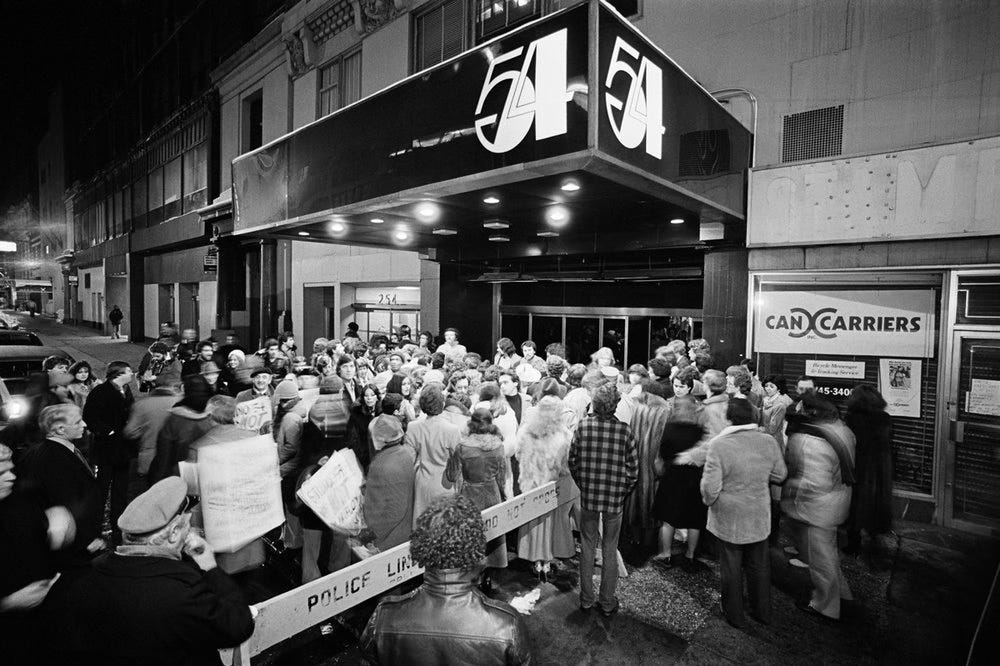
By the end of 1977, the Chic sound was the talk of the club world. Their records were lighting up dancefloors, and their rising profile even earned them an invitation from disco royalty herself, Grace Jones, who was already a major disco star at the time.
On a freezing New Year’s Eve, Nile Rodgers and Bernard Edwards headed to the legendary Studio 54 in New York, where Jones had told them to come by the stage door. Instead of a glamorous welcome, they were met by a doorman who slammed the door in their faces and told them to “Fuck Off.”
Undeterred, they tried their luck at the front entrance. There, the club’s famously selective gatekeeper, Marc Benecke, scanned the guest list, looked them up and down, and delivered the final verdict:
“I looked and you aren’t on the list.”
Nile would later recall the moment:
What started as a humiliating brush-off outside the most famous nightclub in the world would, within weeks, transform into one of disco’s biggest anthems: “Le Freak.” A song born from rejection, and destined to conquer the very dancefloors that had tried to keep them out.
🍾Chic & Grace Jones : A New Year’s Eve invitation that hinted at a future collaboration
When Grace Jones invited Nile Rodgers and Bernard Edwards to join her at Studio 54 on New Year’s Eve 1977, she didn’t really explain why. It was one of the stories I was curious for when I read her biography a while back. But given the timing, and the buzz surrounding Chic at that moment, it’s not hard to imagine what might have been on her mind.

Jones was then recording her disco albums with legendary remixer and producer Tom Moulton, a partnership that would continue until 1979. Yet insiders knew the working relationship was complicated, and the idea of exploring new collaborators would not have been far-fetched.
In the end, that particular New Year’s Eve meeting never happened as planned. But the connection between Jones and Rodgers would eventually come full circle. Nearly a decade later, Rodgers produced Jones’s 1986 album Inside Story.
That, however, is a story for another time.
🎤The Chitlin’ Circuit : Where legends learned their craft — one sweaty club at a time
The first time I encountered the term Chitlin’ Circuit was in the biography of Nile Rodgers. From his description, it was a colloquial name for a vast network of Black nightclubs stretching from Buffalo, New York, all the way down to South Florida.
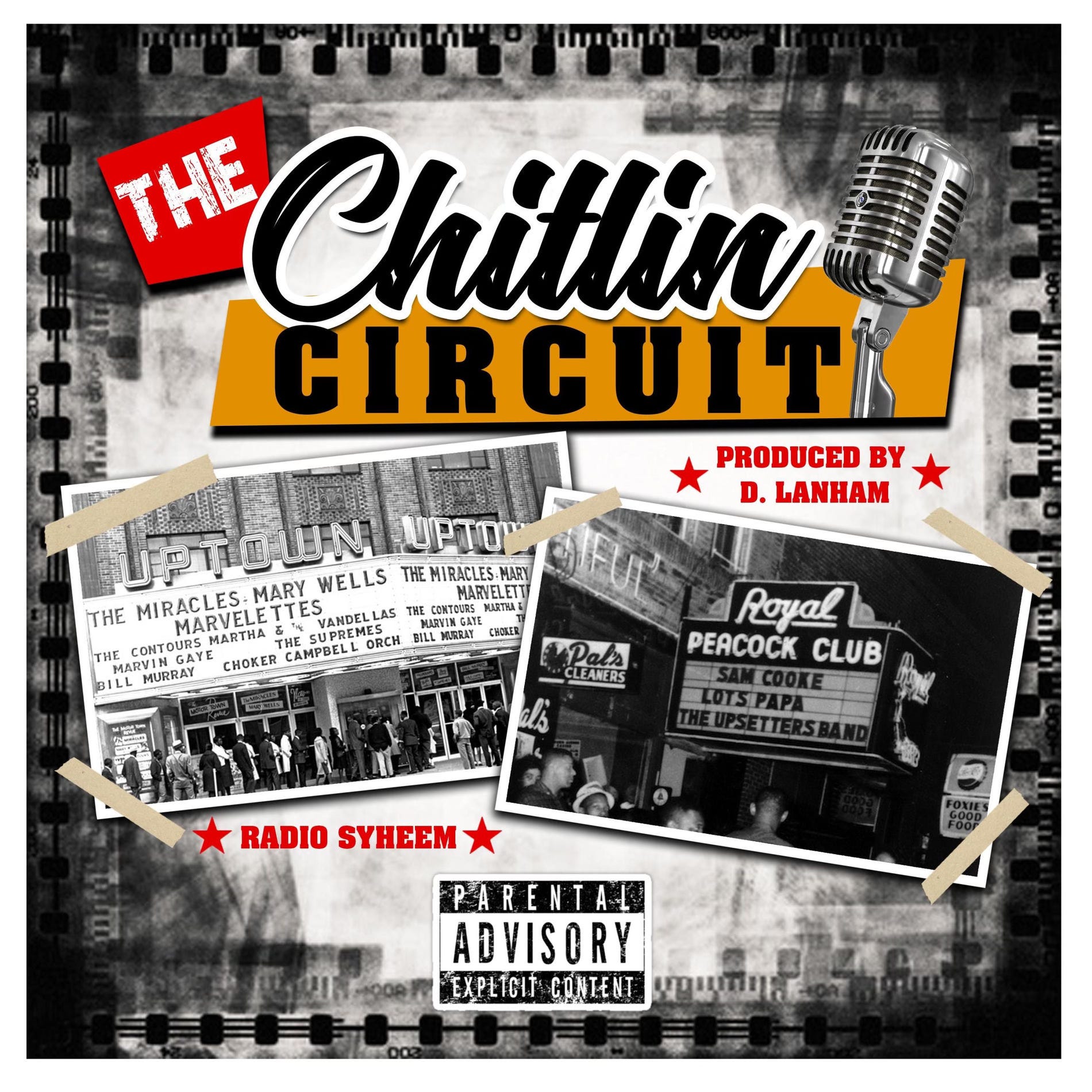
For decades, it was the proving ground for R&B performers east of the Rockies. Countless artists cut their teeth there. Without this circuit, there would likely have been no The Commodores, The Impressions, Marvin Gaye, Labelle, Jimi Hendrix, or Funkadelic.
The venues themselves ranged wildly. Some were glamorous in their own gritty way, the kind of place that might remind you of the bar in Star Wars, while others were little more than tin-roof shacks somewhere deep in the Bible Belt.
But wherever you played, one rule applied: you had to know your music.
If someone in the audience shouted for Pusherman or I Want You Back, the band had better launch into it immediately, and play it well. On the Chitlin’ Circuit, the crowd expected nothing less.
🌍 Le Freak c’est Chic… or L’Afrique c’est Chic? The strange lyric mystery that even fooled Nelson Mandela
One of the funniest stories surrounding Le Freak involves none other than Nelson Mandela.
At one point, Mandela reportedly congratulated Nile Rodgers for helping African emancipation with the song.
African emancipation? From Le Freak?
Yes, because, according to the story, the famous chorus wasn’t always heard as “Le Freak c’est chic.” Some listeners were convinced it actually sounded like “L’Afrique c’est chic.”
The tale goes that this alternative phrase came from a Belgian girlfriend Rodgers supposedly had at the time, who suggested the line. Given Belgium’s historical ties with the Congo and the large French-speaking African diaspora in Brussels, the idea isn’t entirely impossible.
Except for one small problem.
No one seems to know the name of this mysterious Belgian girlfriend. And by now you know me: if there’s even the slightest chance to wave our national tricolour 🇧🇪 and claim a tiny piece of disco history for the fatherland, I’m more than willing to try 😂
But despite some digging, I couldn’t find a single name, nor any mention of such a story in Rodgers’ own biography.
So the Belgian connection is probably a myth.
Still, that doesn’t mean you can’t sing “L’Afrique c’est chic” instead of “Le Freak c’est chic.” Both work perfectly well on the dancefloor, and it might very well be the version Mandela was joyfully singing along to.
🎸How to Play It Yourself : Two simple parts that created one of disco’s most irresistible grooves
In the Side A piece, I explored the distinctive playing styles of Bernard Edwards and Nile Rodgers, the musical chemistry that would define the Chic Sound, power Chic’s success, and later shape countless productions they worked on.
But what did that magic actually sound like in practice?
The two videos below break it down beautifully, showing exactly what each of them brought to the groove. One focuses on Rodgers’ razor-sharp rhythm guitar, the other on Edwards’ fluid, melodic bass lines, the two elements that locked together to create that unmistakable Chic feel.
Bernard Edwards :
Nile Rodgers :
🎤 Section 2 — The Acapella
📀 Strategic Marketing? Que? Life inside a major label… and the path that unexpectedly led me to Nile Rodgers
So what about that “militaristic” term I used for the department I headed over at Warner Music Belgium early 2000’s: Strategic marketing. Did you have a “Frontline” marketing dept as well? It might surprise you, but yeah you did.
Warner Music Belgium was a, relatively, small operation. We had a total headcount of between 20 and 25 people. If my memory serves me, we were then the smallest of the “majors”. Allthough BMG wouldn’t be far ahead of us.

We thought at that time that Warner Music would eventually be “eaten” by one the bigger majors. As it turned out it was Warner who did the eating, swallowing the biggest part of EMI many years later; But I digress
A record company in Europe back then had a Frontline dept that occupied itself with breaking new artists and marketing the succesfull ones. Most of the 20/25 colleagues worked at that department.
Mine was strategic and that meant everything else: compilations, jazz & classical, catalogue & rights management. If Buitoni, of instance, wanted to use Paolo Conte for their new pasta sauce (a real world example) it passed my desk and I could decide on the rate those companies had to pay to be able to use the song, on the condition the artist & management agreed. It sounds fun, but it was cumbersome.
Most fun for me was releasing compilations. I will go in to my work on that front in later posts. Suffice to say now that it didn’t work out the way I thought it would. I’m a music fan first & foremost and when Warner Benelux offered me the job, I was thrilled because of the fantastic catalogue. As it turned out, you couldn’t do anything with it 😁 Most of the biggest artists with a rich catalogue said no to any compilation request. And sometimes it was for very strange reasons. But I’m sure we’ll come to that in later posts.
A big part of my responsibility was catalogue and that’s how I eventually arrived at meeting Nile Rodgers. The job had it’s rewards
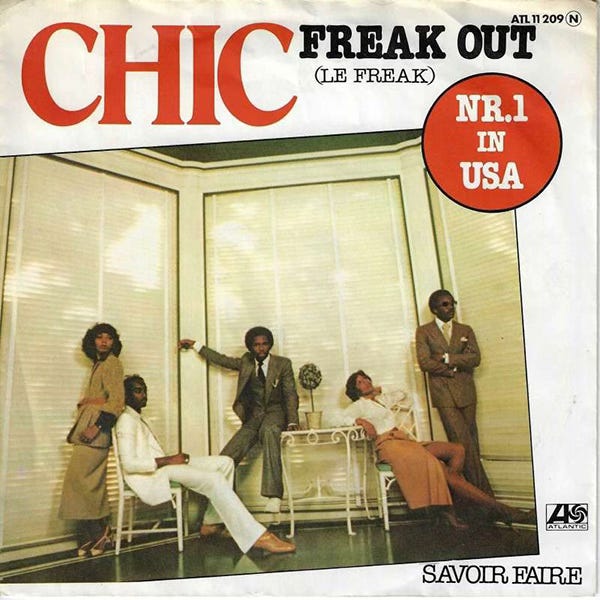
🕺The 12-Inch of Le Freak : The disco anthem whose “12-inch version” wasn’t really a remix
When Atlantic Records released the 12-inch singles of Chic, there was often a small twist: many of those “extended” versions were not exclusive mixes. In most cases, the longer version was already sitting on the album.
That was exactly the case with Le Freak.
The commercially released 12-inch simply used the album version, no special remix, no extended DJ rework. What you heard on the LP was essentially what DJs were spinning from the 12-inch.
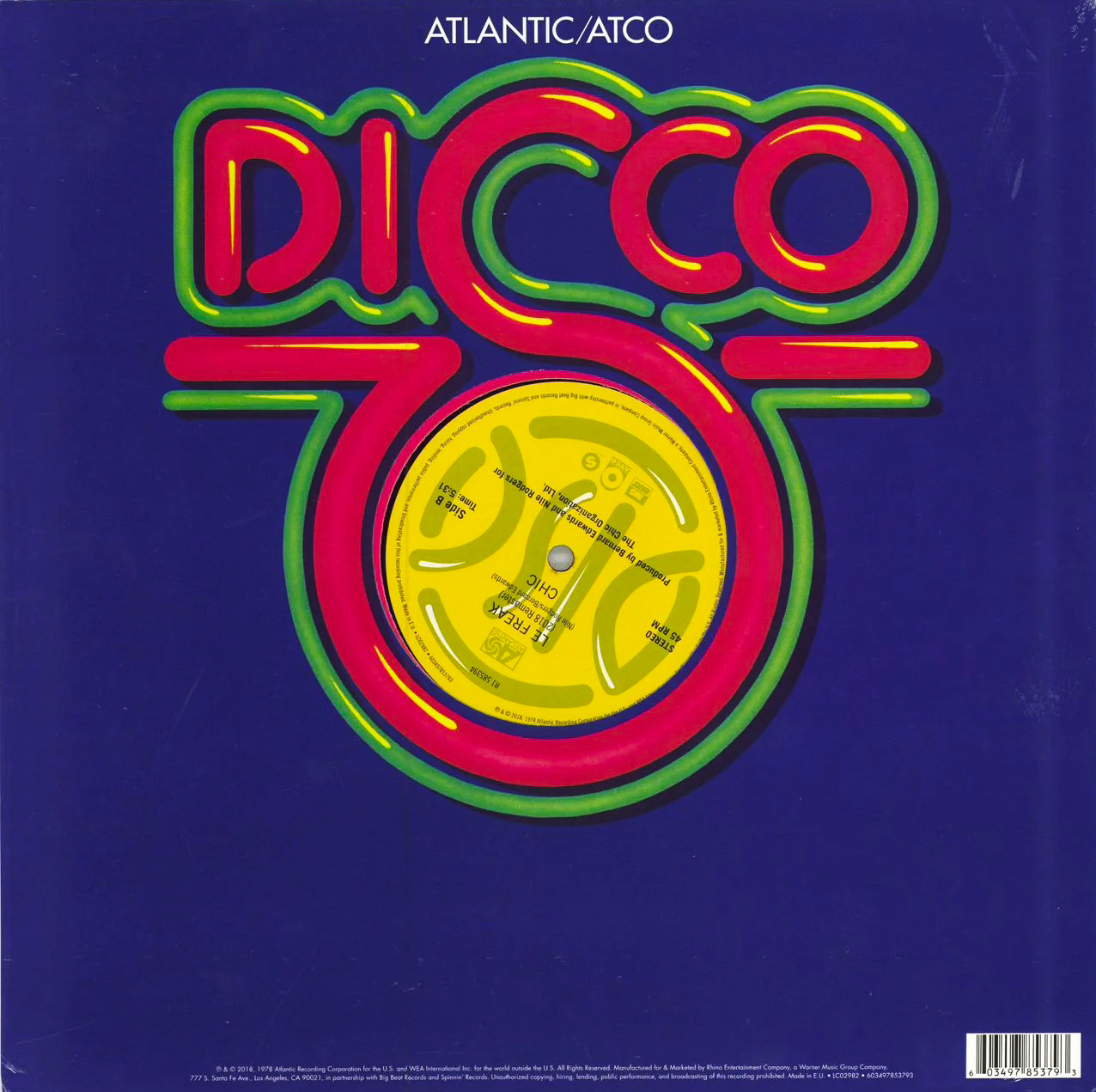
As a rather cash-strapped fan at the time, I was secretly delighted. Buying the album meant you already owned the longer version, always a welcome discovery when your record budget had its limits.
Still, there’s something slightly surprising about that decision. Le Freak isn’t the easiest record to mix. It opens almost immediately with the groove and leaves very little in the way of a clean, DJ-friendly intro.
Which makes it all the more curious that no dedicated remix was ever created to give DJs a proper mixing section. For a song that would become one of disco’s biggest anthems, that’s quite unusual.
The Twelve Inch is a growing community of people who love disco, eighties, and early-nineties dance music.
If you know someone who would enjoy these stories, feel free to share this post with them or pass it along on Substack Notes. Every share helps the music, and the community, travel a little further. 💿✨
🎧 Section 3 — The Dub
✨This Week’s Mixtape : The Chic universe — remixed, reimagined, and still ruling the dancefloor
What better way to illustrate the enormous influence of Nile Rodgers and Bernard Edwards than with a mix that doesn’t strictly stay in their era, but instead gathers songs and productions connected to the Chic sound, many of them in contemporary remix form. 👇👇👇

Click on the image to be taken directly to the fantastic set of James G on Mixcloud, the official soundtrack of this week’s episode
Just like on Substack, Mixcloud has a thriving community of DJs, writers, and musical explorers. And just like there, we collaborate. One of the ways we do that is by swapping feeds for a week, giving each other’s audiences the chance to discover new sounds, new curators, and occasionally… strange new musical worlds. To seek out new life and new civilizations. To boldly go where no man has gone before.
Enfin… you get the drift.
This week’s episode was crafted by my good friend, a brilliant curator of fine sounds and an expert DJ and remixer: James G. I asked him to venture into the world of Chic influences and productions.
And boy, did he deliver.
His playlist speaks for itself:
Chic – Le Freak (Dimitri From Paris remix) / Social Disco Club x Chic – Good Times (Andy Buchan Brythoniaid Male Voice Choir Edit) / Debbie Harry – Backfired (Nelson X ZombieSquad Remix – Extended Mix) / Sheila & B. Devotion – Spacer (Dave Lee Extended Disco Fantasy Mix) / Fonzi Thornton feat. Chic – I’ll Change My Game (Alex Di Cio Re-Edit) / Will Smith – Gettin’ Jiggy Wit It / Charanga ’76 – My Forbidden Lover (Mi Amor Prohibido) (Patoxhea Edit) / Duran Duran – Notorious (Borkez Music Bootleg) / Madonna – Like a Virgin (Ruud van Rijen Refix) / David Bowie – Let’s Dance (RQntz Remix) / Modjo – Lady / Diana Ross – Upside Down (F-Dep’s Downside Up Mix) / The Boogiemaster – Lost In Music (Pied Piper’s Review)
If you don’t yet have an account on Mixcloud, it’s well worth exploring. The platform is full of DJs and curators digging into every imaginable genre. And no, it’s not just plastic trance, far from it. There’s a whole musical universe waiting there.
Start by subscribing to my feed (because there’s much more than just the weekly soundtracks), and then head over to James G’s page as well.
🌍 My Week on James G’s Feed : From Persian pop to South American grooves — a musical detour
Since I mentioned we swapped feeds: while James G took care of this week’s Chic-inspired mix, I took over his channel for the week.
And yes… it’s a bit different. Let’s call it an adventure.
The inspiration came from Googoosh. I recently watched a documentary about her life and was deeply moved by her story.

Click on the visual to be taken to the mixtape on James G feed on Mixcloud
Before the Iranian Revolution, she was essentially the Madonna of Persian pop, a massive star with a brilliant career. When the mullahs took power, however, she was suddenly banned from performing. Eventually she had to flee the country. Her story mirrors the broader tragedy and resilience of the Iranian people.
The track that sparked the mix was Talaagh, a song about emotional separation, shared suffering, and surviving pain.
From there I followed the thread into Middle-Eastern inspired sounds for the first half of the mix. The second half returns to another of my favourite musical continents: South America.
In between, things get a little playful. I combine a ballad with patriotic film music and even slip in Rosemary Clooneysinging a mambo—before closing with proof that you don’t actually need synthesizers to play Kraftwerk.
It may sound like spaghetti with mayonnaise.
But trust me, it works.
And it delivers quite a unique sonic experience… even without the help of mind-altering substances. 😁
🕺 Back to the Order of the Day… Chic - My Listening tips : The Chic extended universe — ten essential grooves for your weekend
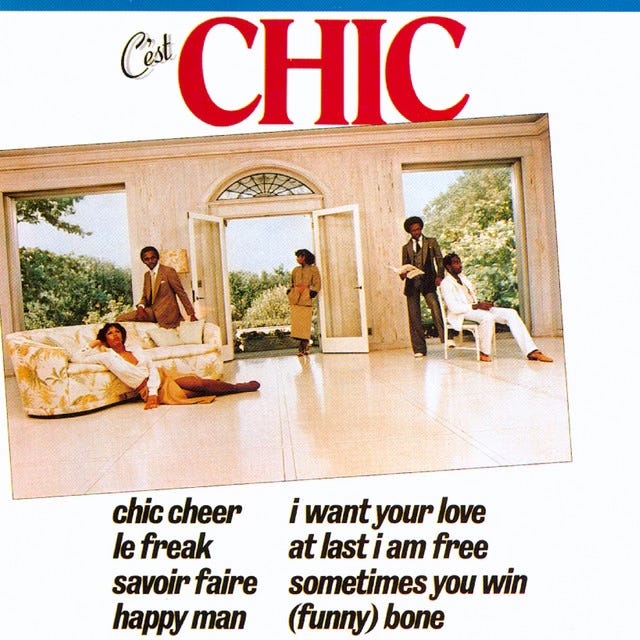
If you want to hear Nile Rodgers and Bernard Edwards at the absolute height of their late-disco powers, you don’t really need to look much further than Chic’s second and third albums: C’est Chic and Risqué
.
But there’s another record that belongs in that conversation: the first album by Sister Sledge, We Are Family. In many ways, it might actually be the ultimate Chic album, something Rodgers himself openly admits in his autobiography.
Still, Chic’s influence extended far beyond their own records. Rodgers and Edwards left their fingerprints all over the late-70s and early-80s dance landscape.
So the real question becomes: what would the ideal playlist look like if you wanted to explore that wider Chic universe?
Or, put more simply: what would be playing if you invited me over on a Friday or Saturday night?
Here are a few of my personal favourites connected to these two distinguished gentlemen:
Surrender — Debbie Harry
Saturday — Norma Jean Wright
You Fooled Around — Sister Sledge
King of the World — Sheila and B. Devotion
Je veux t’aimer — Michèle Richard
At Last I’m Free — Chic
Something to Sing About — Johnny Mathis
My Forbidden Lover — Charanga 76
Get On Up — Roundtree
Rapper’s Delight — The Sugarhill Gang
Some of these tracks will probably sound familiar — they’ve likely crossed your ears at some point.
Take Surrender by Debbie Harry, for example. It was arguably the standout track on her Rodgers & Edwards–produced solo album. The same could be said for Saturday by Norma Jean Wright. Wright, of course, was the original lead singer of Chic, but she left before the band’s big breakthrough to pursue a solo career. She made a very respectable album, though nothing that matched the success Chic enjoyed after she departed. (Two entirely unrelated facts, of course. 😂)
The Johnny Mathis track comes from a rather mysterious project: an album produced for him by Nile Rodgers and Bernard Edwards that, for reasons still not entirely clear, was shelved at the time. Only recently did a smaller label finally release it. True, the record isn’t packed with obvious hits, and you could argue that Mathis’s voice wasn’t the most natural match for the Rodgers & Edwards production style. Still, it has its moments, including Something to Sing About, which made this week’s playlist.
Chic’s ballads have never received quite the credit they deserve, which is a bit of a shame. At Last I Am Free is one of my all-time favorites. I played it endlessly back in the day, and it’s probably the track I’ve returned to the most from the C’est Chic album. So naturally, it had to be part of this week’s selection.
And then there are two slightly unusual inclusions.
First, Michèle Richard. I must confess I know almost nothing about her. I strongly suspect she’s a Canadian singer from Quebec. She recorded a French-language version of I Want Your Love, titled Je veux t’aimer — and I rather enjoy it. The tempo is a little slower than the Chic original, which gives the song an interestingly different feel.
Finally there’s Roundtree. Strictly speaking, the record has nothing to do with Chic — except that Bernard Edwardsplayed bass on it. Get On Up became a modest disco hit in 1978, and Edwards’ bass playing is unmistakable.
For your weekend listening pleasure, I’ve gathered them into a playlist you can explore by clicking here
One small note: The playlist remains exclusive for subscribers of The Twelve Inch.
📖🎸Book : The man behind the groove tells his own story
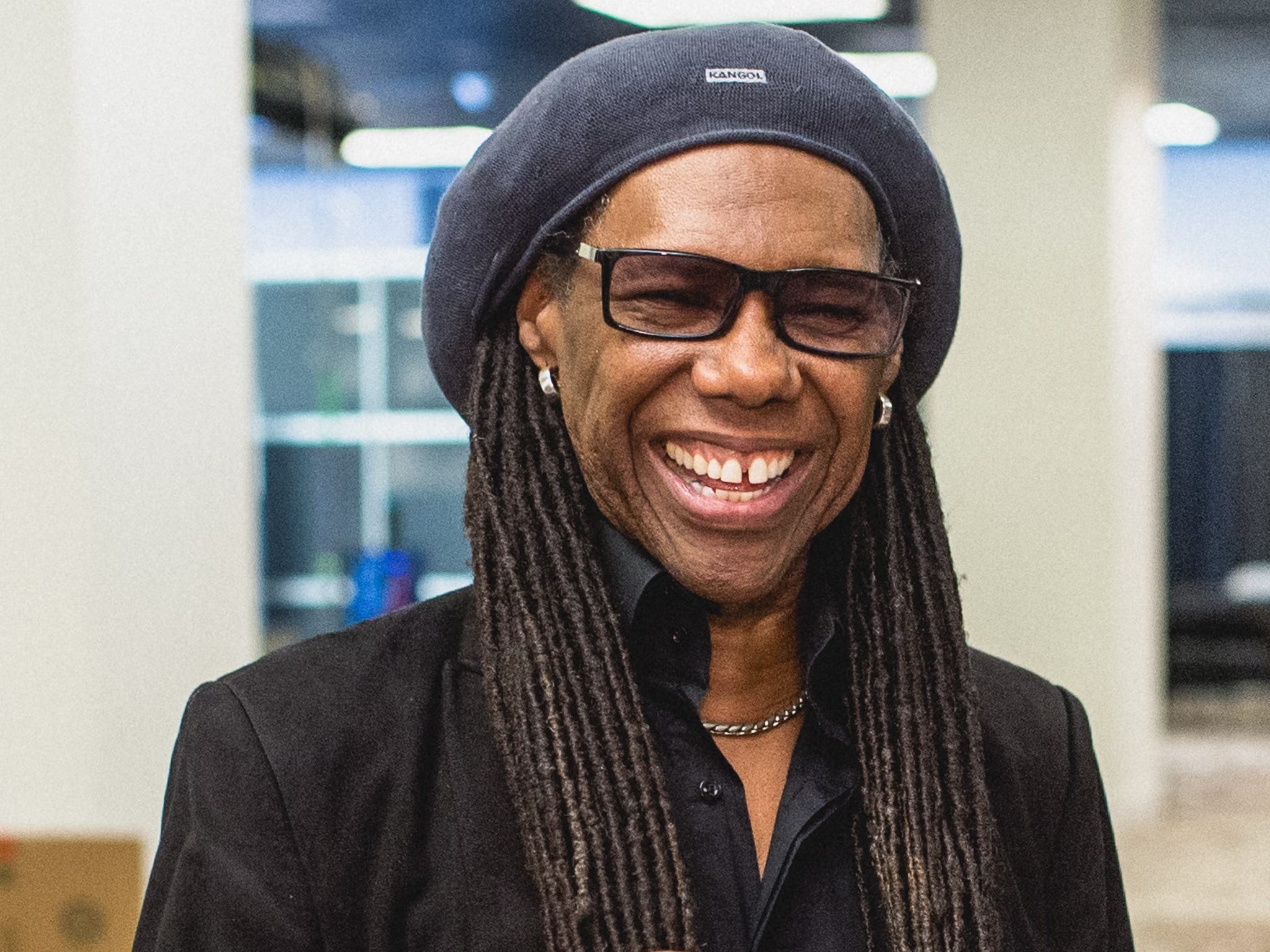
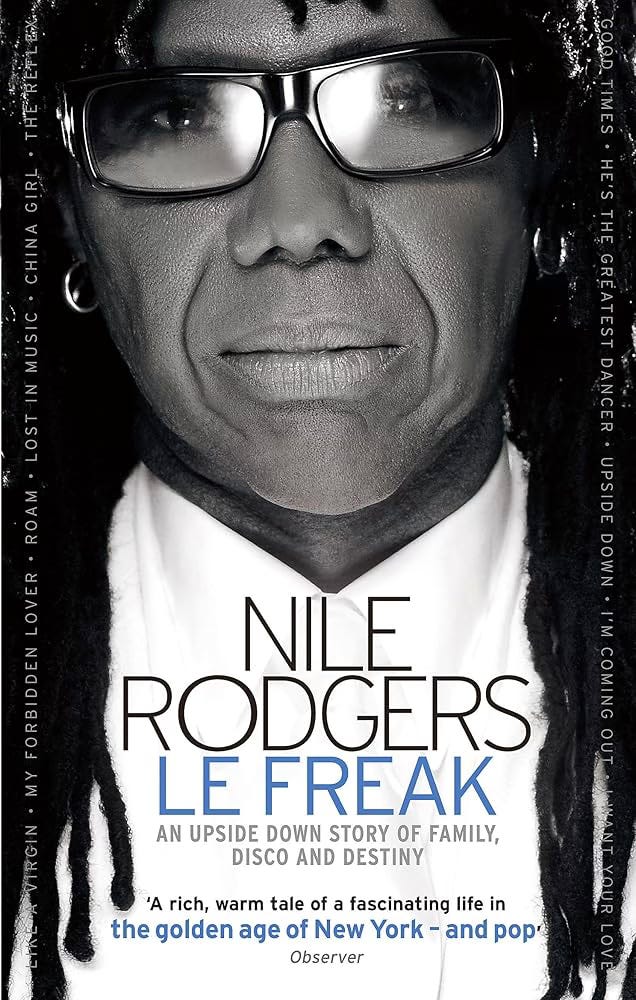
Throughout this piece I’ve quoted from the autobiography of Nile Rodgers: Le Freak: An Upside Down Story of Family, Disco, and Destiny.
Rodgers wrote the book himself, and I can warmly recommend it. It’s an entertaining and often very funny read.
Given the life he has lived, that shouldn’t come as a surprise. Rodgers has had a truly eventful career and has worked with an astonishing number of famous artists along the way.
What makes the book particularly enjoyable is his tone. Rodgers comes across as the perfect gentleman: the story never turns bitter or negative, even when describing difficult moments. That said, if you read between the lines, you can still tell quite clearly which collaborators he enjoyed working with the most.
🎶 Covers & Samples : From tributes to curiosities — the strange afterlife of a disco anthem
Trying to list every sample taken from Chic productions would be an impossible task. Even an AI chatbot would probably give up halfway. As I mentioned in the Side A piece this week, the number is gigantic, and that’s even if you limit yourself to just Le Freak.
What is both fun, and manageable, is taking a look at the covers.
And here things quickly become… a bit muddy.
Some versions are interesting reinterpretations. Others are, let’s say, real head-scratchers.
Le Freak — Bunny Chanél
An amusing artist name. One suspects the idea was to borrow a bit of the French chic suggested by the original title. Unfortunately, any sense of refinement seems to have been left outside the studio when it came time to record the track. Bunny himself may well have been pleased with the result. The rest of the world… perhaps a little less so. 😁
La Freak — Roberto Delgado
One glance at the album cover tells you exactly what kind of territory you’re entering. This is the sort of record that might become entertaining… after consuming enough alcohol to knock a hippopotamus off its feet.
Roberto Delgado is perhaps best described as a kind of Jamaican counterpart to James Last. The difference, however, is that while Last was a genuinely gifted arranger, Delgado seems to be rather short on that particular talent.
Le Freak — Brotherhood of Man
A slightly sad chapter in the afterlife of Le Freak.
Brotherhood of Man once stood at the very top of European pop, even winning the Eurovision Song Contest for the UK. But by 1981 the momentum from that victory had largely faded.
Which may explain, though not entirely justify, their decision to record a cover of Le Freak.
Why they thought this was the right move is anyone’s guess. The end result is… well, let’s just say it leaves something to be desired.
Le Freak — Sten & Stanley
Ever wondered what Le Freak might sound like in Swedish? Well… wonder no more.
Sten & Stanley provide the answer with a version that feels a bit like the Swedish Chef decided to go disco for the evening.
Which One Is Your Favorite ? 😂
💬 Your Turn on the Dancefloor : Let’s continue the conversation
One of the things I enjoy most about writing The Twelve Inch is the conversation that follows. Disco may have started on the dancefloor, but the stories keep living through the people who listened to it, played it, collected it, and sometimes even argued about it.
So I’m curious to hear from you
Drop your thoughts in the comments — I read every one of them, and many of your suggestions have already inspired future episodes.
After all, The Twelve Inch isn’t just a newsletter.
It’s a collective digging session through dance music history.
And sometimes the best records are still waiting in someone else’s crate
Next Friday a new record spins on The Twelve Inch A-Side : Tina Turner is today seen as a rock artist, one of the few Afro American artists to successfully claim that label. But that doesn’t mean she didn’t have her dance music moments. Next week we’ll highlight one of her mid eighties gems.
Subscribers get the full crate every weekend.

Loved this Pé!! So much more wonderful research and information that would’ve been really difficult to fit into the A Side. I’m listening to your Talaagh Transmission mic on Mixcloud and have followed you on there. I used to listen to Mixcloud a lot, probably a decade or more ago, but now I tend to spend most of my time on the streaming sites or listening to my own digital collection. I’ll try to add Mixcloud back into my rotation (I need to do the same with Bandcamp) but there’s only so much time in the day/week!
This is a strong B-side because it actually works like a proper B-side should. It is not just overflow from the main piece, but added context, side routes, and extra detail that deepen the record without losing the groove. The Studio 54 rejection story is always a great one, but I especially liked the more practical material here: the point that the 12-inch was essentially the album version, the look at label life, and the way you map the wider Rodgers/Edwards universe beyond Chic itself.
That is what gives this piece real crate-digger value. It does not treat “Le Freak” as a one-off hit, but as part of a much larger musical system of players, productions, aesthetics, and afterlives. The listening tips help too. They remind the reader just how far Nile Rodgers and Bernard Edwards reached once you start following the trail.