

I’ve never really been the star-struck type.
Even when I worked in the music industry, seeing artists live or getting backstage never felt like one of the great perks of the job. Sure, meeting someone you admire is nice. But there was always a small fear in the back of my mind that the magic might disappear. What if the artist turned out to be rude, arrogant, or simply disappointing?
Being a fan is partly about the mystery we build ourselves. Sometimes it is better not to pull back the curtain.
There were artists I would have loved to meet. Sometimes the chance never came, like with the Eagles. Other times I deliberately stayed away. In the case of Siouxsie Sioux, something she said on stage made me hesitate before going backstage.
But there is one exception, and I’m glad I took that chance.
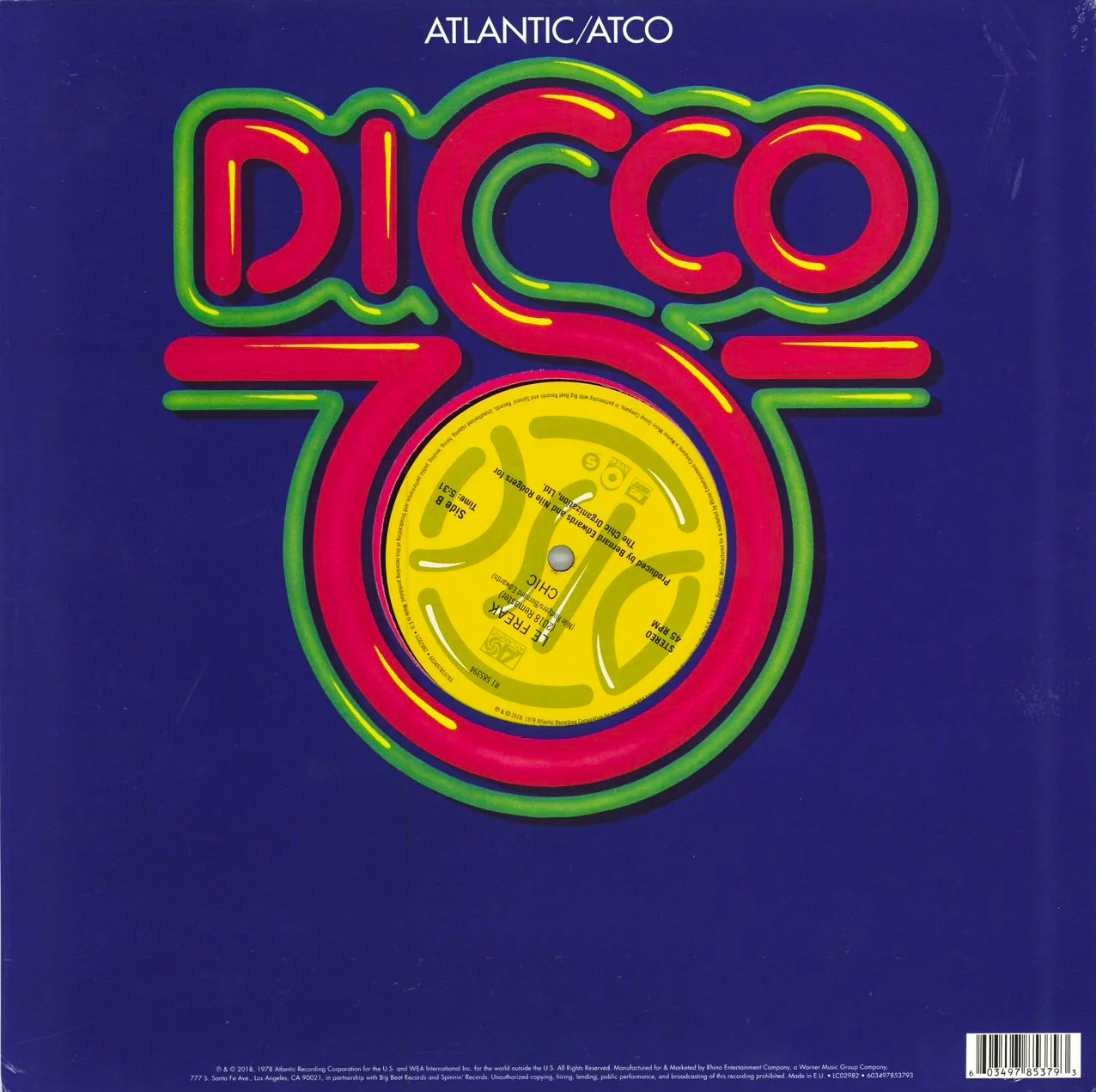
In the early 2000s I met Nile Rodgers, after a Chic concert. At the time I was running Warner Music Belgium’s “strategic department”, I’ll explain the mysterious meaning of strategic on the B-side of this week’s post. I had a request from one of the national radio stations for a radio interview and happened to be the only person from our department at the show.
So I went backstage.
What followed surprised me. Nile Rodgers was incredibly friendly, relaxed, and generous with his time. We even shared a beer together. During that conversation he told me the story behind “Le Freak”, long before I later read it in books and interviews.
That meeting left me with a simple thought.
Maybe the truly great artists are simply… nice people.
The song he told me about would become one of the most important records in the history of dance music.
Because The Twelve Inch is the story of how dance music kept reinventing itself, often by accident.
And “Le Freak” is one of those moments.
👋 Welcome, I’m Pe Dupre, thanks for stopping by.
This is The Twelve Inch, a community about the history of dance music from 1975 to 1995, told one twelve-inch record at a time.
If this landed in your inbox because a friend forwarded it, I’d love for you to subscribe so you don’t miss the weekly episodes. Each one dives into a track, its story, and the culture around it.
To celebrate this new Side A / Side B structure, I’m offering:
🎉 20% off all paid subscriptions during March
🎸 Two Musicians, One Telepathic Groove
The story of Chic begins with Nile Rodgers and Bernard Edwards.
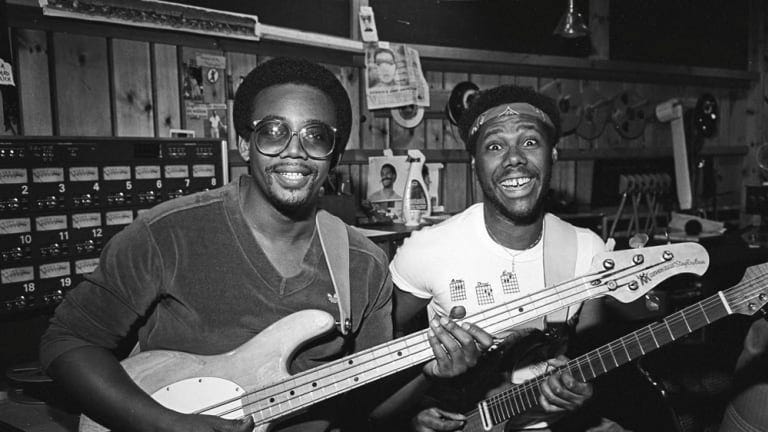
Ironically, their first meeting did not go well at all. When Rodgers enthusiastically explained his avant-garde jazz-rock fusion ideas, Edwards was unimpressed and basically told him to lose his number.
A few months later they met again on the “Chitlin’ Circuit”, a touring network of clubs and venues for Black musicians, I’ll explain the term more fully on the B-side.
This time something magical happened.
When they started playing together, it felt almost telepathic. Each instinctively knew where the other was going musically. From that moment on they became inseparable. If one was hired for a session, he tried to bring the other along.
Their big early break came in 1973, when Edwards became musical director of a group called New York City. Despite the name, the band had a strong Philadelphia soul sound and scored a hit with “I’m Doing Fine Now.”
Touring with the band gave Rodgers and Edwards time to experiment and refine their musical ideas.
One crucial discovery happened almost by accident. During a concert another band used Rodgers’ guitar amp before their set. The guitarist produced a rhythm sound Rodgers had never achieved himself.
Rodgers switched guitars and began imitating the style, gradually developing it into his own technique.
He later called it “chucking.”
It would become one of the most recognizable guitar sounds in dance music history. (more on this on the B-side)
🧬 The Secret Formula, DHM
While touring and playing sessions, Rodgers and Edwards also developed a concept that would guide everything they created.
They called it DHM, Deep Hidden Meaning.
The idea was simple but powerful. A song has a musical DNA. If you truly understand that DNA, you can express it in many different musical disguises without losing its essence.
That approach would later define the Chic sound.
At the same time, the band New York City was beginning to fall apart. During their final shows in London Rodgers lost his passport and had to stay behind while waiting for a replacement.
And that delay changed everything.
✨ Glamour, Roxy Music and the Birth of Chic
While stranded in London, Rodgers went to see Roxy Music perform in a club. The experience blew him away. He later said:
Rodgers immediately bought their albums Stranded and For Your Pleasure. The glamorous women on the covers, Marilyn Cole and Amanda Lear, fascinated him.
Suddenly he had a vision. He called Bernard Edwards and said:
“Got What?” Bernard answered.
The final ingredient came from another unexpected source, KISS. Like Roxy Music, they understood that visual identity could be as important as the music itself. Rodgers and Edwards decided their new band would combine several ideas:
• anonymous mystique like KISS
• sleek elegance inspired by Roxy Music
• strong visual art direction
• a groove built from jazz, soul and funk, but with European-style melodies.
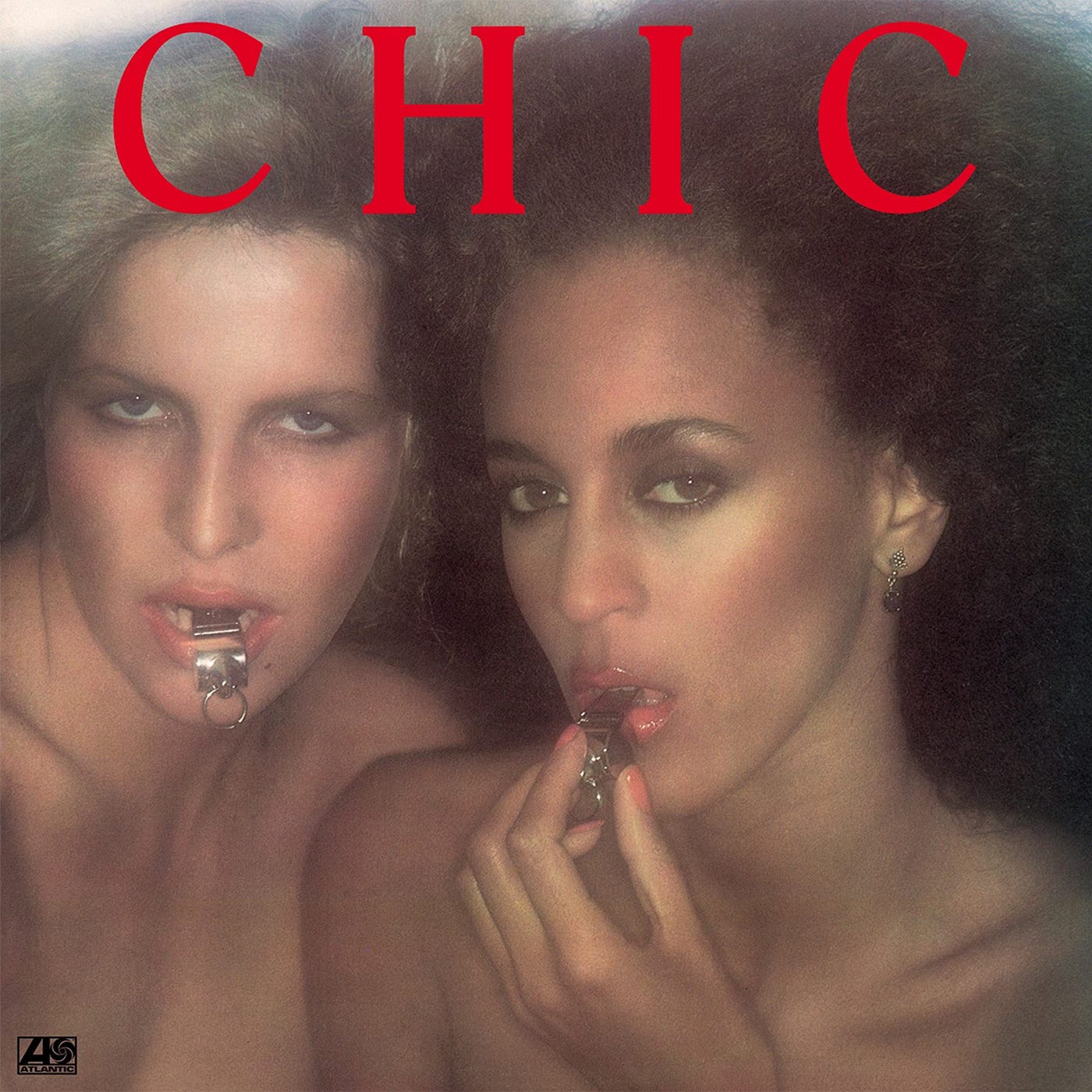
Chic’s first album : anonymous mystique, sleek elegance and strong visual art direction
Their first band name idea, The Big Apple, had to be dropped after Walter Murphy scored a hit with A Fifth of Beethoven, credited to Walter Murphy & The Big Apple Band.
Their second choice suddenly became perfect : Chic.
💃 The Rise of the Chic Organization
Chic’s first song was “Everybody Dance.” But the breakthrough came with “Dance, Dance, Dance.” The success of the record secured them a deal with Atlantic Records.
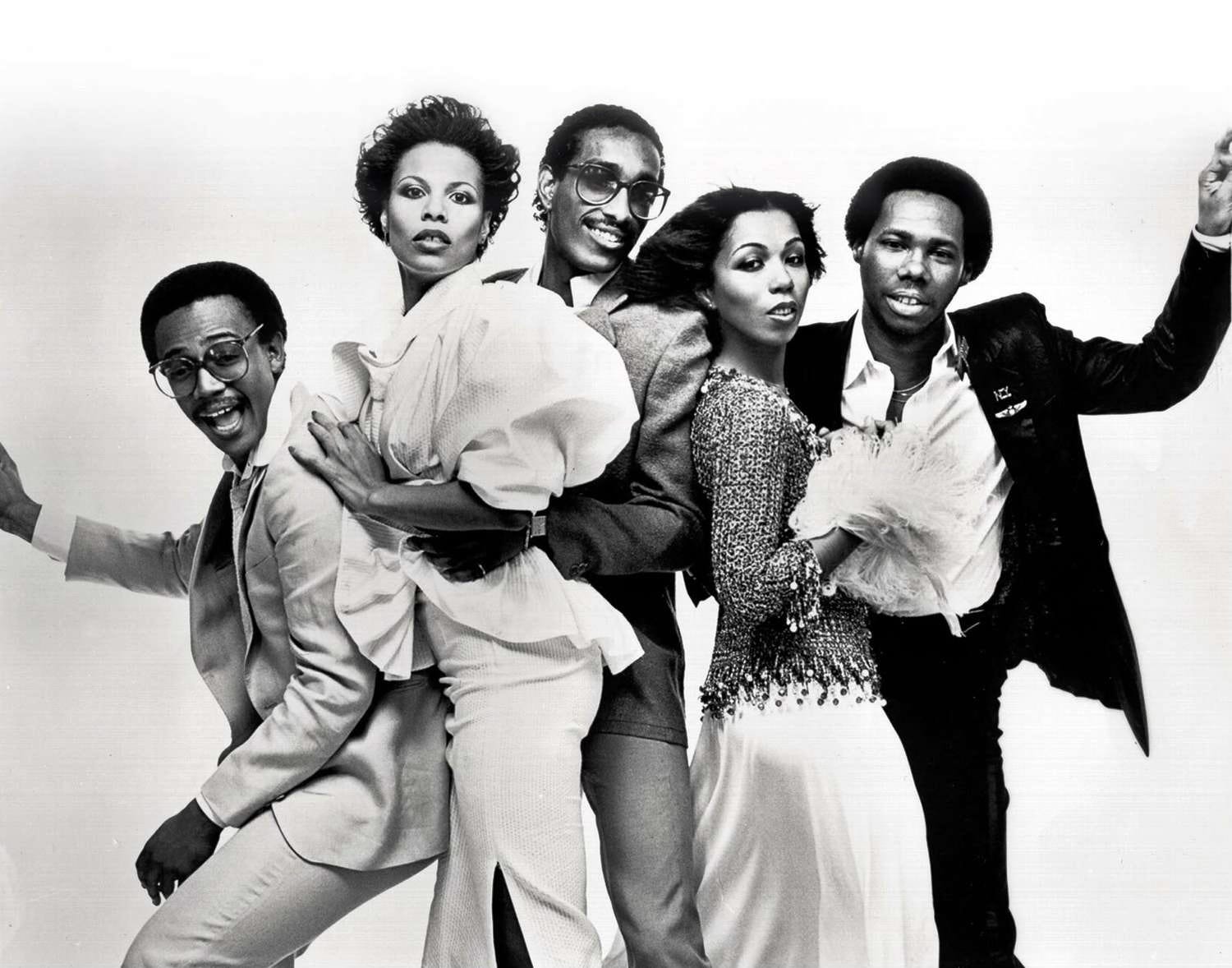
Rodgers and Edwards also perfected their visual concept. Instead of flashy outfits like most R&B artists at the time, they appeared in elegant designer suits, understated but sophisticated.
.
They placed glamorous women on album covers, echoing the Roxy Music aesthetic.
Behind the scenes they built something even bigger.
The Chic Organization Ltd.
It was not just a band. It was a musical production empire. And soon it would produce one of the biggest hits of the disco era.
🚪 “Fuck Off” and the Birth of Le Freak
Ironically, the inspiration for “Le Freak” came from rejection.
Rodgers had already visited Studio 54 before. His girlfriend, a graduate from the Fashion Institute of Technology, knew how to get him past the velvet rope. But on New Year’s Eve 1977, Rodgers and Edwards tried entering the club without her. They had been invited by Grace Jones.
The doorman had a different idea.
His response was simple.
“Fuck Off.”
Rodgers and Edwards returned home frustrated and started jamming on their instruments. The phrase stuck in their heads. They turned it into a chant. Of course, a song called Fuck Off would never get radio airplay. So they changed the words.
“Freak Out.”
Rodgers later explained that the phrase did not even make complete sense at first. But it captured the spirit of losing yourself on the dancefloor. Bernard Edwards had another insight.
The result was “Le Freak.” A global explosion. The single went triple platinum in the United States, meaning over six million copies sold. At the time platinum meant two million units. It remains the biggest single Atlantic Records ever released.
And yes, it was my first encounter with Chic as well. In Belgium and the Netherlands the record reached number two. The number one that blocked it? YMCA by the Village People. Let’s just say… musical taste sometimes comes and goes.
🌍 Chic Conquers the World
The success of Le Freak opened the floodgates. Soon the hits kept coming:
• I Want Your Love
• Chic Cheer
• He’s The Greatest Dancer
• We Are Family
• Lost In Music
• My Forbidden Lover
• My Feet Keep Dancing
• Good Times
Many of the singles and albums went gold, platinum, or multi-platinum. Ironically, the club that inspired their biggest hit also became Rodgers’ favorite hangout.
Studio 54.
He became part of its inner circle, alongside celebrities like David Geffen and Truman Capote. But success can also create enemies.
The Twelve Inch is a growing community of people who love disco, eighties, and early-nineties dance music.
If you know someone who would enjoy these stories, feel free to share this post with them or pass it along on Substack Notes. Every share helps the music — and the community — travel a little further. 💿✨
💥 Disco Sucks and the Fall of Chic
By 1979, a powerful anti-disco movement had emerged. Rock bands like The Knack were celebrated as saviors of rock music, while disco artists were treated as the enemy. Chic became a prime target. Rodgers explained:
The band responded with the single “Rebels We Are.”
They had once promised never to use their music as direct protest. Yet anger over the backlash shaped the entire album. The smooth Chic sound changed. Commercial success faded. It seemed like the end.
🎛 The Producers Who Changed Pop
But the story did not end there. Rodgers and Edwards simply shifted roles. Instead of making hits as Chic, they began producing hits for everyone else.
Through the Chic Organization they helped create classics for numerous artists. We have already encountered some of them in earlier Twelve Inch stories:
• Robert Palmer – “I Didn’t Mean To Turn You On” (Bernard Edwards)
• Sheila B Devotion – “Spacer” (Bernard Edwards & Nile Rodgers)
• Duran Duran – “Notorious” (Nile Rodgers)
And there are many more. Rodgers and Edwards would become two of the most influential producers in music history.
🎧 The Sound That Built Modern Dance Music
The impact of Chic went far beyond their own records. Their sound changed dance music in several ways.
First, they shifted disco from orchestral drama to groove-based rhythm.. Three musical elements defined the Chic blueprint:
• Nile Rodgers’ precise percussive guitar
• Bernard Edwards’ melodic driving basslines
• a minimal but powerful rhythm section
This approach directly influenced:
• late-70s boogie
• early-80s post-disco
• electro-funk
• house music
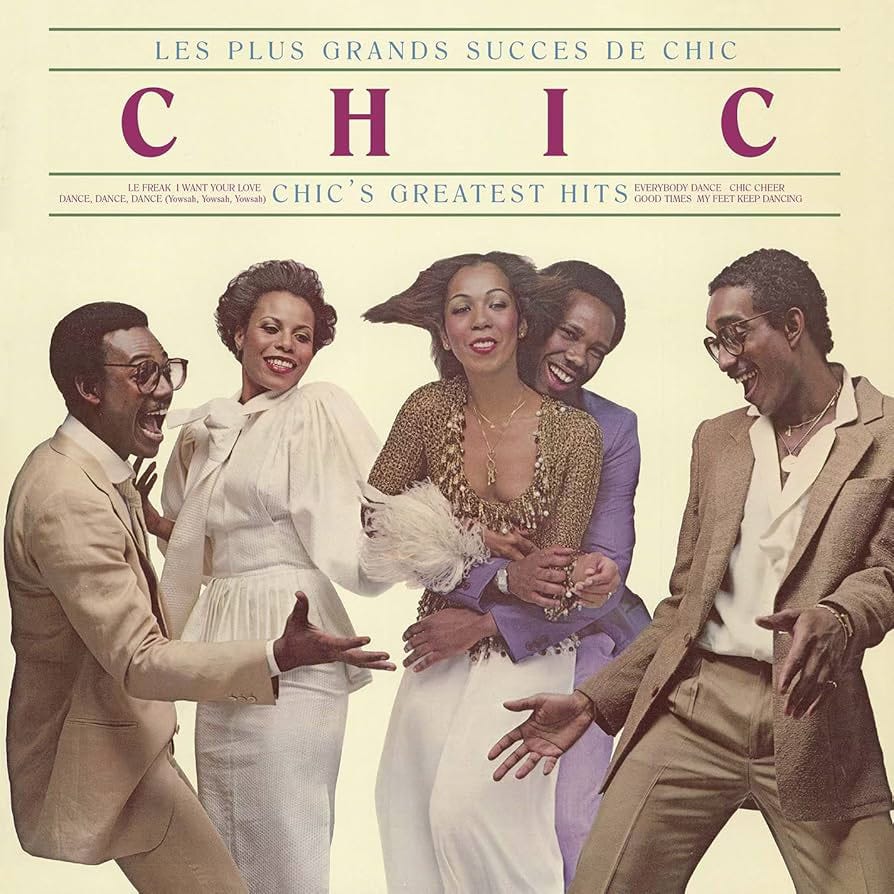
Even the disco revival of the late 1990s followed this blueprint rather than the earlier orchestral disco style.
Chic also fused disco with the discipline of James Brown-style funk, creating a tighter and more rhythmic groove.
In many ways they became the bridge between disco and 1980s funk.
And then there is Bernard Edwards’ bassline on “Good Times.”
Few grooves in music history have been sampled more often. If Edwards had received a writing share on every track inspired by it, he and his heirs might indeed have become some of the richest people on the planet. We will dive deeper into that story in a future Twelve Inch episode.
🪩 When Failure Creates a Legacy
Chic did not survive the disco backlash of 1979.
Studio 54 eventually closed.
But their influence never disappeared.
“Le Freak” became the soundtrack of the Studio 54 era, and the club itself even appears in the lyrics. Quite ironic when you remember how the song started. Two musicians refused entry. One rude doorman. A spontaneous jam session. And suddenly dance music had a new anthem. By (initially) not getting what they wanted, they got much more than they imagined. And once again it proves the central thread running through this entire series.
The Twelve Inch is the story of how dance music kept reinventing itself, often by accident.
💬 Over to You
Now I’m curious to hear from you.
• What is your favorite Chic track?
• Do you think “Le Freak” is the ultimate Chic anthem, or does another song beat it?
• Where did you first hear Chic, on the radio, in a club, or on vinyl?
• And which Nile Rodgers production still blows your mind today?
Jump into the comments and share your memories. I love to hear from you
The dancefloor is open. 🕺
Tomorrow I’ll publish the B-Side of this week’s episode for subscribers.
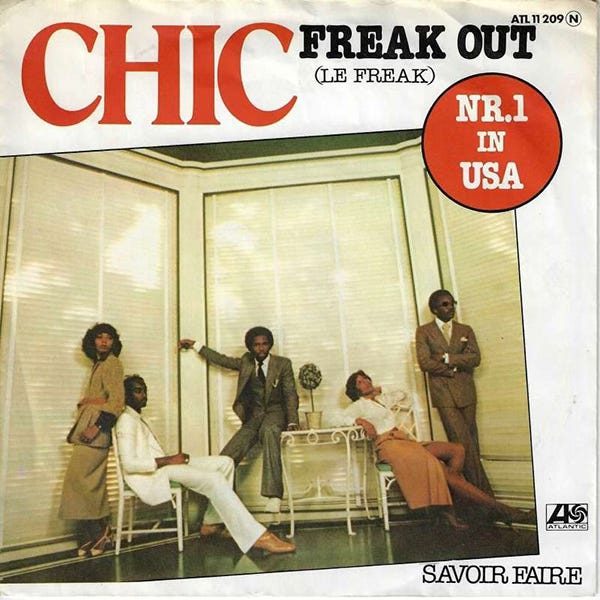
It includes the Beats (extra context), the Acapella (personal stories), and the Dub: a curated listening crate expanding the world around this record with a personal playlist.
So You Wanna Hear More ?
I thought you would !
It’s fun to write about music but let’s be honest. Music is made to listen to.
Every week, together with this newsletter, I release a 1 hour beatmix on Mixcloud and Youtube (although this week is a bit of a special edition so there’s only a Mixcloud version). I start with the discussed twelve inch and follow up with 10/15 songs from the same timeframe/genre. The ideal soundtrack for…. Well whatever you like to do when you listen to dance music.
Listen to the Soundtrack of this week’s post on MIXCLOUD
So looking forward beyond the B-Side…What’s in store for next week?
Tina Turner is today seen as a rock artist, one of the few Afro American artists to successfully claim that label. But that doesn’t mean she didn’t have her dance music moments. Next week we’ll highlight one of her mid eighties gems.
Excellent Pe. Really enjoyed this one. I think Greatest Dancer is probably my favorite.
I’m not surprised that Nile was lovely when you interviewed him. While I’ve never had the pleasure myself, the guy has always radiated good vibes, and he always comes across in interviews as kind, funny and really thoughtful.
“Le Freak” (or “The Freakout Record,” as my school friends called it at the time), was the first Chic song I heard on the radio; but while I liked it, it was so omnipresent that I didn’t feel the need to own a copy. So my first Chic single was “I Want Your Love,” which I liked a little more than “Le Freak” because it was so melancholy and melodic. But my favorite Chic track? It’s gotta be “Happy Man,” which I rediscovered in 2010 and has been my theme song ever since!