
📀 The Story of Shannon: How “Let The Music Play” Invented Latin Freestyle and Launched a Future-Defining Genre but Not A Career
The Twelve Inch 199 : Let The Music Play (Shannon)

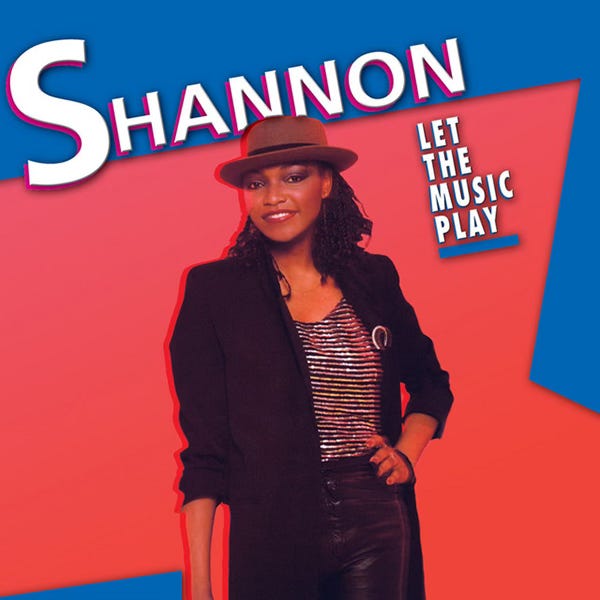
We’re closing in on episode 200, a small milestone in the history of this newsletter. When I launched this project two years ago, I didn’t begin with episode 1 but with episode 100. The first 99 were held in reserve for longer, thematic deep-dives. Which means that today’s episode 199 is, in fact, the 100th newsletter episode. So we have a double landmark to celebrate this week and next.
It feels right to do that by spotlighting two records that didn’t just become hits or launch careers, but shifted the course of dance music. Next week’s track famously made Brian Eno turn to David Bowie and declare that he had “heard the future”, and he wasn’t wrong. Today’s song is just as consequential.
“Let The Music Play” didn’t merely introduce the world to Shannon. It effectively ignited the sound that might first have been called “Shannon Music,” but that we now know as Latin Freestyle. Few genres have such a clear origin point. Most emerge from clusters of records and overlapping influences. Latin Freestyle can be traced directly to this single and to the producer behind it, Chris Barbosa.
Shannon’s debut was a global smash that raised expectations for an enduring career. But things unfolded differently: missed opportunities, major-label politics, and the perennial mismatch between big record companies and dance artists. Latin Freestyle would peak in the latter half of the eighties, by which time Shannon’s star had already faded.
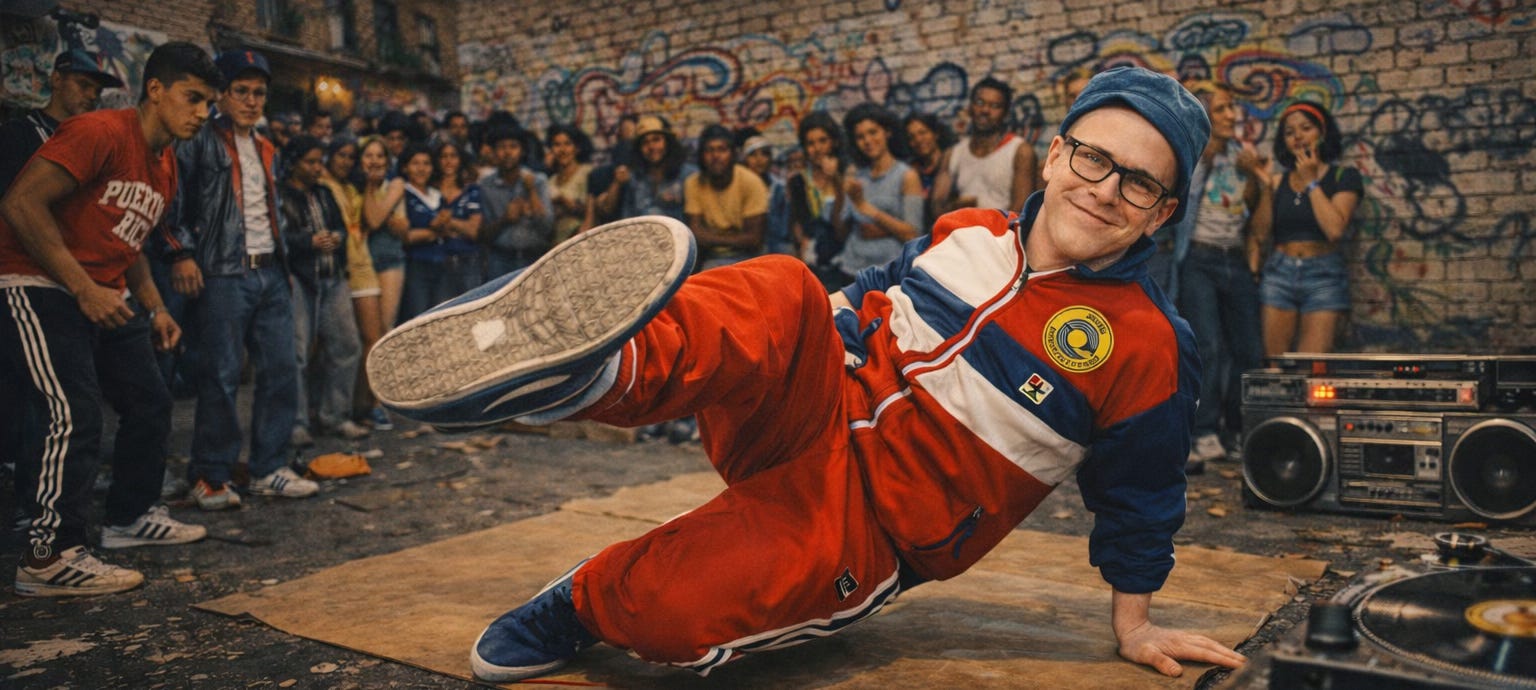
So today we shine a light on why “Let The Music Play” mattered, why Shannon didn’t become the Donna Summer of the eighties, and how Barbosa engineered a sound that spawned a new subculture in its slipstream. Lace up your Puma suedes, zip up your Fila tracksuit, cue the boombox, there’s some breakdancing ahead.
Let’s dive in.
👋 Welcome, I’m Pe Dupre, thanks for stopping by.
This is The Twelve Inch, my newsletter about the history of dance music from 1975 to 1995, told one twelve-inch record at a time.
If this landed in your inbox because a friend forwarded it, I’d love for you to subscribe so you don’t miss the weekly episodes. Each one dives into a track, its story, and the culture around it.
And if you’re already enjoying the free posts, would you consider becoming a paid subscriber? Your support helps me keep researching, writing, and unearthing the stories behind the music.
🎤 Brenda “Shannon” Green — From Gospel Roots to Salsa Rhythms
Brenda “Shannon” Green, who would become a major figure in the post-disco New York scene, wasn’t born in the city but in Washington D.C. in 1958. As far as I know, the family moved to New York when she was young, and it was there that Shannon grew up. Her father, Stanley, came from Haiti, and her mother had Black and American Native ancestry.
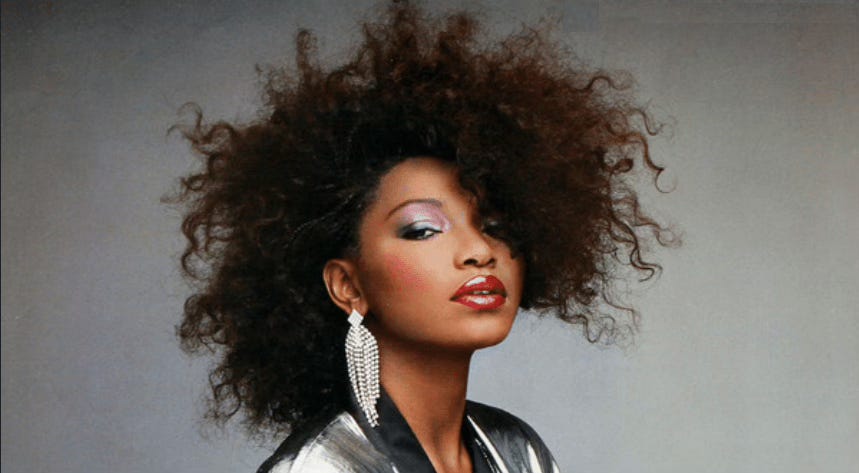
Music mattered in the Green household, particularly Gospel. Shannon sang in church choirs, a training ground we see time and time again in the biographies of African-American artists. Living in Brooklyn, she was also exposed to the music popular in the Latin community and developed a love for Salsa.
Initially, music wasn’t destined to become a career. At 17, Shannon’s father was killed and her mother, deaf and blind, needed support. Shannon went to work as a receptionist, counselor, and waitress. She kept one foot in music, singing after hours in a New York jazz ensemble.
🧠 Chris Barbosa, The Mastermind Behind the Sound
By the time Chris Barbosa was working in his bedroom on the track that would become “Let The Music Play,” New York, and by extension the world, had already been introduced to electro hip hop, a fusion of Kraftwerk’s 1981 album Computer Love with the possibilities of the new & affordable synths and drum machines like the Roland TR-808. Arthur Baker, Afrika Bambaataa, and “Planet Rock” (1982) were key catalysts. As influential as it was, electro mostly moved the dancefloor, not the pop charts.
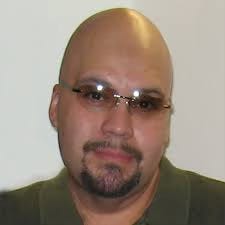
It was only a matter of time before someone turned the electro sensibility into an out-and-out pop record. Enter Chris Barbosa, a young Puerto Rican DJ from the Bronx whose day job was delivering documents for the city board of electricians. He’d convinced his grandmother to buy him a few Roland synths, not initially to make music, but to enhance his DJ sets. Soon he was generating sounds worth developing into tracks.
Barbosa’s sideline gig as a “music reporter” for station WKTU gave him access to label bosses. He played them a track called “Fire And Ice,” the precursor to “Let The Music Play.” The person he was closest to was Sergio Cossa of Emergency Records.
💿 Emergency Records, Italo Meets the Bronx
Sergio Cossa was a club and radio DJ from Milan who began as a staffer for Italy’s Baby Records, a major dance label. When Baby opened a New York office, Cossa moved to the U.S. in the late seventies. He eventually bought out Baby Records’ New York operation, renamed it Emergency Records, and made it an important underground NYC player, releasing early Italo like Kano and local tracks such as Northend’s “Happy Days.”
Barbosa and DJ friend Nelson Cruz were already engaged by Emergency to cut a rap track and were paired with Cincinnati producer Mark Liggett. During the session, Barbosa played Liggett “Fire And Ice.” Liggett liked it; they agreed to co-produce it, and Liggett brought in a lyricist. That song would become “Let The Music Play.”
🎶 The Breakthrough: “Let The Music Play”
The direct inspiration for “Let The Music Play” wasn’t primarily “Planet Rock,” but its follow-up, “Looking For The Perfect Beat.” The title is literal here: Barbosa was looking for a perfect beat and drew from the break section of the Afrika Bambaataa/Arthur Baker track, then added a crucial ingredient, the syncopated Latin rhythms he’d grown up with.
Collaborating with an Italian-versed label explains why the lead synth carries an Italo inflection. Electro + Latin rhythms + Italo synths = a powder mix that exploded onto dancefloors in late 1983.
As with many groundbreaking records, nobody saw the full potential at first. Shannon—who entered the picture via a friend-of-a-friend—was unimpressed:
Attentive listeners will note the doubled vocal in the chorus. Shannon’s vocal was paired with Jimi Tunnell, a white session singer from Texas with a high-pitched voice. The blend worked.
Released in October 1983, the song became a massive hit. Jellybean Benitez, DJ at the Funhouse in 1982, recalled:
“I Remember playing it for the first time off a reel to reel tape and thinking it’s going to be a smash. I played it 5 times that first night. It had a latin thing to it” I
The song hit No. 1 on the dance chart but, crucially, also broke the Hot 100 Top 10 and crossed into the European pop charts, rare in the post-disco era, when dance music was suspect to U.S. radio and the industry.
🚀 The Start of a Career, A Complicated Label Triangle
Here’s the kicker: when the song broke, Shannon wasn’t signed as an artist. Emergency had engaged everyone as work-for-hire. When it hit, they had to rush to sign her. And the label landscape was complicated.
Emergency was a local New York dance label with no national or international muscle. So Emergency sublicensed the track to Mirage Records, founded by former Atlantic head Jerry Greenberg (with brother Bob). Both Emergency and Mirage were distributed by Atlantic. Three labels were now in the mix, enough muscle to break a hit, but messy for career development.
During the glow, there were no complaints. Expectations soared. Greenberg asked:
“She sings great, she looks great. Could she be the next Donna Summer?”
Career-wise, things were golden. “Let The Music Play” was followed by “Give Me Tonight,” another No. 1 dance hit. It did slightly less well on the pop charts and in Europe, but kept Shannon visible. The third single, “My Heart’s Divided,” also landed strongly.
The debut album went gold, exceptional for a dance album at the time, and Shannon earned a Grammy nomination. The future looked bright.
🇵🇷⚡ Freestyle: A Genre Is Born
“Let The Music Play” wasn’t just a hit. It kickstarted a genre, Latin Freestyle, that remains foundational to U.S. dance music.
As explained in the episode on TKA and “One Way Love,” early-eighties young urban Latinos and Italian-Americans found themselves musically “homeless.” Disco was over, but the genres replacing it didn’t resonate. Electro hip-hop, New/No Wave, and rock-formatted radio didn’t serve them. Stations that once leaned into disco shifted formats; WBLS and Kiss FM catered mainly to African-American audiences. A clear demand existed; the sound didn’t, until now.
This is why “Let The Music Play” landed so powerfully. Barbosa may not have been fully conscious of the combination’s power, but he understood what he had unlocked:
Before “Latin Freestyle” was coined, industry people called it “the Shannon sound.” By 1984, others were already iterating on it, most notably Nayobe’s “Don’t Go,” the first record to clearly articulate the Latin identity and imagery embedded in the style.
🏳️🌈☠ AIDS and the End of an Era
“Let The Music Play” is often viewed as the last major dance record to emerge from New York just before AIDS devastated the city’s nightlife and music ecosystem.
AIDS was detected in New York and on Fire Island in 1980. Initially whispered as a fatal “gay cancer,” the toll became visible by 1982–83. A major club, The Saint, became so associated with cases that “Saint’s disease” served as an early colloquial name. By the mid-eighties, New York was an epicenter. Entire communities, especially queer and trans, vanished from dancefloors. Scenes collapsed, venues shuttered, friend circles disappeared.
Simultaneously, gentrification was eroding the experimental, mixed-income nightlife ecology (Mudd Club, Club 57, etc.). AIDS accelerated the decline. A new era dawned, more commercial, more regulated, more property-owner-friendly. New York would continue producing successful dance music, but the 1977–83 culture was gone.
“Let The Music Play” stands near that pivot point.
📉 What Happened to Shannon? Industry Politics Takes Over
Nightlife changes played a role in the broader ecosystem, but Shannon’s derailment was rooted in corporate politics. And with a major label involved, politics mattered.
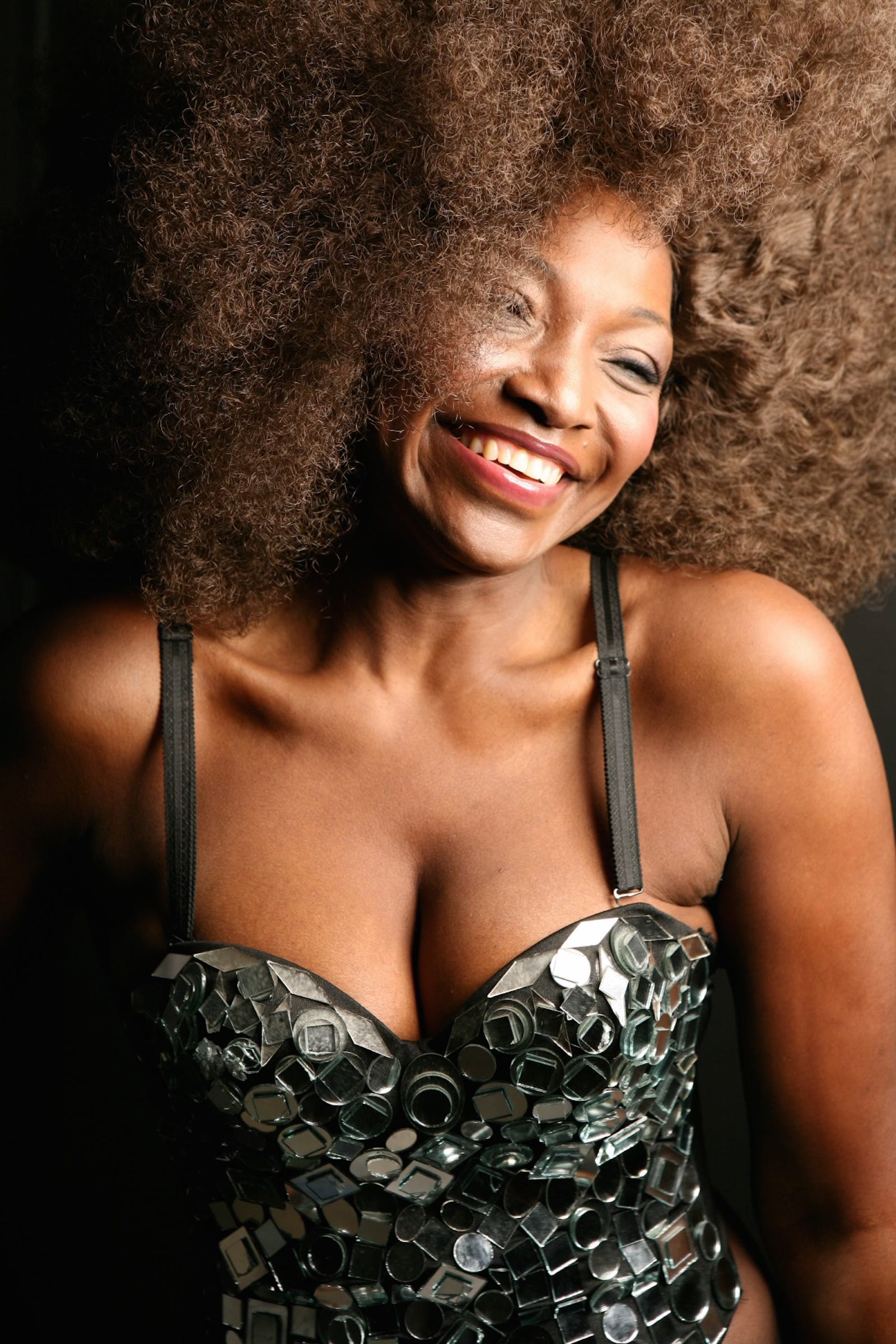
The first single from her second album, “Do You Wanna Get Away,” delivered another No. 1 on the Billboard dance chart. But Shannon had no creative control. She wanted it, and asked for it:
The label’s answer: “No.”
The second problem: direction. Instead of banking on the genre they had just created, Mirage and Atlantic pushed Shannon toward pop. With Madonna, signed to Sire/Warner Bros, scoring big, internal competition fueled the pivot away from Latin Freestyle. It backfired. The low point was a forced cover of Foreigner’s “Urgent”:
“Jerry Greenberg thought it would be a great idea to record it. It’s a great song as is,but it wasn’t my baby” said Shannon “I got a lot of backlash on that one”
The second album performed significantly worse. When work began on the third, Sylvia Rhone became head of Atlantic, the first Black woman to become president of a major U.S. label, but not a Shannon supporter. They clashed immediately. The resulting album lacked direction, received no support, and flopped. Career and contract ended.
🌐 Impact and Influence — A Song That Shifted the Future
John “Jellybean” Benitez later reflected:
“Is still a relevant record; At The End of the day it’s still a great melody and a great lyric. It had a little hip hop in it, a little electronic music. It had a memorable hook. There were times I could turn off the music, mid-song and the crowd would sing along. And then I brought the music back in and people screamed and went crazy”
Beyond quality, the track proved that post-disco, synth-driven, club-born music by Black and Latino-adjacent creators could cross over at a time when U.S. radio distrusted “disco.” Stylistically, its fusion of electro programming, Latin syncopation, Italo synths, and melodramatic R&B vocals became the foundation for mid-eighties Freestyle, Lisa Lisa & Cult Jam, Exposé, TKA, and many more.
📉 Aftermath — Credits, Royalties, and a Return Too Late
After the third album, Shannon left the music business to support her mother. She returned in the late nineties on Todd Terry’s club hit “It’s Over Love,” and also sang on Sash!’s “Move Mania.” She released an album, but the original career couldn’t be revived. Freestyle reunion concerts at least allowed her to reclaim some audience visibility.
But here’s another kicker: Shannon saw virtually no royalties from her hits. She received one $34,000 payment in 1984 and nothing thereafter. Given the track’s eternal popularity, that is, at best, not great.
Chris Barbosa, meanwhile, became a major producer. His credits include Jay Novelle, Nolan Thomas, Xena, Monet, and George LaMond, bona fide Freestyle royalty. He never considered himself the king, but by any metric, he was.
📚 Legacy — The Power of One Song
The story of “Let The Music Play” demonstrates how one record can ignite a musical direction. As always, it comes down to combination, timing, inspiration, and luck. And luck was precisely what Shannon lacked. Like many young, talented female singers, she was surrounded by people who didn’t secure contracts that allowed her to benefit from her work. And once again we see how being a dance artist signed to a major label is not always the best option.
The Shannon repertoire is now owned by Unidisc, the same company that owns Man Parrish’s “Hip Hop, Be Bop (Don’t Stop),” another track that generated wealth for many people except the artist. These exploitation dynamics aren’t Unidisc’s doing, they bought the rights post-success, but acquiring catalogs shouldn’t prevent fair royalty. Owning old music rights is an investment strategy, and ROI is expected. But without the artist’s work, ROI would be zero. Fair pay should follow.
🪩 Your Turn: What’s Your Freestyle Origin Story?
Did “Let The Music Play” cross your path in real time, or did it arrive later through compilations, mixtapes, or YouTube rabbit holes?
Did you connect first through Shannon… or through TKA, Exposé, Lisa Lisa, Nayobe or another Freestyle act entirely?
And the bigger question:
What’s the first record that made you feel you were “hearing the future”?
Drop your stories, memories, trivia, or rare 12-inch tips in the comments, I’m always curious how these genres travelled, who heard them where, and what sparked for whom.
Further reading (or should I say watching)
There are a number of interesting video’s/links :
So You Wanna Hear More ?
I thought you would !
It’s fun to write about music but let’s be honest. Music is made to listen to.
Every week, together with this newsletter, I release a 1 hour beatmix on Mixcloud and Youtube. I start with the discussed twelve inch and follow up with 10/15 songs from the same timeframe/genre. The ideal soundtrack for…. Well whatever you like to do when you listen to dance music.
Listen to the Soundtrack of this week’s post on MIXCLOUD
Or on Youtube :
So what’s in this week’s mix ?
This week’s mix unfolds in two distinct parts. The first sits firmly in Electro (hip-hop) territory, with the Rock Steady Crew, Man Parrish, Freeez, and Two Sisters. We open with Shannon’s “Let The Music Play,” and you’ll hear how naturally it slots into this lineage.
The second half pivots into the synth-pop/New Wave material that was defining the same era. Chaz Jankel’s classic “Glad To Know You,” Gang of Four’s “I Love a Man in Uniform,” and the superb dub of “The Secret Life of Arabia” by Heaven 17 — a.k.a. the British Electronic Foundation, featuring the extraordinary vocals of Billy McKenzie of The Associates.
Bridging both sides are two pitch-perfect Italo disco selections: The Voice of Q and Klein & M.B.O.
There’s even a Belgian connection this week: Brussels chanteuse Nathalie and her George Kajanus/Peter Godwin-produced “My Heart Won’t Let You Down,” presented here in its Franglais version.
Enjoy the ride! 🎶
Next week, we hit a milestone with episode 200. It’s only fitting that we shine a light on an absolute classic. A record that made Brian Eno say “I just heard the future” when he heard it for the first time. Next week I’ll explain what all the fuss was about.
I ❤️ NY
This is fantastic Pé! I’ve been looking forward to this one for a long time. My older sister had this album in 1983. As I was preparing myself for the rite of passage that was my first high school dance, this was the album we listened to when she taught me how to dance.
I have such a vivid recollection of bustin a move in my bedroom to “Let the Music Play” and “Give Me Tonight”. Although I’ve never been a great dancer, the moves I learned served me well on the high school dance circuit when none of my young peers had any clue what the hell they were doing 😆