
🎤 The Human League Story: From Failure to “Don’t You Want Me”
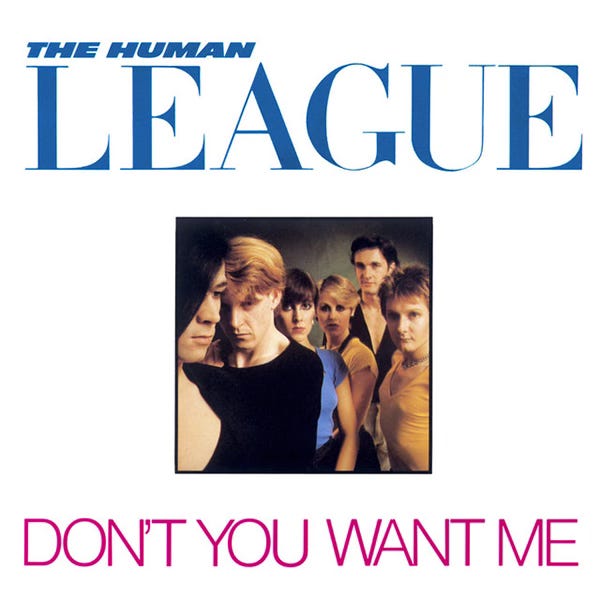
The Twelve Inch 207 - The A-Side (Extended) : Don't You Want Me (Human League)

A few weeks ago I dedicated an episode to Homosapien, the first solo single of Pete Shelley.
It all started with producer Martin Rushent, who wanted to explore the, then new and increasingly affordable, world of synthesizers. It was an idea he shared with Shelley. So when the sessions for the fourth Buzzcocks album failed to spark anything meaningful, the two moved operations to Rushent’s new home studio in Berkshire.
There, they began experimenting with this new gear, shaping what would arguably become the blueprint for a hugely successful synth-pop sound.
Except… not for Pete Shelley.
He was just a bit too left of centre to become the new synth-pop poster boy. That role would go to a band from Sheffield.
👉 So here’s the question that drives today’s story: if Martin Rushent and Pete Shelley created that sound, why did it work so brilliantly for The Human League?
We often think there was a clear divide between late seventies punk and early eighties post-punk. In reality, there wasn’t.
The punk ethos, anyone can create music, even without technical skill, became the foundation of early synth culture.
Many former punk musicians simply swapped guitars for synthesizers. The attitude stayed the same, the tools changed. Minimalism remained, but now it came with synth stabs instead of power chords. Out of this raw, experimental phase came new wave and synth-pop, evolving alongside new instruments hitting the market, like the Roland TR-808 drum machine in the early eighties.
There was, however, another factor, one that was more uniquely British.
It helps explain why the early eighties saw such an explosion of UK artists conquering global charts. In the US, this moment would be labelled the “second British Invasion.”
I’ll break that down fully on this week’s B-side, but the context matters.
The UK economy at the time was struggling, to put it mildly.
Prospects for young people were bleak.
And that often leads to creativity.
Music became not just an outlet, but an opportunity. Especially when the barrier to entry dropped. You didn’t need years of training anymore, you just needed an idea and a machine.
Some of those artists would go on to become global superstars.
Most wouldn’t.
Today, I’m zooming in on The Human League and their massive 1982–1983 hit Don’t You Want Me.
👉 Why did they become the face of synth-pop, and not Pete Shelley?
👉 How did Dare come together?
👉 And why couldn’t they sustain the global success that took them to number one on the Billboard Hot 100?
It’s time for the reign of the asymmetrical haircuts.
It’s time to go back to Sheffield.
The year is 1977.
👋 Welcome, I’m Pe Dupre, thanks for stopping by.
This is The Twelve Inch, a community about the history of dance music from 1975 to 1995, told one twelve-inch record at a time.
If this landed in your inbox because a friend forwarded it, I’d love for you to subscribe so you don’t miss the weekly episodes. Each one dives into a track, its story, and the culture around it.
And if you’re already enjoying the free posts, would you consider becoming a paid subscriber? Your support helps me keep researching, writing, and unearthing the stories behind the music. And You’ll get access to the weekly B-side post: the full archive and extra Subscriber Only Posts
⚡ Enter Sheffield – The Long Road To Nowhere
If there’s one thing you can say about the early The Human League, it’s that their breakthrough didn’t come quickly.
They took their time, so much so that when Gary Numan scored the first synth-pop number one with Are ‘Friends’ Electric? and opened the floodgates for the genre, the tide seemed to rise everywhere… except for them.
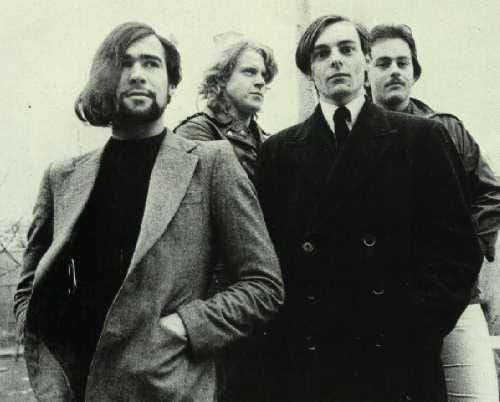
By that point, people were already writing them off as the has-beens that never were.
And here’s the kicker.
Many of those voices came from inside their own label, Virgin Records.
👉 So how did it get to that point?
🧪 Origins – From “Musical Vomit” To The Future
It all begins in early 1977, in Sheffield.
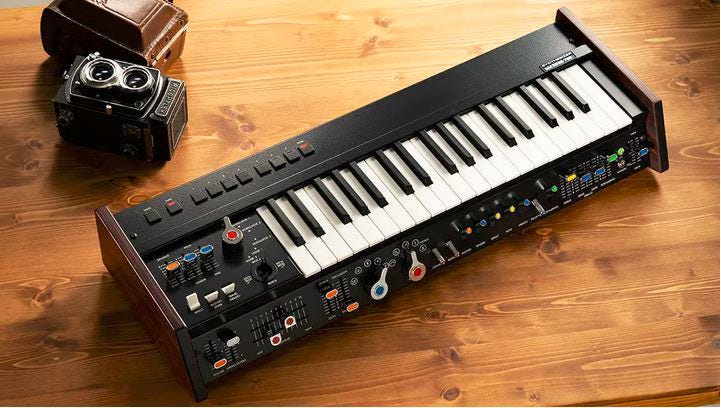
Ian Craig Marsh and Martyn Ware meet at a youth arts project. By day, both work as computer operators. By night, they share a deep fascination for music, from seventies glam rock to Tamla Motown and avant-garde electronica. This is also the moment when synthesizers are becoming just about affordable. So they take the plunge. They buy a Korg 700s together and teach themselves how to play it.
Before that, both had been involved in experimental, “messing about” bands around Sheffield, with names like Meatwhistle and, my personal favorite, Musical Vomit.
Their ambition is clear. Get access to more synths, push the boundaries, and follow in the footsteps of synth pioneer Brian Eno. Their first proper project is called The Future.
But when they begin searching for a singer, everything changes. They find Philip Oakey. And with him, a new identity. The band becomes The Human League, a name borrowed from a science fiction board game owned by a friend.
Oakey, at that point, is working as a hospital porter. But on the Sheffield social scene, he’s already known for his striking, unconventional style.
👉 “he already looked like a pop star”
🚫 Early Failure – When Nothing Works
In 1978, The Human League released their debut single, Being Boiled, on a small independent label. It didn’t chart.
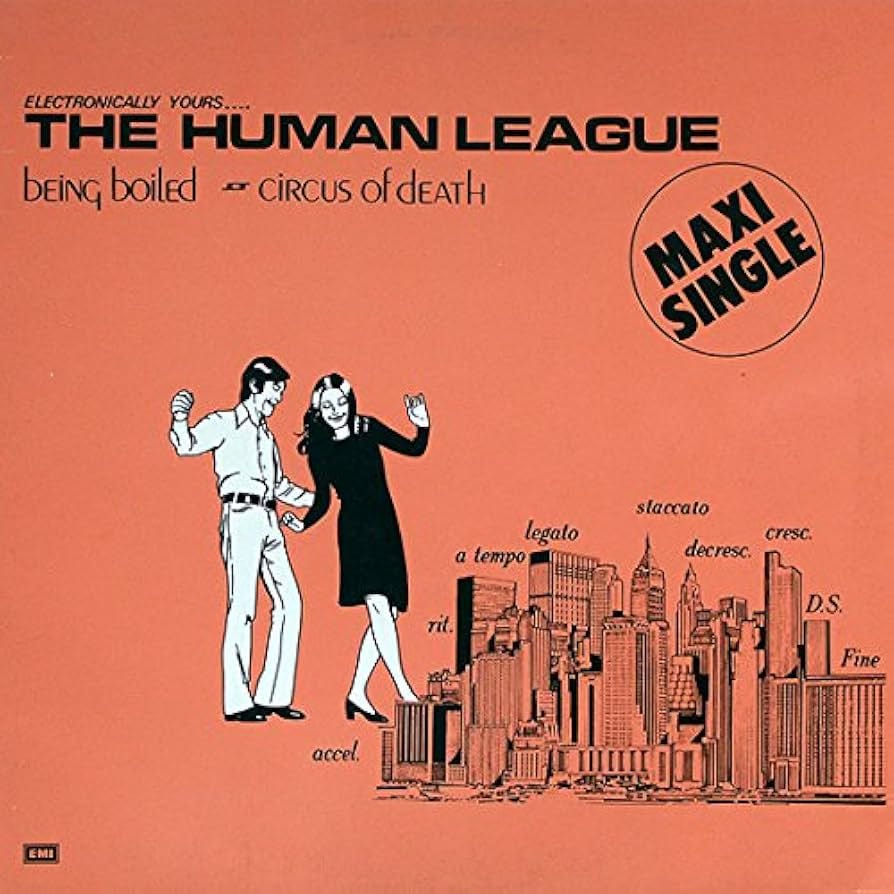
Being Boiled would be re-released (and chart) after the success of the first singles of Dare
But something else was happening.
👉 Their live reputation started to grow.
Word spread quickly, and one particular audience member took notice. David Bowie saw them perform at the end of 1978 and famously remarked that he had “seen the future of rock.” That kind of endorsement opened doors. Major labels came calling, and the band signed with Virgin Records, led by Richard Branson.
What followed was… complicated. Despite promises of creative freedom, Virgin immediately pushed for a more commercial direction.
The band was asked to combine their electronic approach with conventional instruments and traditional vocals. Having accepted a substantial advance, Martyn Ware had little room to resist. But he insisted on one condition. If they were going to release music in this style, it wouldn’t be under The Human League name.
So in July 1979, a disco-influenced track, I Don’t Depend on You, was released under the pseudonym The Men.
It went nowhere. It barely resembled their earlier work. And yet, in hindsight, it hinted at something to come. The track featured female vocals from Lisa Strike and Katie Kissoon, a sound surprisingly close to the future version of the band that would emerge in 1981.
With that experiment failing, Virgin allowed the group to return to their original vision. In August 1979, they released their debut album Reproduction. It didn’t chart. Neither did the single Empire State Human.
Momentum stalled. Completely.
Meanwhile, the scene moved on without them. Gary Numan stormed the charts with Are ‘Friends’ Electric?, redefining electronic pop and claiming the space The Human League had helped open. By early 1980, their status had shifted dramatically. They weren’t seen as pioneers anymore. They were seen as… irrelevant.
So much so that they became the subject of a jab in a hit single by The Undertones. In My Perfect Cousin, which reached number 9 in the UK, the lyric went:
“His mother bought him a synthesiser / Got the Human League in to advise her / Now he’s making lots of noise / Playing along with the art school boys”
👉 From “the future of rock” to a punchline in less than two years.
💥 The Break – Human League vs Heaven 17
The relationship between Philip Oakey and Martyn Ware had always been fragile. They regularly clashed, both creatively and personally. And as long as success stayed out of reach, those tensions only grew stronger. The contrast with Gary Numan’s breakthrough made things worse. What had once been a shared vision now became a dividing line. Ware wanted to stay true to a pure electronic sound. Oakey wanted to move closer to accessible pop structures
👉 The band was being pulled in two opposite directions.
Eventually, something had to give. In 1980, Ware walked out. And Ian Craig Marsh followed him.
Manager Bob Last tried to bring both sides back together.
He failed.
Several solutions were discussed, including the idea of creating two separate bands under a Human League umbrella. But in the end, a clean break was made. Oakey and Adrian Wright would continue as The Human League. Ware and Marsh would form a new band, Heaven 17, with singer Glenn Gregory, ironically their original choice for The Human League back in 1977
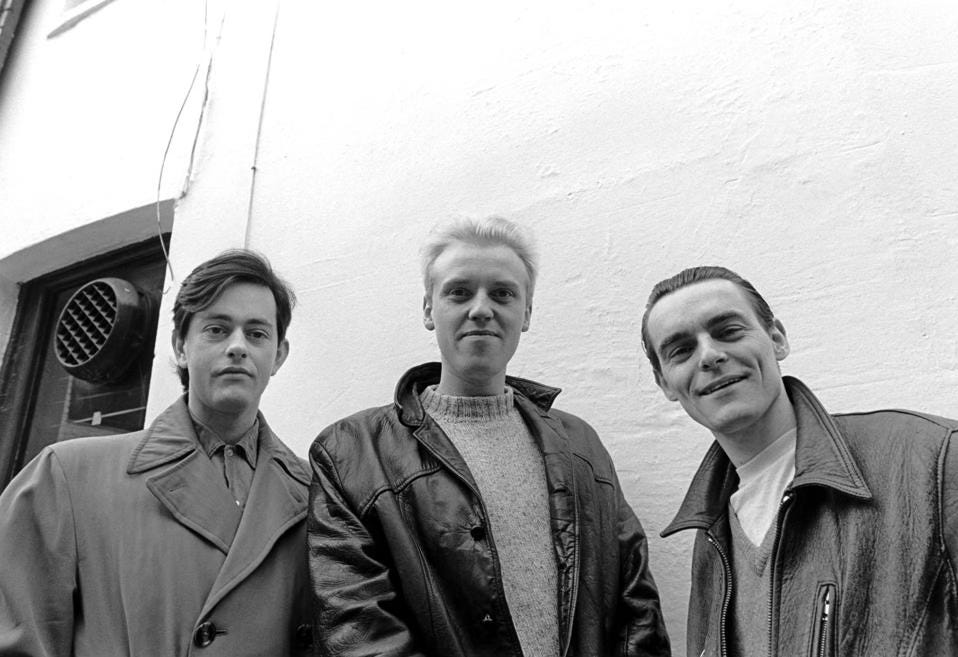
But keeping the Human League name came at a cost.
A heavy one.
Oakey inherited all the debts and obligations tied to the band. On top of that, the contract with Virgin Records required him to pay Ware and Marsh one percent of the royalties from the next Human League album…
…which would later become Dare 😁
And as if that wasn’t enough, the timing couldn’t have been worse. A tour was about to start. The first show was just ten days away. And the press had already written the obituary.
👉 The Human League was finished, now that “the talented people had left.”
🎤 The Craziest Recruitment Story Ever
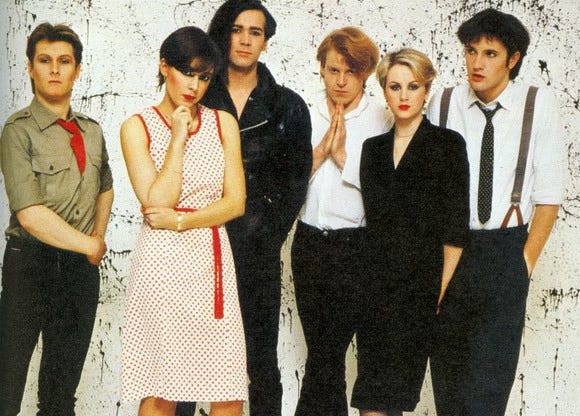
To save the tour, Philip Oakey had to rebuild the band in a matter of days. Adrian Wright stepped up by taking on more synthesizer duties, while Oakey decided he needed a female voice to replace Martyn Ware’s high backing vocals.
What happened next has become part of music history.
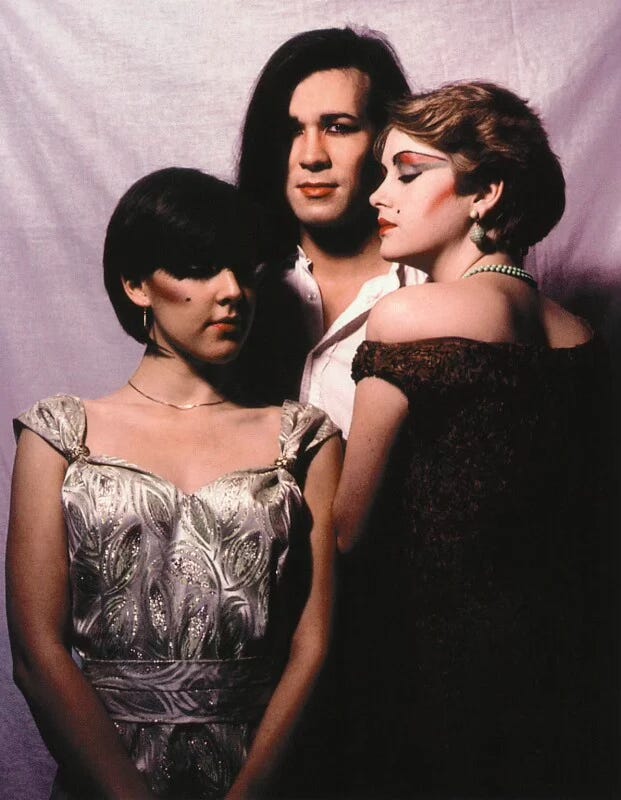
One Wednesday night, Oakey and his girlfriend headed into Sheffield city centre, moving from venue to venue, hoping to find someone who could join the band. They ended up at the Crazy Daisy nightclub. And that’s where everything changed.
On the dancefloor, Oakey spotted two girls dancing together: Joanne Catherall & Susan Ann Sulley. Both were 17 and out for a night with friends. Neither had any professional experience in singing or dancing. Without hesitation, Oakey approached them and asked them to join the tour as dancers and occasional vocalists.
Just like that.
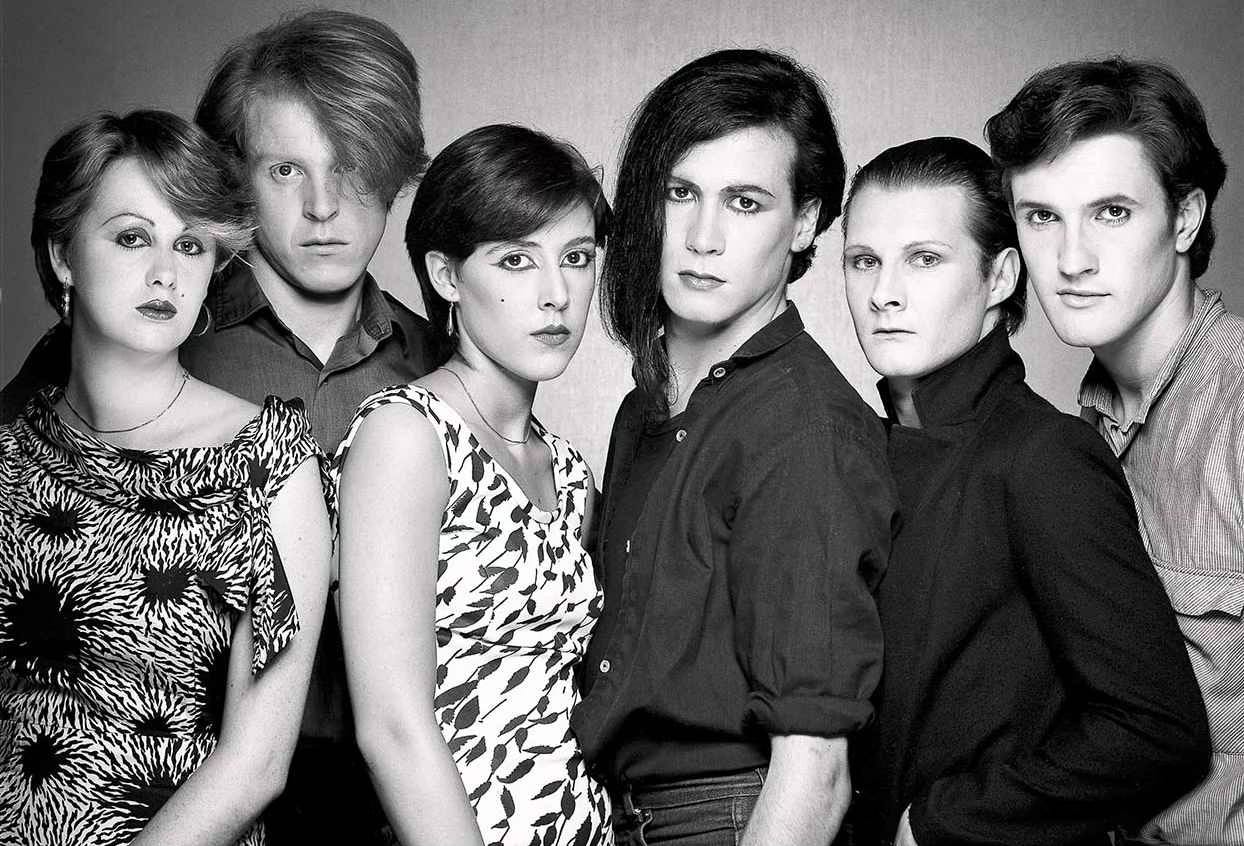
Later, Oakey explained his thinking. When he realised they were teenagers, and best friends, he decided to bring them both along so they could look after each other on the road.
He also understood something else.
👉 Two female performers would add a new visual and emotional dimension to the band.
Of course, there was one small detail to sort out. They were still in school. So Oakey and Wright visited their parents to ask for permission. The answer was yes, with one condition. Oakey had to take responsibility for their safety. Sulley later recalled that both fathers even went to the school to convince them that touring could be… educational, thanks to all the travelling involved 😁
To complete the line-up, Oakey also brought in Ian Burden from the Sheffield synth band Graph for the duration of the tour.
In a matter of days, The Human League had been rebuilt.
🎚️ Meeting The Missing Piece – Martin Rushent
By January 1981, The Human League had made it through the tour. But survival wasn’t the same as success. They were still in serious trouble.
Deep in debt to Virgin Records, Philip Oakey and Adrian Wright were under intense pressure to deliver results, and fast. In February 1981, they recorded and quickly released Boys and Girls. The track reached #47 in the UK charts. Not a breakthrough, but their highest chart position so far.
That alone was enough to signal something important. Oakey realised the band needed to level up. So Ian Burden was brought in as a full-time member.
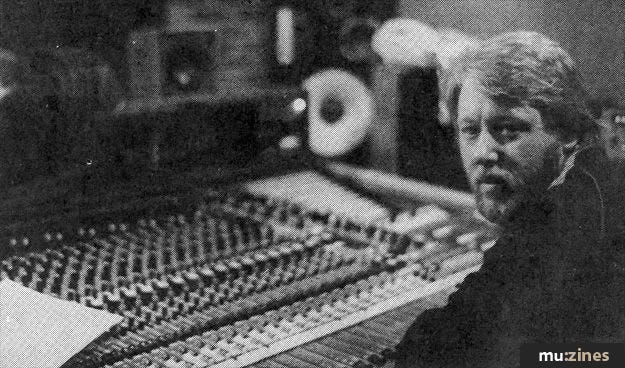
Virgin’s confidence had been partially restored. But they still saw a key weakness. The band needed proper production. So in March 1981, Oakey was introduced to Martin Rushent. A meeting followed. And Rushent would later recall Oakey opening the conversation with a blunt assessment:
At this point, the story reconnects with what I covered in the Pete Shelley episode. Rushent had previously approached Virgin to get Shelley signed. They had said no. But they did have another band in need of a producer.
👉 The Human League.
Rushent’s first move was decisive. He relocated the entire band to his Genetic Studios in Reading, Berkshire. Away from Sheffield. Away from Monumental Studios. And crucially… Away from the “unhealthy atmosphere” they were sharing with Heaven 17.
📈 The Turnaround – Hit After Hit
The first real breakthrough from the sessions at Genetic Studios came with The Sound of the Crowd. It became their first Top 40 hit, climbing to #12 in the UK.
Momentum, finally.
The next single, Love Action (I Believe in Love), pushed things even further. It reached #3 in the UK in August 1981. At that point, everything started to align. The band began shaping their demos and ideas into a full album, with Martin Rushent at the controls. In October 1981, Virgin Records released another single, Open Your Heart. Another hit.
And then came the album Dare
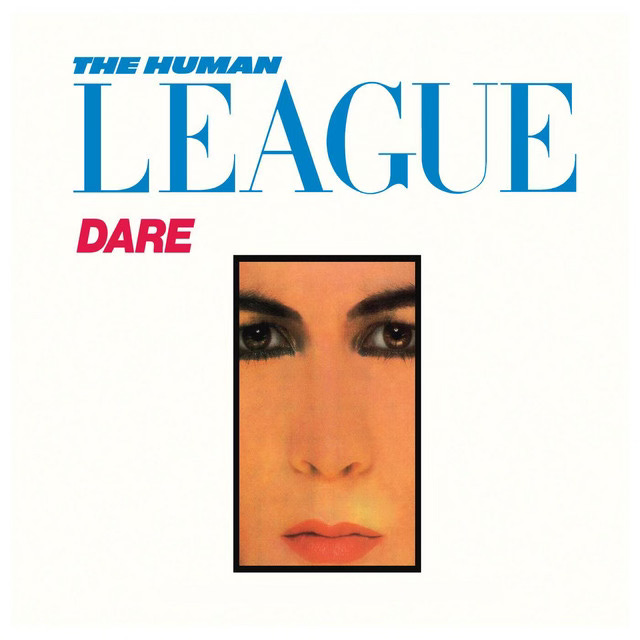
Released that same month, it went straight to number one in the UK. It stayed there for four weeks across 1981 and 1982, remained on the charts for 77 weeks, and ultimately achieved triple platinum status.
The band that had been written off was now at the very top.
💣 A “Filler” That Changed Everything
Virgin wants one more single. Oakey disagrees.
Strongly.
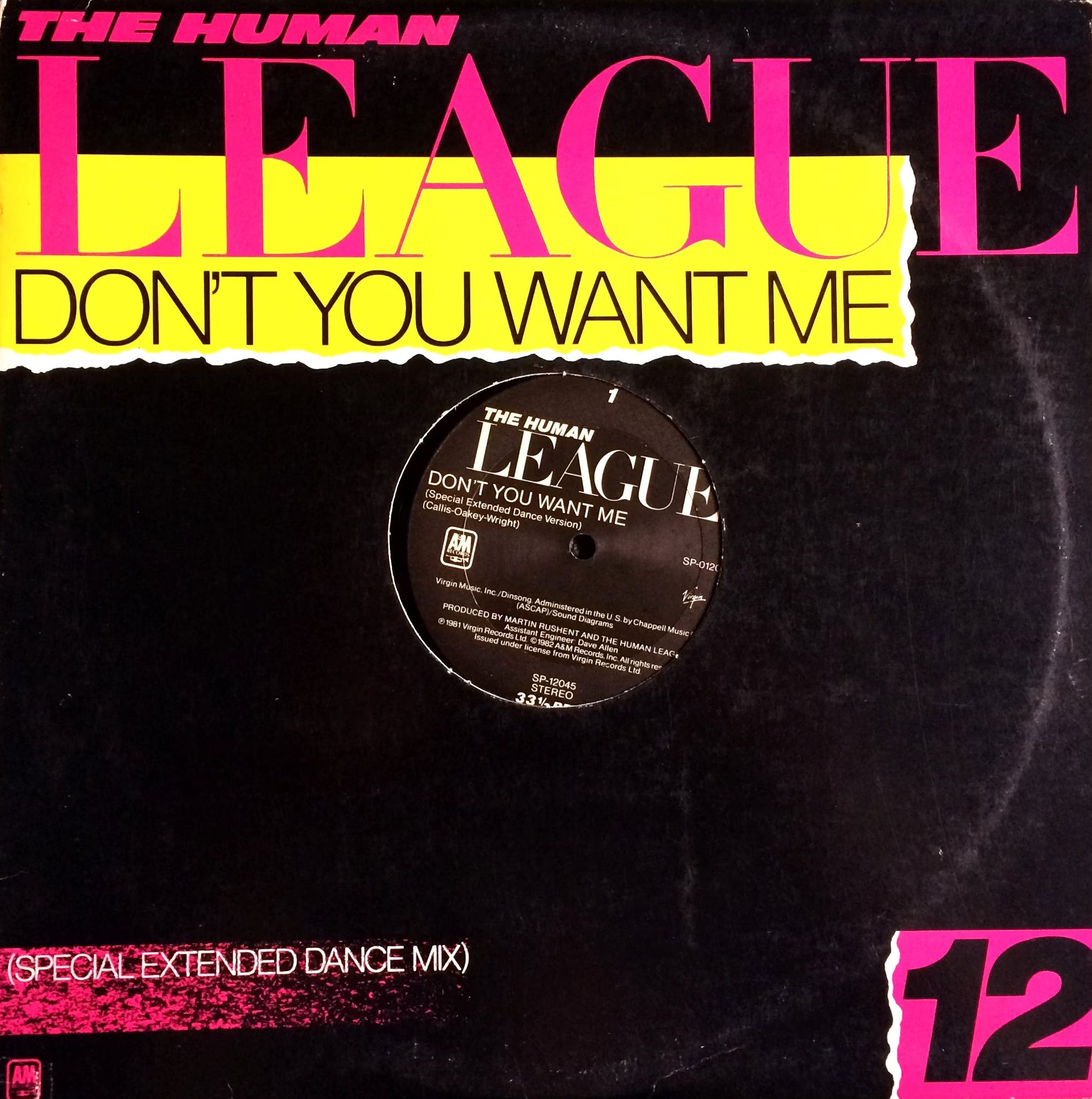
The track? 👉“Don’t You Want Me”
He calls it a filler. The weakest track. But the label insists.
🎬 The Payoff – When Everything Clicks
Supported by an expensive music video, still a rarity at the time, the single took off. It reached number one in the UK and stayed there for five weeks over the 1981 Christmas period.
Looking back in a 1995 interview, Philip Oakey was clear about the impact of visual media on the song’s success:
Don’t You Want Me became the band’s defining hit. It sold nearly 1.5 million copies in the UK alone.
The inspiration came from the 1976 film A Star Is Born, the story of an ageing male star who falls in love with a young woman whose success eventually eclipses his own. Oakey later described the song in stark terms. “a nasty song about sexual power politics,” A theme that captured the mood of the early eighties, and one that still resonates today.
🧠 Why Dare Worked
The making of Dare was anything but smooth.
In fact, it was chaotic.
Not least because, initially, The Human League were still sharing Monumental Studios in Sheffield with Heaven 17. Heaven 17 recorded at night, working on Penthouse and Pavement. The Human League took the day shift, building Dare. Two rival camps, under one roof, with tensions still running high after the split.
Inevitably, a rivalry developed. Heaven 17 even took a swipe at their former bandmates in NME, referring to them as “dodgy boilers.” Martyn Ware later recalled stumbling upon an early demo of what would become The Sound of the Crowd.
His reaction was… less than flattering.
‘hopelessly funny, and with the girls childishly and consistently out of tune… My God, there were even some muffled comments on the tape between takes with Phil encouraging them to try harder’
And yet, that might have been exactly the point. That rawness became their strength. These weren’t polished, conservatory-trained performers. They were normal girls who liked to dress up, go out, and have fun, suddenly transported into the shimmering world of electronic pop.
No privilege.
No formal training.
No expectations.
Just energy.
And that energy connected.
Especially as the band embraced the emerging power of music video, becoming some of the first British acts to truly break through on MTV.
Dare worked because everything aligned.
Visual identity – a gatefold sleeve inspired by Vogue, all dazzling white, close-ups, and bold makeup
Sound – simple structures built around irresistibly catchy synth hooks
Lyrics – direct, memorable, easy to sing along to
👉 There’s a reason Don’t You Want Me still resonates more than four decades later.
📉 After The Peak – Why It Didn’t Last
Success creates pressure. And pressure creates friction.The Human League’s output was reduced to little more than a trickle. Follow-ups: “Mirror Man”& “(Keep Feeling) Fascination” Both hits.
But the next album stalls. Rushent leaves. Chaos returns. Eventually Hysteria arrives, but with less impact.
🧩 The Final Piece – The Real Reason
Even in ideal circumstances the production process of writing & recording wasn’t easy. On this week’s B-Side I’ll dig deeper into the way the album was produced but also the songwriting was a problem. Phil Oakey sums it up perfectly:
So the success wasn’t just the band. It was Martin Rushent’s production, the sound he shaped with Pete Shelley and, especially, the moment in time
The Twelve Inch is the story of how dance music kept reinventing itself, often by accident.
This story is far from over.
In a future episode, we’ll pick up the thread that runs from Pete Shelley to Heaven 17… and beyond.
👉 The B-Side (Tomorrow)
On the B-side, we go deeper:
Rushent’s production techniques, why they were revolutionary
The second British Invasion explained
The disco connection via Love Unlimited Orchestra
The gear behind the sound
A fresh weekend playlist
The Twelve Inch is a growing community of people who love disco, eighties, and early-nineties dance music.
If you know someone who would enjoy these stories, feel free to share this post with them or pass it along on Substack Notes. Every share helps the music, and the community, travel a little further. 💿✨
💬 Call To Action
Now I’m curious:
👉 Do you hear Don’t You Want Me as a masterpiece or as the “filler” Oakey thought it was?
👉 Do you think The Human League deserved that global success more than Pete Shelley?
👉 And which synth-pop track defines this era for you?
Let me know in the comments. I read every single one.
So You Wanna Hear More ?
I thought you would !
It’s fun to write about music but let’s be honest. Music is made to listen to.
Every week, together with this newsletter, I release a 1 hour beatmix on Mixcloud and Youtube. I start with the discussed twelve inch and follow up with 10/15 songs from the same timeframe/genre. The ideal soundtrack for…. Well whatever you like to do when you listen to dance music.
Listen to the Soundtrack of this week’s post on MIXCLOUD
No YouTube version this week, one of the tracks in the set got blocked for some reason.
I did an interview with Oakey and the gang in New York for a magazine called Music Computers and Software after the release of Dare. I thought they were going to be the chilly, intimidating people you saw in the video for "Don't You Want Me." I was very young at the time, and was a little nervous. As it turned out, they were just kids like me. I think they were equally relieved that I wasn't some sour old music journalist and we really hit it off. After they asked if there were any good comic book stores around, and I think I took them to Forbidden Planet in the Village, and we had a great time.
Great work again Pe! I'm assuming you're going to cover it but the single "Human" was also a number one hit in the U.S.
"Don't You Want Me" will always be one of the defining songs of the 1980s for me!