

If you’ve been reading The Twelve Inch for a while, you’ve probably noticed something. The story I’m telling, the story of disco and the dance music that followed it through the eighties and early nineties, isn’t neat.
It’s messy.
And perhaps the messiest part of all is the beginning.
I often say this newsletter covers the period between 1975 and 1995. But disco didn’t simply tumble out of thin air on the first day of 1975, fully formed and wearing a glitter ball. Long before the genre had a name, something was happening.
The dancers could feel it.
The DJs could hear it.
The record companies hadn’t caught up yet.
And frankly, that’s my favourite part of the story.
Because the really exciting moment isn’t when a genre reaches its peak. By then everyone understands the formula. Everyone copies it. Everyone wants a piece of the action. The thrilling period is the one before.
I remember seeing exactly the same thing happen in Belgium in the second half of the eighties, when what would later become New Beat started bubbling away in clubs. People talked about it constantly. DJs wanted to play it. Dancers wanted more of it.
The only problem?
New Beat (records) didn’t exist yet.
So DJs searched for records that captured the feeling. Producers experimented. Artists sensed something brewing and tried different ideas. Nobody knew exactly what they were making, but everyone knew something was changing. Replace Belgium with New York. Replace the eighties with the early seventies. You have disco.
The Twelve Inch is the story of how dance music kept reinventing itself, often by accident.
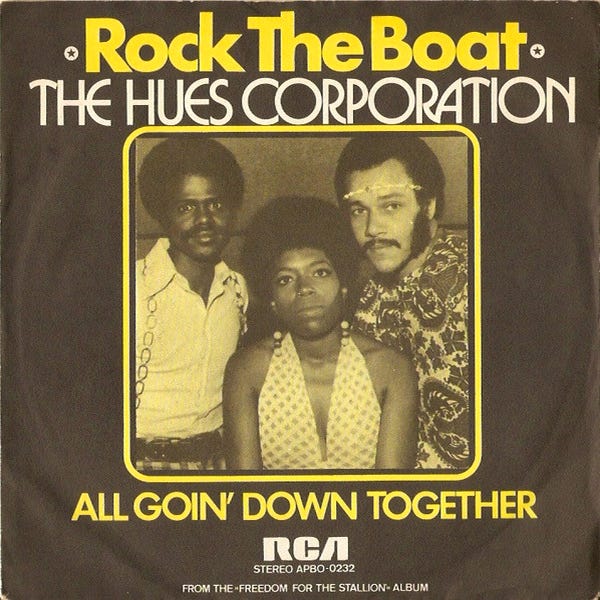
And few records illustrate that better than this week’s subject. A song nobody really believed in. A record that wasn’t even meant to be a single. An album track that flopped. Then somehow became one of the records that helped launch an entire movement.
This week, we’re stepping into that magical, chaotic period before disco truly became disco.
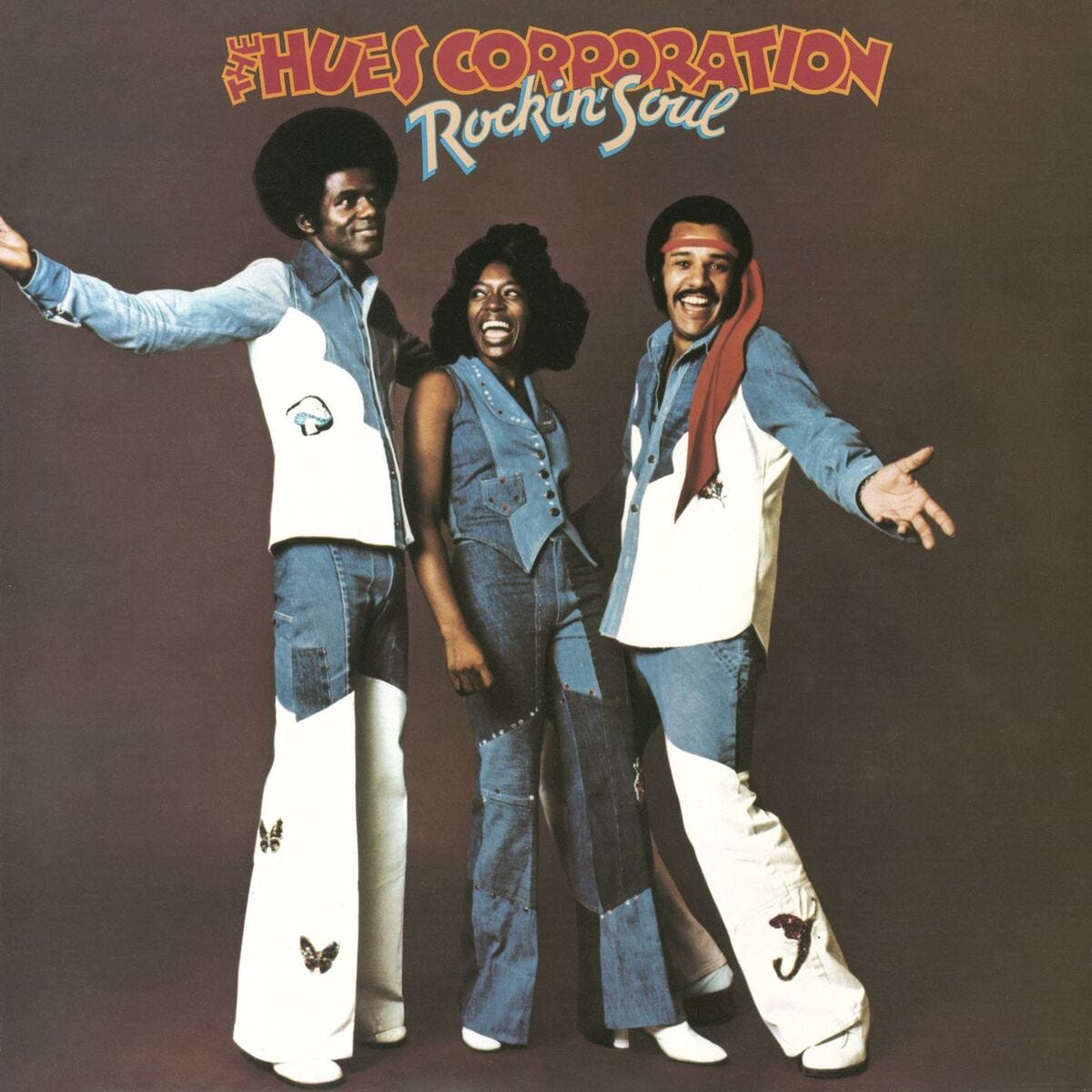
We’re going to talk about The Hues Corporation.
And we’re going to Rock The Boat.
👋 Welcome, I’m Pe Dupre, thanks for stopping by.
This is The Twelve Inch, a community about the history of dance music from 1975 to 1995, told one twelve-inch record at a time.
If this landed in your inbox because a friend forwarded it, I’d love for you to subscribe so you don’t miss the weekly episodes. Each one dives into a track, its story, and the culture around it.
And if you’re already enjoying the free posts, would you consider becoming a paid subscriber? Your support helps me keep researching, writing, and unearthing the stories behind the music. And You’ll get access to the weekly B-side post: the full archive and extra Subscriber Only Posts
🎤 Who Were The Hues Corporation?
Let’s begin with the name. You’ve probably noticed it yourself. The Hues Corporation sounds suspiciously familiar. 😁
That’s because founder Wally Holmes originally wanted to call the group “The Children of Howard Hughes.” He thought it was hilarious. The idea of naming an African American vocal group after one of America’s most famous white conservative billionaires appealed to his sense of humour.
Unfortunately, he couldn’t legally incorporate the name. So the joke evolved. The Hues Corporation was born.
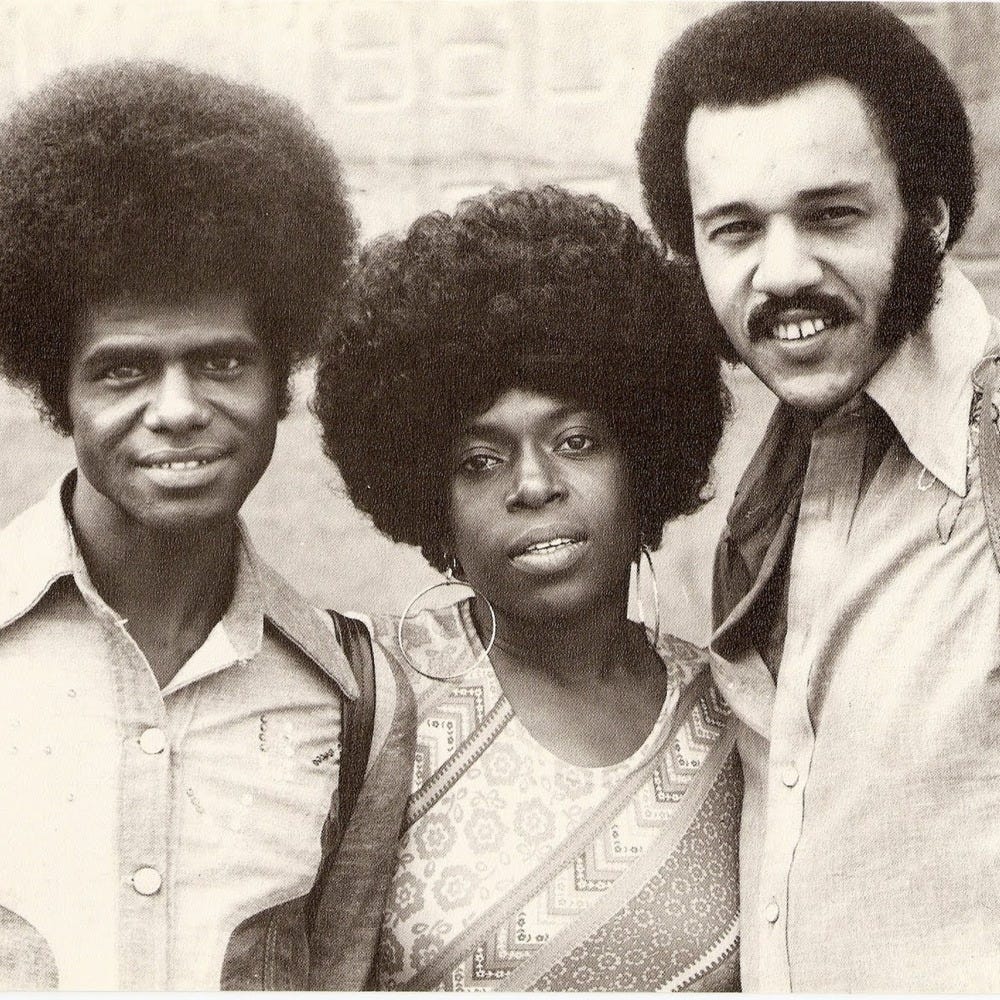
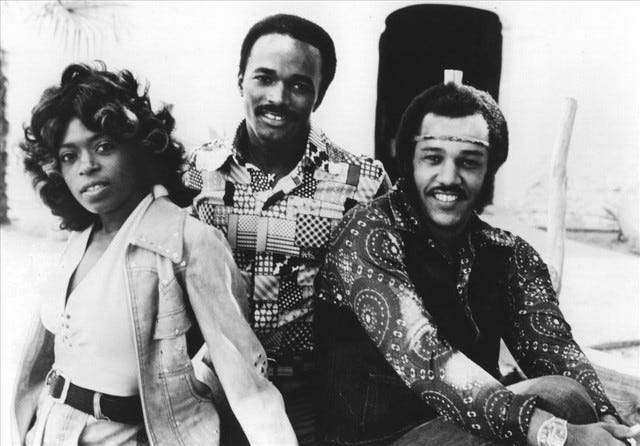
Holmes formed the group in Los Angeles alongside friend Lee St. Clair. H. Ann Kelly joined after appearing on a talent show, and with the addition of singer Fleming Williams, the line-up was complete.
Success didn’t arrive overnight. They played local clubs without much impact. Everything changed when Holmes secured a booking in the lounge of a Las Vegas casino.
Suddenly people started talking. Word spread. RCA came calling. Their debut album, Freedom For The Stallion, arrived in 1973. Two singles emerged from it. Neither troubled the Top 40. One of the album tracks was called Rock The Boat.
Strangely enough, nobody thought it should be a single. In fact, producer John Florez actively disliked it. “When I first met the band they sang Rock The Boat for me; I was totally not impressed. It was a case of bad poetry. I liked Freedom For The Stallion (the first single) much better. So I said to RCA, if you let me produce Freedom For The Stallion, I’ll do Rock The Boat for you” Not exactly a ringing endorsement.
According to Florez, the first version was dreadful. They abandoned it. That could easily have been the end of the story. But dance music history has a habit of changing direction through accidents.
Enter Tom Sellers.
A young producer from New York who helped reshape the track into the version that eventually appeared on the album. The official story says Sellers altered the rhythm and introduced a subtle reggae flavour. Depending on which version of the story you read, there’s even a Caribbean holiday involved.
Maybe.
But I’ve always struggled slightly with that explanation.
Because when I listen to Rock The Boat, I hear something else.
Something more intriguing.
Something that leads directly back to the dancefloors of New York before disco had a name.
🌍 Before Disco Had a Name
This is where the story becomes really interesting. Because before there were disco records, there were simply records people danced to. DJs weren’t looking for “disco”. The category didn’t exist. They were looking for movement. For energy. For records that kept people on the floor.
And they were willing to find them anywhere. Soul. Funk. Latin. Jazz. Imports from countries most people had never thought of as dance music hotspots. In fact, the truly dedicated DJs often preferred the obscure ones. If hardly anyone else owned the record, you had something special. You could build your reputation on exclusivity.
One of those records arrived from Cameroon.
It was called Soul Makossa.
It started life as an exotic import. David Mancuso began playing it at The Loft in New York. Dancers responded immediately. Atlantic Records eventually picked it up for American release. By the summer of 1973, it had reached the US Top 40. And you can be absolutely certain that the people making records were paying attention.
Because slow down the groove of Soul Makossa and something remarkable happens.
You start hearing echoes of Rock The Boat.
And, for that matter, echoes of another enormous hit waiting just around the corner, George McCrae’s Rock Your Baby. When I eventually get to George McCrae’s story, we’ll discover there were other influences at work too.
But in the case of Rock The Boat, I think there’s a compelling connection. Tom Sellers came from New York. It isn’t much of a stretch to imagine he had witnessed firsthand what Soul Makossa was doing to dancers in the city’s clubs.
And what’s fascinating is how all three records seem to share the same DNA.
• Hypnotic repetition.
• Syncopated bass.
• Groove before song structure.
• A sensual rather than aggressive feel.
• An invitation to move rather than simply listen.
If disco means, and I believe it does, a repetitive groove designed to keep people dancing continuously on a club dancefloor, regardless of whether it comes from soul, funk, Latin or African traditions, then Soul Makossa suddenly begins to look like a missing link.
A bridge between the eclectic playlists of New York’s underground clubs and the disco explosion that was about to sweep across America.
I don’t think that sequence was accidental.
DJs discovered dancers loved these hypnotic grooves. Producers softened the edges. Slowed the pulse. Made them more accessible. And within two years, millions of people around the world would be dancing to records built on those same principles.
That’s often how dance music evolves. Not through grand masterplans. But through trial and error. A DJ taking a chance. A dancer reacting. A producer paying attention.
📈 From Flop to Phenomenon
Even then, Rock The Boat almost slipped away unnoticed. It remained an album track until an RCA executive attended one of the group’s Los Angeles performances and noticed something remarkable. Every time they played Rock The Boat, audiences lit up.
Against expectations, RCA finally released it as a single in February 1974.
And it bombed. 🤔
By the middle of March, the record appeared dead.
Finished.
Another failed single destined for obscurity.
Then New York intervened.
Suddenly copies started selling.
Fast.
Very fast.
It wasn’t Los Angeles that embraced the record first.
It was New York.
The dancers recognised something familiar. DJs had begun playing it. Word spread. Before long, RCA had reportedly sold 50,000 copies in the city alone.
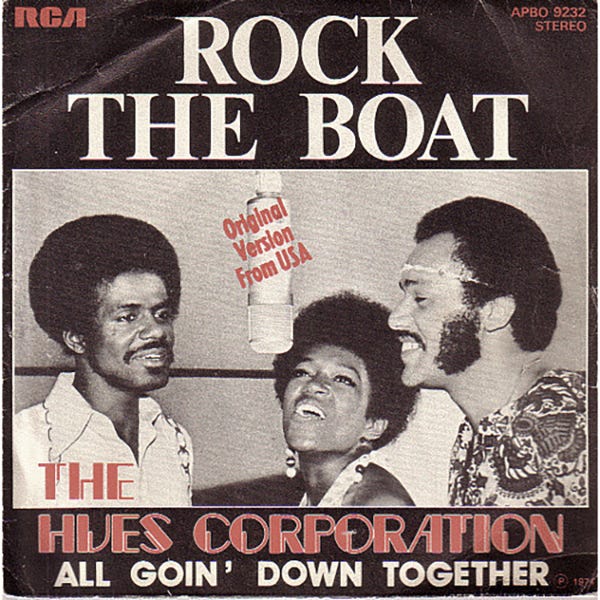
The clubs had spoken.
Radio, as it often would throughout dance music history, arrived late to the party. Once stations noticed what was happening, they jumped aboard. What followed was extraordinary. It took only six weeks from entering the Hot 100 for Rock The Boat to climb all the way to Number One.
Just as summer began.
The song stayed there for one week. It was immediately replaced by another record that would become one of early disco’s defining moments. George McCrae’s Rock Your Baby. Just like the opening sequence of this week’s mixtape.
Coincidence?
Or a sign that something much bigger was happening.
The Hues Corporation never quite managed to repeat the feat. Rockin’ Soul reached Number 18, essentially becoming Rock The Boat Part Two. Later singles failed to match that success. They switched labels. Released I Caught Your Act in 1977. It stalled at Number 92.
Commercially, the breakthrough proved difficult to sustain. But sometimes one record is enough. Because Rock The Boat had already secured its place in history.
✨ Why It Matters
There are songs that define genres. Then there are songs that arrive just before the genre fully understands itself.
Those records are often the most fascinating.
“Rock The Boat” by The Hues Corporation is one of the most pivotal records in the history of dance music.
It bridged soul, funk and the emerging disco sound. It wasn’t necessarily the first “disco” Number One. We’ll have some fun challenging that assumption on the B-Side.
But together with George McCrae’s Rock Your Baby, it arrived at exactly the right moment. The economy was deteriorating. People needed escape. Dancefloors were filling. Communities that often existed on the margins of mainstream culture, Black, Latino and LGBTQ+ audiences especially, were creating spaces centred around joy, release and connection.
And the music adapted accordingly. What made Rock The Boat so significant wasn’t simply its success. It was what that success represented.
It proved that dancefloors could break records before radio embraced them.
It demonstrated that audiences weren’t just passive consumers. They shaped the future of popular music. The underground had influence. DJs mattered. Dancers mattered. Club culture mattered.
And the music industry finally started paying attention.
What happened next would transform not only disco, but the entire way dance music would be made. From twelve-inch singles to remixes, from house music to today’s club culture, the idea remained remarkably consistent. Build something that keeps people moving. Then let the dancefloor decide.
🚤 The Boat That Changed Direction
Looking back, it’s extraordinary how close Rock The Boat came to never happening. A producer hated it. The first version failed. It wasn’t considered single material. Its initial release flopped.
And yet dancers heard something.
DJs recognised its potential.
New York clubs embraced it.
Radio followed.
And suddenly an overlooked album track became one of the records that helped launch an era.
It’s one of my favourite reminders that music history isn’t inevitable. The biggest movements often begin quietly. With uncertainty. With experimentation. With people trying things before anyone knows what to call them.
Disco wasn’t born in a boardroom.
It emerged through countless small accidents.
And sometimes all it took was one song asking people to rock the boat.
This Week’s B-Side 🎁
Of course, the story doesn’t end here.
Because once you start digging into early disco, the rabbit hole only gets deeper.
On this week’s B-Side, we’ll travel back to New York before Rock The Boat reached Number One.
We’ll explore what DJs like David Mancuso were actually playing before disco had a name.
And we’ll tackle a surprisingly controversial question.
Was The Hues Corporation actually responsible for the first disco Number One?
I’ve got a few records lined up that might change the way you think about the birth of disco.
The B-side is where we go deeper.
This week’s B side is exceptionally not paywalled. So join the discussion
And join the club. I’d genuinely love to have you on board.

The Twelve Inch is a growing community of people who love disco, eighties, and early-nineties dance music.
If you know someone who would enjoy these stories, feel free to share this post with them or pass it along on Substack Notes. Every share helps the music, and the community, travel a little further. 💿✨
Let’s Keep The Discussion Going 💬
What do you hear when you listen to Rock The Boat?
A soul record?
A pop song?
A disco classic?
Do you agree that dance music evolves through accidents and experimentation?
And what record do you think truly deserves the title of “the first disco hit”?
I’d love to hear your memories, theories and favourite early dancefloor discoveries in the comments.
So You Wanna Hear More ?
I thought you would !
It’s fun to write about music but let’s be honest. Music is made to listen to.
Every week, together with this newsletter, I release a 1 hour beatmix on Mixcloud and Youtube. I start with the discussed twelve inch and follow up with 10/15 songs from the same timeframe/genre. The ideal soundtrack for…. Well whatever you like to do when you listen to dance music.
Listen to the Soundtrack of this week’s post on MIXCLOUD
Or On Youtube
I loved your post. A couple of years ago, I posted a Substack about a trip to Coney Island during my first summer in NYC in 1974. My clearest memory from that subway ride was hearing both "Rock the Boat" and "Rock Me Baby," coming out of competing radio speakers. But the essay also touched on the fact that it was the beginning of disco without being called disco. I invite you to read it and check out the mix when you have the time. https://robinhall.substack.com/p/summer-of-1974-nyc?r=2lgxk&utm_campaign=post-expanded-share&utm_medium=web
Pe, this was fantastic. You could teach music history at academic level. I mean it. You have the scientific rigour of a historian, a three-dimensional reservoir of knowledge (books, boardrooms, dancefloors), and the passion of a storyteller. Your work is incredible.
I loved the track, which I didn’t know. But what fascinates me the most is your ability to tell stories. I could read you and listen to you every day.