

Growing up, I loved reading comics, and one of my favourites was Bert Bibber & Piet Pienter, a comic strip about two friends written in the local Antwerp vernacular. One of their friends was a professor who had a housekeeper who always spoke loudly, and always in capital letters. In other words, she was constantly shouting. She was aptly called Madam Klaxon, and she always made me laugh.
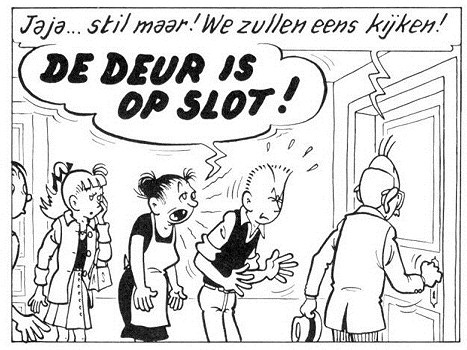
The one and only “Madam Klaxon” or Madam “Horn/siren” 😁
She’s the character I thought of when I first heard Loleatta Holloway sing. The Madam Klaxon of dance music. 😁
I only really discover her music when she records a duet with Dan Hartman on “Relight My Fire”, a massive hit in the Benelux in early 1980. I also take notice of “Love Sensation” when it appears in the slipstream of “Relight My Fire” later that year. But by then, I’m much more interested in what’s happening elsewhere in dance music, and “Love Sensation” sounds like very traditional disco to me. Very dated and, well… very much over.
It’s not until the late eighties that Loleatta appears on my radar again, when Black Box score a massive hit with “Ride on Time”.
A prime example of Italian piano house, the track becomes a huge dancefloor and radio hit. But controversy erupts when we start reading that the singer we see in the video and on television isn’t actually the person singing.
The producers take Loleatta’s voice from an a cappella recording and use a sampler to mould it into the vocal we hear on their song.
They aren’t the first to do this, or by any stretch the only ones. But the way they go about it, take everything, ask nothing, is so over the top that it becomes one of the clearest examples of the state of the dance music industry at the end of the eighties.
And as I listen to, and participate in, the current discussion about AI and whether it represents a major opportunity or threat to the music industry, I keep thinking back to this period and how almost all the same elements are present.
History never repeats itself, but it often rhymes. And this is one of those examples.
So I’m devoting a three-part mini-series to Loleatta Holloway, Black Box and how sampling changes the dance music business.
Next week, I’ll zoom in on Black Box and tell the story of the brazen way they go about it. That’s followed by a B-Side in which I’ll explore why sampling is so groundbreaking, how it changes the music industry and what we can learn from that period to better understand the current trajectory of AI in the music business.
But first, I want to concentrate on Loleatta Holloway herself.
Because she’s a phenomenal talent who always seems to miss out on that big breakthrough.
And her story illustrates something that has always fascinated me about disco. Female singers have plenty of opportunities during the disco years. They’re often the preferred storytellers for the disco audience, giving a voice to its hopes, frustrations and desires.
But more often than not, they’re also the ones being taken advantage of.
👋 Welcome, I’m Pe Dupre, thanks for stopping by.
This is The Twelve Inch, a community about the history of dance music from 1975 to 1995, told one twelve-inch record at a time.
If this landed in your inbox because a friend forwarded it, I’d love for you to subscribe so you don’t miss the weekly episodes. Each one dives into a track, its story, and the culture around it.
And if you’re already enjoying the free posts, would you consider becoming a paid subscriber? Your support helps me keep researching, writing, and unearthing the stories behind the music. And You’ll get access to the regular B-side posts: the full archive and extra Subscriber Only Posts
From gospel to R&B
Loleatta is born in Chicago on November 5, 1946, and like so many African-American girls, she grows up in a household surrounded by music. Her mother organises the Holloway Community Singers, which Loleatta joins by the age of four. She records with them for the first time just a year later.
Not that her mother is convinced of her talent. She prefers giving songs to Loleatta’s sister and niece because she thinks Loleatta doesn’t sing as well.
But one day, something supernatural happens. 😱
As Loleatta later explains in an interview, she feels as though something hits her over the head, and suddenly she begins singing in a loud voice. Everybody thinks the voice comes from an adult. It causes quite a stir, and people start talking about that little girl with the extraordinary voice. But Loleatta herself isn’t particularly pleased. She thinks she sounds like an old woman. And she’s only a little girl!
With such a powerful voice, it seems obvious that she’ll build a career as a singer. Or at least try.
Initially, that career focuses on gospel. She’s invited to join The Caravans in 1967, at the age of 21. But although the group has enjoyed considerable success during the fifties and sixties, its glory days are already over by the time Loleatta joins.
In 1971, she’s hired to sing backing vocals on a non-gospel recording produced by Floyd Smith, an up-and-coming producer who has already worked with Jackie Wilson, Erma Franklin and Little Richard.
When Floyd hears Loleatta, he knows he needs to record her.
In a 1989 interview with Paolo Hewitt of the New Musical Express, she recalls that when Floyd asks her to record, she initially refuses. She only sings gospel! But she leaves an opening. If he can arrange a recording session before the end of the week, she’ll do it.
Floyd rushes around trying to raise the money to book a studio, and after scraping together enough cash, they record “Rainbow ‘71”, a cover of a Curtis Mayfield composition that has already been a hit for Gene Chandler.
By the summer of 1971, the single reaches the top ten in Chicago, opening the next chapter of Loleatta’s career.
Her move into R&B, however, ruffles the feathers of the gospel audience. They make it clear that she has to choose.
And choose she does.
After a short stint in theatre, Floyd Smith, who becomes her husband, arranges a contract with an Atlanta label called Aware Records. The label is owned by Greek-American millionaire Michael Thevis, considered one of the largest distributors of pornography.
Not exactly the most solid foundation for a singing career, because only a few years later, Thevis is arrested and his label folds.
A bit of a false start.
But this is also the period when disco starts attracting attention, and new independent labels are popping up. Floyd meets Ken Cayre, who has started Salsoul Records, and Loleatta signs with the label in October 1975, just as Salsoul enjoys its first big hit with “Salsoul Hustle”.
Salsoul and the disco years
Salsoul has set out to ride the coming disco boom.
But Loleatta and Floyd apparently haven’t read the memo.
When they enter Sigma Sound Studios in Philadelphia, where Salsoul’s recording crew works, there’s some confusion and quite a bit of discussion between Floyd and Norman Harris.
Floyd wants Loleatta to sing ballads. Norman wants uptempo songs.
Eventually, Loleatta starts singing and playing the piano to demonstrate what a good singer she is. Earl Young begins drumming along, and when he stops, he has heard enough.
‘Listen guys. Just stop the bullshit and let’s play. This woman can sing!’
Loleatta isn’t particularly thrilled about the disco songs she’s given to record. But Salsoul is changing the way records are made. DJs want longer versions, and Salsoul obliges by having the rhythm section play for eight or nine minutes. Ken Cayre calls it “jamming”, and these sessions stretch the traditional verse-chorus-verse-chorus-fade structure.
That’s a lot of extra musical space to fill.
And Loleatta rises to the challenge.
Over the following months, she uses the extended instrumental passages and opportunities for ad-libbing to create her own versions of the songs, often inserting her own thoughts and stories. So even if the songs don’t immediately resonate with her, they become hers through what she does with them.
And apart from recording these longer original versions, Salsoul brings in top DJs to remix her songs, creating epic ten-minute-long dancefloor workouts.
They become her trademark.
What starts as a compromise between a soul singer and a label determined to make disco records turns into something neither side quite anticipates. Those extended arrangements give Loleatta the freedom to improvise, and her voice becomes an essential part of what makes these records so exciting on the dancefloor.
She warms further to disco when Salsoul sends her on club tours following the release of her first album in 1976.
She discovers what disco is all about and establishes a bond with the gay audience that will outlast her recording career.
In an interview with Blues & Soul, she explains: “Personally, I love the disco crowds because they are so much freer, easier to work with and far less inhibited. Yes, I really do enjoy playing for them.”
The success of her first records also attracts the attention of the music press, where critics become convinced that a major new soul singer is emerging.
Her second album, Queen of the Night, takes things a notch higher, resulting in a Grammy nomination and even a fashion shoot for Vogue by the famous photographer Richard Avedon.
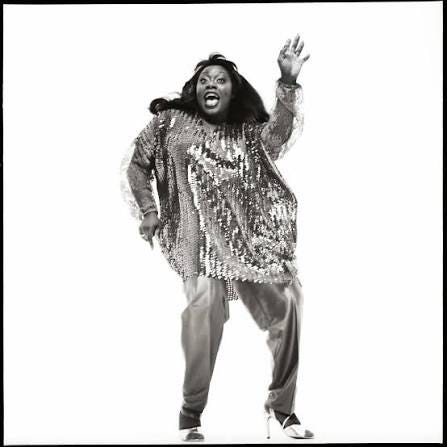
The unnamed writer is positively lyrical about Loleatta: “She’s a for-real singer who uses every bit of her big-woman presence, her Earth Mama sexuality and her ‘tellin’-the-truth’ voice to whip disco crowds into states of revival-meeting frenzy...she’s announcing herself to the world-on her terms...and people on dance floors listen-then shout, applaud, stomp, scream!”
Everything seems to be falling into place. She has the voice, the records, the recognition from critics and, perhaps most importantly, an audience that adores her.
But that final step towards mainstream success remains elusive.
The breakthrough that never comes
And then, of course, we all know what happens towards the end of the seventies.
The disco backlash.
Even before that, things are changing at Salsoul as the Philadelphia recording crew leaves the label.
Initially, this gives Loleatta more room to record non-disco material on her third Salsoul album. But the disco backlash and her clear association with the genre make her increasingly difficult to market.
None of the singles repeat her earlier success, and Salsoul doesn’t release any of her ballads to R&B radio.
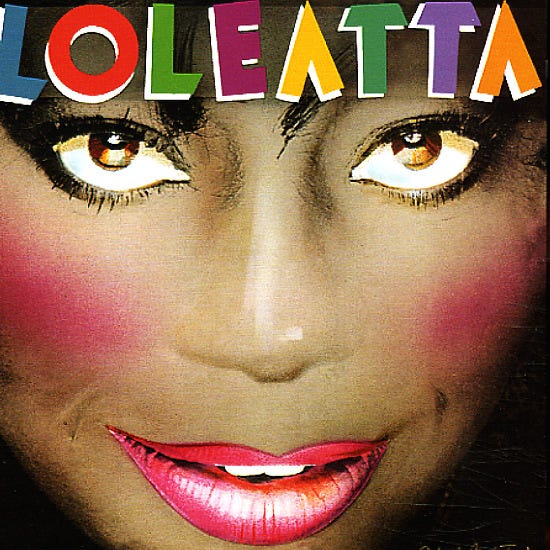
It’s not that her 1979 album, Loleatta Holloway, is out of touch with what’s happening in music.
It clearly shows that Loleatta is paying attention.
But Salsoul isn’t.
And just when her chances of a mainstream breakthrough seem to be slipping away, an unexpected opportunity presents itself.
Shortly after the release of her third album, while Loleatta is performing at The Funhouse, Dan Hartman approaches her and asks whether she’d be interested in singing on a song he’s written for his new album.
That song is “Relight My Fire”.
He reaches an agreement with Salsoul, committing to write and produce a song for Loleatta in exchange for her appearance on his album.
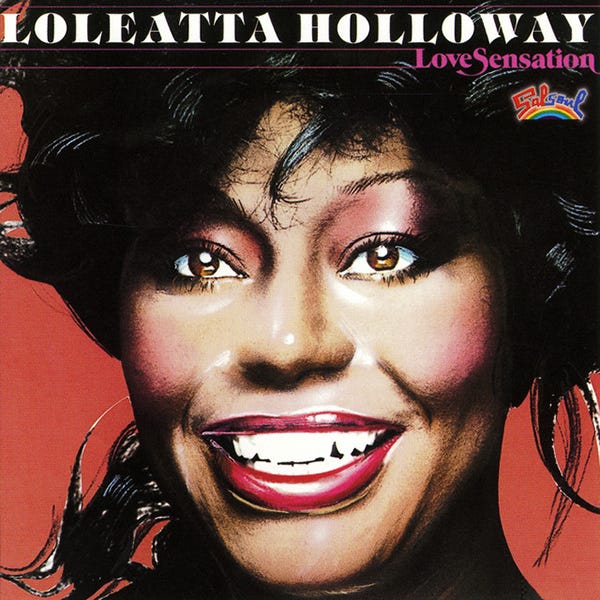
And that song is “Love Sensation”.
Love Sensation
Loleatta travels to Hartman’s home to record the song he’s written for her.
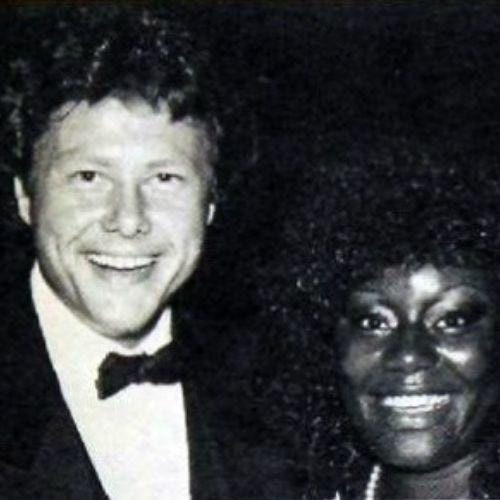
In an interview for disco-disco.com, she later explains: “I stayed in his house for two days. He made sure I ate...he said, *Relax, girl, just chill out. Take your shoes off! We got comfortable. I walked around his mansion and just got so relaxed and then he said ‘Come on, girl. Let’s go in the studio.’”
The rhythm track is already recorded, and she’s been given a cassette to listen to before arriving. So she’s ready to work.
She delivers a take that she thinks nails it.
But Dan Hartman thinks otherwise.
She tells Bill Brewster: “When I went in there, I was clear as a bell. The first time I did it, it was perfect, l thought. I did it a second time. Then he said, ‘Your voice is too clear, I want it hard and deep!”
After what she counts as thirty takes, she’s so hoarse she can barely talk.
The next day, with some cursing and the help of a cup of coffee accented by Vicks VapoRub, she delivers that elongated final “Time won’t take my love away”, holding the note with the grit Hartman has been waiting for.
In the middle of disco’s commercial decline, she delivers a single that satisfies her large fan base, who have never stopped dancing.
When “Love Sensation” reaches number one on Billboard’s dance chart, it shockingly fails to make a dent in either the R&B or pop charts.
And there it is again. Another record that the clubs embrace, another extraordinary vocal performance, but still no crossover hit.
Ken Cayre later laments to Bill Brewster: “I couldn’t get a major hit single on her. She did [’Relight My Fire’] and then she did ‘Love Sensation’ with Dan. It did well, but I couldn’t get it going pop”
Ken Cayre calls it bad breaks.
But there are also systemic issues behind those “bad breaks”.
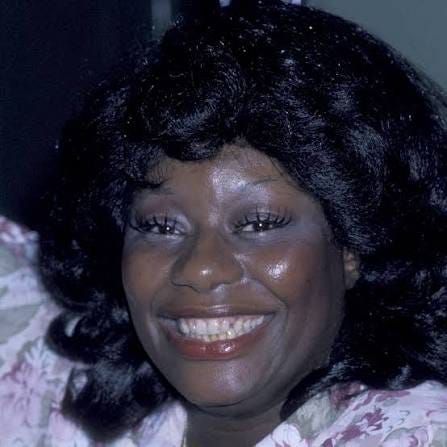
Loleatta doesn’t fit the far-too-tolerated norms of the music industry. She’s a Black woman with a darker complexion, older than many emerging artists, and unapologetically heavier than the women most record executives prefer to promote.
Even critics who praise her voice feel the need to comment on her appearance.
One bluntly describes her as “a plump lady who is no glamor girl” who “sings earthier, grittier ditties and sings them with gusto.”
Another problem is that Loleatta is enormously popular in New York’s club scene but much less so outside the city.
And Salsoul isn’t exactly helping.
The company never really tries to develop its artists into stars. There’s no long-term plan to promote Loleatta as an artist beyond the clubs.
So the problem isn’t simply that disco is falling out of favour. It’s also that Loleatta has never really been given the kind of promotion that might turn her enormous popularity on the dancefloor into a wider career.
Only weeks after the release of “Love Sensation”, Salsoul announces that it will reposition itself as an R&B label and begins dropping its disco artists.
The label downsizes, which means even less support.
Loleatta is allowed to stay, but her fourth album, Love Sensation, becomes her last for the label, probably because that long-awaited breakthrough never materialises.
The incredible thing is that Salsoul never manages to connect “Love Sensation” to the massive success of “Relight My Fire”.
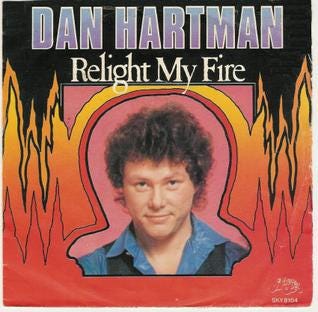
Not helped, of course, by the fact that although Loleatta sings half the song, her name doesn’t even appear on the single’s cover.
Another missed opportunity to introduce her to a new audience.
The difficult eighties
The eighties are a challenging decade for Loleatta.
Her final recording with Salsoul is the 1982 single “Seconds”, for the Salsoul Orchestra’s album Heat It Up.
Then Floyd dies in 1984.
Losing both her partner in life and her partner in music changes everything.
In a 1992 interview with David Nathan, she explains: “He had really taken care of business and I hadn’t dealt with it. He used to tell me ‘Loleatta, just go out there and look pretty and sing!’ It was hard enough for me to go out there and do shows every night and be the mother of four children too without having to worry about business and getting paid”
The emergence of music videos also makes things harder.
Record labels are now looking for more than a voice.
Of course, an artist’s physical appearance has always influenced how record companies market their performers. But the video era changes the rules considerably.
Artists who have built their careers on being great singers, songwriters or musicians suddenly find themselves expected to perform in front of cameras as well.
Or, as John Oates of Hall & Oates points out at the New Music Seminar in 1984, they now have to “be an actor”.
For Loleatta, who already struggles to get the kind of exposure she needs, this is hardly good news.
Between 1984 and 1989, she releases four singles on four different labels.
The gay clubs continue to provide her with regular work. Their audiences never tire of her Salsoul classics.
But it’s not enough to give her another shot at that elusive crossover success.
And yet, her biggest moment is still to come.
Only this time, it’s not of her making.
Nor does it happen with her approval.
An Italian trio gets hold of the a cappella recording of “Love Sensation” and uses Loleatta’s voice on what becomes the biggest dance hit of 1989.
All thanks to the invention of the sampler.
And that’s where we’re going next.
Next week, I’ll tell the story of how Black Box takes her voice and turns it into a massive international hit. Then, in the third episode, a B-Side, I’ll explore why sampling changes the music industry so profoundly, why the whole situation feels eerily similar to today’s AI debate, and what we can learn from what happens next.
The Twelve Inch is a growing community of people who love disco, eighties, and early-nineties dance music.
If you know someone who would enjoy these stories, feel free to share this post with them or pass it along on Substack Notes. Every share helps the music, and the community, travel a little further. 💿✨
So You Wanna Hear More ?
I thought you would !
It’s fun to write about music but let’s be honest. Music is made to listen to.
Every week, together with this newsletter, I release a 1 hour beatmix on Mixcloud and Youtube. I start with the discussed twelve inch and follow up with 10/15 songs from the same timeframe/genre. The ideal soundtrack for…. Well whatever you like to do when you listen to dance music.
Listen to the Soundtrack of this week’s post on MIXCLOUD
Or on Youtube :
Loleatta is one of the great vocalists of her generation and much like Martha Wash, never got the credit she deserved, especially when the sampling and house eras coopted their prowess but didn't give them credit.
So glad you mentioned “Seconds!” I added that to my mix this week and was so impressed at the way Loleatta told the story: she tugs every heartstring! What a talent, for sure!