

I remember it well, the first time I came across Italian Disco.
It happened when Raffaella Carrà almost reached number one in the Benelux at the end of 1977, early 1978, with the irresistible earworm “A far l’amore comincia tu.”
Prophetic words, considering my later love for Italy, its language, its music and, naturally, its cuisine. I could fill pages on that alone.
But today, we keep it with the music. 😁
Because this week’s story is about one of the records that helped reshape dance music history. A song that came from Italy, conquered American clubs, confused the charts, and quietly helped build the bridge from disco to the sound of the eighties.
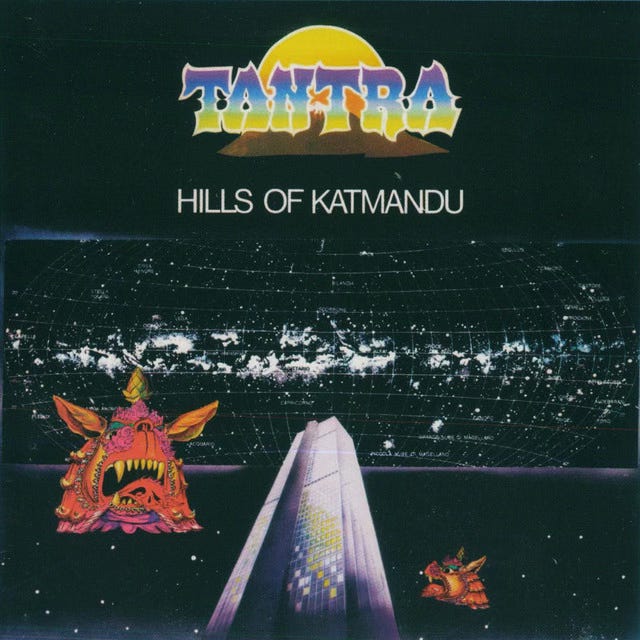
That song was “Hills Of Katmandu.”
And what a story it has.
🌍 When Europe Sent Disco Back to America
One of the pleasures of writing The Twelve Inch is discovering new layers in the transatlantic exchange that created disco and laid the foundations for modern dance music.
America gave the world the blueprint through R&B, funk, soul and club culture.Europe took those ingredients, reworked them, stylised them, mechanised them, and sent them back. Almost every Western European country played a role, but three nations carried most of the weight:
France
Germany
Italy
Italy arrived slightly later than the others, but timing can be everything. Because when the disco backlash damaged the American dance industry after 1979, Italy was perfectly placed to fill the vacuum.
And fill it they did.
⚡ The Disco Backlash Created an Opening
By late 1979, many American labels had retreated from disco. Radio stations abandoned the format. Major companies lost confidence. Independent labels folded.
One executive described the moment perfectly:
“We had Saturday Night Fever, followed by the Sunday Morning Hangover”
But people did not stop going out.
The clubs were still full. LGBTQ+ communities still needed records. DJs still needed fresh music.
And while American production slowed, Italy accelerated.
That is where this week’s central story begins.
👋 Welcome, I’m Pe Dupre, thanks for stopping by.
This is The Twelve Inch, a community about the history of dance music from 1975 to 1995, told one twelve-inch record at a time.
If this landed in your inbox because a friend forwarded it, I’d love for you to subscribe so you don’t miss the weekly episodes. Each one dives into a track, its story, and the culture around it.
And if you’re already enjoying the free posts, would you consider becoming a paid subscriber? Your support helps me keep researching, writing, and unearthing the stories behind the music. And You’ll get access to the weekly B-side post: the full archive and extra Subscriber Only Posts
🤔Who Or What was Tantra?
When you hear the word Tantra, music is probably not the first thing that comes to mind, let alone disco. The original meaning refers to a broad family of spiritual traditions from India and Tibet, found within Hinduism and Buddhism. Developed over many centuries, these traditions include rituals, meditation, mantras, visualisations, sacred texts and practices aimed at transformation, liberation and expanded awareness.
Or perhaps you know the word through Tantric sex 😁, a modern term for intimate practices that focus on slowness, mindfulness, breath, connection and heightened awareness rather than performance or a race to the finish.
But forget all that for today. We are talking about Tantra, the Italian studio project that became one of the most important bridges between Eurodisco and the Italo sound of the eighties.
🇮🇹 Enter Celso Valli

When we say Tantra, we really say Celso Valli. Celso was one of the key figures in the Italian music scene. Beppe and Angelica, my dear friends behind The Italian Disco Stories, have written an extensive piece on his importance 👇, so I will not dive too deeply into his full life and career here.

For today’s story, I simply want to place him in the context of the late seventies and early eighties. Celso was born in Bologna and studied at the Conservatorio Giovanni Battista Martini. He was a gifted student who would soon turn music into a profession. In 1971 he joined the Italian progressive rock band Ping Pong.
And just as we have already seen happen many times in the United States, once disco became a rising commercial force, musicians from other genres wanted to try their hand at it. If it worked, excellent. If it did not, little was lost. Celso was among the first in Italy to make that move. His playful “Pasta e Fagioli” is considered one of the earliest Italian disco singles in 1977.

He was only warming up.
🛰️ Tantra and the Sound of Tomorrow
In 1979, Celso followed in the path opened by Cerrone and Giorgio Moroder and created the record at the heart of today’s story, “Hills Of Katmandu.”

Valli’s conservatory training, combined with his deep knowledge of world music, resulted in a complex, hypnotic suite that stretched beyond sixteen minutes. It became the flagship release of Tantra’s debut album and sounded unlike almost anything else on the market.
Celso recorded these albums for a new label with an unusual background, DDD, short for La Drogueria di Drugolo. The company was founded in 1979 by record producer Roberto Galanti and Baron Lando Lanni della Quara, who lived in the Castle of Drugolo and managed the family herbal business from there. The label’s name came from that drugstore heritage, drogheria meaning drugstore in Italian. A rather colourful setup 😁
Galanti played a major role in Celso Valli’s early career, giving him both the opportunity and the budget to develop the Tantra project. Tantra’s first album, Hills Of Katmandu, arrived in 1979 with little fanfare. Only a limited number of copies were pressed at first. They quickly sold out, and word began to spread about Valli’s latest creation. The same pattern followed when Mother Africa appeared in 1980.

The main obstacle was distribution. Philips Records handled the releases, and Philips was part of PolyGram, a company still dealing with the financial fallout of the Casablanca Records saga and the costly RSO Records acquisition (the combination of which almost bankrupted the major). Add the disco backlash in the United States, and one can imagine that the word “disco” was not especially welcome in PolyGram boardrooms at the time.
So they moved cautiously with new European dance repertoire, taking few risks and offering little real support. That helps explain why the first pressings were so small.
📈 The Weirdest Chart Run in Dance Music?
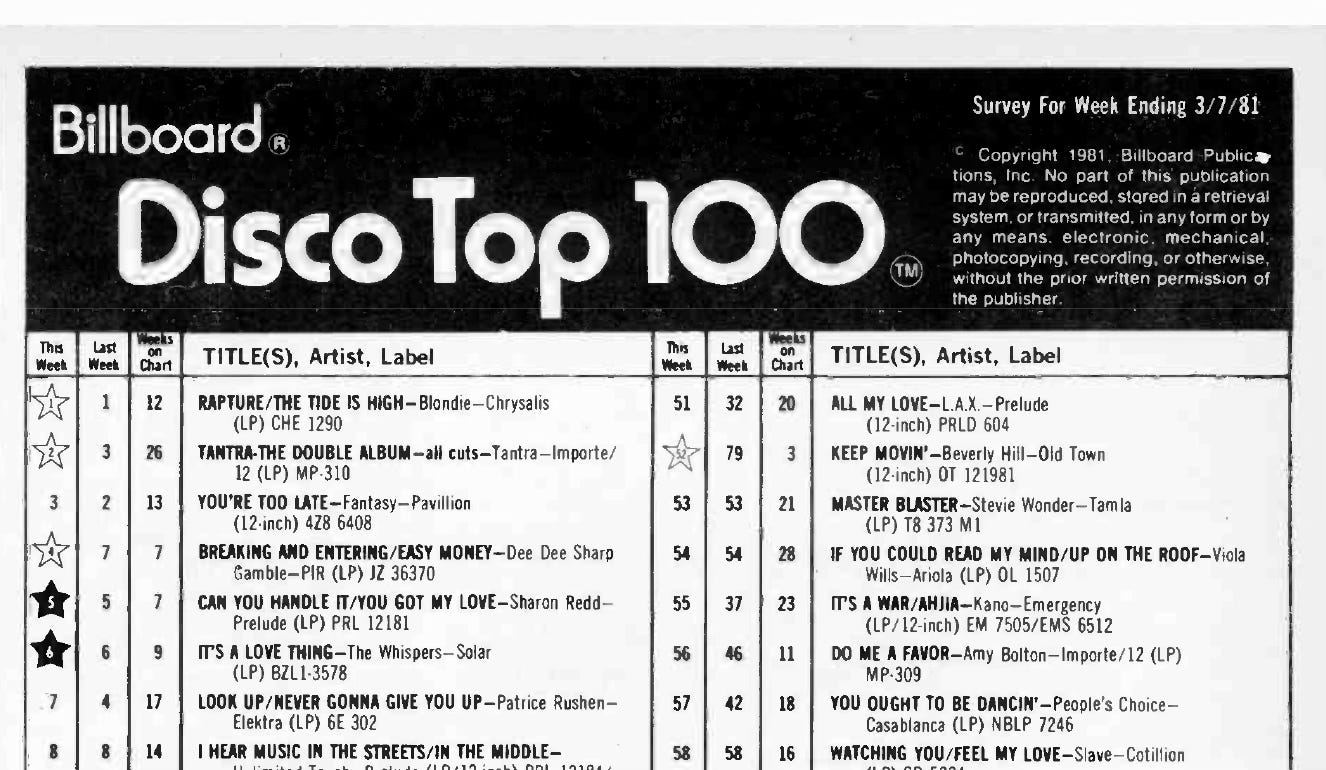
The song eventually reached No. 2 on the US Dance Chart. But not in a normal way. It stayed on the chart for an astonishing 45 weeks. For the first twenty weeks, it bounced around the lower half of the chart like a yo-yo.
Why?
Because clubs were playing it before America had properly released it.
That raises three fascinating questions:
How did it enter the chart without an official release?
Why did it suddenly explode after months of drifting?
Why did American DJs want it so badly?
We’ll go deeper into that in this week’s B-side.
💿 Why American Clubs Needed Tantra
In this week’s B-side, I share a Billboard article from 1980 in which several DJs complain that it had become increasingly difficult to get hold of new and exciting dance releases.
When the disco backlash exploded in the summer of 1979, many major record companies almost entirely abandoned the field. Without the financial backing and distribution power of those majors, a large number of smaller disco labels could not survive and quickly folded. Two of the biggest names, RSO Records and Casablanca Records, were absorbed by PolyGram and suddenly had to operate inside a large corporate structure with very different priorities.
At the same time, many American artists stopped making disco altogether. African American artists and producers often moved toward funk, as I explained in the D-Train episode. Many white American producers either stepped away entirely or shifted toward a sound much closer to new wave.
And then there was radio. Still the dominant force in breaking records into the pop charts, American radio wanted little to do with disco. Most stations that had briefly embraced the format quickly pivoted away. If they still played dance music, it was more likely to be funk-driven Black American productions. Outside a few specialised stations in cities such as New York City, former disco stations not only changed direction but sharply reduced the number of dance records they would playlist.
Almost overnight, the world’s most important music market became a far more difficult place for dance music.
But people did not stop going out. The major clubs did not suddenly close their doors. The real engine behind disco’s popularity, the LGBTQ+ community, was still filling dancefloors and still demanding new records.
With American production slowing to a trickle, opportunities for European producers were growing fast. And there was one country perfectly placed to seize that moment, Italy (I’ll explain why, in this week’s B-Side)
Our central record this week is a perfect example. After his first disco experiments in 1977, Celso Valli had already launched another studio project, Azoto. Its debut single was a reworking of the traditional Jewish folk song “Hava Nagila.” It was not a major dancefloor success, although Azoto would later break through in Europe with “San Salvador.”
Still, that first Azoto release now feels like an early sketch for “Hills Of Katmandu.” It had the same driving synthesizers, the same gradual build-up, the same sense of propulsion. Perhaps it arrived a little too early, or perhaps the source material made it harder to cross over. Either way, Celso was clearly building the experience he would soon need to create something bigger.
⛰ A Hill To Get Over
When Hills Of Katmandu was first released, it was not even an immediate sensation in Italy. The debut album consisted of two side-long tracks, and in some late seventies and early eighties Italian club playlists you are more likely to find the B-side “Wishbone” than the title track itself.
That does not mean they failed to try. The twelve-inch single issued by Philips Records was, strangely enough, a shortened version of the album mix. Yet it was also edited more sharply for club use, and the proof of its effectiveness came quickly through the record’s early success in the United States.
More importantly, the song had every ingredient needed for the post-backlash American dancefloor.
White LGBTQ+ club audiences in venues such as The Saint and Trocadero Transfer still wanted fast tempos, and Eurodisco delivered exactly that. In the wake of Giorgio Moroder, and helped by cheaper electronic instruments, Eurodisco had become heavily synthetic and machine-driven.
What Tantra added to that formula was something extra, the mystical Eastern melody running through the track. That gave it a broader emotional pull and made it equally suitable for more eclectic dance spaces such as The Loft.
And an exotic melodic identity that made it feel mysterious and fresh.
It was disco, but also something beyond disco.
🔥 A Bridge to Hi-NRG and Italo
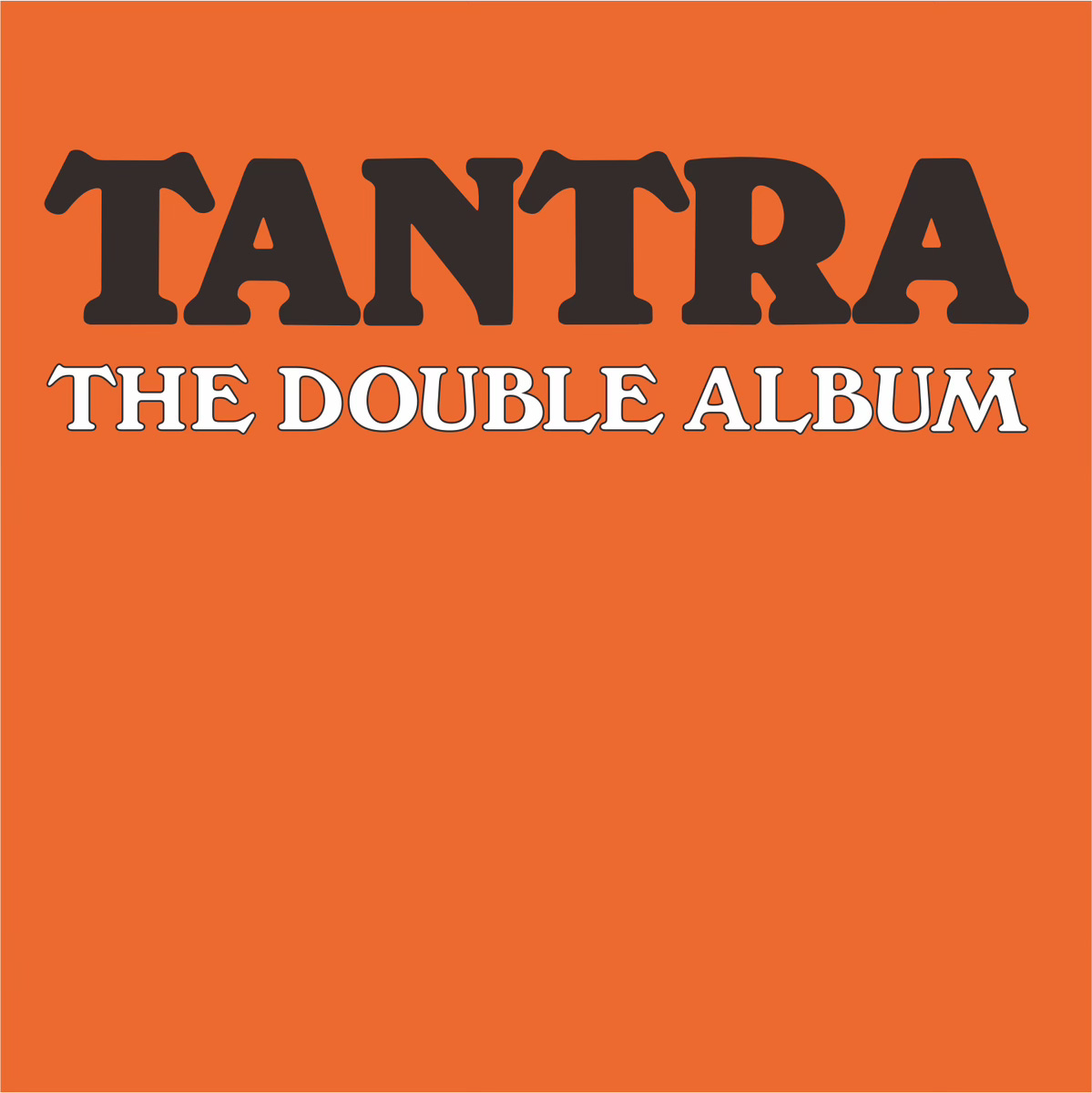
Eventually the record was picked up by a small independent label. As Tantra’s reputation continued to grow, the project’s first two albums were finally given a proper American release in early 1981 as The Double Album on Importe/12.
That is when events began moving quickly. Hills Of Katmandu was given a second life and surged to No. 2 on the American Disco Top 100, where it remained for three weeks. It was kept from the top spot only by Rapture and Breaking and Entering, both of which occupied number one for multiple weeks.
The success of the title track also lifted the rest of Tantra’s catalogue onto the dancefloor. Other songs from the debut album benefited from its momentum, while Mother Africa would later become part of the sets played by Frankie Knuckles at The Warehouse.
Today, Hills Of Katmandu is widely seen as one of the key bridge records of its era, linking disco, space disco, Hi-NRG and the earliest flowering of Italo Disco. In my earlier episode on You Make Me Feel (Mighty Real), I explained how San Francisco became a major centre for post-disco Hi-NRG, especially within LGBTQ+ club culture, through artists such as Sylvester, Patrick Cowley and The Boys Town Gang.
🎤 Sylvester and How ‘You Make Me Feel (Mighty Real)’ Birthed the San Francisco Sound and Redefined Dancefloor Freedom

When Sylvester belted out “You make me feel… mighty real!” in 1978, he wasn’t just performing, he was preaching. That track didn’t just light up dancefloors; it rewired them. This wasn’t merely disco. It was liberation, pulsing at 132 beats per minute. But at the time, it wasn’t liberation for me, at least, not yet. My own coming out was still years awa…
You can draw a direct line from Tantra and Hills Of Katmandu to those early Hi-NRG records, and onward to the British Hi-NRG explosion that followed.
In 1982, Tantra released its final album, Tantra II. By then, the post-disco era was fully underway and music had changed almost beyond recognition. Celso understood that immediately.
Never one to stand still, and always an innovator, he made Tantra II another forward-looking and influential work. Its subtitle, The Journey Continues, was a fitting farewell for one of his most successful projects.

After Tantra, Celso Valli went on to become one of the most important producers in Italian music. For the full story, I warmly recommend the excellent work of The Italian Disco Stories. He enjoyed a long and fruitful career and passed away on 27 July 2025 at the age of 75.
🎼 Why It Still Sounds Modern
What is truly remarkable about Hills Of Katmandu is that decades after its release, it still sounds contemporary. It remains a timeless record, one that feels less like a conventional disco album and more like a musical adventure. Across its two epic tracks, genres, influences and cultures collide in fascinating ways.
Listen closely and you can hear traces of classic American disco, Eurodisco, funk, rock and soul. Add elements of African and Indian music, and what emerges is a richly multicultural journey, innovative, imaginative and unlike almost anything else of its era.
To my ears, nobody else could have made a record like Hills Of Katmandu. You can clearly hear Celso Valli’s progressive rock background as one of its key building blocks. He applied the structure and ambition of prog rock to disco, using suite-like arrangements, shifting moods and multiple musical ideas within a dance framework.
Combine that with Valli’s conservatory training and his deep knowledge of world music, and the result was something entirely distinct from what other producers were releasing at the time.
That originality is the true secret behind the enduring appeal of Hills Of Katmandu.
He later explained it perfectly: “Tantra was my first production. At the record companies they considered me crazy. How could anyone even imagine we could compete with the Americans using a sound that had nothing to do with our tradition?
This Week’s B-Side 🎁
This week’s B-side goes deeper into four big questions:
What do we call this music?
Italo Disco, Italo Dance, or simply Italo?
Why was Italy so ready for this moment?
How politics, society and culture helped build a music powerhouse.
Why did Italians break America faster than others?
Entrepreneurship, diaspora links, or something more?
Why did DJs prefer Eurodisco in 1980?
We go straight into Billboard and let them explain it themselves.
Plus: a guided dive into Tantra’s catalogue for weekend listening.
The B-side is where we go deeper.
It is paywalled, but for the price of 8 premium coffees, you get:
a full year of access to every B-side piece
the complete archive of 150+ articles
future deep dives into genre-spanning stories
And since “premium coffee” can mean many things, and payment in beans is impractical 😁, I happily accept € or $.
Join the club. I’d genuinely love to have you on board.

The Twelve Inch is a growing community of people who love disco, eighties, and early-nineties dance music.
If you know someone who would enjoy these stories, feel free to share this post with them or pass it along on Substack Notes. Every share helps the music, and the community, travel a little further. 💿✨
Let’s Keep The Discussion Going 💬
Do you remember the first time you heard Italo Disco?
Was “Hills Of Katmandu” a disco record, an early Hi-NRG record, or something entirely its own?
Which Italian dance records changed your life?
And did Europe improve disco, or simply reinterpret it?
Tell me in the comments.
The Twelve Inch is the story of how dance music kept reinventing itself, often by accident.
So You Wanna Hear More ?
I thought you would !
It’s fun to write about music but let’s be honest. Music is made to listen to.
Every week, together with this newsletter, I release a 1 hour beatmix on Mixcloud and Youtube. I start with the discussed twelve inch and follow up with 10/15 songs from the same timeframe/genre. The ideal soundtrack for…. Well whatever you like to do when you listen to dance music.
Listen to the Soundtrack of this week’s post on MIXCLOUD
No Youtube version this week. One of the tracks of this week’s mixtape is/was sadly not cleared for Youtube
I loved this, Pe. As I always tell you, the way you bring in the socio-cultural and historical context adds a level of richness to your work and the music behind it. I also always appreciate your record industry insights which help me understand the motivation behind certain label moves or decisions.
Like you, I love Italy, its people, culture, and yes, of course, its food!! (It’s by far my favourite cuisine). Happy weekend, and I can’t wait for side B!
Not an artist I’d ever heard of, but I enjoyed both tracks, particularly The Hills of Kathmandu