

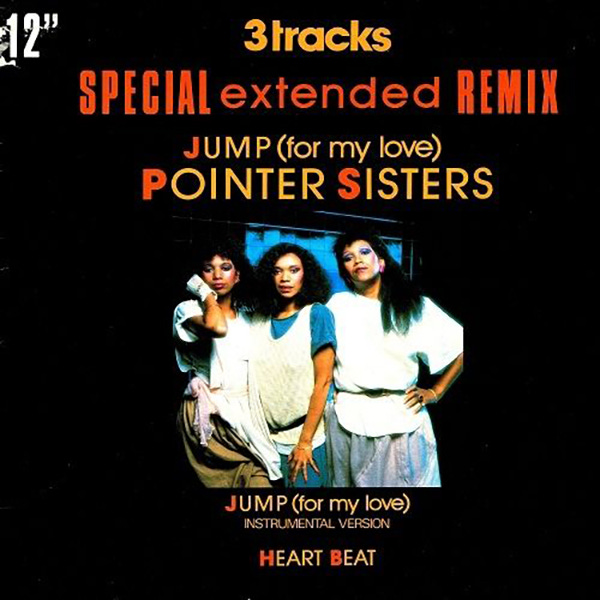
Sometimes it’s not easy to know where your fascination with an artist or band comes from. But in the case of the Pointer Sisters, I have a pretty good idea.
In 1979, the Pointer Sisters scored their first and only number one in the Benelux with a Bruce Springsteen song: Fire. It was the height of disco, and here was an African American group that wasn’t doing soul or disco, but something much closer to rock. And what’s more, they scored a big hit with it.
Although the follow-up, Happiness, was a dancefloor-ready gem, you wouldn’t exactly have called it part of the natural disco habitat we were used to by then. That all changed with their 1983 album Break Out and the slick, synth-driven dance-pop sound that would deliver hit after hit. The likelihood of a Pointer Sisters song playing on the radio at any given moment back then was almost a certainty.
But how did we get from pop-rock to pure dance-pop in just a few years? And why did they make that change in the early eighties, but not during the disco boom of the late seventies?
With an album like Break Out, I had plenty of possible tracks to choose from. But I specifically chose Jump (For My Love) because it’s a bit of an outlier.
By the early eighties, more African American artists were recording dance tracks at tempos above 130 BPM. Jump was one of the most obvious examples. And I always wondered what the connection was with the Hi-NRG sound that was ruling the gay dancefloors of the US and Europe.
That’s a question for the coming B-Side. But first, there’s another question worth answering.
Why did the Pointer Sisters take so long to get there?
👋 Welcome, I’m Pe Dupre, thanks for stopping by.
This is The Twelve Inch, a community about the history of dance music from 1975 to 1995, told one twelve-inch record at a time.
If this landed in your inbox because a friend forwarded it, I’d love for you to subscribe so you don’t miss the weekly episodes. Each one dives into a track, its story, and the culture around it.
And if you’re already enjoying the free posts, would you consider becoming a paid subscriber? Your support helps me keep researching, writing, and unearthing the stories behind the music. And You’ll get access to the weekly B-side post: the full archive and extra Subscriber Only Posts
Four sisters, and a lot of musical influences
Every artist is shaped by the culture they grew up in, their family, their origins and the stories they heard as children. And with the Pointer Sisters, it’s worth looking at that before we get to the records.
The four sisters grew up in a conservative religious household in Oakland, California. Their parents, Elton and Sara Pointer, had migrated from Arkansas during the Second World War, and the sisters’ musical upbringing was quite a mixture.
When they visited relatives in Arkansas, they listened to country radio. That influence stayed with them, to the point where they were invited to perform at the Grand Ole Opry in 1974. The first African American vocal group to do so.
Then there was gospel, of course. Like so many African American artists, the sisters learned to sing in church. But growing up around Oakland also meant being surrounded by a musical scene that was changing rapidly. By the late sixties, the West Coast was a place where gospel traditions, James Brown’s funk, Latin rhythms and even progressive rock could all find their way into the same musical conversation.
And finally, there was jazz. Particularly the freedom of vocal jazz, where improvisation and individual expression were just as important as singing the right notes.
Put all those influences together and it’s probably no surprise that the Pointer Sisters’ 1973 debut album sounded quite different from the more conventional pop and R&B of many other girl groups of the era.
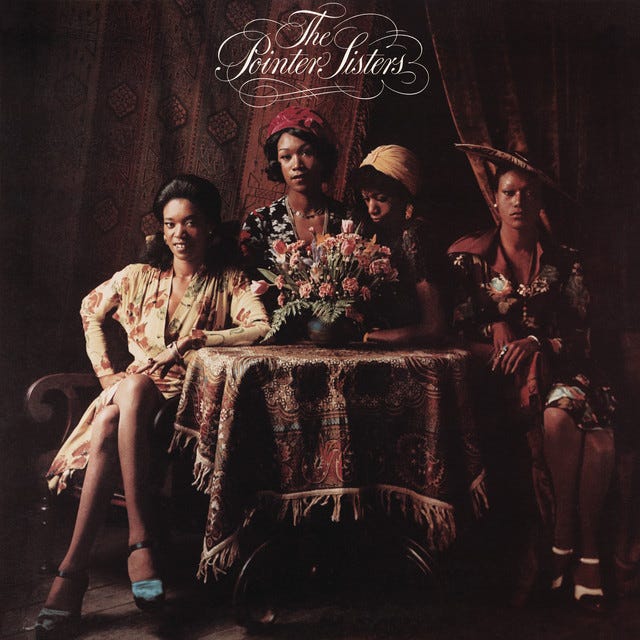
Their first three albums appeared on Blue Thumb Records, an independent label that also housed an early Sylvester. Another interesting connection, considering where this week’s story is eventually taking us.
But what made the Pointer Sisters particularly interesting was that they were determined to do things their own way.
And that included the clothes.
Everything, but not disco?
In their early years, the sisters had developed a distinctive image, dressing in vintage clothes that suited their mixture of jazz, swing, gospel and country.
It was all very original. But there was a problem.
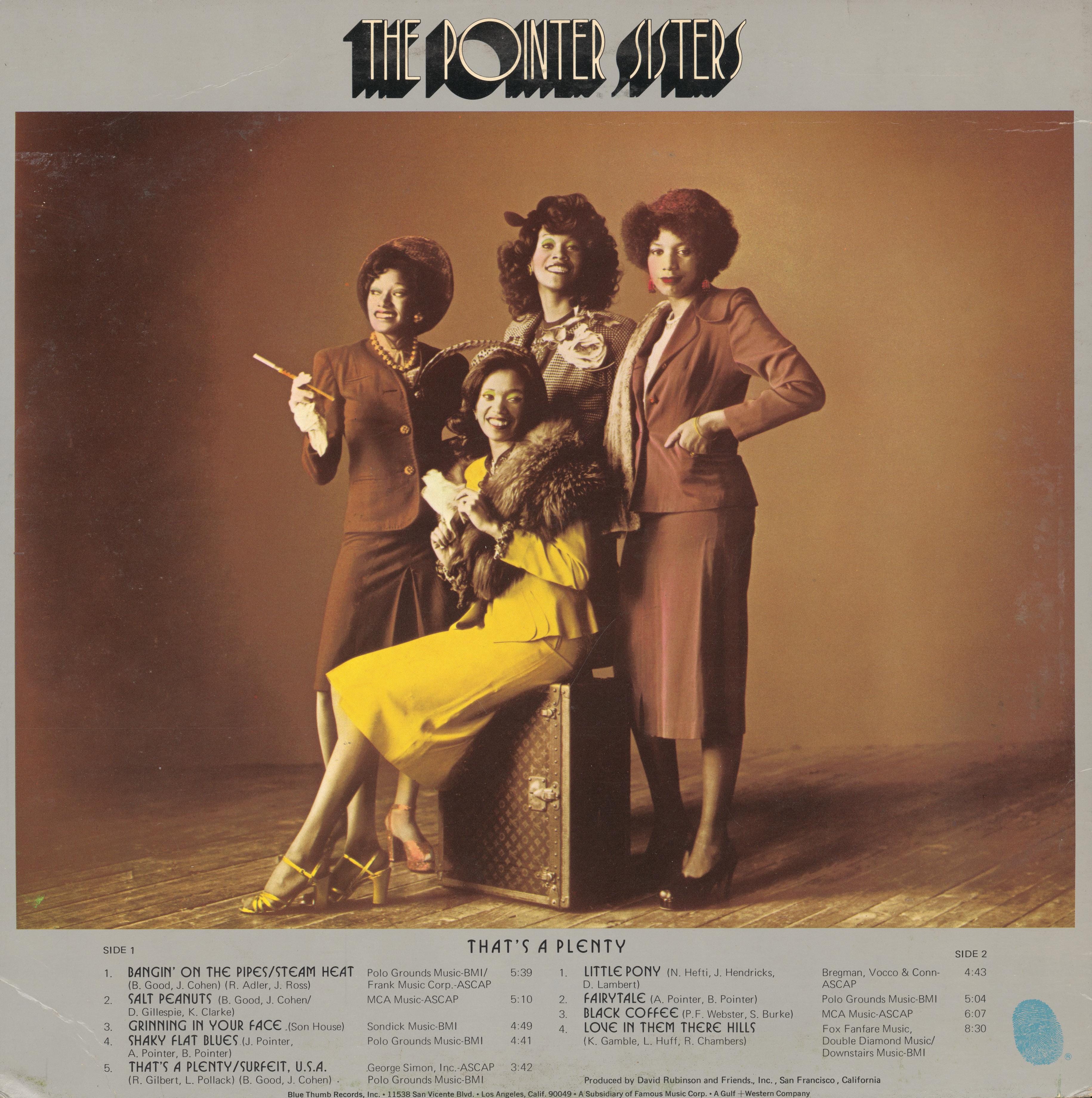
As Anita Pointer told Rolling Stone in 1979, the thrift-store image was beginning to dictate what kind of music they could perform.
And it’s hard to be sincere with a pile of fruit on your head.
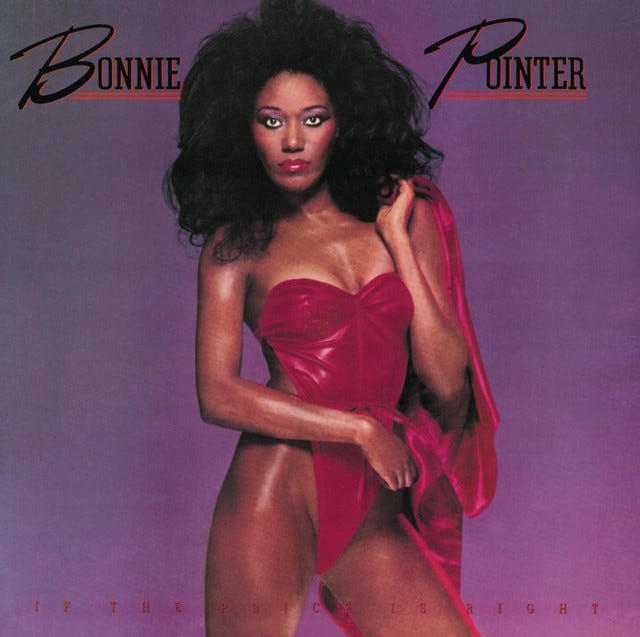
By the late seventies, the sisters were ready for a change. And then Bonnie Pointer left the group to pursue a solo career with Motown. Bonnie would do something her sisters wouldn’t: make disco records.
Anita later explained that Bonnie’s departure made them rethink everything. They wanted a new direction so people wouldn’t miss her. New clothes, a new look, new music, a new producer. Everything. You can’t help but wonder whether the decision to stay away from disco was partly influenced by Bonnie’s choice.
A bit like, “Everything, but not that...”
There’s no evidence that this was a deliberate decision, but the timing is interesting.
And then there’s Richard Perry.
The producer behind records by Barbra Streisand, Carly Simon and many others became the man responsible for the Pointer Sisters’ next chapter. He had started his own label, Planet Records, and wanted to take the sisters in a pop-rock direction.
Disco wasn’t part of the plan.
But was that what the sisters wanted?
Ruth Pointer later explained that Perry had a very definite musical direction in mind. After everything the group had been through, including the departures of June for a period and then Bonnie, their main concern was getting their career back on track. They had families and financial responsibilities. And they knew they could sing almost anything.
So they went along with Perry’s plans.
I find that quite revealing. The sisters who had once insisted on making their own musical choices were now willing to let someone else take the lead. Not because they had lost their independence, but because they wanted to make records and get back out there.
And Perry had the songs.
Fire and Happiness were the first results. Both successful, particularly Fire, which became a major international hit. But when the second Planet album, Priority, moved further into harder-edged rock, the results weren’t quite as impressive.
Something had to change again.
The missing link
This is where the story gets interesting for me.
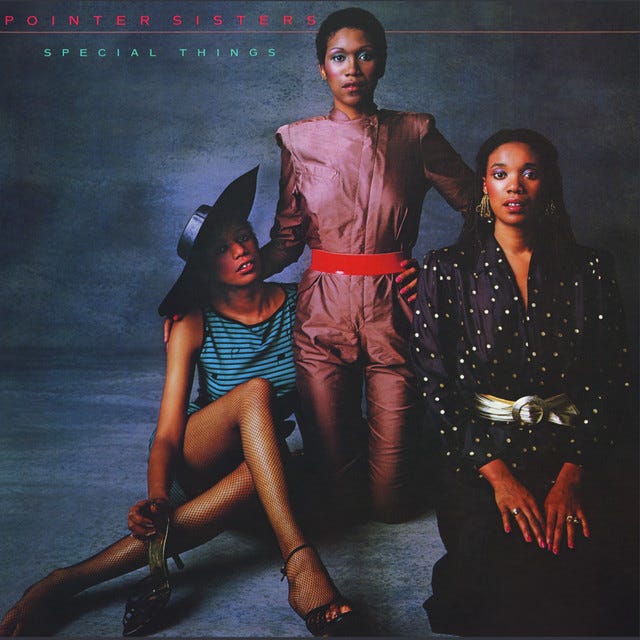
If you listen to Fire and then jump straight to Automatic or Jump (For My Love), it sounds like an enormous musical change. But it wasn’t really a sudden pivot. The evidence is right there on their 1980 album Special Things.
Nothing is created in a vacuum. And usually, by listening to an album and placing it within its timeframe, you can hear where the inspiration was coming from.
Quite literally in this case.
The first single, He’s So Shy, sounds like a distant brother (or sister, if you prefer) of the Doobie Brothers’ What A Fool Believes. And I don’t think it’s much of an exaggeration to call Could I Be Dreamin’ a close relative of The Jacksons’ Shake Your Body (Down To The Ground). Then there’s We’ve Got The Power, a clear disco-funk track that did well on the dancefloor.
So much for the Pointer Sisters staying away from disco.
Those three songs also gave the sisters another appearance on the American dance charts. And He’s So Shy reached number three on the pop chart.
The new direction was working.
But what I find fascinating is that the Pointer Sisters weren’t simply abandoning their earlier influences. The gospel-infused vocals, the jazz harmonies, the rhythmic complexity of funk, they were all still there. What changed was the musical environment around them.
The early eighties brought synthesizers, keyboard programming, new production techniques and a growing connection between pop music, MTV and film soundtracks. And the Pointer Sisters were perfectly placed to take advantage of it.
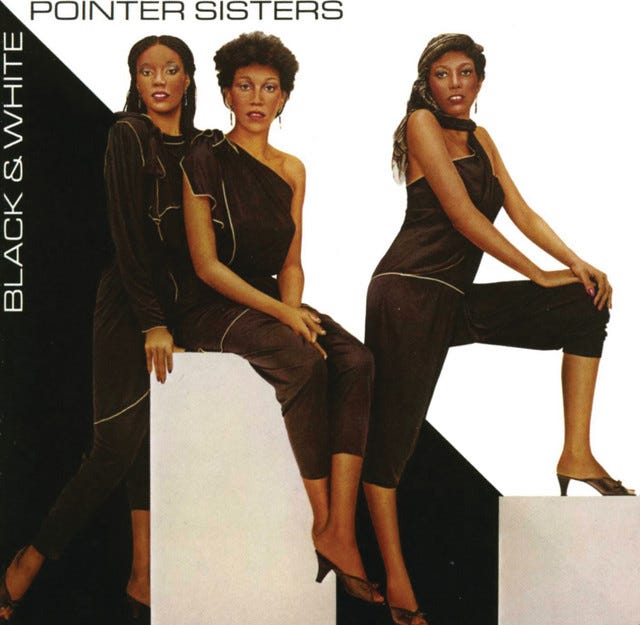
The next album, Black & White, gave them another major hit with Slow Hand. Then came So Excited! in 1982, where synthesizers and electronic arrangements became more prominent.
And by the time Break Out arrived in late 1983, everything seemed to fall into place.
Breaking out, one hit at a time
Richard Perry had sold Planet Records to RCA in 1982, but the change of ownership didn’t immediately alter the Pointer Sisters’ fortunes. In fact, their biggest success was still to come.
Break Out became the album that transformed the sisters into genuine eighties pop superstars. But even here, success wasn’t quite as straightforward as it might appear.
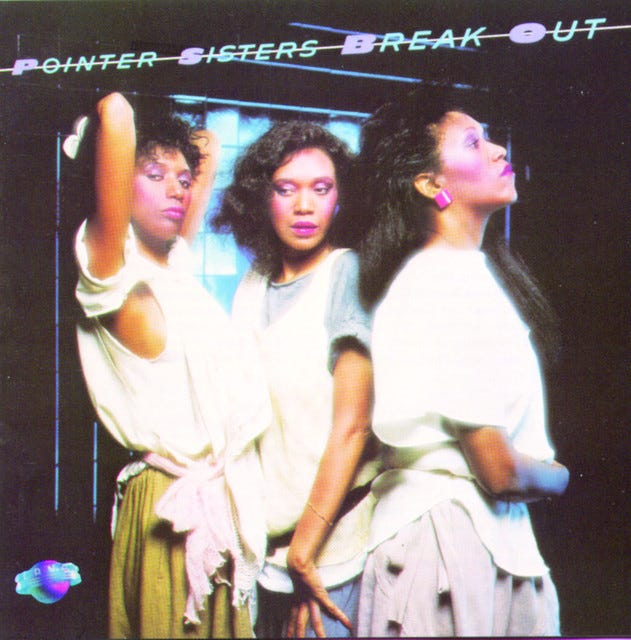
Take Automatic.
It wasn’t originally planned as the second single. But DJs started playing it, the record company followed, and the song went to number two on the R&B chart and number five on the pop chart. A nice example of the dancefloor telling the record company what to do, rather than the other way around.
Then there’s I’m So Excited.
The song had already appeared on the previous album in 1982, but the original single hadn’t reached the pop Top 10. The sisters + Record company believed it deserved another chance, and they were right. A remixed version was released in 1984, reached the Top 10 and was added to a revised edition of Break Out.
That makes the album quite interesting from a collector’s point of view. The original 1983 edition and the revised 1984 version aren’t exactly the same record. Nightline disappeared to make room for I’m So Excited.
Then there was Neutron Dance.
Its inclusion in the soundtrack of Beverly Hills Cop gave the song an enormous additional push. The film’s success and the exposure on MTV helped turn it into another Top 10 hit.
And then we come to this week’s central song.
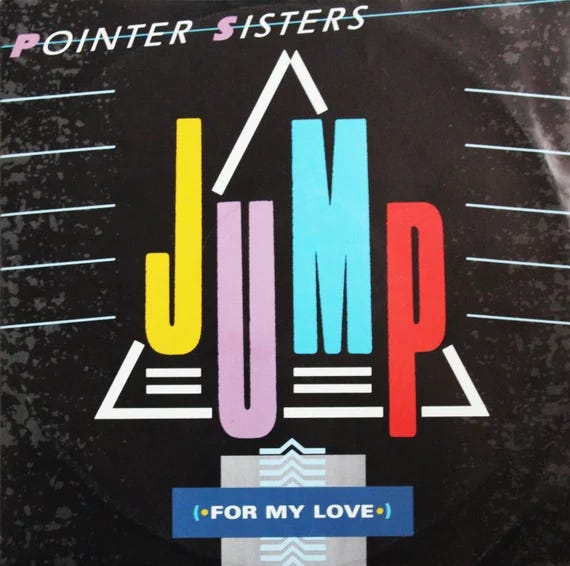
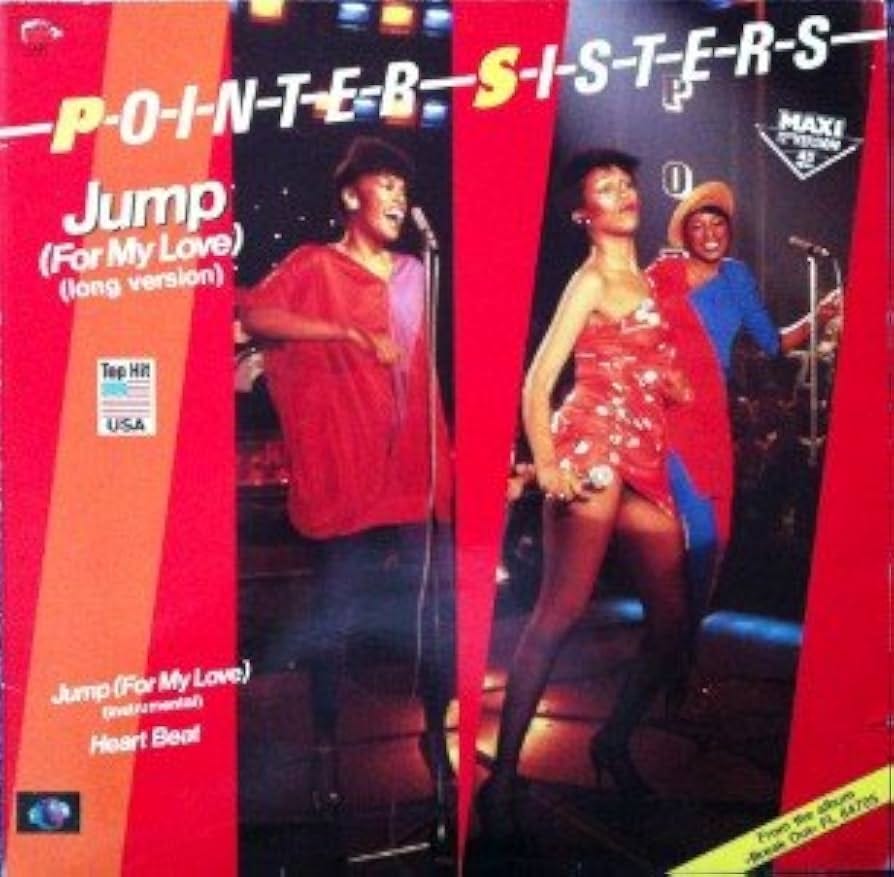
Jump (For My Love).
Released as a single in 1984, the year Los Angeles hosted the Olympic Games, Jump had a video filled with images of athletes doing exactly what the title suggested.
Jumping.
There was no official connection with the Olympics, but the timing couldn’t have been better.
The song reached number three on the American pop chart and became one of the biggest hits from Break Out.
And musically, it was quite a different beast from Fire.
The electronic rhythm, the tempo, the powerful vocals, the whole thing was designed to get people moving. Yet the sisters still sounded unmistakably like the Pointer Sisters.
Which brings me back to Richard Perry.
Richard Perry, Julio Iglesias and the perfect pop song
Perry was one of the major producers of his generation. A perfectionist who worked his artists hard and had a very good ear for commercially successful material.
But he also understood something important about the Pointer Sisters.
They could sing almost anything.
And he knew how to find songs that suited their voices while remaining accessible to a much wider audience. The popularity of their records rested partly on the simplicity of the melodies and lyrics, combined with rhythms that were often far more sophisticated than they first appeared.
Anyone could sing Jump (For My Love) after hearing the chorus once.
But that doesn’t mean making a record like Jump was simple.
Perry worked with a team of associate producers, arrangers, programmers and engineers who helped give Break Out its sleek, electronic sound. And that was probably the perfect combination. The sisters brought their gospel, jazz and soul backgrounds. Perry and his team brought the songs, the production expertise and an ear for what was happening in popular music.
Although Perry wasn’t infallible.
Because the funniest bit of information I came across while researching this song was that he originally considered giving Jump to Julio Iglesias.
Yes. Julio Iglesias.
Now, I have a really hard time imagining what that would have sounded like.
Perhaps somewhere in an alternative universe, Julio is singing Jump (For My Love) while the Pointer Sisters are recording To All The Girls (Boys) I’ve Loved Before.
I’m pretty sure we got the better deal 😁
The dancefloor connection
What makes Jump such an interesting record for me isn’t just that it became a big hit. It’s the way it connects to another musical world that was developing at the same time.
By the early eighties, a growing number of African American artists were recording fast, electronically driven dance tracks. Songs that could easily push beyond 130 BPM. And those tempos were also central to the Hi-NRG sound that was filling gay clubs in the US and Europe.
The Pointer Sisters weren’t specifically making music for that scene. But listen to Jump alongside records by Sylvester, Evelyn Thomas, Lime or Hazell Dean and you’ll hear how naturally they fit together. That’s exactly what I’ve tried to demonstrate in this week’s Go Dancin’ mix.
And it raises a question I’ve been asking myself for quite some time.
Were these musical worlds influencing one another? Or were they simply responding to the same changes in technology, production and dancefloor culture? It’s something I want to explore properly.
From now on, the B-Side will have its own rhythm, separate from the weekly A-Side. It will remain behind the paywall, but I’ll be using it to explore bigger subjects, much like I did with the Canadian disco series.
And this connection between Black dance music and Hi-NRG seems like a very good place to start.
Because when you listen to Jump (For My Love), the connection sounds perfectly natural.
But how did it happen?
And did you ever think of the Pointer Sisters as part of the Hi-NRG story, or were they always a pop group to you?
The Twelve Inch is a growing community of people who love disco, eighties, and early-nineties dance music.
If you know someone who would enjoy these stories, feel free to share this post with them or pass it along on Substack Notes. Every share helps the music, and the community, travel a little further. 💿✨
So You Wanna Hear More ?
I thought you would !
It’s fun to write about music but let’s be honest. Music is made to listen to.
Every week, together with this newsletter, I release a 1 hour beatmix on Mixcloud and Youtube. I start with the discussed twelve inch and follow up with 10/15 songs from the same timeframe/genre. The ideal soundtrack for…. Well whatever you like to do when you listen to dance music.
Listen to the Soundtrack of this week’s post on MIXCLOUD
Or on Youtube :
I love the alternate album covers for the Pointer Sisters Jump For My Love, I only saw the original and sadly my 12” single didn’t have a picture sleeve. Once again I learn something about music I lived through in real time.
The film Love Actually is one of my favorite soundtracks and glad the track is featured in a pivotal Hugh Grant scene. BTW if you’re a fan of Love Actually, you should check out the directors cut with commentary as it features a deleted scene from each couples relationship.
Fascinating to witness The Pointers' career progress through its various genres in real time, Pe! As Richard Perry had worked to give Barbra a different (rock) sound in the early-'70s ("Stoney End" and a couple others), here he was called on again to streamline (and bring up-to-date) their sound for the '80s!
It's fun to look back and see some of these "liner note names," make the connections, and realize just what, exactly, this name or that was good at doing, and who and how many artists hired these folks to utilize their special talents for these new specific purposes!
I love that Julio Iglesias tidbit! Matching song'n'artist....not as easy as it may look!!