

What if the weirdest band in your record collection turned out to be one of the most influential?
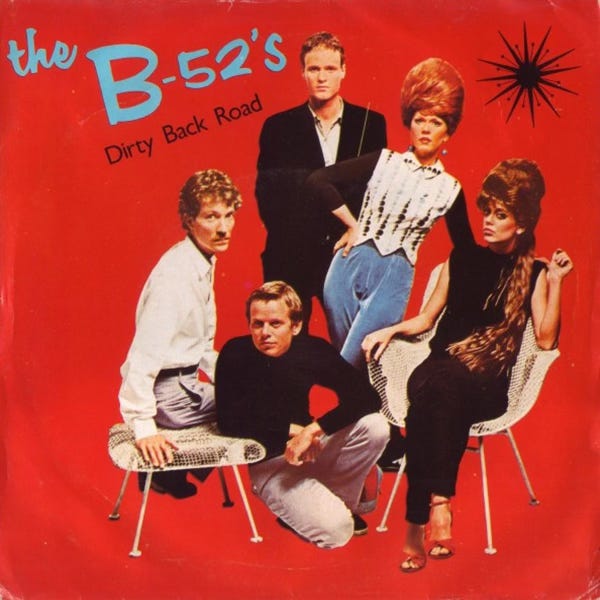
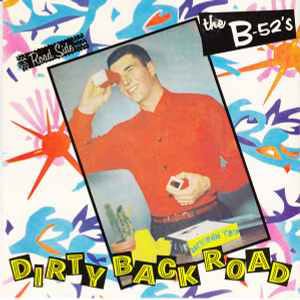
Somewhere between punk’s sneer and disco’s shimmer, between the grit of CBGB and the gloss of Studio 54, a band from Athens, Georgia hopped in a beat-up station wagon, took it onto a (dirty back) road, and ended up rewriting the map of dance music. That band was the B-52’s. And the track? The delightfully groovy “Dirty Back Road.”
A song that never charted on the Billboard Hot 100. A band that looked like a thrift store exploded. And yet, without the B-52’s, it’s hard to imagine the ‘80s as we know them. From Talking Heads to Madonna, from new wave to house, their fingerprints are everywhere.
In my high school, the local parties divided clearly between disco kids and “new wave” rockers. I was firmly Team Disco, until I heard “Planet Claire”. It wasn’t disco, but it was hypnotic, futuristic, danceable.
When Wild Planet, their second album, dropped with “Dirty Back Road” as its first single, the B-52’s became my favorite band.
On the dance floors where it mattered, “Dirty Back Road” was important, even if it never topped official charts.
Welcome, I’m Pe Dupre and I’m really glad you’re here. This is “The Twelve Inch”, my newsletter that tells the history of dance music between 1975 and 1995, one twelve inch at a time.
If you’ve received this newsletter, then you either subscribed or someone forwarded it to you. If you fit into the latter and want to subscribe, please do so. That way you will not miss any of my weekly episodes
Who Are the B-52’s?
The B-52’s are the band that shouldn’t have worked, but did. Formed in 1976 after a flaming volcano cocktail shared at a Chinese restaurant in Athens, Georgia, the original lineup was Fred Schneider (speak-singer extraordinaire), Kate Pierson and Cindy Wilson (operatic harmonies from another planet), Ricky Wilson (a guitarist who literally removed strings from his guitar), and Keith Strickland (drummer, later multi-instrumentalist and secret architect of the band’s sound).

Athens was not exactly a music capital in the mid-70s. It was cheap, weird, and hot, a Southern town full of artists, students, and dropouts. But this isolation gave the B-52’s their freedom. “We didn’t have a goal of what we wanted to sound like when we started out,” says Keith Strickland, “We just knew we wanted it to be fun.”
How Did They End Up in New York?
After a legendary debut show at a friend’s Valentine’s Day party in 1977, the B-52’s became local legends. But it wasn’t long before they set their sights on New York City.

If you ever saw them live, you’ll agree that it is a party
CBGB, Max’s Kansas City, Club 57—this was their real stage. The city’s underground scene was buzzing with acts like Blondie, Talking Heads, and Suicide. What made the B-52’s stand out wasn’t just their look (though, let’s be honest, those wigs deserved their own record deal 😃), but their ability to turn outsider art into irresistible grooves. They weren’t trying to be cool; they were cool, and proud of it.
Their live shows in New York City quickly caught the attention of record labels. Sire Records and its founder Seymour Stein, who had already signed fellow NYC breakout stars, Talking Heads, initially led the race, but the deal was ultimately snapped up by sister label Warner Bros. Outside the U.S., Island Records secured the rights.
The First Two Albums: Punk’s Disco Cousins
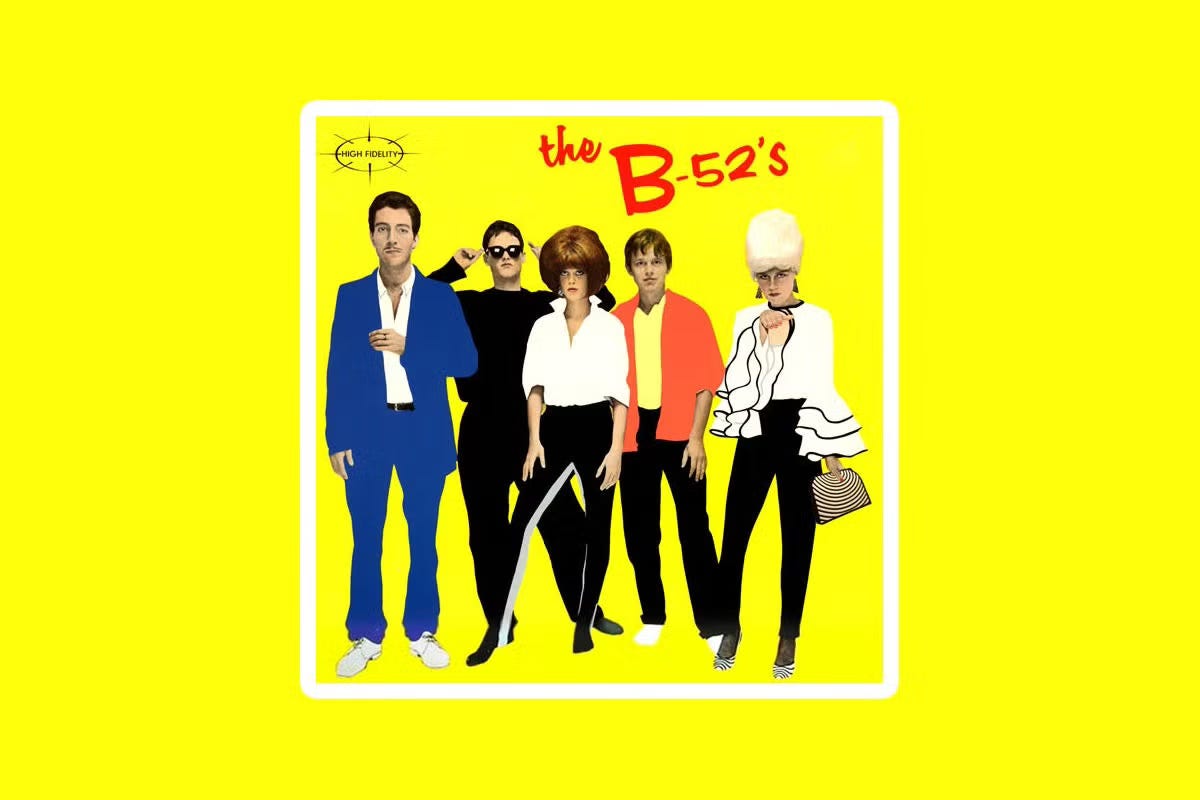
The B-52’s (1979) was pure alien pop: “Planet Claire,” “Rock Lobster,” and “Dance This Mess Around” didn’t sound like anything else. Produced by Island Records’ Chris Blackwell, the LP became an underground hit from New York to Berlin.
Yet, mainstream America wasn’t ready.
Despite selling over 500,000 copies, none of the singles charted on the Hot 100. Too weird for radio. Too pop for punk. Too punk for disco.
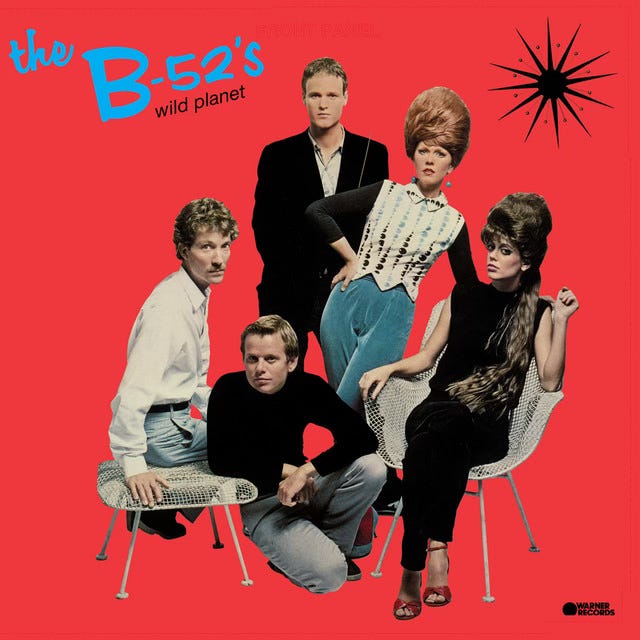
Wild Planet (1980) pushed their sound further. Produced by Rhett Davies, it experimented more in the studio and revealed a sharper, more serious side of the band.
And from it came one of their coolest songs: “Dirty Back Road.”
Why I adore the B 52’s and how they shaped my growing up.
The first time I heard “Planet Claire,” it hooked me right away. Without a bass player in their lineup, the B-52’s created a unique edge, all tight rhythms and quirky melodies, that set them apart. This distinctive style helped cement their reputation as post-punk innovators and made them my perfect bridge into a world beyond disco.
But there was another reason, one I didn’t recognize at first. When the B-52’s entered my life, I was struggling with my own sexual identity. They showed me that there was a world beyond the traditional norms. At the time, I had no idea that four of the five members identified as LGBTQ+, which only deepens their significance for me. They championed individuality and inclusivity, not by wearing a label, but simply by being themselves. That’s why I adore them.

The other B 52. The one without the laughs
The B-52’s redefined queerness in music by fully embracing their eccentricity and creating a space for self-expression. They showed that queerness could be celebrated in a way that was fun, joyous, and accessible, helping to normalize LGBTQ+ identities in pop culture.
By “sneaking queerness into the mainstream” without alienating wider audiences, the B-52’s became trailblazers for future generations of queer artists. Even though they never considered themselves a “queer band,” their legacy continues to inspire today’s queer pop stars and activists. Kate Pierson : “We just thought of ourselves as just plain queer, as in eccentric”
What’s the Story Behind “Dirty Back Road”?
The B-52’s, known for their quirky and experimental style, often packed their music with layered meanings. On the surface, “Dirty Back Road” sounds like a simple road song, describing a drive down a rural back road. But it’s widely interpreted as a metaphor for uninhibited sexual exploration. The lyrics capture a sense of freedom and desire, weaving themes of intimacy and passion in a playful yet direct way.
The band’s unconventional songwriting style often blended humor with metaphor, inviting listeners to make the songs part of their own world — to interpret them however they liked. “Dirty Back Road” can represent any kind of sexual exploration you want it to, though the title, paired with a line like “feet in the air,” clearly points in a certain direction 😃. The song celebrates breaking free from societal norms and embracing personal desires without shame or restraint.
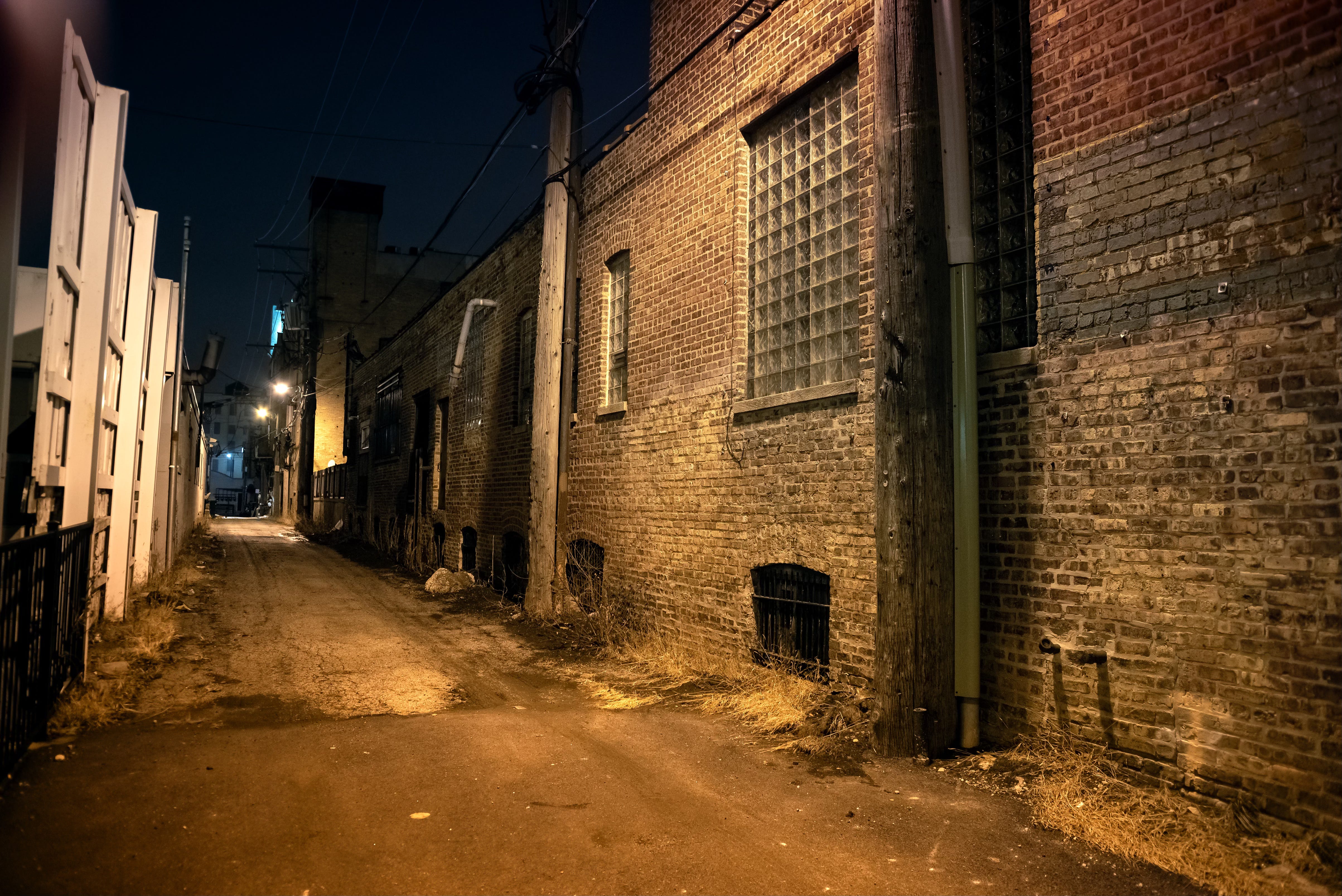
It’s a dirty back road allright, just not the one we are referring to 😁😁
Kate and Cindy sing the same set of lyrics twice, but with a twist: they switch harmonies each time, trading top and bottom parts. This subtle musical move cleverly reinforces the song’s deeper themes of sexuality, fluidity 😃, and playful subversion.
The complicated story of the single releases: Why “Dirty Back Road” was only released in Europe.
To begin with, you should know that the B-52’s single release strategy in 1980 was, to put it mildly, pretty muddled. Their first two albums came out in relatively quick succession. So while a large part of their audience was still discovering the debut album, and becoming fans, Wild Planet was already hitting the shelves. This probably explains why, in the U.S. Rock Lobster was re-released (for a third time), paired with Private Idaho from Wild Planet.
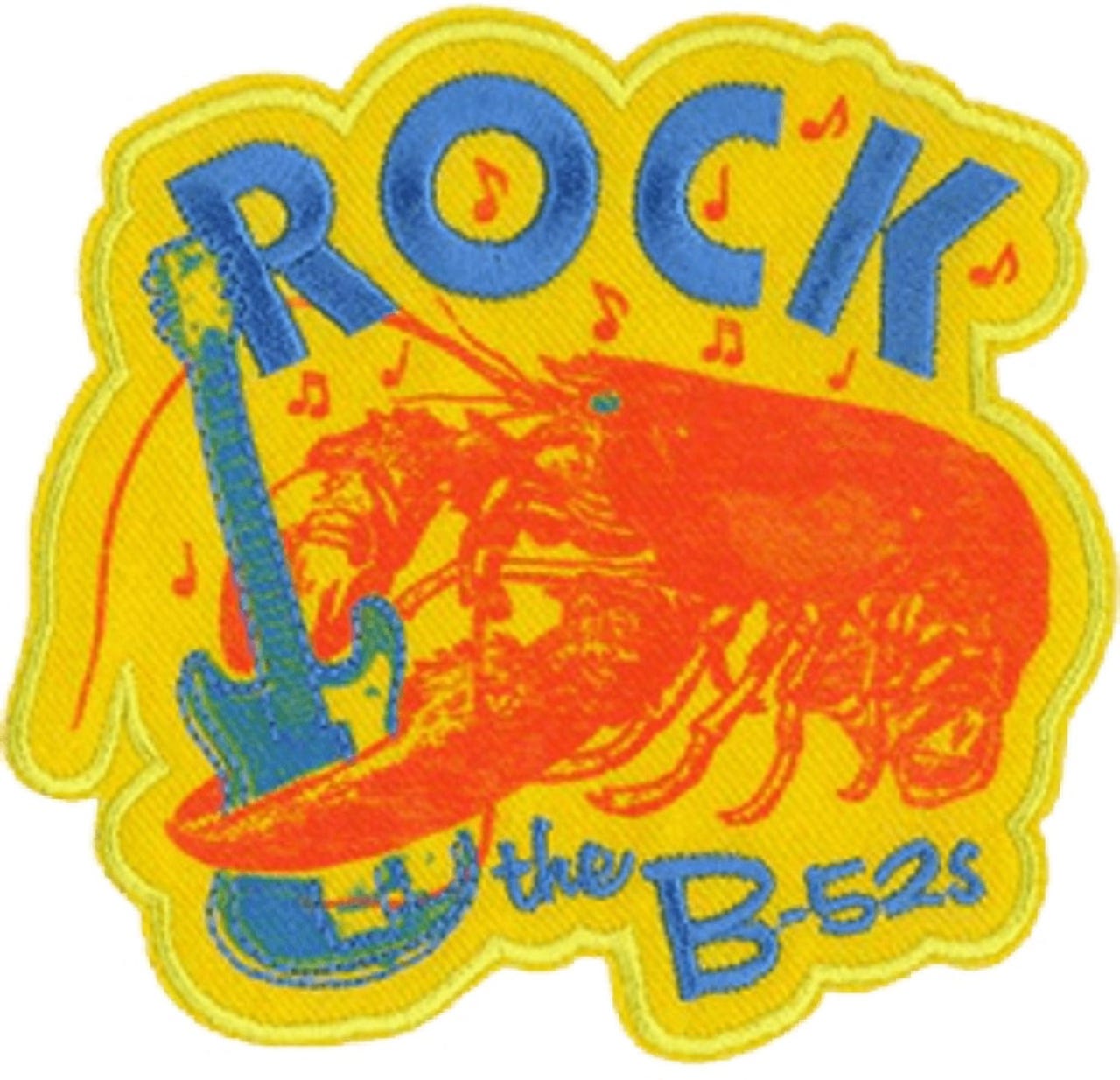
Eventually, Private Idaho became a single in its own right, and then the momentum seemed to stall. They did put out Lava in early 1981 (a very odd choice), but it clearly served more as a promotional tool than a serious attempt at chart success. My guess is that Warner Bros. found Dirty Back Road a little too subdued to be used as a lead single for the album in the U.S..
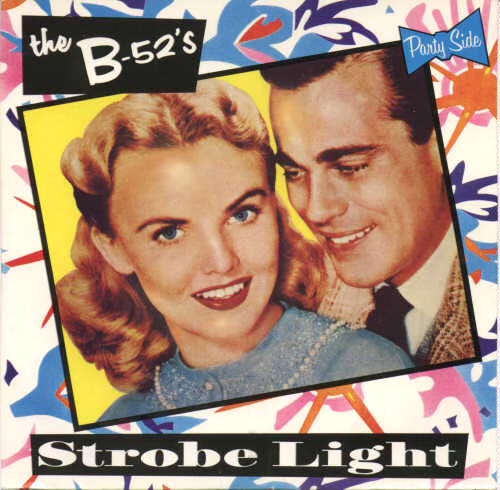
In Europe, where Island Records handled the B-52’s releases, the approach was different. They chose Dirty Back Road backed with Strobe Light as the first single. Later, Give Me Back My Man was released, this time paired once again with Dirty Back Road.
And then came the Party Mix! album: six remixed tracks, three from the debut, three from Wild Planet, initiated by Island Records and released worldwide (through Warner as well). Unfortunately, Party Mix! dropped while Wild Planet was still fresh, further complicating the singles landscape.
The truly baffling part? The two tracks that seemed perfect for a dance remix, Planet Claire from the debut and Dirty Back Road from Wild Planet, weren’t included on Party Mix! at all. That’s why there’s no 12-inch extended version of either song today.
How Popular Were the B-52’s in the Late ‘70s and Early ‘80s?
They were massive, just not on the charts.
By 1981, the B-52s were selling out international tours, making appearances on Saturday Night Live, and winning over both the post-punk and disco undergrounds. Yet when critics tried to define them, they mostly focused on how the band didn’t fit the typical rock mold. In a rock culture that prized authenticity, strength, and sincerity, the B-52s were often misunderstood and overlooked. The very qualities that had made them stand out, and fueled their meteoric rise, now started to push them to the margins.
Why the B-52’s Mattered (and Still Do)
The B-52’s were the first American band to truly bridge punk, pop, and dance music. They were:
Queer before “queer pop” was a thing.
Camp in a way that was inclusive, not ironic.
Danceable without being disco.
DIY but not lo-fi.
Why “Dirty Back Road” Deserves a Revisit
“Dirty Back Road” isn’t the band’s most famous track, but it may be one of their most timeless. It anticipates the indie-dance crossover that would become much more normalized from the eighties on.
If “Rock Lobster” is the B-52’s at their most cartoonish, “Dirty Back Road” is them at their coolest, subtle, stylish, and effortlessly groovy.
What Do You Remember?
Did you know “Dirty Back Road” before reading this? Were you a B-52’s fan? Did their music touch your life? I’d love to hear your stories. 😃
Further reading (or should I say watching)
There are a number of interesting video’s/links :
So You Wanna Hear More ?
I thought you would !
It’s fun to write about music but let’s be honest. Music is made to listen to.
Every week, together with this newsletter, I release a 1 hour beatmix on Mixcloud and Soundcloud. I start with the discussed twelve inch and follow up with 10/15 songs from the same timeframe/genre. The ideal soundtrack for…. Well whatever you like to do when you listen to dance music.
So what’s in this week’s mix ?
We kick things off by diving into the danceable New Wave sounds of the early eighties, starting with “Dirty Back Road,” followed by the brilliant Talking Heads track “Life During Wartime” and Rheingold’s “Dreiklangsdimensionen.” The first half-hour is a lively mix of American and European influences.
Special shoutout to the incredible production work of Martin Rushent. I’ve highlighted three standout examples of his touch in this week’s mix: Altered Images’ “I Could Be Happy,” The Members’ “Chairman Of The Dub,” and the dub version of Pete Shelley’s “Homosapien.” His dub mixes, in particular, had a major impact on the evolution of dance music during this era. I’ll definitely be zooming in on that in a future episode.
For the last half-hour, we move into tracks by artists who blended key elements of disco into their sound to create irresistibly danceable songs — with Roxy Music’s “Angeleyes” and Blondie’s “Atomic” standing out as perfect examples.
Enjoy!
Next week, I’ll be heading back to Miami to explore how its vibrant disco scene was shaped by influences that set it apart from New York’s.
Didn't see them live. Didn't know that any band members were queer. I was in college and just LOVED the music. It is different but still has a groove. Big fan of Kate and Cindy's lead vocals. I often refer to their backing vocals as "vocal percussion". "Give Me Back My Man" is still my go-to, but I will listen to any song off their first two albums, at any time. Gimme gimme gimme.
Link to one of the best videos ever made : https://www.youtube.com/watch?v=swBDlOk0V6Y
Great write up on one of my favorite tracks! The first two albums are perfection, no skips.