

Some Songs Arrive With a Memory, Others Simply Become Part of You ✨
The moment you first hear one of your favourite records is sometimes tied to a very precise memory, a place, a time, even a state of mind. That exact setting can be a major reason why you end up loving that song. And because music is such a powerful repository of memory, every listen takes you back to that same moment.
But some records that make it into your all-time pantheon do not carry that connection.
It’s what I wrote about last week with Boz Scaggs and “Lowdown”. You do not quite remember when you first heard it, or why you fell in love with it. You just did.
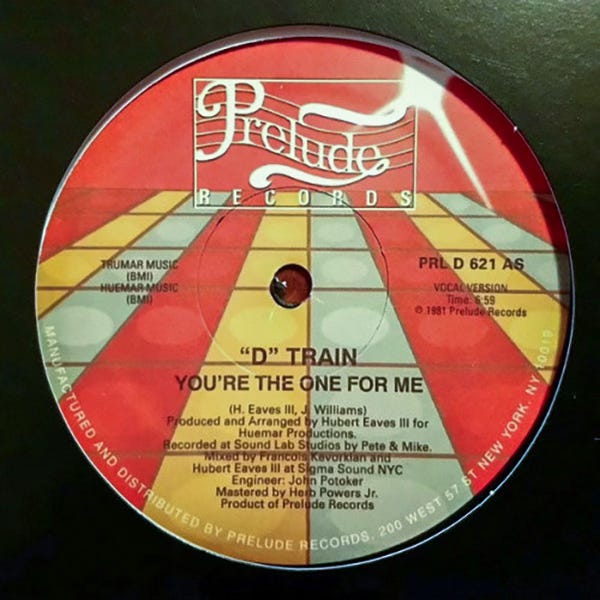
D Train’s “You’re The One For Me” is exactly that kind of record for me.
I have no memory of where or when I first heard it. I strongly suspect it happened during one of my visits to the local record import shop we had in Antwerp.
I loved hanging around that place. They stocked a large selection of cut-outs, straight from the US. Quite a bit of my vinyl collection still consists of American pressings with the cut-out marks to prove it. While I rummaged through the bins, the owner would play the latest imports for the DJs who came in to hear new releases.
I strongly suspect that is where I first heard “You’re The One For Me”, because both my twelve-inch and album are original Prelude copies, not the Ramshorn editions that later carried the local licence.
And the first time I heard it, I was hooked.
Why Do Certain Songs Hit You So Hard? 🤔
Last week I asked the question why we fall in love with certain songs or genres, and why that can be so difficult to explain.
For this week’s record, I may have found the answer during my research.
When I heard Hubert Eaves III, one half of D Train, explain that he wanted to create a dance sound with “very masculine energy”, I suddenly understood something.
It was 1981. I was 18.
So we can safely say Hubert reached his goal 😁
If today’s youth has influencers, we had manosphere dance music 😂
The sound of the record has often been described as stripped-down, soulful and more electronic than peak disco, driven by sequenced handclaps, synth bass and raw vocal power.
It sounded like a bulldozer thundering across dancefloors in the early eighties.
And it arrived at the perfect moment.
The Song That Bridged Disco and House 🌉
“You’re The One For Me” is one of the most important transitional records in dance music history.
It arrived exactly when disco’s golden era was ending and the eighties were beginning.
The song is best understood as a post-disco / boogie record, bridging late disco grooves, gospel-inflected vocals, leaner electronic production and the stripped-down approach that would later feed early house music
It was shaped by the Paradise Garage / Larry Levan ecosystem, and many DJs and historians later pointed to it as one of the records that helped define the shift from disco into house.
The Twelve Inch is the story of how dance music kept reinventing itself, often by accident.
And few records embody that idea better than this one.
Today on Side A, we zoom in on the two men behind D Train and how their story connects to several of the most important people, places and institutions in dance music history.
It is also one of the signature releases of one of New York’s three great post-disco labels, Prelude Records.
I will not dive deeply into Prelude this week, but on the B-side I will zoom in on three other crucial elements:
why this record mattered so much historically and what the Dub has to do with that
the remixer who turned it into a dancefloor weapon
the DJ and club that launched it into orbit
👋 Welcome, I’m Pe Dupre, thanks for stopping by.
This is The Twelve Inch, a community about the history of dance music from 1975 to 1995, told one twelve-inch record at a time.
If this landed in your inbox because a friend forwarded it, I’d love for you to subscribe so you don’t miss the weekly episodes. Each one dives into a track, its story, and the culture around it.
And if you’re already enjoying the free posts, would you consider becoming a paid subscriber? Your support helps me keep researching, writing, and unearthing the stories behind the music. And You’ll get access to the weekly B-side post: the full archive and extra Subscriber Only Posts
How It All Started 🎤
D Train was an American post-disco R&B duo consisting of James D-Train Williams and Hubert Eaves III. They were active between 1980 and 1985.
James Williams was born in the Bronx, New York and, like so many African-American singers of his era, began in church.
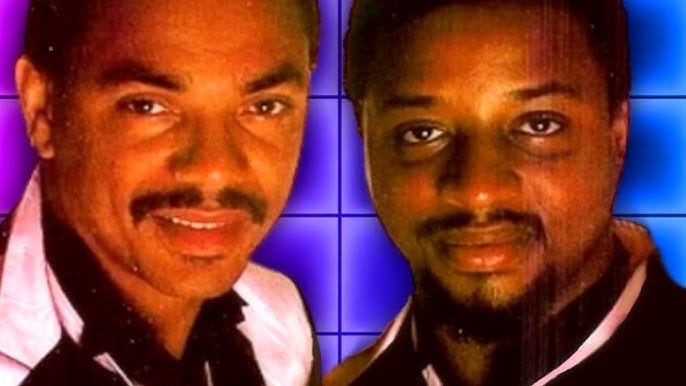
At age ten, seeing The Jackson 5 perform on The Ed Sullivan Show inspired him to study jazz guitar.
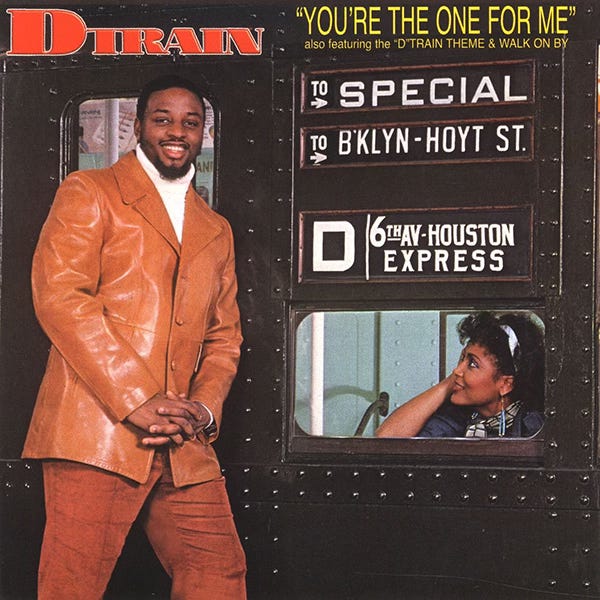
Later, at Erasmus Hall High School, he played defensive tackle on the football team. That is where he got the nickname “D Train”, after the Brooklyn subway line, because according to the team captain: “When he hits you, it’s like being hit by a train.” 😁
While working on a project with classmate Will Downing, Williams met Hubert Eaves III.
Hubert, born in St. Paul, Minnesota, had already built a reputation as keyboardist in Mtume and had released solo work before meeting James.
Williams remembers:
Nobody Wanted It, Until Everybody Did 💥
The pair recorded the song, but labels hated it.
Williams recalled:
History would prove them spectacularly wrong.
James Williams’ voice fit the song & sound perfectly.
The Paradise Garage Explosion 🔥
Undeterred, the duo went grassroots.
Williams vividly remembers:
That was the breakthrough moment.
Soon after, Prelude Records signed the duo.
Williams said:
The Paradise Garage buzz led to radio support from legendary WBLS DJ Frankie Crocker.
By December 1981: “You’re The One For Me” hit No. 1 on Billboard’s Dance Chart.
Why It Sounded So Different 🎛️
Part of the song’s success lies in its sound.
Everything about “You’re The One For Me” felt futuristic in 1981.
The song is almost entirely synthesizer-driven. Only the drums were organic, added afterward to strengthen the kick because early drum machines simply could not provide the same impact. Hubert Eaves built something revolutionary:
thick, aggressive, punchy synth funk.
Though still rooted in disco structure, it introduced a sonic blueprint countless later funk and boogie records would follow.
François K and the Dub Revolution 🕺

But another crucial reason for the song’s importance lies in one specific version.
On many dancefloors, the dub/instrumental version mattered more than the vocal.
That brings us to François Kevorkian. When D Train signed to Prelude, François K was working A&R and remixing much of the label’s catalogue. He had already helped turn Prelude into a powerhouse with records like Musique’s “In The Bush.” On D Train, he helped elevate the dub mix into something central.
François said:
This was not the birth of dub versions, but it was one of the records that pushed them into the mainstream of dance culture.
And we will dive much deeper into that on the B-side.
What Happened Next? 📈
Curiously, “You’re The One For Me” never became a huge pop crossover hit, outside of the UK where it reached No. 30.
Still, D Train followed it with a string of dancefloor staples:
“Keep On”
“Walk On By”
“D-Train Theme”
They later released two more albums:
Music (1983)
Something’s on Your Mind (1984)
The single “Music” became their biggest European crossover and their only real Benelux chart hit. By the late eighties, the partnership ended amicably. Williams attempted a solo career but later admitted:
“By 1988, I had no shows for my band, I was falling behind in my bills and rent. The story was over”
Its Legacy in Dance Music 🏛️
The influence of D Train can be heard everywhere.
Its DNA appears in: You’re In My System by The System, Juicy Fruit by Mtume and She’s Strange by Cameo….
The song is also often named as a major influence on the early house pioneers specifically names like Farley “Jackmaster” Funk’s “Love Can’t Turn Around” and Ten City’s “That’s the Way Love Is”
And its sparse synth textures, dub effects and stripped-back arrangement became part of house music’s foundation.
Why This Record Still Stands Out ❤️
What makes “You’re The One For Me” special is not simply that its dub mattered.
It is that the record arrived exactly at the moment DJs, remix culture and stripped-down production became central to dance music’s evolution.
It was both: a hit and a blueprint
James Williams put it beautifully:
And perhaps that explains why it still resonates.
Nobody quite knew what it was when it arrived.
But everyone knew it mattered.
This Week’s B-Side 🎁
This week’s B-side dives into four big questions:
Where does the dub version come from, and why did it become so important?
Who is François Kevorkian, and why was he so vital to dance music?
Why was the Paradise Garage such a legendary nightclub?
How exactly did they make “You’re The One For Me”, and which synths were used?
As always, there is also an exclusive playlist with 10 essential D Train tracks.
The B-side is where we go deeper.
It is paywalled, but for the price of 8 premium coffees, you get:
a full year of access to every B-side piece
the complete archive of 150+ articles
future deep dives into genre-spanning stories
And since “premium coffee” can mean many things, and payment in beans is impractical 😁, I happily accept € or $.
Join the club. I’d genuinely love to have you on board.

The Twelve Inch is a growing community of people who love disco, eighties, and early-nineties dance music.
If you know someone who would enjoy these stories, feel free to share this post with them or pass it along on Substack Notes. Every share helps the music — and the community — travel a little further. 💿✨
Let’s Keep The Discussion Going 💬
Do you remember the first time you heard D Train?
Was “You’re The One For Me” ever one of your essential dancefloor records?
And do you agree it belongs among the key bridge records between disco and house?
Let me know in the comments, I always love hearing your memories and takes.
So You Wanna Hear More ?
I thought you would !
It’s fun to write about music but let’s be honest. Music is made to listen to.
Every week, together with this newsletter, I release a 1 hour beatmix on Mixcloud and Youtube. I start with the discussed twelve inch and follow up with 10/15 songs from the same timeframe/genre. The ideal soundtrack for…. Well whatever you like to do when you listen to dance music.
Listen to the Soundtrack of this week’s post on MIXCLOUD
Or on Youtube :
Listening to it, I don't think I've heard this song before. I was hitting the dance floors a bit back then, but the melody doesn't strike me as memorable. Or maybe it was the manosphere vibe that prevented me from getting down with it?!
But can I say that the record label at the top is gorgeous.
I am 55 years old, and, I remember the very first time I heard D-Train's 'You're The One For Me'. It was 1984, and I was 14 years old. My mother was splitting up her second marriage, and I was spending a lot of my time at my 18 year old friend Matthew's house. He had a box set of dance music records, and I was so obsessed with this song, that I must have listened to it dozens of times. Fast forward to adulthood, and, I made sure that D-Train was in my collection of music. Before I was unable to work, I taught art in Philly for ten years, where I played old school 60's, 70's and 80's music for my students while they worked on art projects. When I was 43, I stopped teaching and co-owned a vinyl records and vintage shop with my boyfriend for the last year before I could no longer work. We are both music lovers and collectors of records, CD's, cassettes, DVD's and all kinds of other vintage stuff. D-Train's 'You're The One For Me' will always be one of my forever favorites. Thank you, sincerely, for sharing D-Train's story behind their music.
😀👍🏼