

🧠 Opening Question, Why Do We Love What We Love?
I often asked myself what exactly makes a song into a personal favorite? Why do I love almost everything Rick James ever released but will I be seriously cherrypicking when it comes to Prince?
There are a number of scientific explanations. They have to do with
the release of dopamine,
your internal reference system which is, predominantly, build between the ages of 12 and 25, also triggering the age old discussion only the music of my youth was good music 😁,
the balance between prediction and
a connection to your emotional history, music as the repository of memories.
Also it has to align with your identity, matching your trained taste and feeling right on a sensory level.
All true, but none of it fully explains why some artists click… and others don’t.
The least I can say is that most of Prince’s repertoire is of exceptional quality. Only… apparently not for me.
And that raises the real question of this week’s episode:
Why do certain songs, or even entire genres, become part of who we are?
💃 The First Spark, Where It All Began
The same question applies to genres.
Why did I fall in love with disco early on while most of my peers leaned into rock or new wave? Part of it is personality. Playing the contrarian suited me just fine.
But there’s something deeper.
I was never a passive listener.
If something interests me, I want to understand it, take it apart, maybe even try it myself. So when I heard, for the first time, a DJ seamlessly mixing two records on my favorite radio show, something clicked.
That moment didn’t just make me love music, it made me want to participate in it.
And yet… even that doesn’t explain why I tuned into that radio show in the first place. That part remains a mystery.
🎤 Enter Boz Scaggs, A Personal Mystery
Boz Scaggs is one of those mysteries.
I hold a special love for his voice and repertoire. Why? I genuinely don’t know. In the Benelux, his chart success was limited. Three hits in 1977, that’s it. And yet, when I first listened to his Best Of album Hits, I knew almost every song.
Songs that never charted here, songs I hadn’t heard in years, but still recognized instantly.
That tells you something about how music embeds itself.
🌊 The Hidden Connection, AOR Meets Disco
Part of the explanation lies in the connection between R&B-based disco and AOR, or Yacht Rock as it’s now often called. I’ve touched on this before, and I’ll go deeper into it on this week’s B-side. But the essence is simple:
The uptempo Boz Scaggs tracks share the same groove DNA as the disco I loved.
So even without consciously knowing his songs, they felt familiar. They aligned with my taste, my identity, my internal musical compass.
📻 The Discovery, AFN & “Breakdown Dead Ahead”
When my taste broadened in the early eighties, I rediscovered him through “Breakdown Dead Ahead”. It wasn’t a hit in the Benelux. I found it on the American Top 40 on AFN with Casey Casem, a show I loved.

.Only much later did I connect it back to those earlier songs I already knew and loved.
Music sometimes connects the dots long before we consciously do.
👋 Welcome, I’m Pe Dupre, thanks for stopping by.
This is The Twelve Inch, a community about the history of dance music from 1975 to 1995, told one twelve-inch record at a time.
If this landed in your inbox because a friend forwarded it, I’d love for you to subscribe so you don’t miss the weekly episodes. Each one dives into a track, its story, and the culture around it.
And if you’re already enjoying the free posts, would you consider becoming a paid subscriber? Your support helps me keep researching, writing, and unearthing the stories behind the music. And You’ll get access to the weekly B-side post: the full archive and extra Subscriber Only Posts
🎬 How It Started, From Texas to the First Break
William Royce Scaggs was born on June 8, 1944 in Canton, Ohio, but spent most of his early years in Texas. It was in a private school in Dallas that something important happened. He met Steve Miller.
Miller taught him how to play guitar at the age of 12, setting everything in motion. His nickname “Boz” also dates from that period, evolving from “Bosley”, given to him by a schoolmate.
The foundations were laid early, but the path forward was anything but straightforward.

Together with Steve Miller, he enrolled in college, but both left soon after to pursue music. That decision took Scaggs far from Texas, all the way to London and across Europe, where he busked to make ends meet. In 1965, he recorded his first solo album for a Swedish label.
Nothing came of it. No breakthrough, no momentum. Just experience.
Back in the United States in 1967, the connection with Steve Miller resurfaced. He joined the Steve Miller Band and stayed until 1968, when he decided to go solo again.
Real progress only started a few years later.
When he signed with Columbia Records in 1971, things began to shift, slowly at first. His first two albums for the label sold modestly, showing potential but not yet delivering results.
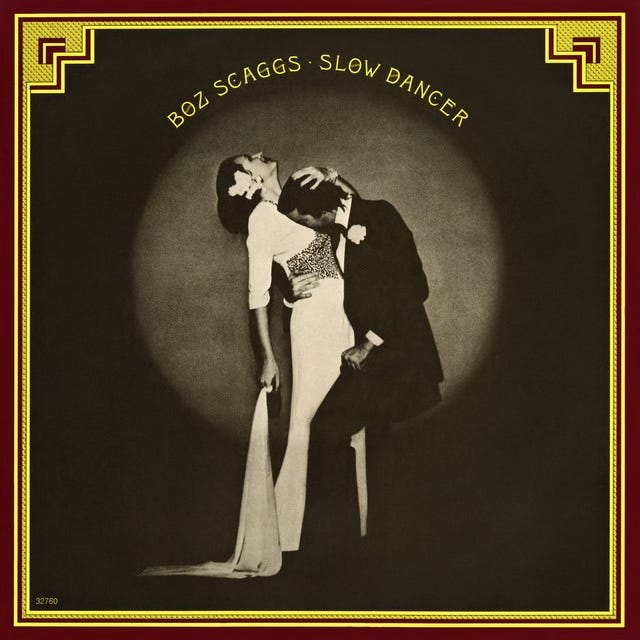
For the third album, Columbia made a decisive move. They brought in Johnny Bristol to produce and steer the sound toward something more soulful. Before that, Scaggs had approached Gamble & Huff, but they turned him down.
That decision would indirectly shape everything that followed.
The result was Slow Dancer in 1974. It reached number 81 on the Billboard Album chart, a clear step forward and his biggest success up to that point.
More importantly, it set the direction.
Because what was coming next would change everything.
🕺 The Breakthrough, Lowdown & The Dancefloor
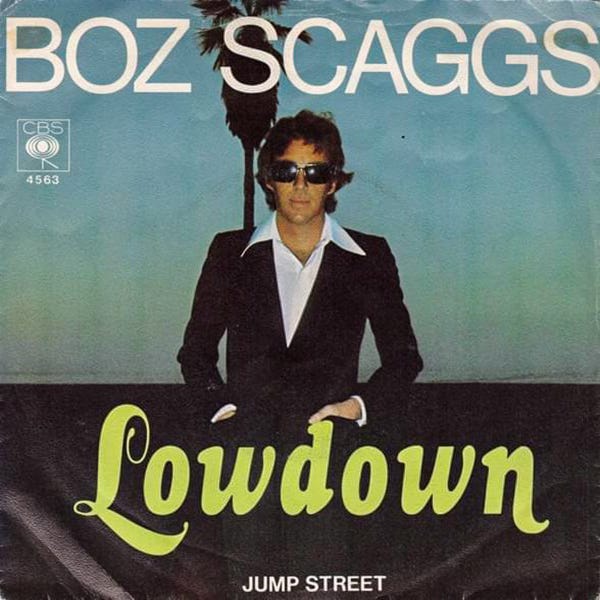
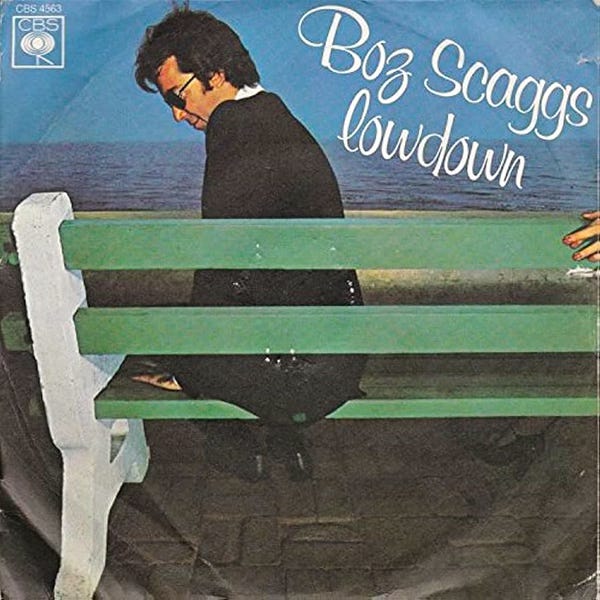
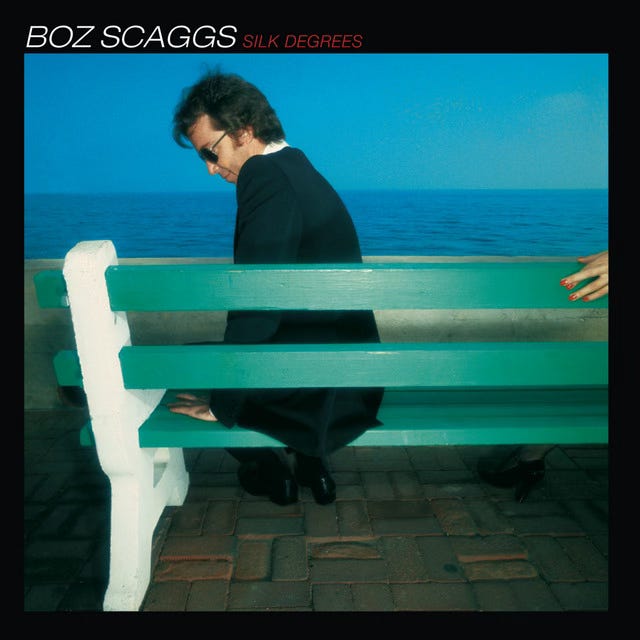
Boz Scaggs broke through in 1976 with Silk Degrees and the song “Lowdown”. It was a n°3 hit on the Billboard Hot 100 and his only entry into the dance charts.
And timing was everything.
This was just before Saturday Night Fever, when R&B-based disco was beginning to enter the mainstream. Scaggs had already been building toward this sound. As he said:
Then came the key moment.
“Lowdown” wasn’t even the first single. It was persistent airplay on R&B stations that forced CBS to release it.
DJ’s picked it up.
Dancefloors responded.
And suddenly, a song that wasn’t disco… became part of disco culture.
🎬 The Counterfactual, The One That Got Away
Here’s where the story takes a fascinating turn. John Travolta rehearsed his Saturday Night Fever dance routines… to “Lowdown”.
But when RSO wanted to license the track, CBS said no. The song was already tied to the film Looking for Mr. Goodbar.
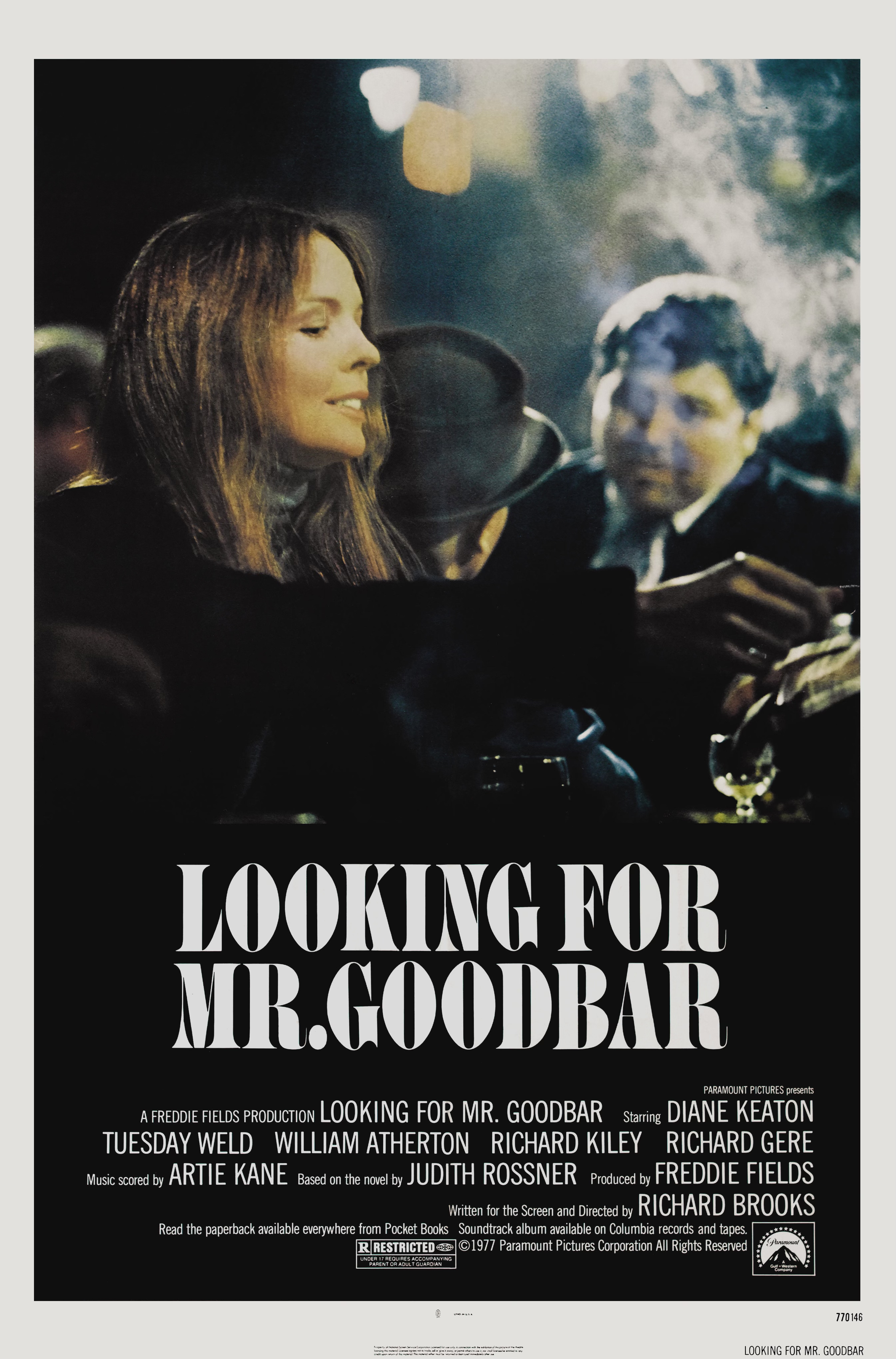
A good film, but not a cultural phenomenon.
Imagine the alternative history.
“Lowdown” on the Saturday Night Fever soundtrack.
A completely different trajectory.
I’ll explore that counterfactual in depth on the B-side.
🎹 The Toto Connection, From Groove to Arena Rock
There’s another thread that ties into my personal taste.
Toto.
Their early work, especially “Hold The Line”, resonated with me in a similar way. Not disco, not even dance. And yet… it connected. The reason becomes clear when you look at the musicians. The core of Boz Scaggs’ band became Toto:
Jeff Porcaro on drums
David Paich on keyboards
And Boz himself explains how it started:
That “magic” became a blueprint.
Not just for Scaggs, but for Toto’s entire sound.
📉 The Aftermath, Success, Pressure & Silence
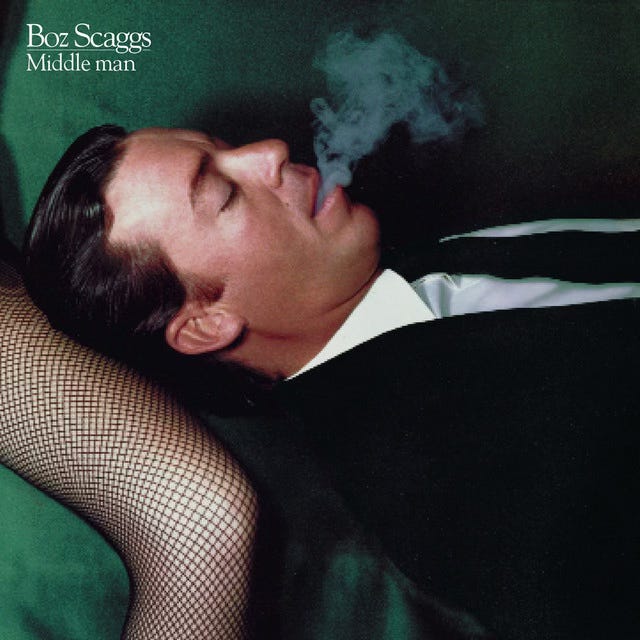
Following Silk Degrees, expectations were high. The follow-up didn’t match its success. Then came Middle Man in 1980, featuring my personal favorite:
“Breakdown Dead Ahead”.
After that, something changed. Scaggs stepped away, feeling music had become a “career” and that it had “left him”. In 1985, he returned out of necessity:
“something very big missing”
But the magic of the late seventies moment was gone.
🪩 Was It Disco? Or Something More Subtle
Boz Scaggs built a career out of interpreting black music for predominantly white audiences. Silk Degrees, his first gold record after five attempts, drew its appeal from a very specific blend, a distinctive white pop vocal style combined with an evocative mix of black, Philly soul rhythms.
He himself pointed directly to where that inspiration came from:
“It dawned on me that the most innovative music was coming from the Gamble & Huff / Thom Bell Philly studios.” “This was before disco happened,” he added. “I wanted to try to work with the new rhythms and the great black session players.”
And that is where things start to get interesting.
Because while he wasn’t setting out to make disco, the world around him was changing. R&B based disco was on the rise, quietly shaping what would become the dominant sound of the second half of the seventies. If you listen closely to Silk Degrees, you can hear that shift happening in real time.
Boz Scaggs was perfectly positioned for it.
His roots were firmly in Rhythm & Blues, his producer came from Philadelphia, even if not directly tied to the Philly Sound, and had worked with Earth, Wind & Fire. The ingredients were all there.
And then there is “Lowdown”.
It is not disco. Not even strictly R&B. It sits somewhere between Blue Eyed Soul, AOR and what we now call Yacht Rock.
But above all, it grooves.
And that was enough.
Because in early 1976, DJ’s were not looking for labels. They were looking for records that worked on the dancefloor.
“Lowdown” did exactly that.
A perfect example of the right song at the right time.
🎶 The Peak Moment, When Everything Clicked
Scaggs would later reflect on what Silk Degrees meant to him:
It was not just a commercial breakthrough, it was a creative alignment.
🕺 The Dancefloor Reality, Label vs Function
And yet, despite its success in clubs, Scaggs himself resisted the label:
A 1978 interview in BAM Magazine notes that he “recoils at the thought that anyone would consider him a disco artist,” even though “Lowdown” was being played in discos and clearly belonged to that late seventies crossover moment.
Later, he framed it more precisely:
He wasn’t making disco. He was moving alongside it.
And that distinction matters.
🔍 Building the Sound, A Conscious Direction
This wasn’t accidental.
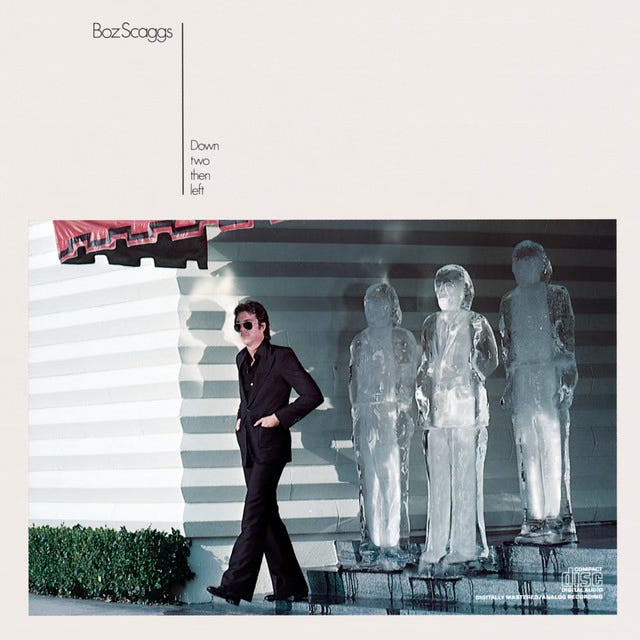
You can already hear him moving in this direction on Slow Dancer in 1974. Tracks like “You Make It So Hard To Say No” clearly point toward the groove-driven approach that would define Silk Degrees. And if you move forward to Down Two, Then Left from 1978, the connection becomes even clearer. The single “Hollywood” arguably leans even closer to disco than “Lowdown”.
Same ingredients, same direction, but a different moment.
Because by then, the world had shifted again, moving toward a more European sound. Timing, once more, proved everything.
🔗 The Missing Link, Why This Story Matters
Boz Scaggs is one of those essential, often overlooked links in the history of dance music.
A bridge between R&B, rock, AOR and the dancefloor.
Proof that disco was never operating in isolation.
There was always a wider ecosystem, far beyond the obvious, and often ridiculed, disco attempts from rock acts like the Beach Boys, Kiss or Rod Stewart. What makes Scaggs different is that his connection to the dancefloor was not opportunistic.
It was organic.
And that is exactly why “Lowdown” worked. The irony is that today, his music is often described as part R&B, carefully avoiding what actually happened when that track hit the dancefloor.
But history sounds different when you listen closely.
And on the dancefloor of 1976, “Lowdown” absolutely belonged.
🔓 The B-Side, Where We Go Deeper
This week’s B-side dives into three questions:
What if “Lowdown” had been on Saturday Night Fever?
How different would Toto have sounded if they had started earlier?
What do AOR and disco really have in common on the dancefloor?
As always, there’s also an exclusive playlist with 10 essential Boz Scaggs tracks.
The B-side is where we go deeper.
It’s paywalled, but for the price of 8 premium coffees you get a full year of access to all B-side pieces, the complete archive of 150 articles, and upcoming deep dives into genre-spanning stories in the months ahead.
And since it might be unclear what qualifies as a “premium coffee”, or how to pay me in beans 😁, I’ll happily accept € or $.
Join the club. I’d genuinely love to have you on board.
The Twelve Inch is a growing community of people who love disco, eighties, and early-nineties dance music.
If you know someone who would enjoy these stories, feel free to share this post with them or pass it along on Substack Notes. Every share helps the music, and the community, travel a little further. 💿✨
💬 Let’s Talk
Music is deeply personal, but never entirely random.
So I’m curious:
What artist do you know is great… but never clicked for you?
Which song feels like it has always been part of your life, even if you don’t know why?
And have you ever discovered a track years later… only to realize you already knew it?
Let me hear you.
So You Wanna Hear More ?
I thought you would !
It’s fun to write about music but let’s be honest. Music is made to listen to.
Every week, together with this newsletter, I release a 1 hour beatmix on Mixcloud and Youtube. I start with the discussed twelve inch and follow up with 10/15 songs from the same timeframe/genre. The ideal soundtrack for…. Well whatever you like to do when you listen to dance music.
Listen to the Soundtrack of this week’s post on MIXCLOUD
Or on Youtube :
Never did any kind of dive on Toto and always knew them for "Rosanna," "Hold the Line," and "Africa." But then last year I heard "Georgy Porgy" for the first time on a retrospective compilation of Columbia dance tracks that was issued in 1990. Great fusion of soft rock and disco there. Didn't make the American top 40, but featured fellow labelmate Cheryl Lynn on vocals.
Your intro on why people love the music they do was really interesting, Pe. (Of course I think that being a psychologist.)
I'm a Toto fan, but they showed up after my youth and I loved them because of two things. They were on a flight I was on in 1980 and we had to traipse past them to leave the plane. And their song "Africa" hit the spot due to my obsession with living overseas. (And it was a great tune.) It's weird to look at why we love what we love. I think the factors you've listed are right on.