

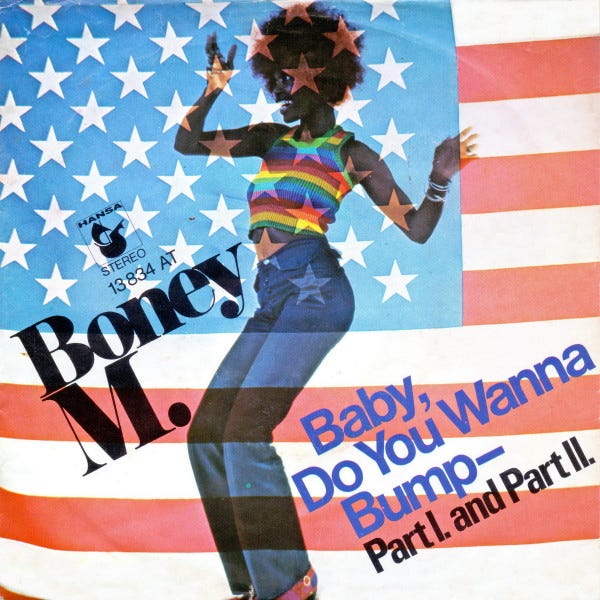
I had lost it. I was absolutely sure.
It was the summer of 1979, we were about to leave on holiday, and I was frantically searching for one of my favourite cassette tapes.
At the time, you could borrow vinyl records from the local library. That department was also called the discotheek (discothèque), a rather confusing name for something that had already acquired a completely different meaning by then.
I went there every week. You could borrow three records at a time, and you’d better take good care of them because they were checked when you returned them. But for a cash-strapped youngster like myself, it was a lifeline.
One of the albums I’d borrowed was a compilation called Super Disco Party. A selection of Frank Farian productions featuring Boney M, Eruption and Gilla.
And I couldn’t get enough of it.
With a title like that, and knowing how much I was into disco by the end of the seventies, that probably doesn’t come as a big surprise. Except that I wouldn’t have wanted to be seen dead leaving a record store with that album under my arm. Boney M, Eruption, Gilla and, by extension, Frank Farian weren’t exactly considered cool territory in 1979.
Boney M had enjoyed their biggest year in 1978, when “Rivers of Babylon” occupied the number one spot for weeks on end.
I hated that song.
If you’d asked me back then for a musical translation of the word tacky, I’d have answered without hesitation: “That’s an easy one. Rivers of Babylon.”
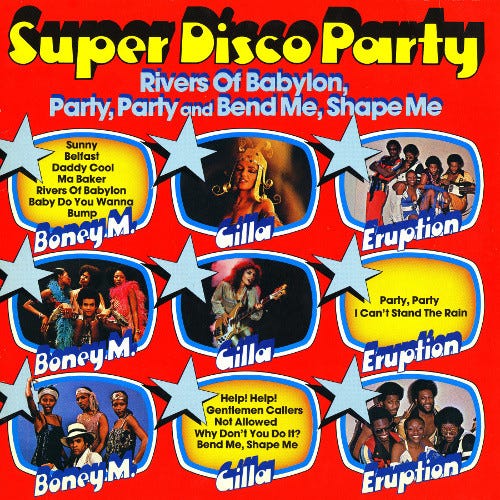
The enormous success of that song had prompted Hansa to release Super Disco Party. And of course, “Rivers of Babylon” opened the album. Fortunately, the compilation appeared in 1978, before we sank even deeper with “Hooray! Hooray! It’s a Holi-Holiday”.
So there was only one piece of deadweight to get through.
Suffice to say, I always started at track two of side one. And when I taped the album, “Rivers of Babylon” was conveniently left out.
But once you got past that particular piece of tacky territory, the magic appeared. A whole cavalcade of excellent Eurodisco pop songs, the kind only Frank Farian could produce.
It was music that made me happy.
And apparently, I was prepared to risk my reputation for it. As long as nobody saw the record sleeve.
👋 Welcome, I’m Pe Dupre, thanks for stopping by.
This is The Twelve Inch, a community about the history of dance music from 1975 to 1995, told one twelve-inch record at a time.
If this landed in your inbox because a friend forwarded it, I’d love for you to subscribe so you don’t miss the weekly episodes. Each one dives into a track, its story, and the culture around it.
And if you’re already enjoying the free posts, would you consider becoming a paid subscriber? Your support helps me keep researching, writing, and unearthing the stories behind the music. And You’ll get access to the weekly B-side post: the full archive and extra Subscriber Only Posts
The Man Behind the Curtain
Frank Farian was a true product of the sixties and seventies European music industry. A brilliant producer who knew how to arrange a song, fill it with hooks and turn it into a hit. But also a man who was prepared to do just about anything to achieve success and hold on to it.
His career was mired in controversy.
The most famous scandal was, of course, Milli Vanilli. But that was simply the one he didn’t get away with.
There had been others.
Including the group at the centre of this week’s story: Boney M. And that story starts in late 1974 with a record called “Baby Do You Wanna Bump”.
By then, Farian had already spent years in the German music industry, mainly as a singer of Schlager repertoire. Not something he was particularly keen on. He wanted to make the music he loved listening to.
Farian and one of his schlager hits
Like Giorgio Moroder and many other entrepreneurial European producers, Farian was fascinated by what was happening on the other side of the Atlantic. Europe already had its discotheques, and a whole generation of producers knew how to make the sort of bubblegum pop that worked on their dancefloors.
So when disco began taking shape in America, there was already a market waiting for it in Europe.
West Germany was particularly well placed. The presence of American troops and AFN radio meant that producers could hear what was happening in the US without having to cross the Atlantic.
And Farian was listening.
In 1974, he decided to try his luck.
The Bump was one of the fashionable disco dances of the period, and naturally, there were plenty of records inviting people to do it.
Farian’s contribution was “Baby Do You Wanna Bump”.
There was just one small problem.
He didn’t have a group.
Not that this bothered him particularly. He simply sang all the vocal parts himself, using both his deep voice and falsetto.
The song was based on Prince Buster’s sixties ska record “Al Capone”. Initially, Farian claimed it as an original composition under the pseudonym Zambi.
He wasn’t exactly eager for people to connect this new disco adventure with his Schlager career.
And at first, it looked as if he’d gone to all that trouble for nothing.
A Hit Looking for a Group
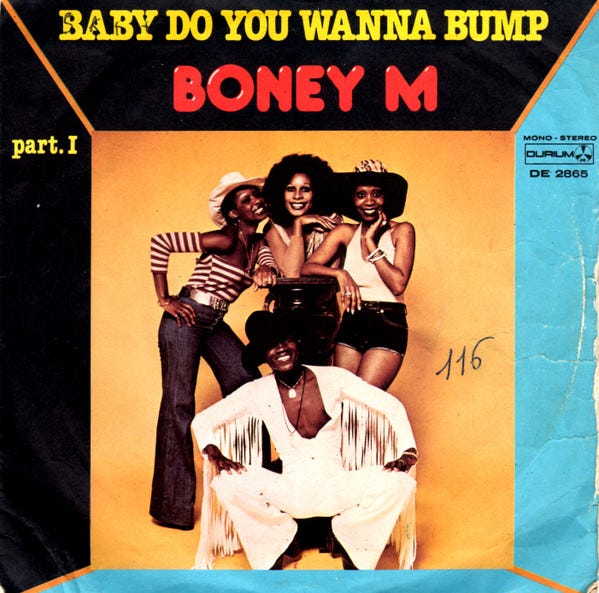
“Baby Do You Wanna Bump” didn’t do much in Germany.
The Benelux was one of the few markets that showed interest, but even there it took an awfully long time to catch on. The single appeared in February 1975. Almost a year later, it finally reached number 14 in the Netherlands in December and number eight in Flanders in January 1976.
Why it took so long is lost in the mists of time.
But suddenly Farian and Hansa had a hit on their hands. And they needed a group to go with it. That’s how Boney M was born.
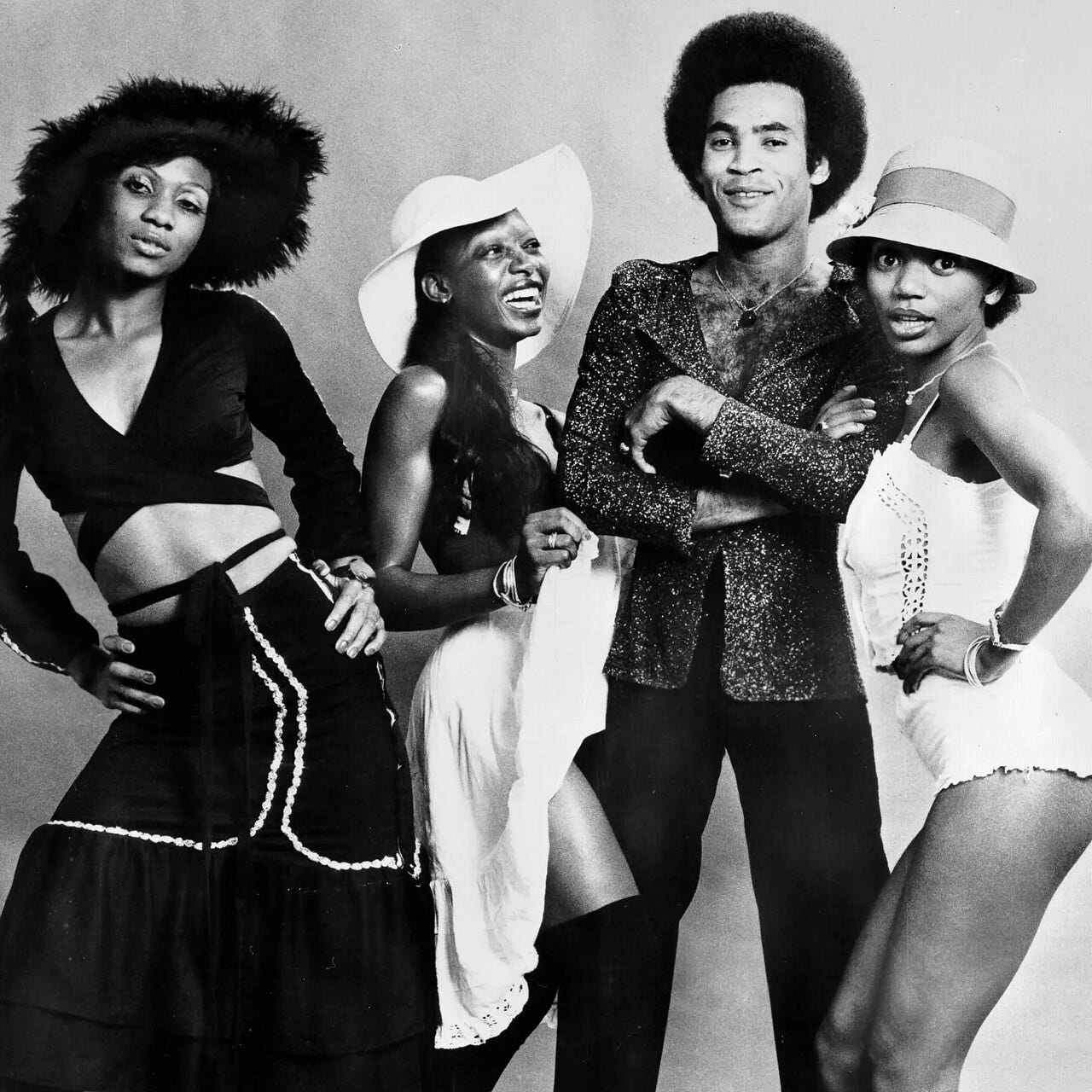
The eventual line-up brought together Liz Mitchell and Marcia Barrett from Jamaica, Maizie Williams from Montserrat and Bobby Farrell from Aruba. Four performers who would become some of the most recognisable faces of European pop music.
But having a hit and having a successful group were two different things.
The follow-up, “Daddy Cool”, also took time to get going. Boney M had already been touring discos, clubs and even country fairs when an appearance on the German television show Musikladen in the late summer of 1976 helped things take off.
The groundwork had been done. Now the records started selling.
And selling.
“Daddy Cool”, “Sunny”, “Ma Baker”, “Belfast”. Whatever you think of Boney M, there’s no denying that Farian knew how to produce a catchy pop song. Not that everything was quite what it seemed.
On subsequent Boney M recordings, Farian used only two members of the group as singers: Liz Mitchell and Marcia Barrett.
The characteristic deep male voice?
That was Frank Farian himself.
Bobby Farrell was the group’s flamboyant male performer, but not the man singing those bass parts. When this eventually became public knowledge, it caused nothing like the scandal that would engulf Milli Vanilli years later.
Of course, Boney M hadn’t won a Grammy.
But the atmosphere was different too. In the seventies, studio creations and manufactured pop groups weren’t exactly unusual. Farian himself never seemed particularly troubled by the distinction between the people making the records and the people performing them on stage.
In a later interview, he described himself as the conductor of a musical orchestra. He’d made the first record entirely himself, and putting together the group was, in his view, a form of musical theatre. He even compared it to imagining Lady Gaga without her costumes.
You can see his point.
Although it doesn’t entirely settle the question of who deserves the credit.
The Art of Making a Hit
Frank Farian was never a trendsetting producer in the way Giorgio Moroder was. He never really left the world of bubblegum pop behind, and critical acclaim wasn’t exactly following him around.
But he understood something that many more fashionable producers occasionally seemed to forget. A good pop song needs a good melody, a memorable chorus and somebody who can sing it.
Sounds simple, doesn’t it?
Farian was also a meticulous producer. He could spend days working on a recording, getting every detail right. And there was an interesting connection with Moroder. Musicians from the Munich studio scene also worked on Farian’s recordings in Frankfurt.
Different producers, different ambitions, but some of the same people helping to create the sound of European disco. Farian was particularly proud of the care he put into his productions.
In one interview, he explained that Boney M was his baby. He could work on it day and night, something he believed a producer working purely on commission wouldn’t necessarily do.
And listening to those records today, I can hear what he meant. Even when the songs are ridiculous, the productions rarely are.
Which brings me back to that cassette tape.
Why ABBA, But Not Boney M?
Boney M’s career was enormously successful, but relatively short. By the early eighties, their glory days were largely behind them. Something they had in common with another major force in European pop music: ABBA.
But there’s a curious difference in how we remember them.
ABBA have been completely rehabilitated. They’re now widely regarded as prime examples of seventies and early-eighties pop craftsmanship.
Boney M?
We still tend to think of them as a bit tacky. Can you imagine a Boney M avatar show attracting the same attention as ABBA Voyage?
I can’t.
Farian himself addressed the difference in interviews. He believed it had a lot to do with presentation. ABBA borrowed plenty from bubblegum pop and disco, but they packaged everything as mainstream pop music.
Boney M was always over the top.
The costumes, the choreography, Bobby Farrell’s extravagant performances. It was all part of the attraction.
And perhaps part of the problem.
But I think there’s another reason.
Look closely at Farian’s production work and you’ll find an awful lot of covers. Songs, arrangements and ideas were also used and reused across different artists and projects. He could produce brilliant pop records, but he was equally capable of making music aimed squarely at the lowest common denominator.
And some of it hasn’t aged particularly well.
With ABBA, even “Chiquitita” and “Fernando” seem to be forgiven nowadays.
I’m not sure “Hooray! Hooray! It’s a Holi-Holiday” will ever enjoy the same rehabilitation.
But then you put on “Daddy Cool”, “Ma Baker” or “Sunny”.
And suddenly the distinction becomes a lot less obvious. Which makes me wonder whether our opinion of Boney M has as much to do with the way they looked as with the music they made.
Frank Farian and Michael Jackson?
One of the joys of researching these stories is finding pieces of information that you don’t quite know what to do with.
Here’s one.
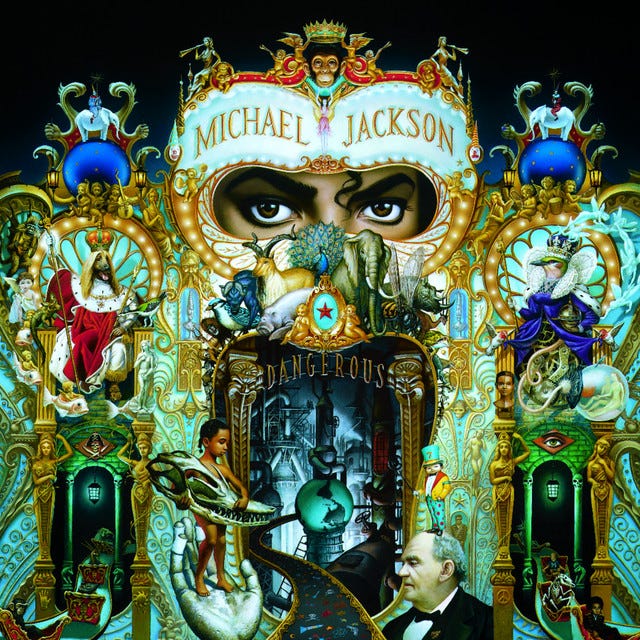
I came across an interview in which Farian apparently claimed he’d turned down a request from Michael Jackson to work on parts of his 1991 album Dangerous.
Yes, that Michael Jackson.
And no, I’m not going to make some smart joke about it.
Farian was a very good producer. Whatever you think of his methods or his musical taste, he knew his way around a recording studio. It could have produced some very interesting results.
Although I must admit, the thought of Michael Jackson recording a Farian production does take some getting used to. And perhaps that’s the problem with Frank Farian. We think we know exactly what kind of producer he was.
Just as I thought I knew exactly what kind of music I was supposed to like back in 1979.
Yet there I was, frantically searching for a cassette tape filled with songs by a producer I wouldn’t have wanted anyone to know I admired.
Forty-seven years later, I still love those records.
Well, most of them.
“Rivers of Babylon” still doesn’t get a free pass.
What about you? Do you think Boney M deserves the same critical rehabilitation as ABBA? And which supposedly tacky disco records have you never stopped loving?
The Twelve Inch is a growing community of people who love disco, eighties, and early-nineties dance music.
If you know someone who would enjoy these stories, feel free to share this post with them or pass it along on Substack Notes. Every share helps the music, and the community, travel a little further. 💿✨
🎁 B-Side, Going Deeper Into The Groove
So You Wanna Hear More ?
I thought you would !
It’s fun to write about music but let’s be honest. Music is made to listen to.
Every week, together with this newsletter, I release a 1 hour beatmix on Mixcloud and Youtube. I start with the discussed twelve inch and follow up with 10/15 songs from the same timeframe/genre. The ideal soundtrack for…. Well whatever you like to do when you listen to dance music.
Listen to the Soundtrack of this week’s post on MIXCLOUD
Or on Youtube :
Once again I learn so much from your work. And bonus to have you marry Boney M with Giorgio Moroder and ABBA in conversation. And thanks for another wonderful compilation!
These compilations of the era always remind me of K-Tel Records of Winnipeg!