

History has relevance.
I remember how, during my high school days, the Belgian government had all kinds of plans to reform the education system. One of the discussions that seemed to come back on a regular basis was how many hours a week should be devoted to each subject.
It always seemed to me that history was on the losing side. Yes, we still had it, but the number of hours a week diminished.
I was a history buff from a very young age, so I always thought we didn’t have enough history classes. Furthermore, I was incurably lazy, and I knew that history was one of those subjects I didn’t need to study for when the exams came around. I knew enough to get through them without a worry.
So bring it on!
But I’m sure the powers that be weren’t really worried about my shenanigans. Their discussion revolved around the question of how much history is enough.
Nobody was disputing the fact that knowing the past helps you today and in the future. That it’s essential, even. But how much should one know about the past?
And yet, history is super important.
History never repeats itself, but it does rhyme. So knowing one’s past will at least help you chart a way forward.
Even telling the story of dance music can help us do that.
Take the whole discussion around AI and the doom scenarios for the music industry and human creativity. These discussions have been raging ever since increasingly capable chatbots were unleashed on humanity.
Will AI eat up the whole industry? Will human-made music even stand a chance in the future?
All valid questions, and it’s impossible to predict the outcomes. But at least in the music industry, we know we’ve been through difficult transitions before. And we can learn from them to get a better idea of what might happen in the future.
One such difficult period is the sampling era of the late eighties and early nineties.
With a sampler, you can sample (or let’s say “use”) someone else’s work to build your own. Initially, samplers are very expensive and rather limited in capacity. But prices come down and capacities go up.
And by the late eighties, this starts to cause trouble when everybody starts sampling without asking permission.
Where will it end?
Does that ring a bell?
Sampling will change the music industry profoundly, but it won’t kill it. And yes, I do believe there are lessons to be learnt for the current situation.
That’s a story for next week’s B-Side episode.
This week, we continue to set the stage.
Because one of the clearest examples of what happens at the start of the “sampler revolution” is the story I started telling last week, zooming in on Loleatta Holloway and the song “Love Sensation”.
This episode builds on that.
We already know that Loleatta Holloway isn’t exactly a household name at the start of the eighties. A succession of missed opportunities leaves her without a recording contract and with only a handful of releases.
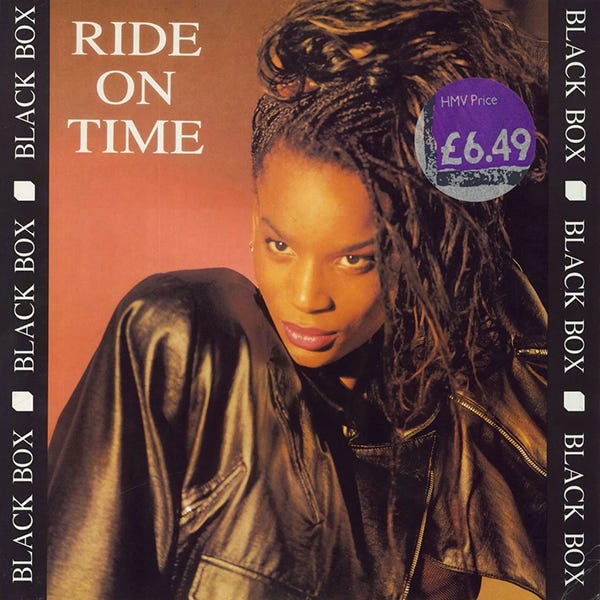
Most of us get to know her voice through a very different song, one that will become one of the biggest hits of 1989 and one of the most important early house records: “Ride on Time” by Black Box.
You already know that they use Loleatta’s voice without asking permission or, to put it in industry terms, without “clearing the rights”.
It gets very ugly, very fast.
But before we get to that part of the story, let’s first tell the story of Black Box and late-eighties Italian house music.
👋 Welcome, I’m Pe Dupre, thanks for stopping by.
This is The Twelve Inch, a community about the history of dance music from 1975 to 1995, told one twelve-inch record at a time.
If this landed in your inbox because a friend forwarded it, I’d love for you to subscribe so you don’t miss the weekly episodes. Each one dives into a track, its story, and the culture around it.
And if you’re already enjoying the free posts, would you consider becoming a paid subscriber? Your support helps me keep researching, writing, and unearthing the stories behind the music. And You’ll get access to the regular B-side post: the full archive and extra Subscriber Only Posts
Previously on The Twelve Inch…
Maybe we should start with a “Previously on The Twelve Inch” recap to remind you of what’s happening in Italy after the disco backlash and to set the stage for the story of “Ride on Time” and Black Box.
You already know that Italy doesn’t get the memo when the disco backlash happens. Well, in fact, the whole of Europe doesn’t exactly get the memo. But Italy goes one step further by keeping the production of dance music going.
Disco might be “dead” as far as many record companies and artists are concerned, but people don’t exactly stop dancing.
The dance music coming from Italy, which we call Italo disco (yeah, I know… how did they come up with the name? Crazy, innit? 😂), conquers many dancefloors.
It’s built on the electronic disco of the late seventies, taking cues from Giorgio Moroder, Kraftwerk and synth-pop. Italo is popular and crosses over into the pop charts between 1983 and 1987. And, as is so often the case in the history of dance music, it’s created by independent record companies.
In my Canadian disco episodes, I explained how music keeps travelling from Europe to the US and Canada and back again. And so does its influence.
Italo isn’t just popular on dancefloors across the Atlantic. It also influences what’s being developed in Chicago and Detroit.
I’m painting in broad strokes here. My episodes are still too long, and I don’t want to move away from the big picture because we’ve got a lot to get through today.
There will be many more episodes that give us the opportunity to zoom in on the nitty-gritty of what happens.
Suffice it to say for now that Chicago house and Detroit techno are reshaping dancefloors. And the Italian producers take notice.
They retain the melodic sensibility of Italo while adopting the four-on-the-floor pulse, sampler-driven stabs (especially piano) and diva-style vocals.
Part of the story is the influence of the well-established Italian club scene in places like Milan and Rimini. But a big part of it is also the independent music industry, which, by now, has the experience and connections not only to know what’s happening the moment it happens but also to distribute the resulting records around the globe.
In explaining all this, I’ve already given you much of the story of how “Ride on Time” becomes such a success.
At least most of it… Some other details are still missing, but I’ll come to those.
The man behind Disco Magic
The record company behind Black Box is Disco Magic, the company founded and run by Severo Lombardoni.
And although he isn’t directly involved in the creation of “Ride on Time”, it’s important to zoom in on his story first because it gives us vital information about how a record like “Ride on Time” comes to be made in the first place.
I’m usually not such a big fan of the “great man” approach to history. The idea that one (usually visionary) individual is responsible for an entire historical development.
But I agree that if you want to make a case for that approach, the history of the music industry is a useful place to look. Certainly, in the history of dance music, there’s no shortage of colourful individuals who, for better or worse, shape companies and, ultimately, the direction in which music evolves.
Italo is no exception. There are a number of big players in the Italian music industry of the eighties who help turn Italo into the force it becomes (and still is today).
One of those figures is Severo Lombardoni.
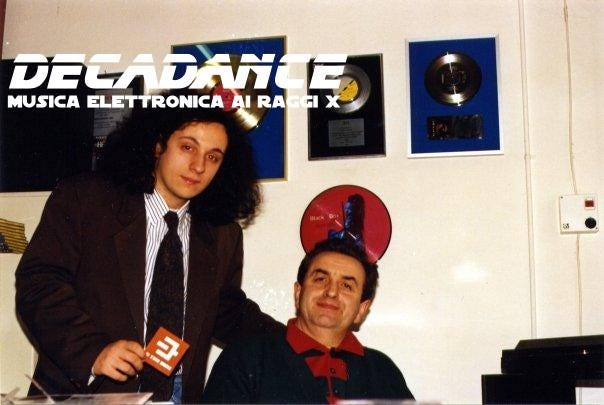
He starts his career by opening a record shop in the town of Seriate in 1974. We’re talking about the Lombardy region in northern Italy. Bergamo is close by, and Milan isn’t too far away.
And his background in retail (and wholesale) is important because Severo knows how to get records into shops and connect with consumers.
He also knows that you can never fully predict whether or not a record will become a hit.
So his tactic is to throw a lot at the wall and see what sticks.
Not that he releases whatever crosses his desk.
In Francesco Cataldo Verrina’s book on Italo disco, I read the story of how a typical meeting with Severo goes. He listens for a few seconds and then shouts, “What the hell am I supposed to do with this?”, immediately wrong-footing the aspiring producer or DJ.
The reality is that he knows exactly what to do with a great record, and he has the results to prove it, scoring multiple hits with records like P. Lion’s “Happy Children”, Savage’s “Don’t Cry Tonight” and Ryan Paris’s “Dolce Vita”.
He’s so confident that he’s prepared to hand out advances on sales, one of the main reasons so many producers try their luck with Disco Magic.
It’s also what brings Daniele Davoli to Disco Magic.
The birth of Black Box
Daniele starts his career as a DJ, and by 1988, he sees that house is becoming increasingly important. People are getting excited about anything with a piano.
But at the same time, he notices that the records coming from the UK and US aren’t quite as “happy” as the Italians like them.
So why not make them yourself?
After some initial projects, Daniele starts working on the track “Numero Uno”. He needs a keyboard player, and that’s how Mirko Limoni joins the production team that will eventually become Black Box.
“Numero Uno” is their first track to be released by Disco Magic.
Not exactly a million-seller, but successful enough to spark the label’s interest in further tracks.
Around the time of its release, two things happen that set the stage for “Ride on Time”.
Daniele travels to New York and finds a twelve-inch with the a cappella version of “Love Sensation”. And back in Italy, he’s introduced to a sampler: the Akai S900.
Samplers are becoming more affordable, but their capacity is still rather limited. You can only fit a few vocal snippets into the memory.
When the club where Daniele DJs also buys a sampler, he starts playing around with samples from the Loleatta a cappella. Mirko notices what he’s doing when he visits the club.
The next day, he asks Daniele about it. They load the samples into the sampler in the studio, Mirko creates new piano chords and voilà, “Ride on Time” is born.
Initially, the signs aren’t good, though.
The dancefloor of the first club where they road-test the new song empties in no time.
But there’s another, more promising development.
From Rimini to Top of the Pops
By the late eighties, English DJs are becoming aware that the Italians are developing a different sort of house.
Disco Magic knows not only how to reach consumers but also how to get its records to influential hotspots like Ibiza, where a lot of Italian house is being played and English dj’s are getting inspiration.
Paul Oakenfold and Danny Rampling decide to travel to Rimini in search of those new dancefloor gems.
When they hear “Ride on Time”, they’re won over in an instant. They take all the copies they can find in the shop and bring them back to England.
From that moment on, things move at lightning speed.
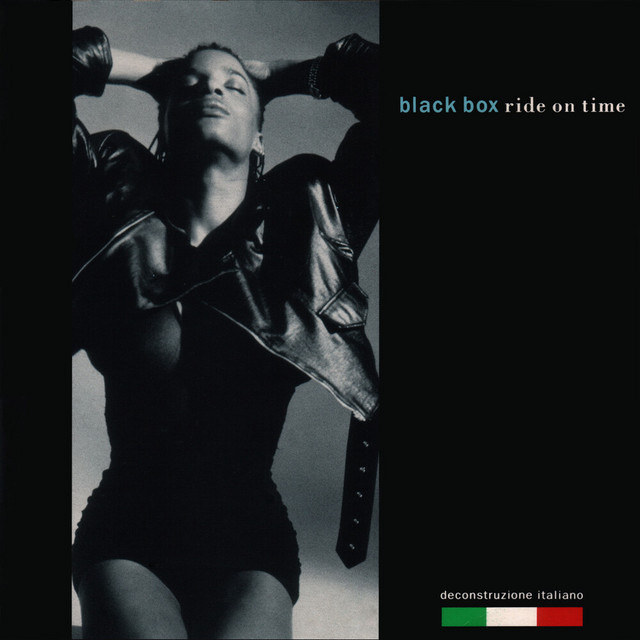
Deconstruction Records, one of the important UK dance independents, is already in contact with Disco Magic about signing “Numero Uno”, but they’re too late. It’s been snapped up by Beggars Banquet.
So they ask if Disco Magic has anything else.
When they hear “Ride on Time”, they sign it immediately. But thanks to Oakenfold and Rampling, the UK import shops are already bringing in quantities directly from Italy, so Deconstruction has to release it quickly.
Before Davoli, Limoni and the third member of Black Box, Valerio Semplici, know it, they’re on a plane to London to make their first appearance on Top of the Pops.
There’s one small problem, though.
Nothing has been cleared.
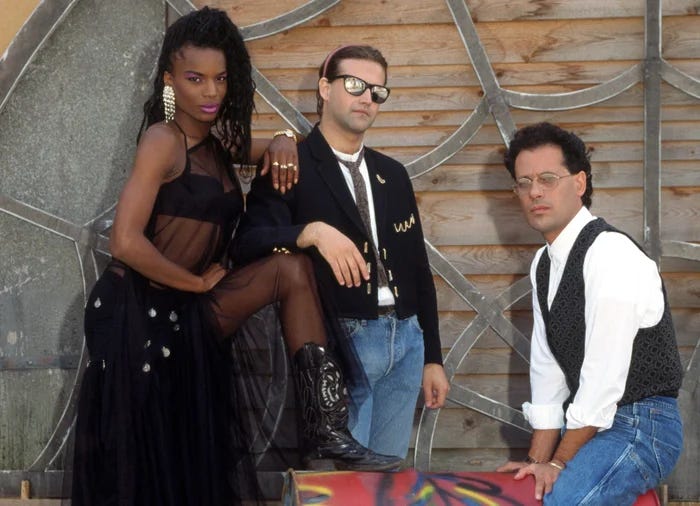
They’re using a sample not to complement their track but as its primary focus, without crediting Loleatta Holloway or Dan Hartman.
And to add insult to injury, they’ve brought along a French-Caribbean model, Katrin Quinol, to act as the singer.
“After we made the record, Deconstruction said that we needed to have someone in the video. Our studio owner knew Katrin as she performed in his club. We talked to her and she was happy to mime. There was no plan - we thought the song would only have a short lifespan. I never thought I’d still be talking about it 30 years later.” says Daniele Davoli in a later interview.
“Ride on Time” hits the top spot of the UK charts a few weeks later and stays there for six consecutive weeks, becoming the biggest hit of the year in the UK.
The rest of Europe follows.
In the US, it isn’t as big, but it’s big enough to be noticed by those whose work has been stolen.
A further complication is that neither the guys nor the model speaks English.
Try convincing the UK music press that they’re dealing with the real thing.
Houston, we’ve got a problem.
Clearing the rights
To be fair, when Deconstruction comes on board, they know they have a potential problem on their hands, so they contact Salsoul Records to clear the “sample”.
They even reach a deal for $5,000 to buy out the rights.
But the contract is never signed, and by the time they get around to finalising things, Salsoul knows something big is brewing and that a flat fee of $5,000 is ridiculous.
So they go back to Deconstruction and tell them that the $5,000 is an advance.
From there, things get nasty.
Then songwriter Dan Hartman contacts Black Box and tells them he doesn’t want to spoil their moment if they agree to give him a third of the royalties.
A bit oblivious to the situation they’re in, they try to negotiate the figure down because they think a third is a bit too much.
But when they understand that Hartman could have gone for the full 100%, they quickly agree.

The negotiations with Salsoul, meanwhile, go pear-shaped.
Faced with copyright issues, BMG asks Black Box to record a new vocal. Within a week, they re-release the song with a new vocal by Heather Small of M People and withdraw Holloway’s version.
But this does little to dispel Holloway’s grievances and, although BMG and Salsoul eventually reach an agreement, she apparently knows nothing about it.
And what about Loleatta?
Because here’s the real kicker.
Loleatta never gets a dime.
The master is owned by Salsoul which, by the time Black Box hits big, is little more than a money-spinning reissue catalogue.
Eventually, Salsoul, just like Deconstruction, is hoovered up by BMG, which solves the copyright issues but not Loleatta’s problem.
Try to imagine the situation.
You’ve recorded a song, and they steal your voice, your recording, to make another song. They don’t ask your permission and don’t pay you anything. Initially, they even flatly deny that it’s your voice.
Would it mess you up?
It would mess me up.
Loleatta later says:
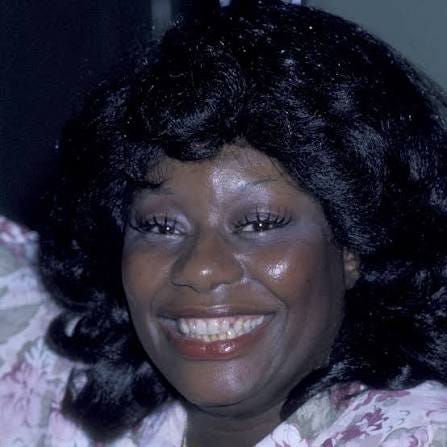
If some of the stories I’ve encountered in my research are to be believed, Salsoul even has the audacity to ask Loleatta to pay back money for unrecouped advances.
Loleatta, who by then has to live off her live appearances, is repeatedly asked to sing her “hit song” during her shows.
And I’m sure some people might be a bit disappointed to discover that “the voice from Black Box” isn’t the slim model they’ve seen in the video and on Top of the Pops.
It’s a grim story.
In later interviews, the Black Box guys show some contrition.
But Loleatta isn’t the only victim.
When they record the follow-ups, they ask Martha Wash to sing the demos. She gets paid a flat fee but isn’t asked for permission to use her vocals from the demos on the actual releases.
Once is an accident, twice is a choice.
The whole story receives extensive coverage at the time, both in the music trade press and in the consumer music press.
The Black Box/“Ride on Time” saga is one of the scandals that puts the whole discussion around sampling and copyright front and centre.
It has some immediate consequences, but the debate will continue for a long time. More than thirty years on, there are still legal cases running over different sampling issues.
Next week, in the B-Side, I’ll take you a bit deeper into the consequences and what we can learn from them in today’s music business.
Let me end by giving the last word to Loleatta.
She told Paolo Hewitt at the height of the Black Box drama:
“I haven’t had a dime for that song in years. What hurts me today is that it’s being played now and somebody else is getting the credit for my voice. It’s like, Why am I wasting my time out here?’”
In a 1989 interview for Number One, she made it plain.
“Am I bitter? The only thing I feel bad about is that the record companies really used me. All these people have made all this money off me and I’m only just getting by... I’m very bitter about this record business thing”
The Twelve Inch is a growing community of people who love disco, eighties, and early-nineties dance music.
If you know someone who would enjoy these stories, feel free to share this post with them or pass it along on Substack Notes. Every share helps the music, and the community, travel a little further. 💿✨
So You Wanna Hear More ?
I thought you would !
It’s fun to write about music but let’s be honest. Music is made to listen to.
Every week, together with this newsletter, I release a 1 hour beatmix on Mixcloud and Youtube. I start with the discussed twelve inch and follow up with 10/15 songs from the same timeframe/genre. The ideal soundtrack for…. Well whatever you like to do when you listen to dance music.
Listen to the Soundtrack of this week’s post on MIXCLOUD
Or on Youtube :
Happy whatever you do over there in Benelux! I wrote about all those 90s cases for the NY Law Journal but your reporting filled in the gaps. My own sorry to be in it but can't help myself years are the subplot of my NY Story but we were low level players easily kicked to the curb.
These new queens of soul deserved more and they got almost nothing back but heartache.
Only do it if you really can't do anything else is the old saying. I decided to work and do music just for the love and art of it. A true amateur.