
🎧 Beat Box & The Art Of Noise, The Moment Dance Music Learned To Sample Itself
The Twelve Inch 211 - The A Side (Extended) : Into Battle With The (Art Of The Noise)

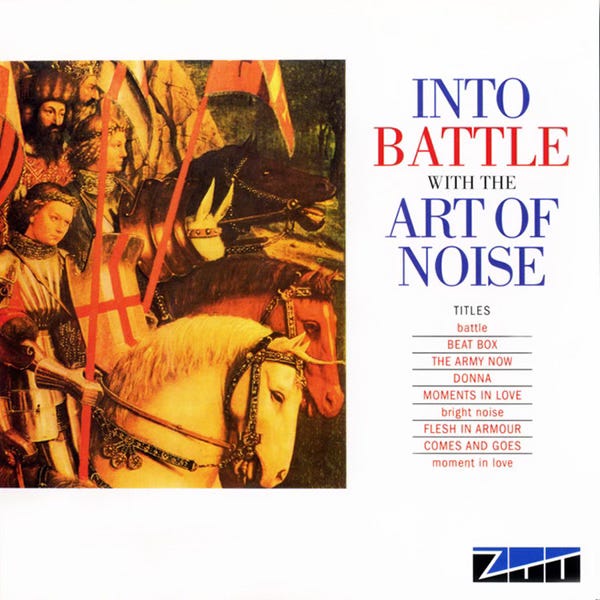
If you look at the dance music scene in eighties England, three producers stand out as truly shaping the sound of the decade. I’ve zoomed in on Martin Rushent a few times already, and in two weeks I’ll take the dreaded step 😁 and dive into Stock Aitken Waterman.
But one thing surprised me. Across all the songs I’ve covered so far, I hadn’t yet done a proper episode on a Trevor Horn project.
We’ve crossed his path, of course. Sometimes indirectly, Adamski, Naked Eyes, Scritti Politti. A bit more directly with the production that never quite happened with Wendy & Lisa, and as co-producer of Paul McCartney’s Flowers In The Dirt, from which I picked that very un-McCartney track “Où Est Le Soleil.”
But this week, we go deeper.
Because the band at the centre of this story is not only directly connected to Trevor Horn, it also explains why he became such a crucial figure in the evolution of dance music.
The track I’ll be discussing is one of the most influential records we’ve encountered so far. It didn’t just fit into the eighties, it helped define them. It set a new benchmark, it sounded like nothing else at the time, and it was the very first release on Trevor Horn’s own, and soon legendary, label ZTT Records.
Behind it was a pop group.
A pop group that was, at the same time, completely extraordinary and very ordinary.
No central vocalist. No traditional songwriter. Music built from car engines, found sounds, and fragments of reality. Powered by banks of cutting-edge samplers that, at the time, cost thousands of pounds. And all of it wrapped in a very British sense of humour, confronting the public with dense essays and promotional images that didn’t even feature the band members.
Today, I’m zooming in on the story of Art Of Noise and their first release Into Battle With…, introducing two essential tracks, “Moments In Love” and the record at the heart of this episode, “Beat Box.”
A track as influential as Kraftwerk, Yellow Magic Orchestra, and Martin Rushent.
Their music was built on samples, yet in a twist that feels almost inevitable, they would go on to become one of the most sampled acts of all time.
This is the story of one of the most important and consequential left turns in the history of dance music.
👋 Welcome, I’m Pe Dupre, thanks for stopping by.
This is The Twelve Inch, a community about the history of dance music from 1975 to 1995, told one twelve-inch record at a time.
If this landed in your inbox because a friend forwarded it, I’d love for you to subscribe so you don’t miss the weekly episodes. Each one dives into a track, its story, and the culture around it.
And if you’re already enjoying the free posts, would you consider becoming a paid subscriber? Your support helps me keep researching, writing, and unearthing the stories behind the music. And You’ll get access to the weekly B-side post: the full archive and extra Subscriber Only Posts
🔊 The Art Of Starting The Noise
There are songs that freeze a moment in time. You remember exactly where you were, what you were doing, and how it felt when you first heard them. I can trace that moment for quite a few of my favourite records. Beat Box is one of them.
I first heard it on Dutch radio, on a Wednesday afternoon show I didn’t usually tune into. It simply didn’t play enough of the music I was looking for. But that day, for some reason, I listened. And they played one track that changed everything.
“Beat Box.”
I had already heard plenty of synth-driven records by then. But this felt different. On another level entirely. It sounded almost industrial. Raw, mechanical, yet at the same time driven by an irresistible groove. It felt organised and disorganised at once. Noise and music, colliding perfectly.
And that immediately raised a question.
Who are these guys?
It wasn’t an easy one to answer. They stayed hidden behind masks, philosophical essays, and a very British sense of humour.
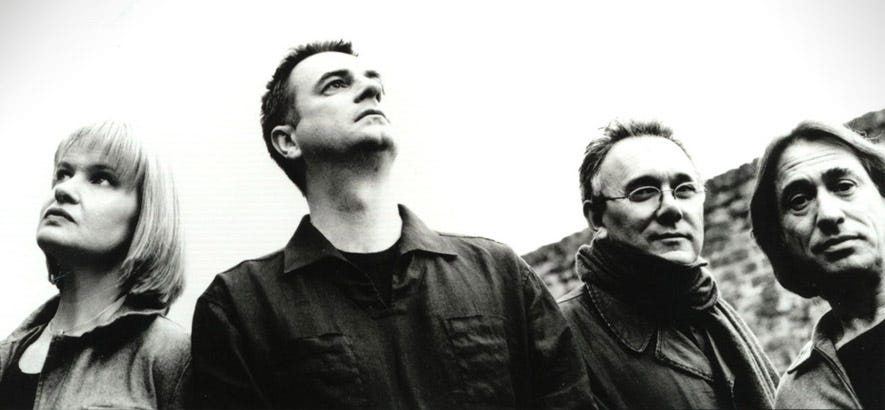
Behind the scenes were Gary Langan, J. J. Jeczalik, and Anne Dudley. Studio specialists who had already worked on several Trevor Horn productions. They hadn’t set out to form a band. But during one of those sessions, with a new tool at their disposal, something happened.
A moment of experimentation that would quietly lay the foundations for what would become Art Of Noise (and a big part of eighties (dance) music)
🎛️ The Art Of Finding The Noise
That tool was the Fairlight CMI, and the production was 90125 by Yes, released in 1983.
We were at the very beginning of the digital age. Drum machines, sequencers, and more affordable synthesizers were appearing everywhere. But one invention stood out above all the others.
The sampler.
🤖The Machine That Changed Everything
The Fairlight CMI didn’t just add new sounds. It redefined what sound could be.
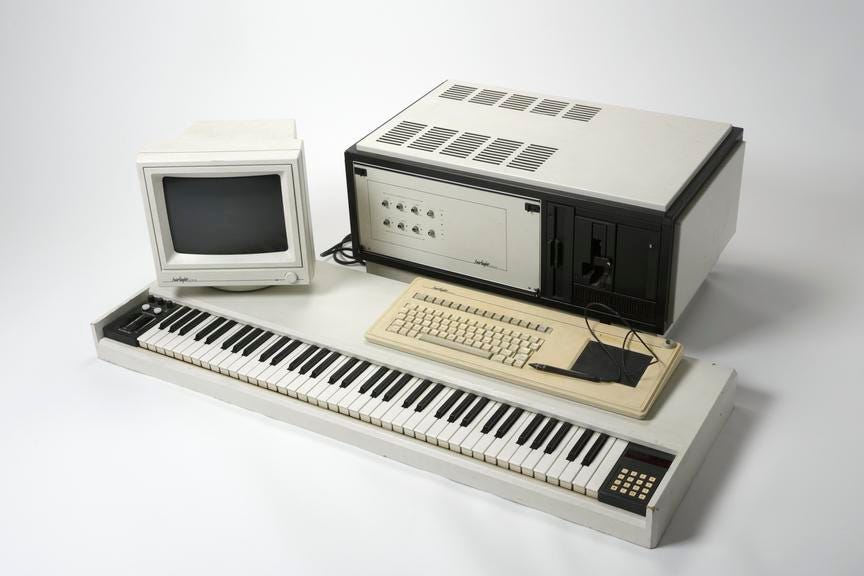
With it, short digital recordings, samples, could be played across a keyboard, while a computer reshaped their pitch, tone, and texture. Suddenly, you could turn a voice into a melody, a noise into harmony and everyday life into music
Anything could become musical material.
Trevor Horn immediately understood the implications. While others used samples as decoration, Horn and his collaborators saw the bigger picture.
You could build entire compositions from them.
I’ll go deeper into the Fairlight and its impact on dance music in this week’s B-side.
🎹 From Buggles To Yes
By 1983, Trevor Horn was still relatively new as a producer. Before that, he had a short but successful synth-pop career with The Buggles, alongside keyboardist Geoff Downes. They only made two albums, but their journey took an unexpected turn. Both joined Yes for one album and one tour in 1980. That album was fittingly titled Drama.
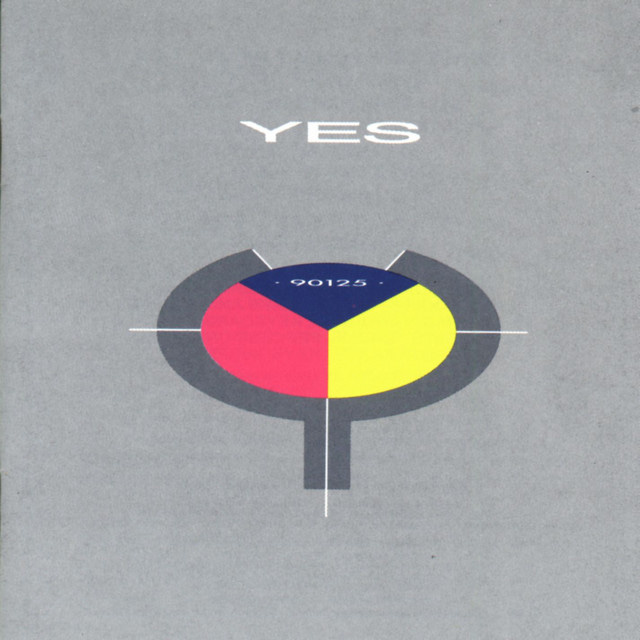
Horn later described that tour as far from the highlight of his career 😁. Yes would soon split (two facts wholly unrelated). But in 1983, after a series of twists, they regrouped to record 90125, with Trevor Horn as producer.
It became their biggest success.
Driven by their biggest hit ever: Owner Of A Lonely Heart
🔁 The Twelve Inch Breakthrough
A large part of that success came from the twelve inch version.
Traditionally, producing and remixing were/are very different skills, and most producers didn’t excel at both. Trevor Horn was one of the rare exceptions. In fact, you could argue that his remix work was even more groundbreaking than his productions. And once again, the Fairlight played a central role.
If you want to hear just how revolutionary it was, the Red & Blue mix of “Owner Of A Lonely Heart” is the perfect starting point. It wasn’t his first twelve inch, but it remains one of his most iconic.
⚡ Ground Zero For Art Of Noise
The sessions for 90125 would become ground zero for Art Of Noise.
One Friday night, after a session, Gary Langan told J. J. Jeczalik about an idea. There was a discarded recording of a drum riff, played with full force by Yes drummer Alan White. Instead of erasing it, Gary wondered:
What if we load the entire drum riff into the Fairlight and cut it into pieces?
Today, that sounds routine. In 1983, it had never been done before.
🧪 Two Seconds That Changed Music
JJ, eager to go home, reluctantly agreed to help.
The original drum recording already sounded huge. Deep, cavernous, completely different from the small, rigid drum machine sounds that dominated at the time. The Fairlight could only sample two seconds. But that was enough.
They captured a single drum, reshaped it, and built the rhythmic backbone of what would become Beat Box.
Then they started layering fragments of a tennis match, archived studio sounds and even the sound of Gary’s car engine starting. That engine sample would later become the equivalent of a guitar solo.
Gary jokingly called it: “Cantata for VW starter” 😁
🚀 The Moment It Clicked
When Trevor Horn heard the demo, he immediately knew something special had happened.
And the timing was perfect.

He was already planning his own label and had secured a distribution deal with Island Records. What he needed now were artists and ideas strong enough to launch it. When Chris Blackwell of Island Records heard the track, he didn’t hesitate. After testing it in a New York club and seeing the reaction, he told Horn: this should be your first release.
And at that moment, a fifth figure entered the story.
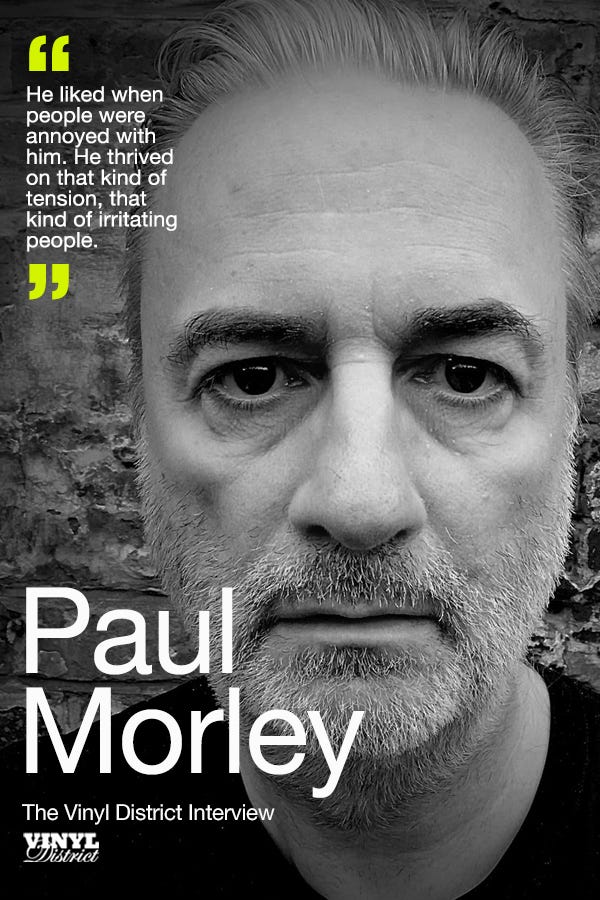
Paul Morley.
🧠 The Art Of Marketing The Noise
When you look at Art Of Noise and ZTT Records, one question naturally comes to mind.
What mattered most, the music or the marketing?
Because there’s no denying it. The marketing machine that defined ZTT’s identity, starting with Art Of Noise, would later fuel the massive success of Frankie Goes To Hollywood. At the centre of it all was Paul Morley.
✍️ From Critic To Architect
Morley began his career at the New Musical Express, where he quickly stood out. His writing wasn’t just about songs. It was intellectual, provocative, often influenced by art theory and politics. He didn’t just review music, he analysed culture.
In doing so, he helped redefine music journalism into something much closer to cultural criticism. Ironically, he hadn’t always been a fan of Trevor Horn. At one point, he dismissed him as the “dustbin of pop.”
But that changed.
As Horn delivered productions like The Lexicon Of Love and Duck Rock, Morley began to see something more. And Horn, in turn, became intrigued by Morley.
What if a passionate writer, someone obsessed with ideas, became executive of a record label? That curiosity led to Morley becoming co-founder of ZTT. (I’ll dive deeper into the label’s early history in this week’s B-side.)
📢 Turning Music Into Myth
Morley didn’t just promote music.
He reframed it.
He was among the first to bring ideas from advertising into the music world, and in doing so, he changed music marketing forever.
When Trevor Horn asked him what to make of these strange tapes, Morley responded with an eight-page manifesto: “The Art of Noise Sampling the 20th Century.” And just like that, the name was born.
🎭 Concealing The Art
Morley’s thinking was rooted in a classical idea: “Ars est Celare Artem” the art is concealing the art. From that premise, everything followed. The music should become a legend. Built on myth. On illusion. The band members would remain anonymous.
Morley himself would act as their voice, writing sleeve notes, giving interviews, shaping the narrative.
No band photos.
Instead, the back cover of their first release featured…
a spanner.
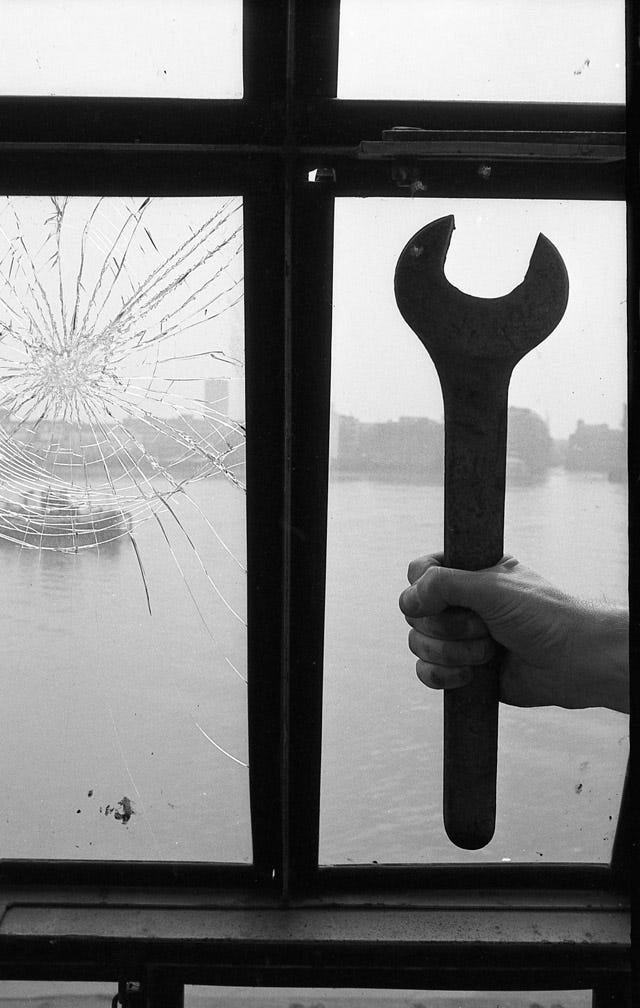
Because, as Morley provocatively suggested,
the spanner is intrinsically more interesting than the lead singer of Tears For Fears. (And yes, that jab was very much in line with his writing at the time, more on that in the B-side.)
🎼 Building The Record
While Morley was constructing the myth, the music kept evolving. Gary Langan, J. J. Jeczalik, and Anne Dudley continued experimenting outside their regular studio work. Langan and JJ would generate ideas, fragments, structures. Then Dudley, classically trained, would step in to shape them, adding harmony, chords, and melodic direction where needed. From this process came a large number of demos.
Horn and Morley selected nine of them for the first release: “Into Battle With…”, issued in the summer of 1983.
📀 Playing With Format
Morley later insisted the record wasn’t an album, not a single, not even an EP. Just: “a length of music that we put on the 12 inch record.”
That mindset would define ZTT’s approach in the years that followed. They pushed format to its limits. Multiple versions of the same release. Endless remixes and variations treated as separate products
A deliberate strategy to extend the life of a record.
It confused buyers. It frustrated them. But it also changed expectations.
🔁 A Legacy Still Felt Today
Most of those variations have now migrated to streaming platforms.
And even today, trying to untangle what is what within the Art Of Noise catalogue can feel like an impossible task. A fitting legacy for a project that was never meant to be straightforward in the first place.
📀 The Art Of Releasing The Noise
“Beat Box” and “Moments In Love” were the two defining tracks on that first release. “Beat Box” would later be repositioned as the first real single, and in doing so perfectly illustrated what made Art Of Noise so unique.
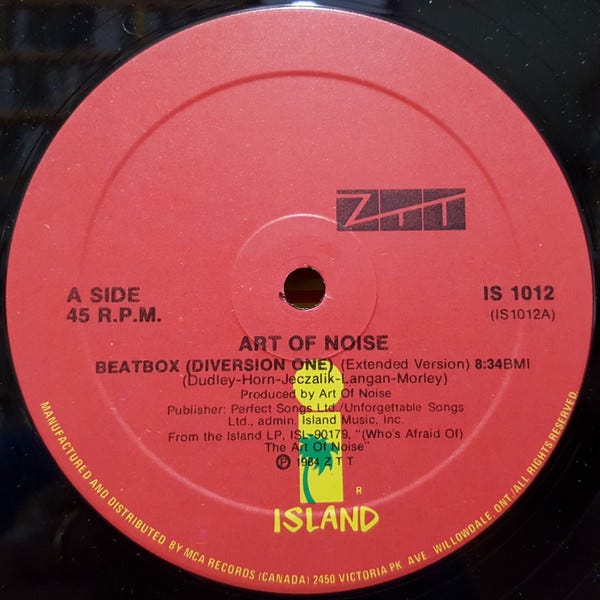
There wasn’t just one version. There were many.
Remixes, variations, edits, and not all of them even carried the same title.
🗽 From Underground To Dancefloor
The first EP, let’s stick with that term to avoid even more confusion 😁, didn’t chart. But it did find its way onto radio, that’s where I first heard it, and more importantly, it quickly embedded itself in the emerging New York hip hop scene.
Breakdancers embraced it immediately.
The track had everything they needed, rhythm, space, energy, and something entirely new.
🔁 One Track, Many Lives
From there, things evolved quickly. “Beat Box” was re-released, first as “Beat Box” itself, and then transformed into something new. “Close (To The Edit).”
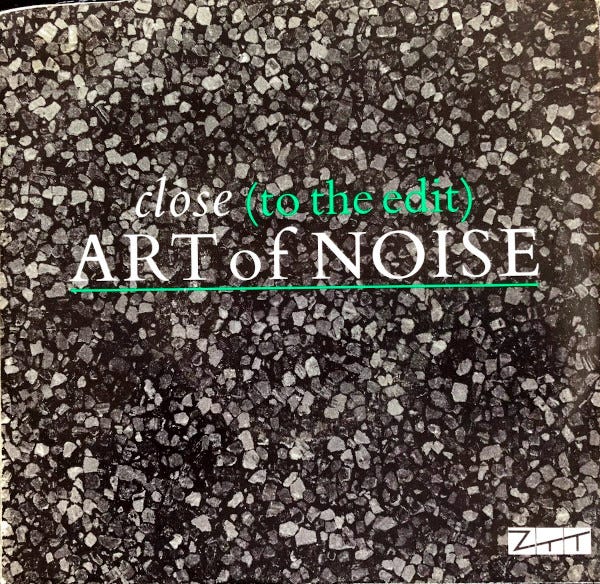
But this wasn’t just a random remix. It came from the same creative DNA. A new identity, born from the same source.
📈 When It Clicked
And it worked.
“Beat Box” reached #1 on the US Dance Chart in February 1984
“Close (To The Edit)” followed with a #4 position
In the UK, the story flipped slightly.
“Close (To The Edit)” broke into the Top 10 Pop charts
“Beat Box” later appeared as the B-side of “Moments In Love” in 1985, but didn’t reach the Top 40
In the Benelux, success came even later.
“Moments In Love” only entered the charts after a re-release in 1987
Confused? You’re not alone 😁
🎭 When Myth Meets Reality
The anonymity strategy worked, at first. But it also led to some… unexpected situations.
Because the music fit so naturally within the urban club scene, some assumed it came from the Black communities of Chicago 😁 The result?
“Beat Box” reached #10 on the US R&B chart
And in 1984, the group was informed they had won an award for Best Black Act of the Year 😁
They politely found a way not to attend.
📺 The Problem With Visibility
Things became even more complicated when “Close (To The Edit)” started climbing the UK charts. Television appearances became unavoidable, especially on shows like Top Of The Pops. But TV had its own rules.
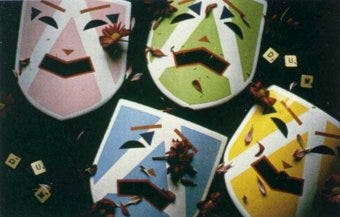
The commedia dell’arte masks, central to the band’s image, were rejected. So the group appeared without them, miming parts they hadn’t originally performed. Thankfully, the producers frequently cut to the official video, limiting their on-screen exposure.
But it didn’t sit well with the band.
⚡ The Art Of Breaking The Noise
When ZTT Records organised a series of showcase concerts at the Ambassador Theatre in Soho, London, Art Of Noisewere positioned as one of the headliners. But what the audience actually saw was… something else entirely. Dancers, performing to a backing track.
No band. No presence. No connection.
At one point, Paul Morley himself stepped onto the stage to explain. This, he told the audience, was exactly how Art Of Noise was meant to be experienced. No visible members, because masks and spanners were more interesting…
The reaction was far from enthusiastic.
⚡ Behind The Scenes, Tensions Rise
What the audience didn’t see was that things had already started to fall apart behind the scenes. The relationship between ZTT and the group had been deteriorating for some time. It reached a breaking point when Anne Dudley, J. J. Jeczalik, and Gary Langan pulled out of the performances at the very last moment.
Not long after, they left ZTT altogether and signed a new deal with China Records. The full story has never been completely clarified. But there were clear signs of friction.
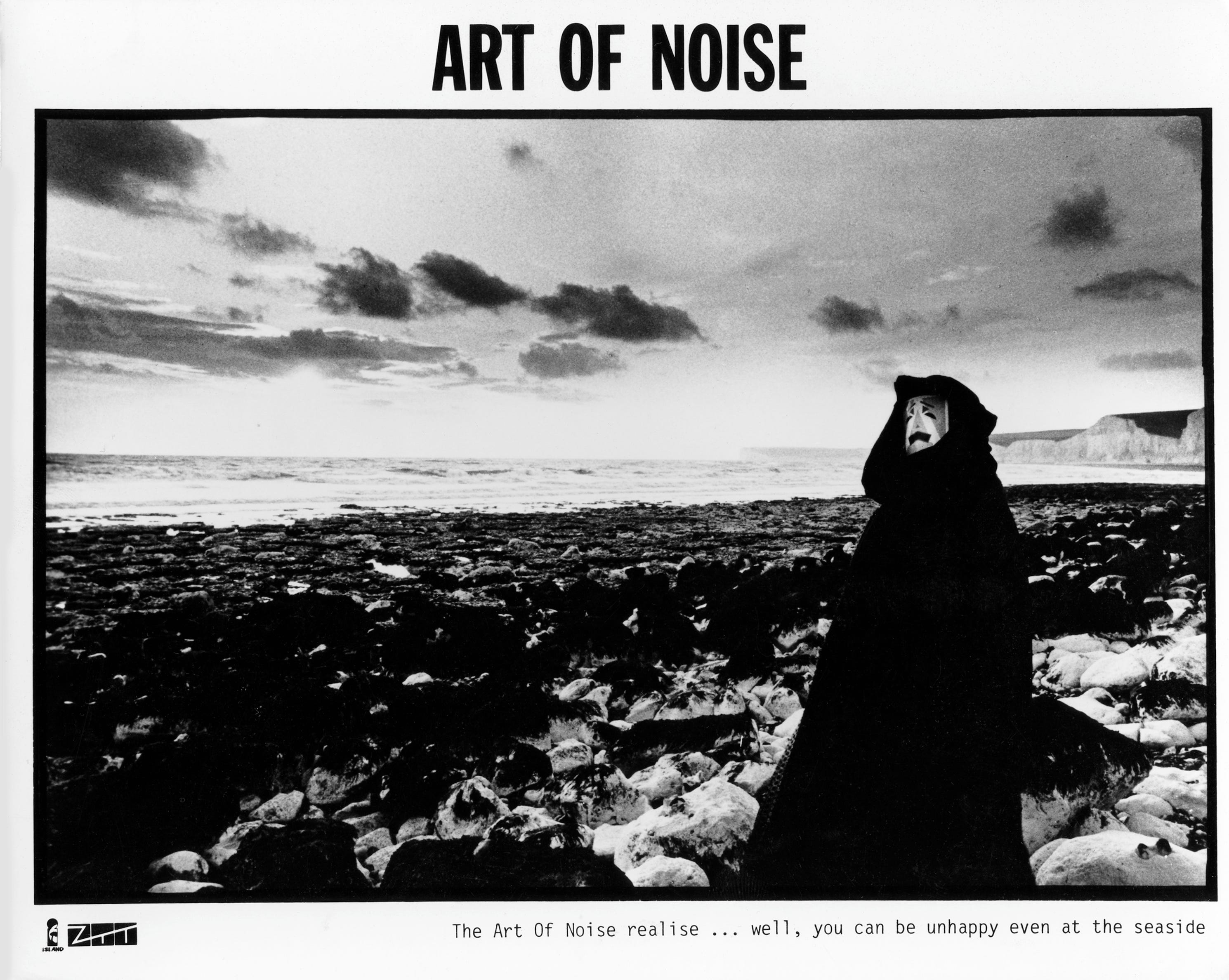
There was a growing sense that the public narrative around the group focused far more on Trevor Horn and Paul Morley than on the actual creators of the music. Horn and Morley often handled interviews, despite being more involved as producers and executives than as direct contributors to the recordings.
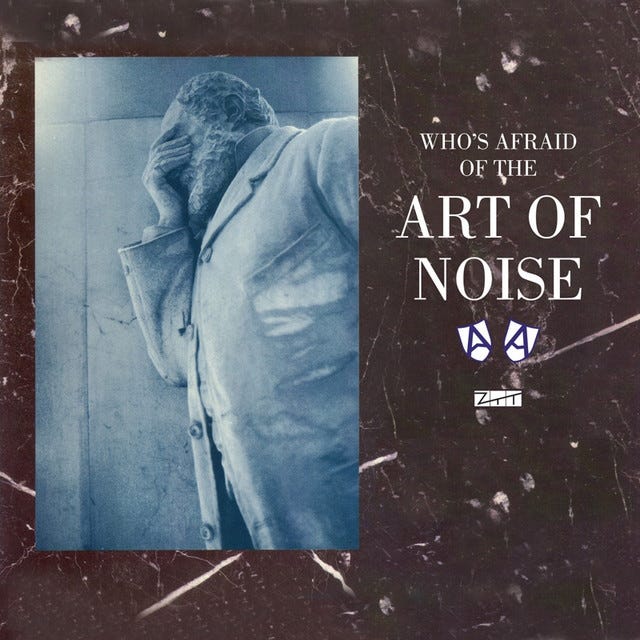
At the same time, Morley’s conceptual approach, sleeve designs filled with statues, and abstract texts comparing tortoises retreating into their shells to human stupidity, didn’t land well with everyone.
For some, it had gone from bold to… a bit too much.
Trevor Horn would later reflect on the situation in his biography, saying: “What also didn't help was certain pronouncements made by Paul (Morley) when he told an interviewer, I am the Art Of Noise, which really wound up the rest of the band”
🌍 The Art Of Influencing The Future (Noise)
“Beat Box” and Art Of Noise didn’t just create a new sound, they shifted the direction of dance music.
They pushed it toward something more sample-based, machine-driven, and built inside the studio itself. And in doing so, they created a bridge between UK electronic experimentation and U.S. club culture, hip-hop, and breakdance scenes.
🧩 Rhythm As Construction
At the heart of that shift was their approach to rhythm. Instead of relying on live drumming, they built grooves from: cut-up fragments, found sounds and synthetic textures
Rhythm became something you constructed, not something you recorded.
And once you understand how the Fairlight CMI was used, you start hearing its fingerprints everywhere in the years that followed.
🔁 The Birth Of Remix Logic
Their influence wasn’t just sonic. It was structural. “Beat Box” existed in multiple versions, each with its own identity.
A track was no longer fixed. It could evolve.
remixed
re-edited
extended
reimagined
That way of thinking would become central to remix culture and later electronic dance music.
⚡ Why It Sounded So New
In 1983, this approach felt completely fresh. “Beat Box” didn’t sound like traditional pop. It sounded like: a machine-made sound collage
Its power came from contrast: a hard, mechanical groove paired with intricate, detailed textures. It was instrumental, rhythm-first, and incredibly effective on the dancefloor. Dancers could lock into it instantly, while the sound still felt futuristic and underground.
🧠 A New Production Mindset
Their real legacy goes far beyond a single track.
It’s a mindset: use the studio as a creative instrument, treat rhythm as design and build music that sounds like the future That thinking fed directly into sampling culture and shaped how electronic dance music would be made in the decades that followed.
Dance music became more edited, more synthetic, more modern.
If you’ve ever wondered when the sample-based house sound of the late eighties truly began…
this is the moment.
🔥 Echoes Everywhere
The influence didn’t just stay theoretical. Some artists went as far as sharing writing credits. Take Firestarter by The Prodigy.
And then there’s television.
Try to imagine an eighties pop or clip-based show that didn’t use sampling techniques in its theme or soundtrack.
It’s almost impossible.
🔊 The Bigger Shift
In the end, “Beat Box” helped move global dance music away from straightforward disco grooves and toward something far more fragmented and creative.
A collage of sounds. A new language of rhythm. A different future.
One that would shape club culture, hip-hop, and the wider pop landscape for years to come.
This Week’s B-Side 🎁
This week’s B-side goes deeper into:
The Fairlight CMI, who invented it and why it mattered
ZTT Records, and its radical approach
Paul Morley vs Tears For Fears, what was really going on?
Plus a guided dive into the Art Of Noise catalogue for your weekend listening.
The B-side is where we go deeper.
It iIt’s paywalled, but for the price of 8 premium coffees, you get:
a full year of B-sides
access to 150+ deep dives
future stories across genres
And yes, payment in beans is still impractical 😁
Join the club. I’d genuinely love to have you on board.
The Twelve Inch is a growing community of people who love disco, eighties, and early-nineties dance music.
If you know someone who would enjoy these stories, feel free to share this post with them or pass it along on Substack Notes. Every share helps the music, and the community, travel a little further. 💿✨
Let’s Keep The Discussion Going 💬
I’m curious:
Do you remember the first time you heard “Beat Box”?
Did it sound like music… or something else entirely?
When do you think sampling truly changed the game?
And which track made you realise the studio had become an instrument?
Let’s continue the conversation 👇
So You Wanna Hear More ?
I thought you would !
It’s fun to write about music but let’s be honest. Music is made to listen to.
Every week, together with this newsletter, I release a 1 hour beatmix on Mixcloud and Youtube. I start with the discussed twelve inch and follow up with 10/15 songs from the same timeframe/genre. The ideal soundtrack for…. Well whatever you like to do when you listen to dance music.
Listen to the Soundtrack of this week’s post on MIXCLOUD
Or On Youtube
Great piece, as always! I always learn so much reading your essays. Trevor Horn is connected to so many of my favorite music projects that he’s probably in the top five people who shaped my taste over my many decades.
I remember sort of when I first heard Art of Noise. I think it was who’s afraid (of the art of noise?) I think it was several years after that when I learned that Trevor Horn was behind the band. I was still in my heavy metal phase when they started out. But I was a big fan of Yes, which I think is what attracted me to them, despite it being a couple of years before I would be fully open minded. I look forward to side B!