
🔥 Banned, Sexy and Unstoppable, How Musique’s In The Bush Became Disco’s Guilty Pleasure
The Twelve Inch 217 - The A Side (Extended) : In The Bush (Musique)

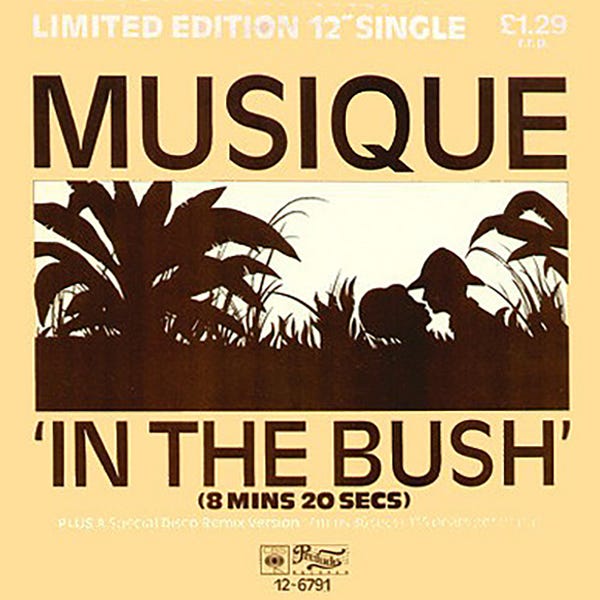
How does a song that hundreds of radio stations refused to play become one of the defining disco records of all time?
That’s exactly what happened to Musique’s In The Bush.
By 1978, disco had become much more than music. It was a cultural phenomenon, a way of life, and according to its critics, everything that was supposedly wrong with modern society. It was too loud, too black, too gay, too decadent and, perhaps worst of all, too sexual.
Few records embodied those fears better than “Push, push, in the bush.”
Even today there are plenty of radio stations around the world that have never played the record, and probably never will. The lyric hardly leaves much to the imagination, unless your imagination happens to be as exciting as a beige wall 😁
Personally, I never found it particularly shocking. Suggestive? Absolutely. But offensive? Not really. Then again, perhaps it’s easier to say that when English isn’t your first language. Besides, history has shown that banning a record often has the exact opposite effect. Just ask Frankie Goes To Hollywood. Sometimes censorship is the best publicity money never had to buy.
That was certainly true for me.
By 1978 I was already a hopeless disco addict. Every week I faithfully tuned into the only Dutch radio programme I knew that played the latest American disco imports and discussed the Billboard Disco charts.
But I gradually noticed something curious.
Certain records never appeared. Musique’s In The Bush was one of them. Naturally, that made me want to hear it even more. When I eventually spotted the single in my local record shop, I did something I almost never did. I bought the 7-inch. Normally I ignored singles altogether. I wanted the twelve inch, or at the very least the album if it contained the long version. Yet there was something about In The Bush that made me break my own rules.
And once I heard it, I understood why.
Because here’s the thing.
Strip away the controversy for a moment and you’re left with an irresistible disco record.
The groove never lets up. The rhythm keeps pushing forward. The arrangement is lean, hypnotic and relentlessly danceable. Add the magnificent vocals of Christine Wiltshire, whom we already met in the episode about Poussez!‘s equally suggestive C’mon And Do It, together with Jocelyn Brown’s unmistakable power, and you have all the ingredients of a genuine dancefloor weapon.
The lyric may have attracted the headlines, but the groove is what kept people dancing.
That combination makes In The Bush the perfect record to explore a much bigger story.
Because disco’s relationship with sex is often reduced to clichés.
Depending on whom you ask, disco either celebrated sexual liberation or encouraged excess and moral decline. The truth, as always, is rather more interesting.
We’ll begin exploring that story today, and continue it on this week’s B-Side. We’ll look at why sexuality became so closely associated with disco, why that reputation has endured, and tackle a question that has fascinated me for years.
If gay men were among disco’s greatest architects and its most devoted audience, why do so many of its biggest songs tell unmistakably heterosexual stories?
We’ll save that conversation for later.
For now, let’s return to one remarkable record that accidentally found itself at the centre of it all.
Because the story behind Musique is almost as unlikely as the song itself.
👋 Welcome, I’m Pe Dupre, thanks for stopping by.
This is The Twelve Inch, a community about the history of dance music from 1975 to 1995, told one twelve-inch record at a time.
If this landed in your inbox because a friend forwarded it, I’d love for you to subscribe so you don’t miss the weekly episodes. Each one dives into a track, its story, and the culture around it.
And if you’re already enjoying the free posts, would you consider becoming a paid subscriber? Your support helps me keep researching, writing, and unearthing the stories behind the music. And You’ll get access to the weekly B-side post: the full archive and extra Subscriber Only Posts
🎹 A Group That Didn’t Exist
One of the recurring themes of The Twelve Inch is that dance music keeps reinventing itself, often by accident.
Musique is a perfect example.
Forget the familiar story of musicians spending years touring tiny clubs before finally getting their lucky break. There was no struggling band, no carefully crafted artistic vision and certainly no lifelong dream of becoming Musique.
The project began with a conversation.
At the height of the disco boom, Prelude Records founder Marvin Schlachter called producer Patrick Adams into his office and asked him a remarkably simple question.
Could he make a disco album?
Adams replied that he could.
How much would it cost?
After a quick calculation he named his price.
How long would it take?
“Maybe three weeks.”
Schlachter quietly opened the bottom drawer of his desk, pulled out his chequebook and wrote Adams a cheque for the entire project. His only instruction was wonderfully straightforward.
“Bring me a good album.”
He never asked which musicians Adams would hire. He never asked what songs would be recorded. He never asked what the concept would be.
There was just one final question.
“What are we gonna call it?”
Adams smiled.
“Well, it’s music, let’s just call it Musique.” 😁
In the summer of 1978 that cheque amounted to $16,000, a substantial investment for what was essentially an idea without a band. In fact, there wasn’t even a group yet. The album artwork was designed before anyone had been hired to sing on the record.
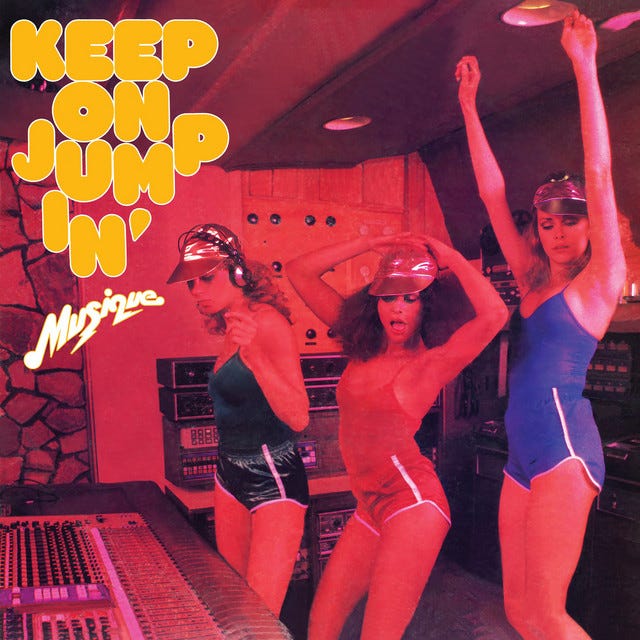
As Marvin Schlachter later admitted with refreshing honesty: “There was no artist named Musique when Patrick Adams produced that for us. These were just session singers that were hired to do the vocals, and then ultimately we turned around and created a group.”
The entire debut album, Keep On Jumpin’, was recorded at Bob Blank’s Blank Tape Studios in New York. The tracking session took just four hours.
Four.
Hours.
Adams even wrote the horn arrangements while the session musicians were waiting in the studio.
The finished album contained only four tracks: Keep On Jumpin’, Summer Love, In The Bush and Summer Love Theme.
The vocalists were hardly unknowns, although few listeners realised it at the time. Jocelyn Brown was still some years away from becoming one of dance music’s greatest voices. Christine Wiltshire was already proving herself one of New York’s finest session singers, joined by Angela Howell and Gina Tharps.
On paper it looked like a modest studio project.
History had rather bigger plans.
🎛️ The Invisible Genius Behind the Groove
Musique may have been assembled almost overnight, but the man pulling the strings had spent years preparing for this moment.
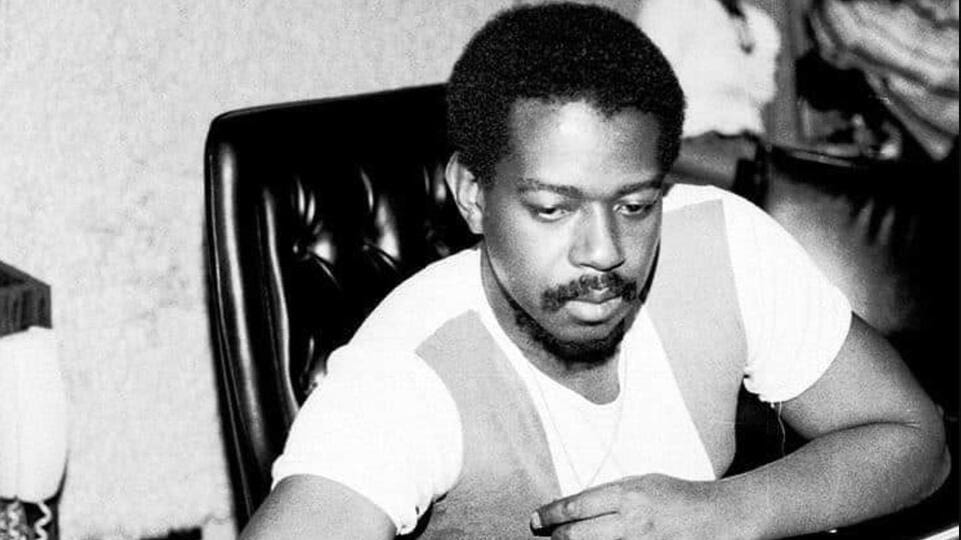
Patrick Peter Owen Adams was born in Harlem on March 17, 1950.
Outside collector circles his name is still surprisingly unfamiliar.
Inside them, it’s spoken with genuine reverence.
Adams knew exactly what he wanted long before most children had even thought about careers. “Even when I was 12 years old, I wanted to be a record producer. I wasn’t actually sure what a record producer did, but I had this burning desire to be one. So I practiced all my instruments—guitar, bass, drums, keyboards—and wrote as many songs as I could. Between the time I was 12 and 17, I probably wrote 200 songs—not that any of them were spectacular, but practice makes perfect!”
It would take years before anyone gave him that opportunity.
Throughout the early 1970s Adams built a formidable reputation as an arranger, one of those rare musicians capable of transforming good songs into great ones. Yet producers kept overlooking him when it came to running sessions himself.
That frustration had been building for years.
When Marvin Schlachter handed him that blank cheque, Adams finally had the freedom to prove what he had always believed. As he later put it: “The Musique album was an outburst of frustration on my part because I’m tired of people telling me what I can’t do and I knew full well I could”
He certainly could.
Musique became Prelude Records’ first major success and launched one of the most remarkable behind-the-scenes careers in dance music. Yet Adams never chased celebrity. “The generation I grew up in, you just wanted to be known for the work that you did. You didn’t want to be known for just being known.” That attitude explains why many casual listeners have never heard his name, while crate diggers treat him almost like royalty.
Cloud One, Bumblebee Unlimited, Universal Robot Band, Inner Life, Phreek ,Musique. If you’ve spent enough time digging through the golden years of New York disco, you’ve almost certainly been dancing to Patrick Adams without even knowing it.
And then, almost by accident, he wrote three words that would make hundreds of radio programmers reach for the panic button…
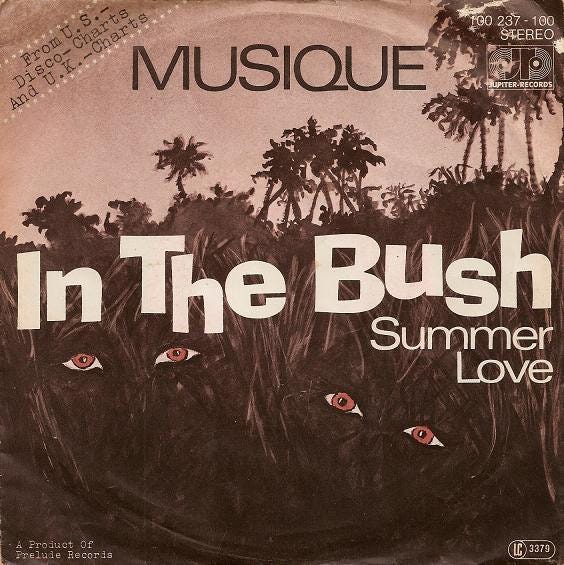
🔥 Three Words That Shocked America
So where did those infamous lyrics actually come from?
Like many great stories in dance music, the answer is far less calculated than you might imagine. Patrick Adams explained it years later: “My older brother and his friends were always chanting ‘to the Bush, to the Bush,’ referring to this club they used to go to. So in my dirty mind, I translated it to ‘in the bush.’ I had no idea where that was going to go lyrically, but one of the background singers came up with ‘push.” And it all came together in my head at that point: “push, push, in the bush.” Now, I’m a First Amendment guy who loves freedom of speech, but 600 stations refused to play it! To this day, WNBC here in New York has never played the record, and they probably never will.”
It’s a wonderful reminder that not every cultural flashpoint begins with a grand strategy. Sometimes it starts with a joke, with an accidental rhyme. And sometimes with a producer whose own words describe him as having “a dirty mind.”
Yet what happened next says far more about American society than it does about Musique.
By 1978 disco had become an easy target. The music was increasingly associated with sexual freedom, nightlife and communities that many conservative Americans already regarded with suspicion. The lyrics of In The Bush simply gave critics another reason to attack the genre.
Or perhaps more accurately, another excuse.
Because popular music had always flirted with sex.
Blues musicians had mastered double entendres decades earlier. Rock ‘n’ roll had built much of its early reputation on suggestive lyrics and provocative performances. What made disco different wasn’t simply that it sang about desire. It invited thousands of people to celebrate that desire together on the dancefloor.
That made it feel different. More public. More visible. More threatening to those who preferred sexuality to remain hidden behind closed doors.
The irony, of course, is that attempts to suppress music have a remarkable habit of making it even more desirable. Every radio station that refused to play In The Bush made somebody else curious enough to seek it out.
I know.
I was one of them.
🪩 The Dancefloor Didn’t Care
If radio programmers thought they could stop the record, they underestimated one crucial thing. By the late 1970s, radio was no longer the only route to success.
Disco had built its own ecosystem: the clubs, the DJs, the twelve inch single. The dancefloor itself.
I’ve written before that one of disco’s greatest revolutions was shifting power away from radio and towards the clubs. DJs had become tastemakers in their own right. A record didn’t have to dominate daytime radio if it could fill dancefloors every weekend.
In The Bush became one of the clearest demonstrations of that new reality.
Despite being ignored, or actively rejected, by hundreds of radio stations, club DJs embraced it almost immediately. And dancers responded. That relentless groove, Christine Wiltshire’s commanding vocals, Jocelyn Brown’s unmistakable energy and Patrick Adams’ economical production did exactly what they had been designed to do.
They kept people moving.
The controversy may have sold the first copy.
The groove sold the next million.
📈 Bigger Than Its Charts
Looking purely at its pop chart positions, you could easily underestimate In The Bush. It reached No. 58 on the Billboard Hot 100. Respectable, not spectacular.
But that’s looking at the wrong chart.
Where the record truly came alive was on Billboard’s Disco chart, where it reached No. 1, paired with Keep On Jumpin’. That was the chart that mattered most.
It also climbed to No. 29 on the R&B chart, reached No. 16 in the UK, spent twelve weeks there, and became a major club record across Europe, particularly in countries like Belgium, the Netherlands, France and Germany, where disco culture was thriving.
Considering the resistance it faced from mainstream American radio, those achievements become even more impressive.
But numbers only tell part of the story. The real measure of In The Bush isn’t where it peaked in November 1978.
It’s where it still gets played almost fifty years later.
Walk into a disco night almost anywhere in the world and sooner or later you’ll probably hear those opening bars.
That’s because disco has always had two histories.
There’s the history written by chart compilers.
And there’s the history written by dancers.
They’re not always the same.
Many of disco’s greatest records achieved something far more valuable than a high Hot 100 position. They became permanent fixtures in DJs’ record boxes.
The dancefloor has a much longer memory than the charts.
That’s one of the lessons In The Bush teaches so beautifully.
And it wasn’t the only surprise waiting for Patrick Adams. Because the success of Musique was only the beginning…
✨ A Four-Hour Session That Changed Disco
The success of In The Bush naturally led to a second Musique album.
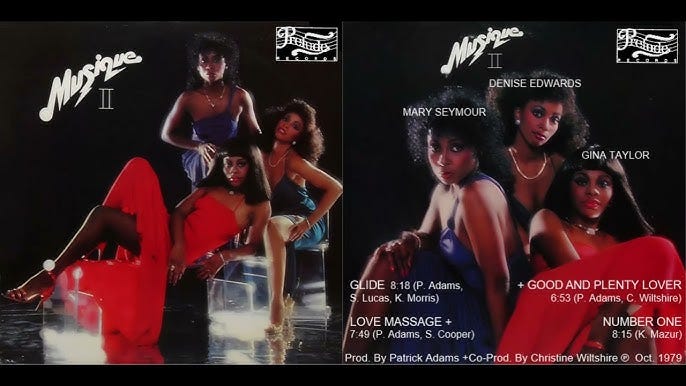
Musique II arrived in 1979 with a largely new line-up. Mary Seymour, Denise Edwards and Gina Taylor replaced the original vocalists, but lightning refused to strike twice. The debut had captured a very particular moment in disco history, one that proved almost impossible to recreate.
The project quietly disappeared.
Its members did not.
Jocelyn Brown would become one of dance music’s greatest voices through Inner Life before embarking on a hugely successful solo career.
Christine Wiltshire would later appear on Class Action’s immortal Weekend, itself a reworking of Weekend, originally recorded by Phreek, another Patrick Adams creation.
And Patrick Adams?
He simply kept making extraordinary records.
Over the following decades his fingerprints appeared everywhere. Cloud One. Bumblebee Unlimited. Universal Robot Band. Inner Life. Shannon. Even Eric B. & Rakim’s groundbreaking Paid in Full, which he engineered, creating one of the most remarkable bridges between seventies disco craftsmanship and the birth of hip hop.
Today Discogs credits him with well over 400 production credits and more than 600 writing and arrangement credits.
Even those astonishing numbers probably underestimate his contribution.
Yet his greatest achievement may be something less tangible. Patrick Adams helped shape the sound of New York dance music without ever becoming a household name. Sometimes the people who change music the most are the ones standing furthest from the spotlight.
💃 Why In The Bush Still Matters
So where does In The Bush fit into disco history?
Not at the beginning.
Donna Summer had already proved that sexuality could become part of mainstream dance music with records like Love To Love You Baby. Other artists had flirted with innuendo long before Musique walked into Bob Blank’s studio.
What In The Bush represents is the moment disco stopped apologising for pleasure.
By 1978 the genre had found its confidence. Dance music was no longer asking for permission. It celebrated freedom. Bodies. Desire. The simple joy of losing yourself in a packed room full of strangers moving to the same relentless beat.
That confidence also made disco a target.
For some people, records like In The Bush represented everything they disliked about the culture growing around the clubs. The music became an easy symbol for changing attitudes towards race, sexuality, gender and nightlife.
Looking back almost fifty years later, it’s remarkable how much anxiety could be generated by three repeated words. Yet perhaps that’s exactly why the record has endured. Because beneath the controversy sits a brilliantly constructed disco groove.
The groove made the controversy matter.
That’s why DJs never abandoned it. That’s why dancers never forgot it. And that’s why the record still appears on disco compilations almost half a century later.
Like so many classics we’ve explored in The Twelve Inch, its greatest success wasn’t measured by the Billboard Hot 100. It was measured by full dancefloors.
This Week’s B-Side 🎁
If In The Bush tells us anything, it’s that disco’s relationship with sex was far more complex than most people remember.
This week’s B-Side picks up exactly where today’s story ends.
We’ll look at why disco became labelled as “the sexy genre” and whether that reputation was actually deserved.
We’ll tackle a question that has fascinated me for years.
If gay men were among disco’s greatest innovators and its most loyal audience, why do so many of disco’s biggest songs tell unmistakably heterosexual stories?
Was that ever a contradiction?
Or have we been looking at those lyrics in entirely the wrong way?
And because no discussion about disco and sexuality would be complete without a soundtrack, I’ve also put together my personal Top 10 most suggestive, provocative and scandalous disco records of the seventies.
The ideal soundtrack to get a bit more “Push” to get In The Bush.
The B-side is where we go deeper. (Pun intended)
It iIt’s paywalled, but for the price of 8 premium coffees, you get:
a full year of B-sides
access to 150+ deep dives
future stories across genres
And yes, payment in beans is still impractical 😁
Join the club. I’d genuinely love to have you on board.
The Twelve Inch is a growing community of people who love disco, eighties, and early-nineties dance music.
If you know someone who would enjoy these stories, feel free to share this post with them or pass it along on Substack Notes. Every share helps the music, and the community, travel a little further. 💿✨
🪩 One Last Thought
I often say that The Twelve Inch is the story of how dance music kept reinventing itself, often by accident.
Musique embodies that idea perfectly.
A producer finally given his chance.
A blank cheque.
A group that didn’t yet exist.
An album recorded in four hours.
A throwaway lyric that became one of disco’s most recognisable hooks.
Almost fifty years later people still smile when they hear those opening bars.
Not bad for a record that hundreds of radio stations refused to play.
Sometimes history really does have a sense of humour.
I’d love to hear your memories.
Did your local radio station play In The Bush, or was it one of the records that mysteriously disappeared from the airwaves?
Do you think disco genuinely deserved its reputation as music obsessed with sex, or has history exaggerated that side of the story?
And perhaps the biggest question of all.
Can a controversial lyric become a classic without a great groove behind it?
As always, I’d love to read your thoughts in the comments.
So You Wanna Hear More ?
I thought you would !
It’s fun to write about music but let’s be honest. Music is made to listen to.
Every week, together with this newsletter, I release a 1 hour beatmix on Mixcloud and Youtube. I start with the discussed twelve inch and follow up with 10/15 songs from the same timeframe/genre. The ideal soundtrack for…. Well whatever you like to do when you listen to dance music.
Listen to the Soundtrack of this week’s post on MIXCLOUD
☀️ Summer Break… but only for two weeks!
Before you panic, don’t worry. 😁
I’ll be taking a short two-week summer break while travelling, so The Twelve Inch will be back in the second half of July with plenty of new stories to tell.
And I’m already hard at work on what’s coming next.
Episode 218 will focus on one of my all-time favourite divas.
Born in Canada, she never became the superstar there, that many expected. Instead, she crossed the Atlantic and grew into one of France’s biggest stars ever, giving a voice to the hopes and disappointments of an entire generation through one unforgettable song.
We’ll explore why France embraced her so completely, why Canada didn’t, and why her career followed such a different path from another Canadian icon, Céline Dion.
That episode will also mark the beginning of a series I’ve wanted to write for quite some time: the story of the Canadian dance music scene.
I’ll admit something. When I first announced the series, I quickly realised I’d bitten off more than I could chew. The deeper I dug, the more fascinating connections I uncovered. Canada wasn’t simply producing great records, it became a vital bridge between the American and European dance scenes, helping shape the evolution of disco and dance music in ways that are often overlooked.
It’s one of my favourite countries, and musically it deserves far more attention than it usually gets.
Then, in Episode 219, we’ll return to Detroit (and Los Angeles) for the story of Marvin Gaye and Motown, another chapter in the ever-evolving story of dance music.
Until then, enjoy the summer, stay cool if you’re living through the current heatwave, and, as always…
keep dancing. 🪩
I vaguely remember this song as one that would occasionally get played in the 80s. Kind of an earworm!
I totally remember this song and it was a favorite of mine to play percussion along with. I of course thought the lyrics were suggestive, but that perhaps they weren’t as directly sexual as they appeared? Maybe it was a metaphor I wasn’t picking up on?
Perhaps the lyrical content being more heterosexually oriented had a dual purpose. One, to expand the disco appeal beyond the gay community. And second because clearly same-sex gendered lyrics would limit the song to the clubs only..
I’m not quite sure where I would always hear this song. Maybe it was just disco compilations that I would play. But I am both surprised and not surprised that it had been banned.