

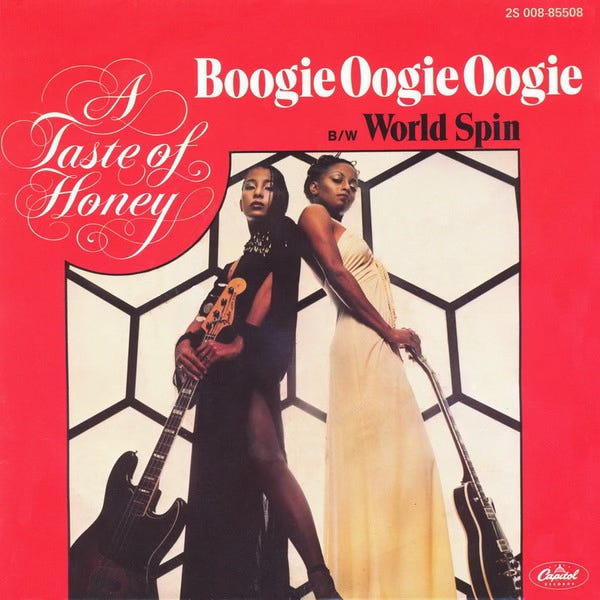
By 1978, disco was the dominant force in American music. Saturday Night Fever had transformed a thriving underground movement into a $4 billion industry by 1979. Record labels scrambled to cash in, eager to press anything that could set a dancefloor ablaze.
Capitol Records, one of the six major U.S. record labels, was lagging behind in the disco race. While they had some disco releases, they weren’t making enough of an impact. The label needed a game-changer—a group that could rival the stylish sophistication of Chic. Enter A Taste of Honey, a band that embodied musicality, charisma, and a groove that refused to be ignored.
But how did a band fronted by two women in an era dominated by male-led groups, end up creating one of the most infectious anthems of the late ’70s? And what happened after the glitter settled?
Welcome, I’m Pe Dupre and I’m really glad you’re here. This is “The Twelve Inch”, my newsletter that tells the history of dance music between 1975 and 1995, one twelve inch at a time.
If you’ve received this newsletter, then you either subscribed or someone forwarded it to you. If you fit into the latter and want to subscribe, please do so. That way you will not miss any of my weekly episodes
The Birth of A Taste of Honey
Before their breakthrough, A Taste of Honey was a hard-working club band in Los Angeles. Formed by bassist and singer Janice-Marie Johnson and keyboardist Perry Kibble, the group later added guitarist Carlita Dorhan and drummer Donald Ray Johnson. When Dorhan left in 1976, Hazel Payne stepped in, completing the lineup. Their name paid homage to the classic 1965 Herb Alpert & The Tijuana Brass instrumental, A Taste of Honey.
Unlike many disco acts that relied on producers, A Taste of Honey were accomplished musicians. Johnson stood out as a female bassist in a genre dominated by male instrumentalists, delivering basslines as funky and powerful as any of her peers.
A Lucky Break: Getting Signed to Capitol Records
Capitol Records, known for The Beatles, The Beach Boys, and Frank Sinatra, needed a slice of the disco pie. A Taste of Honey got their chance when they played a showcase in Hollywood. Though initially courted by A&M Records, the deal didn’t materialize.
Their real break came at a wedding gig for Wayne Tweed, the bassist for Smokey Robinson. In the audience were legendary jazz-funk producers Fonce and Larry Mizell—known for their work with Donald Byrd. Blown away by Johnson’s bass prowess and the band’s tight performance, they immediately recommended them to Capitol. The result? A record deal in a matter of weeks.
The Mizell Brothers: The Secret Sauce Behind the Groove
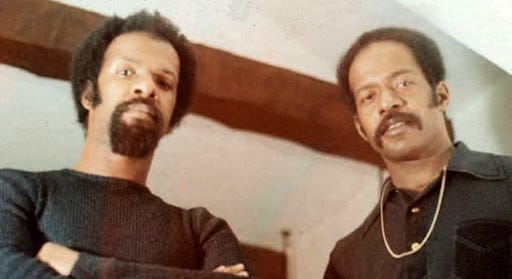
The Mizell brothers, primarily jazz-fusion producers, saw disco as an opportunity to cross genres. Alphonso Mizell, a member of Motown’s hit-making team The Corporation (who wrote The Jackson 5’s early hits), knew how to craft a song that could dominate the airwaves.
The inspiration for Boogie Oogie Oogie came from an unexpected place. Shortly after signing with Capitol, the band performed at an airbase in San Bernardino. The crowd’s reaction was lukewarm, leaving Janice-Marie Johnson wondering whether they were indifferent or simply mesmerized by a band playing all their own instruments. Frustrated, she told the crowd:
Yep, she still plays the song
Later, listening to a recording of the show, she realized those words would make a great lyric. She picked up her bass, crafted the now-iconic groove, and worked with Perry Kibble to complete the song. “Some songs come very quickly. Other ones you have to work at. That song was not one I had to work at too hard”
The Mizell brothers polished the track, ensuring the bassline, call-and-response vocals, and tight guitar licks hit with maximum impact. It was one of the last songs added to their album, but it would become their biggest hit.
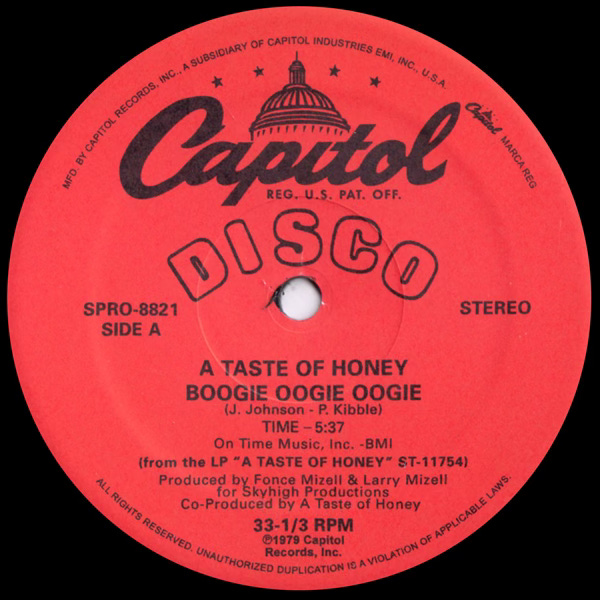
Capitol's Gamble Pays Off: The Song Becomes a Sensation
Capitol had been slow to embrace disco, watching as labels like TK Records and Casablanca dominated the genre. They had success with artists like Tavares, Natalie Cole, and The Sylvers but lacked a defining act. A Taste of Honey changed that.
It seems to me that Capitol Records wasn’t initially fully invested in disco, as the genre was largely dominated by one-hit wonders and producer-driven acts rather than long-term careers. However, that perception started to shift with the success of Chic and the influential productions of Bernard Edwards and Nile Rodgers. Their impact likely played a role in Capitol recognizing the potential of A Taste of Honey. With Boogie Oogie Oogie as their golden ticket, the label wasted no time in signing them to a five-album deal—demonstrating a clear commitment to building a lasting band rather than just chasing a fleeting hit.
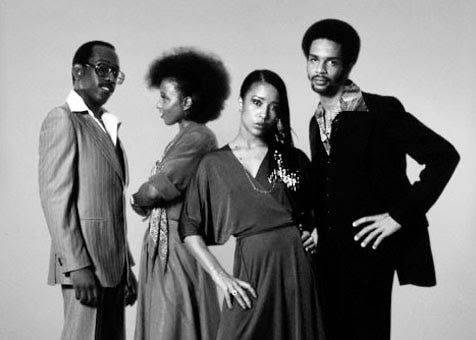
The styling was heavily inspired by Chic. It’s clear who the "target audience" was! 😃
Upon its release in the summer of 1978, Boogie Oogie Oogie was an instant smash:
✅ #1 on the Billboard Hot 100 (1978)
✅ #1 on the Hot Soul Singles chart
✅ Certified Platinum (the first Capitol single to do so—even The Beatles and The Beach Boys hadn’t achieved platinum status for a single)
✅ Grammy Award for Best New Artist (1978)—making them the first Black group to win in this category
The song also became a global hit, reaching the Top 10 in the UK, Canada, and Australia. From New York to Tokyo, dance floors pulsed with its infectious groove.
Usually, I’m a fan of John Luongo’s remixes, but he completely missed the mark on this one. I much prefer the original. What do you think?
Success and Struggles: The Weight of a Disco Hit
The overwhelming success of Boogie Oogie Oogie was both a blessing and a burden. Janice-Marie Johnson later reflected:
“I still have a problem that we were labelled a disco group” “We were not disco. Boogie Oogie Oogie had a groove to it. But anything at that time that was up-tempo was considered disco”.
Follow-up singles failed to match the success of their debut, though Do It Good performed modestly. By the early ’80s, disco was fading, replaced by new wave and electro-funk.
In 1981, they adapted with a more R&B-driven sound, releasing Twice as Sweet. The album included their cover of Sukiyaki, which became another surprise hit, reaching No. 3 on the Hot 100. Though many assumed Johnson had Japanese heritage, she clarified:
“I’m half Black, half Native American. There’s no Japanese heritage.”
Despite their resilience, industry shifts and internal tensions led to the band’s split in the mid-’80s. Johnson pursued a solo career, while Payne transitioned into acting. Still, their legacy endures. As Johnson put it:
“The one good thing disco had, was it took away the color (of your skin)”
What’s Your "Boogie Oogie Oogie" Memory?
Did you dance to it in a disco club? Did you wear out your vinyl copy? Or did you discover it years later, realizing it was the foundation for so much of today’s dance music? Love to hear from you so share your memories in the comments!
Further reading (or should I say watching)
There are a number of interesting video’s/links :
So You Wanna Hear More ?
I thought you would !
It’s fun to write about music but let’s be honest. Music is made to listen to.
Every week, together with this newsletter, I release a 1 hour beatmix on Mixcloud and Soundcloud. I start with the discussed twelve inch and follow up with 10/15 songs from the same timeframe/genre. The ideal soundtrack for…. Well whatever you like to do when you listen to dance music.
So what’s in this week’s mix ?
This week, I went all in on American disco from 1978. While the massive success of Saturday Night Fever led to Eurodisco and Eurodisco-style productions dominating the scene, plenty of African American artists remained true to disco’s earlier roots, blending it with funk and jazz.
Boogie Oogie Oogie is a perfect example, driven by a funky groove. You can also expect some incredible Fusion Jazz artists, including Lenny Williams (of Tower of Power fame) and Roy Ayers. The middle section takes a jazzy turn with Goody Goody and one of arranger Vince Montana’s standout tracks, A Dance Fantasy, which even weaves in elements of the Close Encounters soundtrack.
We wrap things up with a fantastic finale featuring Taka Boom (Chaka Khan’s sister), Cissy Houston, and the disco classic Hot Shot by Karen Young.
Enjoy !
Next week, I’ll be diving into late ‘80s Euro House and highlighting one of the most promising Dutch producers, Peter Slaghuis. He was seen as a rising star with a bright future ahead—until a tragic car accident cut his life short. I’ll also share the story of why I chose to escape the Belgian nightlife at that time and why Rotterdam became my go-to over Antwerp.
What a cool track. I knew it but I didn’t know I knew it, if you see what I mean. Thanks for the education and for making it so entertaining!
Great bass line!